Coco Chanel and the Renaissance of Costume Jewelry
From Renaissance Symbolism to Modern Costume Jewelry
In the early twentieth century, Coco Chanel initiated a fundamental rethinking of jewelry’s cultural role. Her work challenged entrenched hierarchies that equated value with material rarity, instead proposing jewelry as a visual and symbolic language—one shaped by scale, composition, and intention rather than intrinsic worth.
Luxury has never been defined solely by material value. Across centuries, it has been shaped by symbolism, perception, and visual authority—by how objects communicate meaning rather than what they are made of. Few figures understood this principle as instinctively and radically as Chanel. While she is most often celebrated for transforming women’s fashion, her contribution to jewelry—particularly costume jewelry—represents one of the most profound intellectual shifts in the history of adornment.
Chanel did not simply design accessories. She reframed jewelry as a visual language, liberating it from rigid hierarchies of wealth and reconnecting it to a much older artistic tradition. In doing so, she unknowingly revived ideas rooted in Renaissance portraiture, where illusion, symbolism, and visual clarity mattered more than intrinsic material worth. This article explores Chanel’s jewelry not as a fashion trend, but as part of a long continuum of visual culture—from painted pearls in Renaissance portraits to gilt metal and glass pearls in twentieth-century Paris.

Beyond Biography: Understanding Chanel as a Cultural Editor
Gabrielle Bonheur Chanel (1883–1971) is often described simply as a fashion designer. This definition, while accurate, is incomplete. Chanel was, above all, a cultural editor—someone who instinctively understood how objects construct authority, identity, and taste.
Her personal history is well known, but what matters more is how it shaped her worldview. Chanel rejected inherited privilege and distrusted overt displays of wealth. For her, elegance was not something one possessed by birth or money; it was something one constructed through choice, restraint, and intention. This philosophy would come to define not only her clothing, but her revolutionary approach to jewelry.
The Visual Problem Chanel Solved
Before Chanel, European luxury followed a rigid visual order:
-
Fine jewelry equaled legitimacy and status
-
Costume jewelry implied imitation or inferiority
-
Wealth was displayed literally, not symbolically
By the early twentieth century, this system no longer aligned with modern life. Women were increasingly independent, visible in public spaces, and uninterested in performing inherited social roles. Chanel recognized that jewelry needed to evolve accordingly. She understood that modern authority required visual clarity, not material excess.
This insight connects her directly to Renaissance artists, who also treated jewelry as a symbolic tool rather than a mere inventory of wealth.
Jewelry in Renaissance Portraiture: Symbol Over Substance
In Renaissance portraiture, jewelry functioned as visual rhetoric. Pearls, gold chains, and gemstones were deployed strategically to communicate purity, legitimacy, dynastic power, or divine favor. Painters frequently exaggerated scale, repetition, and luminosity, prioritizing symbolism over material accuracy.
In many cases, the jewels depicted were idealized or even imaginary—artistic conventions rather than precise representations. The viewer was meant to read jewelry, not appraise it. Jewelry in painting thus operated according to a principle Chanel would later articulate in modern terms: meaning is constructed, not mined.
Chanel’s Radical Separation of Jewelry from Material Hierarchy
Chanel’s embrace of costume jewelry was not a compromise or a cost-saving measure. It was a deliberate philosophical act. She rejected the assumption that diamonds must be real to be powerful or pearls must be natural to be elegant. Instead, she treated jewelry as composition—an arrangement of form, scale, and contrast.
Her designs privileged:
-
Visual impact over intrinsic value
-
Rhythm and repetition over rarity
-
Intentional artifice over authenticity
This approach mirrors how painters work with pigment rather than precious materials, choosing color and emphasis to guide the viewer’s eye. Chanel’s jewelry behaves less like treasure and more like applied visual art.
Faux Pearls and the Art of Illusion
Pearls occupy a central place in Chanel’s jewelry language. Historically, pearls symbolized chastity, moral order, and authority—especially in Renaissance and Baroque portraiture. Chanel reclaimed this symbolism while stripping it of aristocratic exclusivity.
Her faux pearls were intentionally oversized, layered excessively, and worn in daylight. They were not meant to pass as natural pearls, but to function as visual punctuation. Like painted pearls in a portrait, they existed to structure the composition of the body and command attention through rhythm rather than rarity.
In this sense, Chanel’s pearls are best understood as painterly devices, not substitutes for fine jewelry.

Costume Jewelry as Modern Portraiture
Chanel effectively transformed the dressed body into a living portrait. Her jewelry framed the face, anchored simple garments, and asserted presence without reliance on wealth. Just as Renaissance sitters curated their painted likenesses, Chanel encouraged modern women to author their own visual identity.
Costume jewelry became a tool of self-definition—chosen, layered, and styled according to intention. Authority no longer derived from lineage, but from visual fluency.
Baroque Resonances and Sculptural Ornament
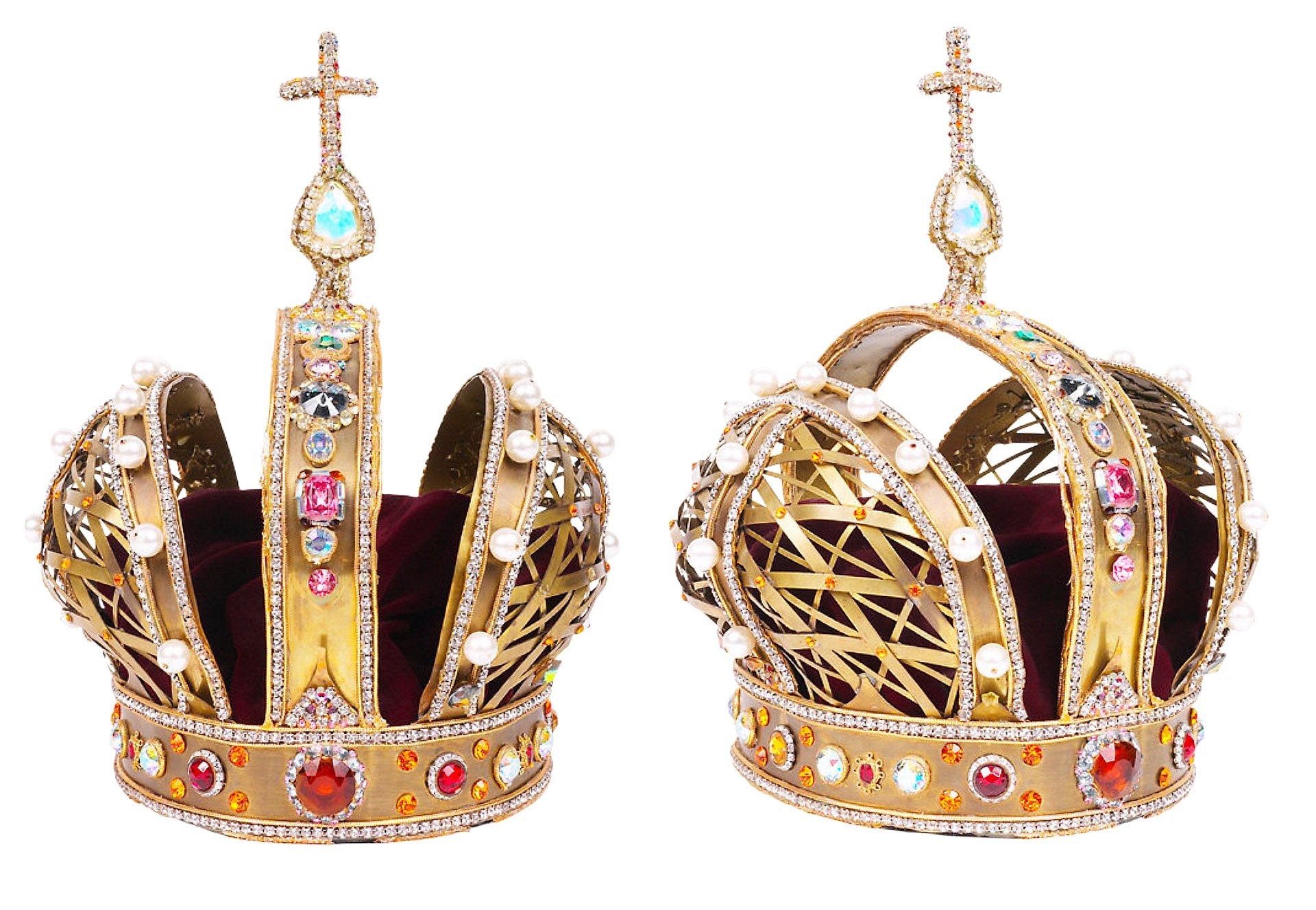
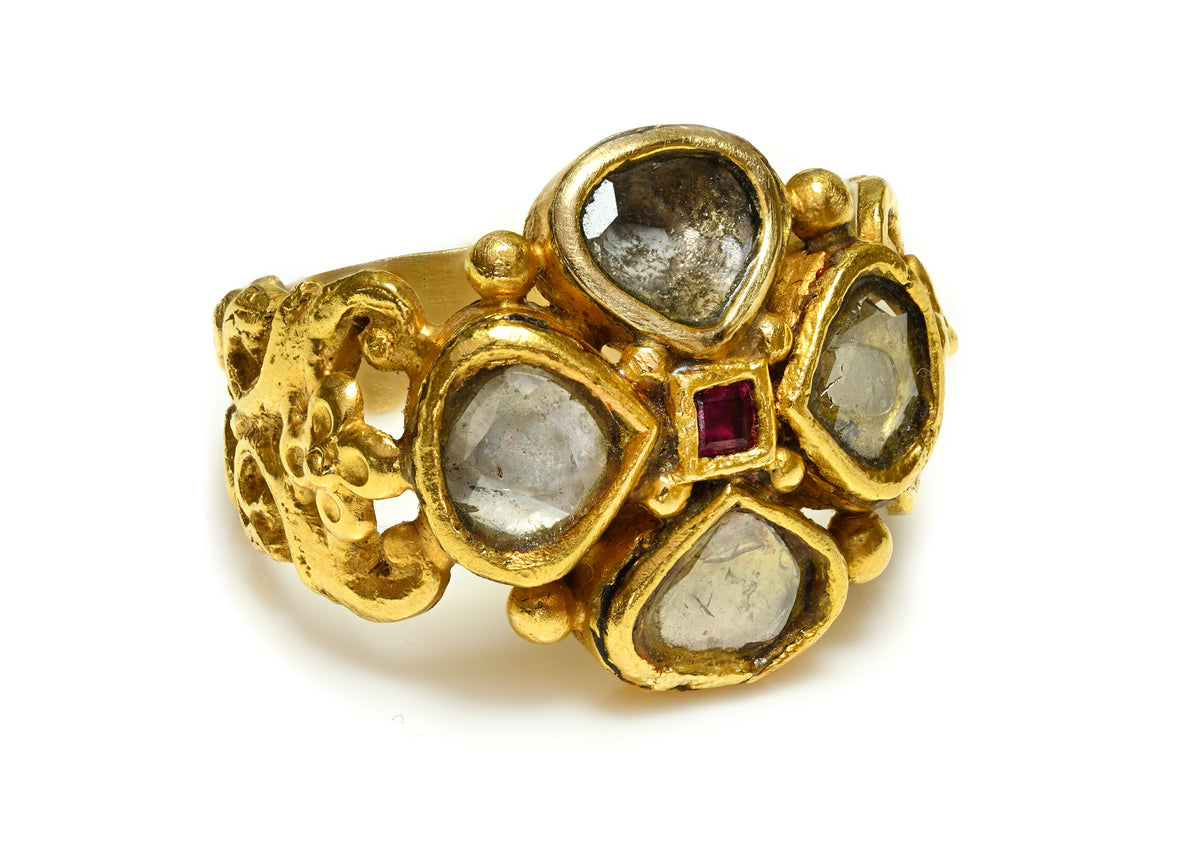
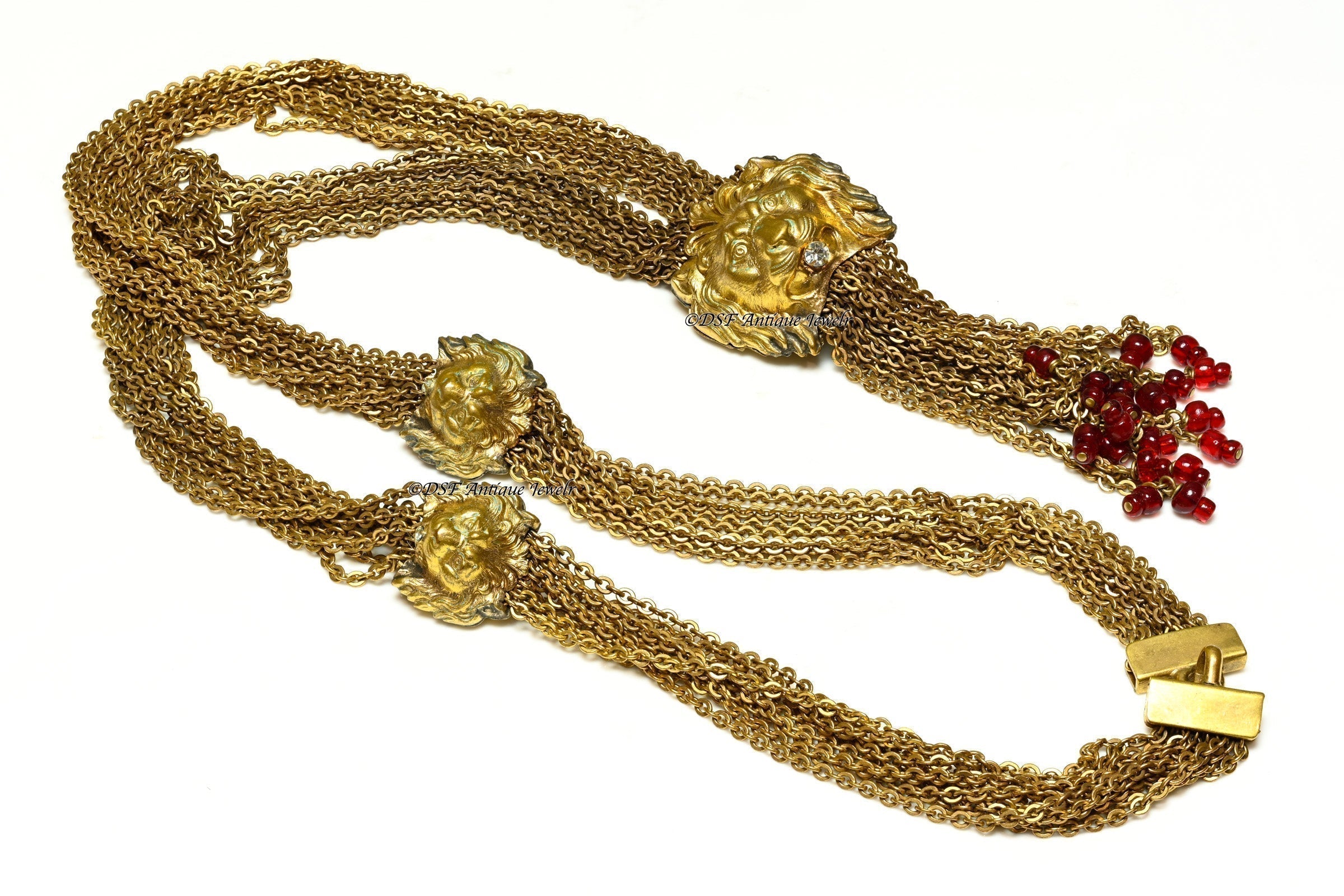
Although Chanel is often associated with restraint, her jewelry frequently embraced Baroque richness. Gilt metal, rock crystal, glass cabochons, and textured surfaces evoke reliquaries and ecclesiastical metalwork rather than modern fine jewelry.
This was not contradiction, but strategy. Baroque art emphasized drama, density, and emotional impact—qualities Chanel harnessed to create jewelry that functioned as sculptural presence. These pieces blur distinctions between ornament, artifact, and miniature sculpture, aligning costume jewelry with the decorative arts rather than with imitation luxury.

Jewelry as Authority Without Wealth
One of Chanel’s most enduring achievements was redefining authority itself. Where jewelry once reinforced class boundaries, her designs enabled participation in visual power without material gatekeeping. Costume jewelry allowed wearers to signal cultural literacy, confidence, and modernity.
In this way, Chanel’s jewelry echoes the original purpose of adornment in art: to communicate meaning. It proves that symbolic clarity can outweigh material scarcity.
Why Costume Jewelry Is Historically Significant
The notion that costume jewelry is “lesser” jewelry collapses under historical scrutiny. If value is measured by cultural impact, visual innovation, and symbolic effectiveness, costume jewelry often surpasses fine jewelry.
Chanel understood that luxury is a conceptual achievement, not a material one. Her jewelry occupies a crucial place in the history of decorative arts because it documents a moment when symbolism was liberated from substance.

Case Study I: Painted Pearls and Faux Pearls
Renaissance painters exaggerated pearls to convey purity and power, often independent of material reality. Chanel’s faux pearls operate within the same logic. Enlarged, multiplied, and intentionally artificial, they prioritize visual rhythm over authenticity. Both painted and faux pearls demonstrate that persuasion lies in convincing illusion, not in material truth.
Case Study II: Baroque Revival and Gilt Surfaces
Chanel’s gilt metal jewelry recalls Baroque reliquaries and sacred objects, where surface, texture, and light carry meaning. These pieces derive authority from historical resonance rather than gemstone value, reinforcing the idea that jewelry can function as cultural artifact.
Case Study III: Costume Jewelry as Cultural Documentation
Unlike fine jewelry, which often remains stylistically conservative, costume jewelry records rapid social change. Chanel’s designs capture a moment when women rejected inherited status in favor of constructed identity. Each piece serves as a document of modernity—evidence of shifting ideas about femininity, power, and self-authorship.

Jewelry, Collecting, and Contemporary Relevance
Today, Chanel’s costume jewelry occupies a unique position in serious collections. Its significance lies not only in design, but in what it represents: a turning point in visual culture. Museums increasingly recognize costume jewelry as part of the decorative arts, acknowledging its role in shaping modern concepts of luxury and identity.
For collectors, these pieces offer historical depth, unmistakable design language, and enduring relevance. They are objects that changed the rules.
Chanel’s Jewelry as Visual Philosophy
Coco Chanel did not invent costume jewelry, but she legitimized it. By separating symbolism from substance, she reconnected jewelry to its original artistic function: communication. Her designs demonstrate that illusion can be more truthful than material, and that elegance is constructed rather than inherited.
Seen through this lens, Chanel’s costume jewelry is not a departure from history, but its continuation—an extension of the same visual language that once animated Renaissance portraits, translated for a modern world.