Vintage vs. Antique Jewelry: What’s the Difference?
The terms vintage jewelry and antique jewelry are frequently used together, and sometimes interchangeably. For collectors, dealers and anyone interested in fine jewelry, however, they describe different categories.
The most important distinction is age, but age is only the beginning. Period, craftsmanship, gemstone cutting, materials, design and historical context can all help determine how a jewel should be described.
Understanding these differences can make it easier to appreciate an estate jewel, research its history and recognize the characteristics that distinguish a genuinely antique piece from one made more recently.
What Is Antique Jewelry?
In the jewelry and antiques world, an item is generally considered antique when it is at least 100 years old.
Because that definition moves forward with time, the cutoff changes every year. In 2026, for example, jewelry dating from 1926 or earlier may qualify as antique based on age.
Antique jewelry therefore includes pieces from several important historical periods, including:
- Georgian jewelry
- Victorian jewelry
- Edwardian jewelry
- Art Nouveau jewelry
- Early Art Deco jewelry
The dates associated with jewelry periods are not always absolute. Artistic movements overlapped, and jewelers did not suddenly abandon one style when another became fashionable. A piece should therefore be evaluated according to its construction, design, materials, provenance and other available evidence rather than relying on a date range alone.

What Is Vintage Jewelry?
The definition of vintage jewelry is less rigid.
In the jewelry trade, the term is commonly used for pieces that are old enough to represent an earlier period or style but are not yet 100 years old. A frequently used guideline is approximately 20 years or older, although there is no single universal definition applied by every collector, dealer or auction house.
Today, vintage jewelry can include pieces from periods such as:
- Art Deco and late Art Deco
- Retro jewelry of the 1930s and 1940s
- Mid-century jewelry
- Jewelry from the 1960s and 1970s
- Bold designer jewelry of the 1980s and 1990s
- Selected pieces from the early 2000s
As time passes, individual pieces naturally move from the vintage category into the antique category.
A jewel described as vintage twenty years ago may therefore qualify as antique today.
Antique vs. Vintage Jewelry at a Glance
The simplest distinction is:
Antique jewelry: generally 100 years old or older.
Vintage jewelry: generally from an earlier era but less than 100 years old, often at least approximately 20 years old.
The age of a jewel, however, does not automatically determine its quality, rarity or value.
A highly important signed vintage jewel can be considerably more valuable than an unsigned antique jewel, while an exceptional antique piece may be prized for craftsmanship or techniques that are rarely encountered today.
Jewelry Periods and Design
One of the pleasures of collecting older jewelry is seeing how design changed from generation to generation.
Georgian Jewelry
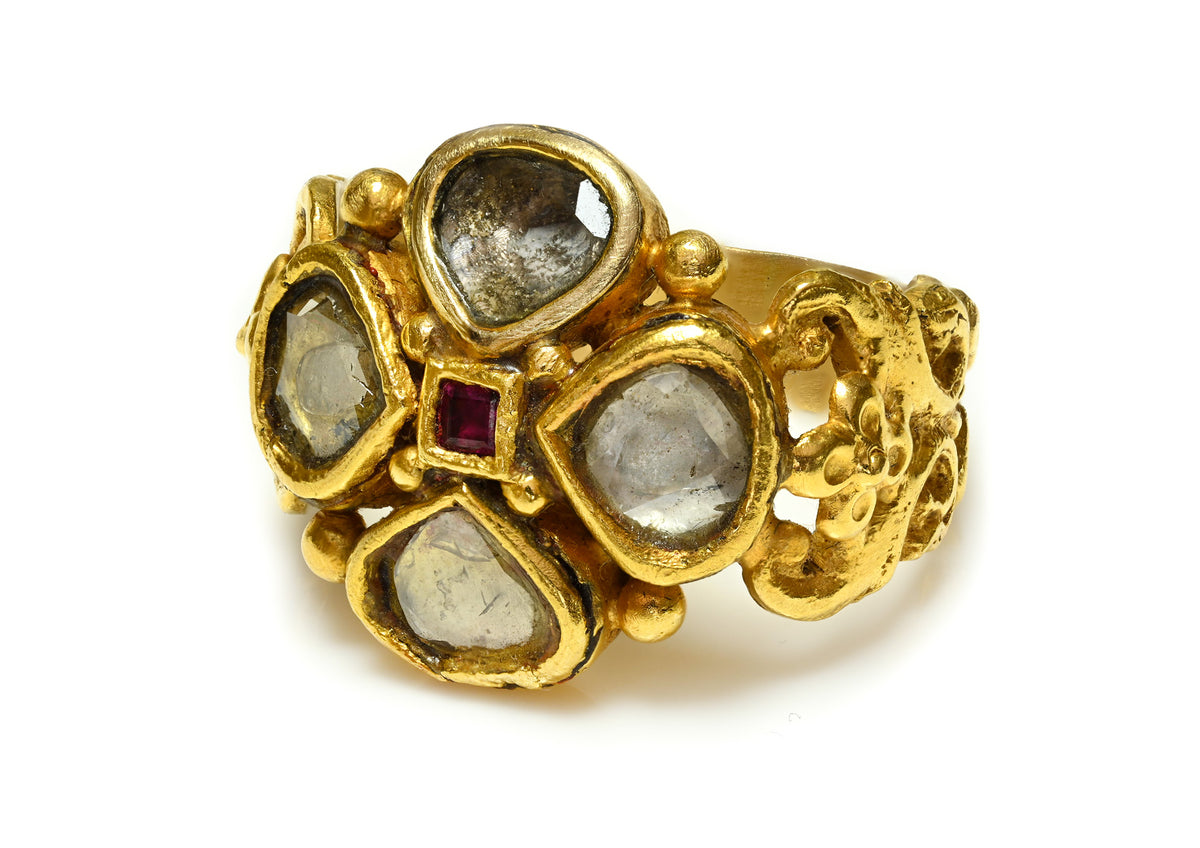
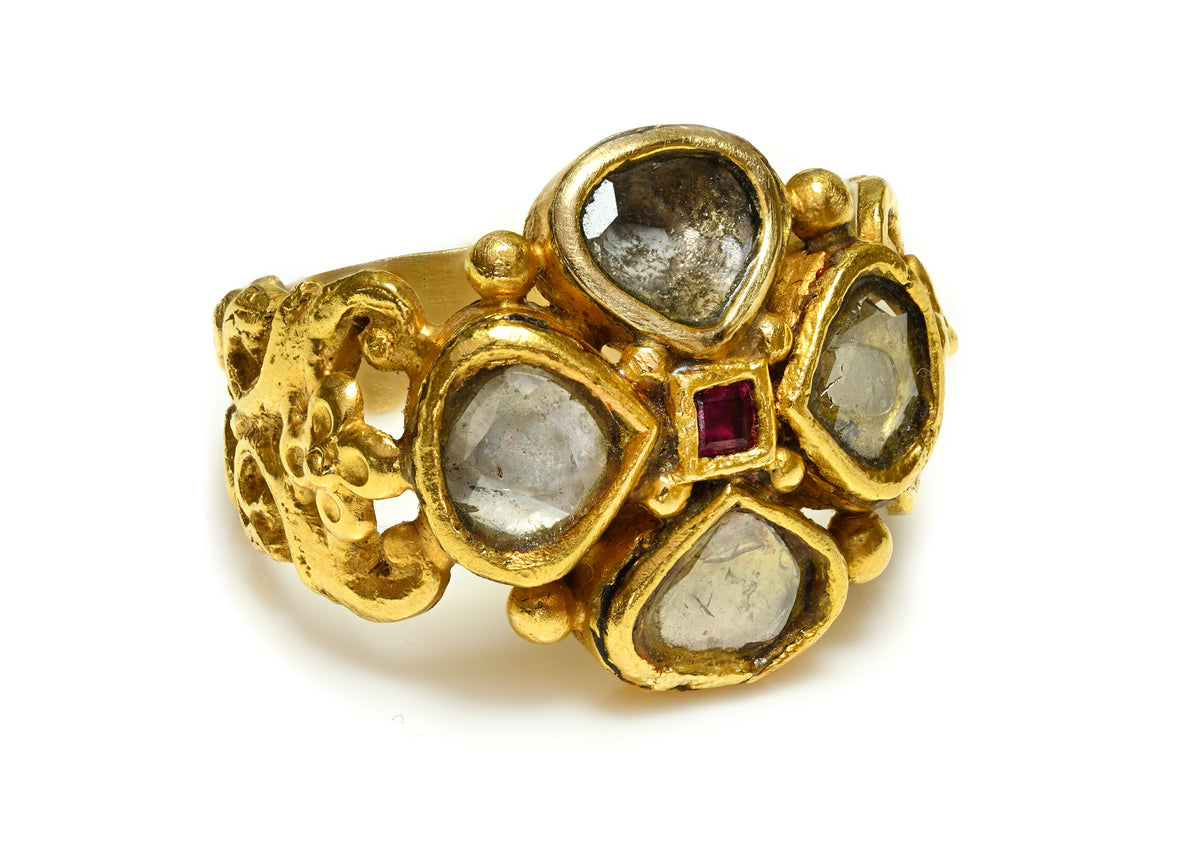
Georgian jewelry, dating broadly from the 18th and early 19th centuries, is among the most difficult period jewelry to find in original condition. Pieces were frequently handmade and often incorporated silver-topped gold, closed-back gemstone settings, foil-backed stones and old diamond cuts.
Surviving examples can offer a remarkable glimpse into jewelry making before modern industrial production.
Victorian Jewelry
The Victorian period, traditionally associated with the reign of Queen Victoria from 1837 to 1901, encompassed several very different jewelry styles.
Romantic floral designs, sentimental jewelry, serpent motifs, cameos, mourning jewelry, colorful gemstones and increasingly elaborate diamond jewelry can all be found within the Victorian era.
Gold was extensively used, often alongside diamonds, pearls, turquoise, garnets, coral and numerous other materials.
Edwardian Jewelry
Edwardian jewelry is known for delicacy and refinement.
Advances in platinum fabrication allowed jewelers to create extraordinarily fine settings resembling lace, garlands and ribbons. Diamonds and pearls were especially important, and techniques such as milgrain helped produce the light, intricate appearance associated with the period.
Art Nouveau Jewelry
Art Nouveau jewelry emphasized nature, movement and artistic expression.
Flowers, insects, women, mythological imagery and flowing organic forms appeared frequently. Jewelers experimented with materials including enamel, horn, opal, pearl and colored gemstones, sometimes valuing artistic composition over the intrinsic cost of the materials themselves.
Art Deco Jewelry
Art Deco brought a dramatically different visual language.
Geometric forms, symmetry, strong architectural lines and striking contrasts became central to jewelry design during the 1920s and 1930s.
Diamonds were frequently combined with emeralds, sapphires, rubies, onyx, coral and other materials. Platinum remained an important metal for fine diamond jewelry.
Today, the earliest Art Deco jewels may already meet the age requirement to be considered antique, while later examples remain vintage.
Retro and Mid-Century Jewelry
Jewelry of the late 1930s and 1940s became larger, bolder and more sculptural.
Yellow and rose gold became particularly prominent, and designs often featured sweeping curves, ribbons, scrolls and dramatic three-dimensional forms.
By the 1950s and 1960s, highly polished gold, diamonds, colored gemstones and sophisticated signed jewelry from major houses helped define another important chapter in 20th-century design.

Gemstones and Diamond Cuts Can Reveal a Jewel's History
Older jewelry often contains cutting styles that differ considerably from modern gemstones.
Antique diamond jewelry may feature:
- Rose-cut diamonds
- Old mine-cut diamonds
- Old European-cut diamonds
- Early transitional cuts
These diamonds were cut by hand, often with proportions very different from today's standardized brilliant cuts. Their distinctive appearance is one reason many collectors specifically seek antique jewelry.
Gemstone settings can also offer clues to age. Foil-backed stones, closed-back settings, hand-cut collets, early platinum work and certain construction methods may help specialists place a jewel within a particular historical period.
No single feature, however, should be used by itself to date a piece conclusively.
Craftsmanship: Handmade Does Not Always Mean Antique
One common misconception is that intricate handwork automatically indicates that a piece is antique.
Many antique jewels were indeed created using labor-intensive techniques, including hand engraving, hand piercing, enamel work and individually fabricated settings.
But exceptional hand craftsmanship continued throughout the 20th century and remains part of fine jewelry making today.
Similarly, some antique jewelry was produced using the manufacturing technologies available at the time.
Craftsmanship is therefore an important part of evaluating a jewel, but it should be considered together with its age, materials, hallmarks, construction and design.
Signed Vintage Jewelry Can Be Highly Collectible
Age alone does not determine collectibility.
Vintage jewels by important designers and jewelry houses can have exceptional historical and artistic significance. Collectors frequently seek signed pieces by houses such as Cartier, Tiffany & Co., Van Cleef & Arpels, Bulgari, David Webb and other recognized makers.
For signed jewelry, factors such as maker, design period, rarity, condition, provenance and whether a piece is representative of an important period in the designer's work can significantly influence collector interest.
An outstanding jewel from the 1960s or 1970s may therefore be just as compelling to a collector as a piece made a century earlier.
Estate Jewelry Is a Different Term
Another expression frequently encountered is estate jewelry.
Estate does not refer to a particular age.
An estate jewel is simply a piece of jewelry that has been previously owned. It might be 150 years old, 50 years old or relatively contemporary.
For this reason, an estate jewel can also be antique or vintage, but the words are not interchangeable.
For example:
A Victorian brooch may be antique and estate jewelry.
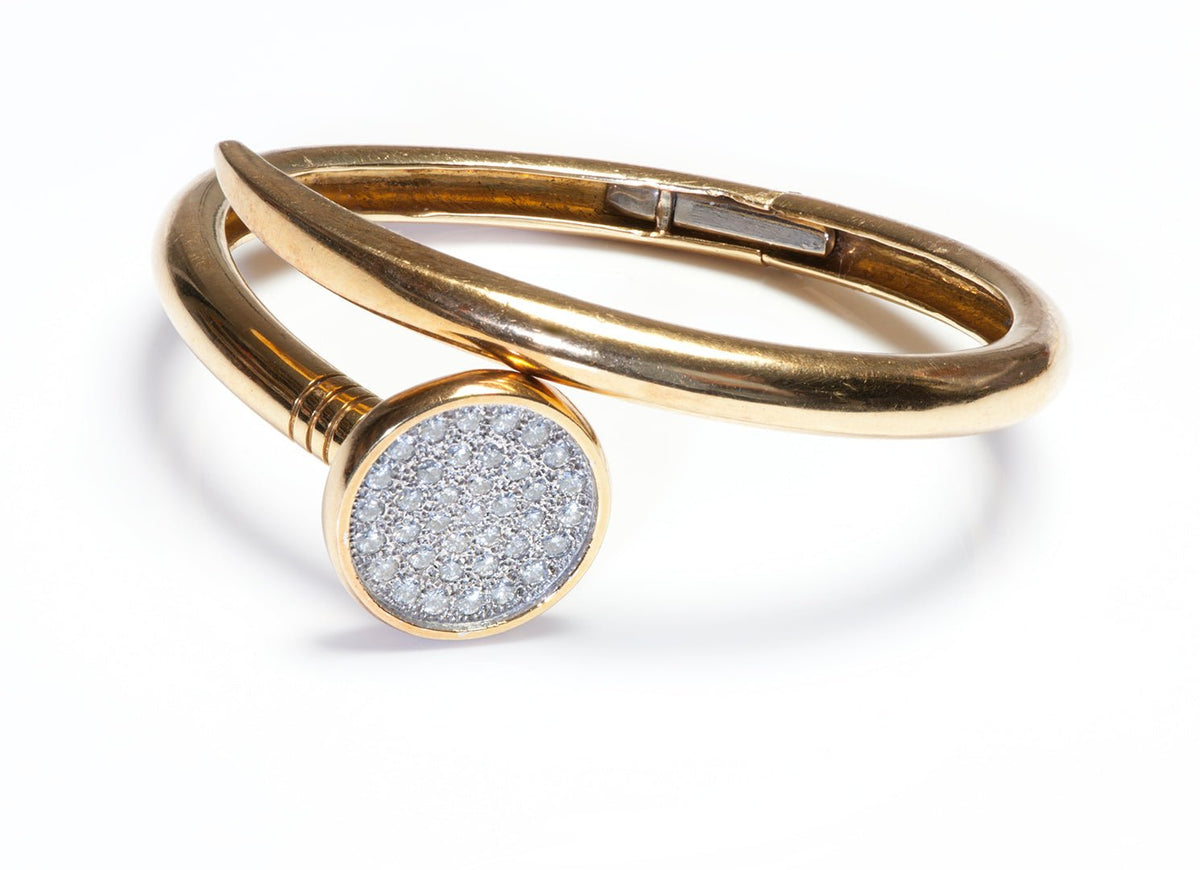
A 1960s Cartier bracelet may be vintage and estate jewelry.
A recently produced jewel acquired from a previous owner may be estate jewelry without being either vintage or antique.
Is Antique Jewelry More Valuable Than Vintage Jewelry?
Not necessarily.
A jewel's value depends on many factors beyond age, including:
- Maker or signature
- Rarity
- Gemstone quality
- Design
- Craftsmanship
- Condition
- Provenance
- Historical importance
- Collector demand
An unsigned antique jewel is not automatically more valuable than a signed vintage jewel simply because it is older.
Likewise, rarity should be evaluated carefully. Some historical jewelry styles were produced in substantial quantities, while particular vintage designs by celebrated makers may survive in very limited numbers.

Why Collect Vintage and Antique Jewelry?
Part of the fascination of older jewelry is that each piece belongs to a specific moment in the history of design.
A Victorian serpent ring, an Edwardian platinum diamond brooch, an Art Deco geometric bracelet and a sculptural 1970s gold jewel each express a different approach to beauty and craftsmanship.
Older jewelry can also preserve techniques, gemstone cuts and design traditions that are no longer commonly used.
For collectors, these characteristics transform jewelry from decoration into something more: a wearable connection to the artistic and cultural history of its period.
Discover Vintage and Antique Jewelry at DSF Antique Jewelry
At DSF Antique Jewelry in New York, we specialize in carefully selected fine jewelry spanning multiple periods, including antique, vintage, estate and signed designer pieces.
Our collection ranges from historical jewels of the Georgian, Victorian, Edwardian, Art Nouveau and Art Deco periods to important 20th-century creations and signed pieces by internationally recognized jewelry houses.
Explore our Fine Jewelry Collection to discover antique and vintage jewelry selected for its design, craftsmanship, character and collector appeal.
Whether you are searching for a jewel from a particular period, an unusual signed piece or simply something with a history of its own, understanding the difference between antique and vintage jewelry is an important first step toward appreciating what makes each piece distinctive.
VIEW OUR COLLECTION OF ANTIQUE & VINTAGE JEWELRY
VIEW OUR JOURNAL & NEWS