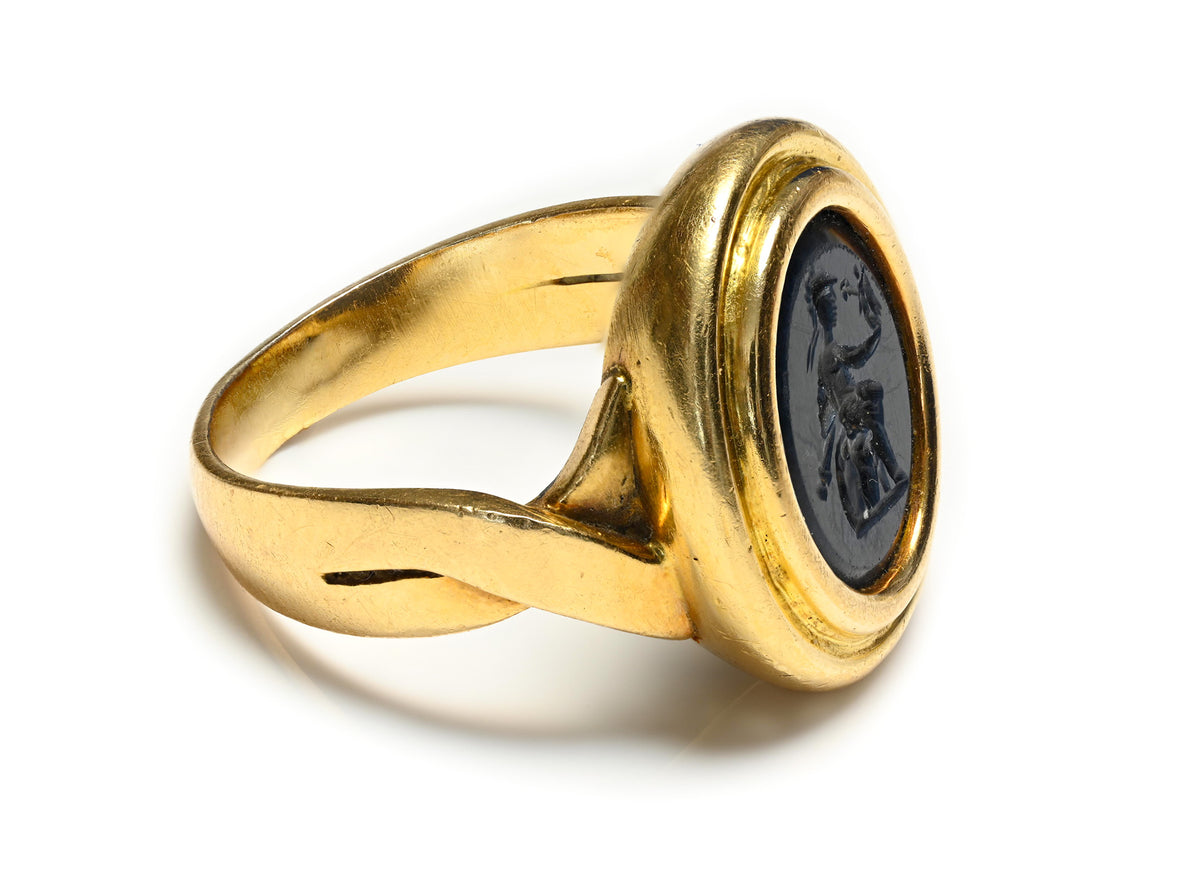
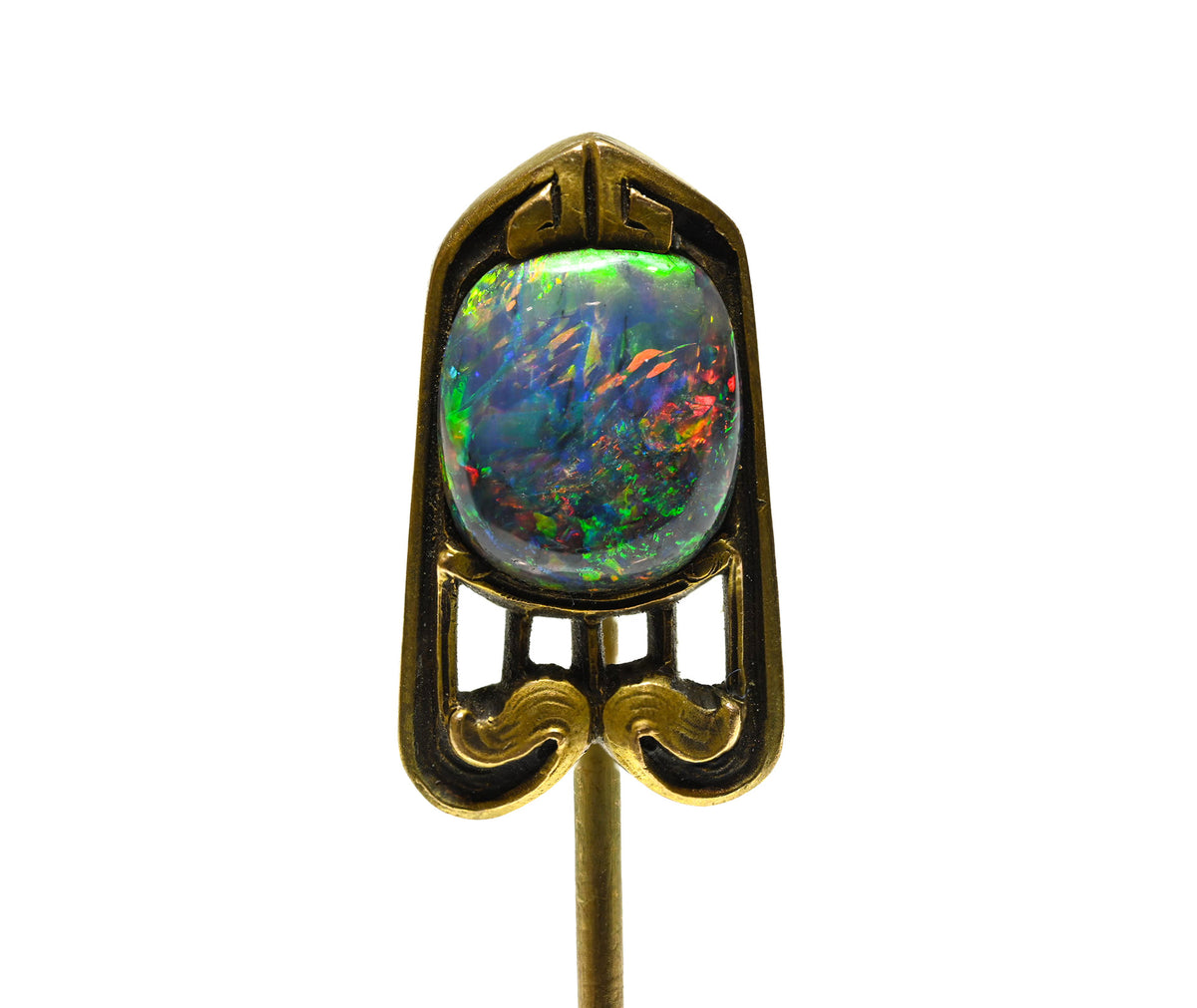
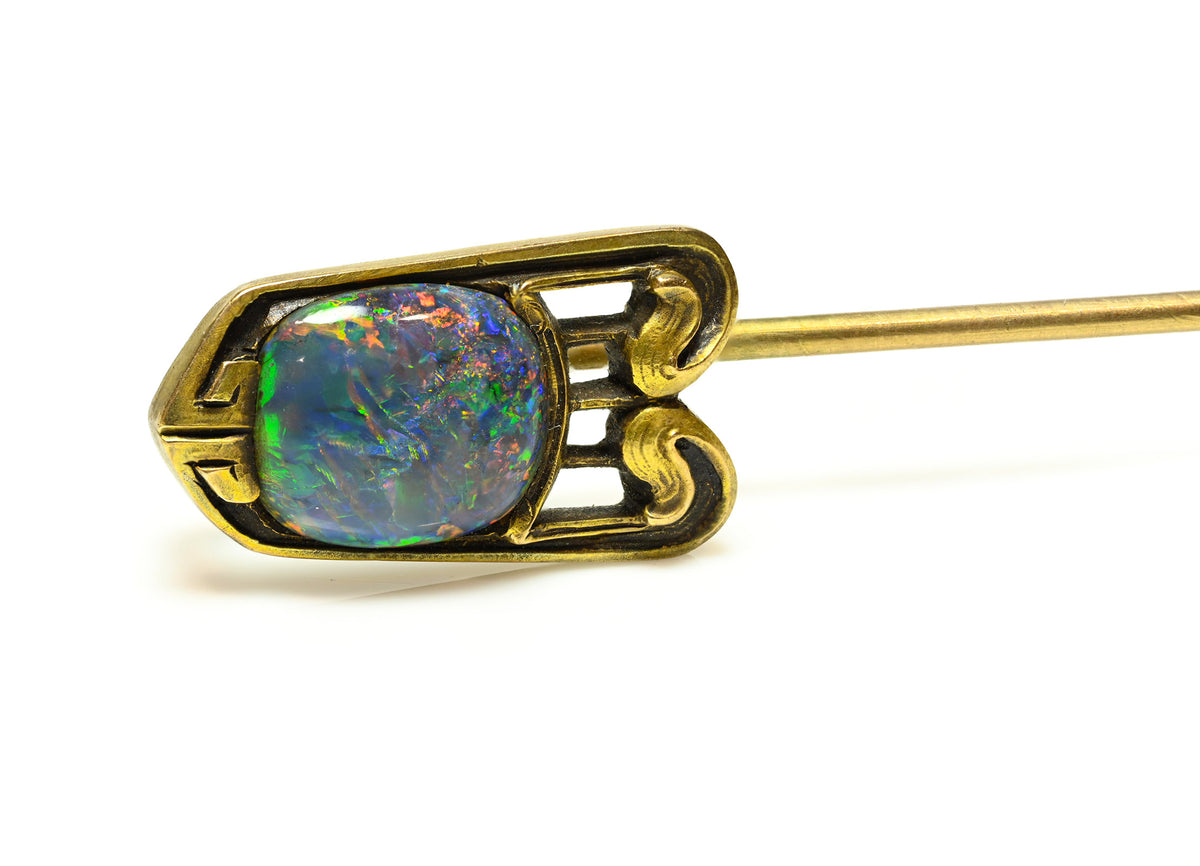
In the jewelry industry, hallmarks are historical fingerprints that go beyond simple ornamental impressions. They serve as the “passport” of the jewelry, providing crucial information about its background and composition.
A hallmark is an official mark or set of marks applied to metal objects, usually to attest to the presence of noble metals like palladium in some countries, platinum, gold, and silver. In a broader context, any quality standard may be referred to as a hallmark.
The subject of hallmarks is a fascinating one and is considered by some to be a window that offers readers and jewelry lovers the chance to view jewelry from different angles.
In this article, we attempt to highlight the evolution of hallmarks in Europe, particularly in England.
Goldsmiths' Buildings, source Geograph Britain and Ireland, via Wikimedia Commons, Autor Alan Murray-Rust
Roman and Byzantine silver has been found to exhibit marks that suggest a quality control system was in place at the time. However, no formal control of any kind was established in England until the Ordinance of 1238.
A second ordinance that was intended to affect all goldsmiths in England and all other places under the King’s control (this broader meaning included France) was passed in 1300. It established the benchmark for silver as “sterling,” or equivalent to money, and the “touch of Paris” as the fineness for gold, which is roughly 19+ carats.
Sterling
Regardless of its origin, the term “sterling” has been in use ever since it was first introduced in the Ordinance of 1300. It indicates that the metal has a purity of 925 parts per thousand, said Wynyard R.T. Wilkinson in his book A History of Hallmarks.
After setting the standard, the Ordinance of 1300 mandated that no silver vessel was allowed “to depart from the hands of the workers” until it had been examined by the craft’s guardians (who were appointed in 1238) and marked with the leopard’s head.
Silver pap boat, London, England, Source https://wellcomeimages.org/indexplus/obf_images/70/b8/493192b83186a50fab35ace72b47.jpg, via Wikimedia Commons
As time went on, the guardians of the craft visited each workshop and asked the workers if their gold matched the previously mentioned touch exactly. If it didn’t, the piece would be forfeited to the King.
The repeal of this ordinance did not occur until 1856. For more than 550 years, it remained law.
The Statute of 1423, which was solely focused on silver, is the next significant development for the marks, said Wilkinson.
Paul Storr hallmarks, left to right: makers mark, lion passant (sterling silver), London town mark, date letter (1835), Source Paul Storr Hallmark.jpg via Wikimedia Commons, User Rauantiques
Assay Towns
Additionally, seven towns were established as assay towns, presumably due to their significance as communication hubs that facilitated the delivery of plates to them. They are Bristol, Coventry, Lincoln, Newcastle-upon-Tyne, Norwich, Salisbury, and York.
Also, it was stipulated that no silversmith working in the Realm of England (not near an assay town) was permitted to work silver worse than sterling or offer it for sale before his own mark was applied.
It was not until 1953 that the Statute of 1423 was repealed.
It continued to serve as the foundation for all hallmarking laws during that time. Since the terms would still be fresh in the workers’ minds, subsequent Acts were designed to discourage deception.
Wilkinson claims that another statute was passed in 1477. This was the first of many that made small changes to the overall plan but left the overall structure largely unchanged. In this instance, the carat gold standard was replaced with 18.
It further stated that all goldsmiths who were “aliens and foreigners” to the London Company should fall within its purview and that the leopard’s head sterling mark should be crowned.
Seemingly alarmed by this final clause, the firm created a distinct mark—a variable date letter—to identify the date on which a certain piece was tagged.
In 1544, when Henry VIII devalued the coinage to one-third silver, the Goldsmiths’ Company had to reassure its customers that wrought plate had not experienced a comparable decline in quality.
A Piece of Silver
To achieve this, they added a lion passant “guardant” mark—which means “looking out of the punch, not looking forward”—to the ones that were already in use.
Given that many people today, with good reason, will not accept that a piece is silver unless it carries the lion passant symbol, this mark was perhaps one of the most successful commercial assurances ever created.
According to Wilkinson, a piece of silver that was created in London in 1545 would be marked with a lion passant, date letter, leopard’s head crowned, and maker’s device.
With the exception of the date letter being in a different script and the leopard’s head being uncrowned, these are precisely the same as those on a piece today, more than 400 years later. Double-interest legislation was introduced in 1575.
First of all, it was to remain in force until March 25, 1697. Secondly, it merely stated that silver should bear a maker’s mark prior to being sold or traded, while also validating the sterling standard and creating the standard for 22-carat gold. No reference to hallmarks was made.
This seems to show that it was not rare to have unmarked silver and that it was certainly not regarded as illegal to sell a piece bearing only a maker’s mark. The Statute of 25 March 1697 is particularly remarkable. It established the role of the maker’s mark in addition to altering the standard and the marks used to indicate that standard.
British Hallmarks, Source: Wikimedia Commons
Twelve troy ounces of silver contained an additional eight pennyweights of silver, or 33.3 parts in a thousand more pure than sterling, according to the new standard. “Britannia” was the new standard’s name, Wilkinson declared.
Along with the standard date letter, two mandatory markers were added: the figure of Britannia and an erased lion’s head. It was decided that the first two letters of the maker’s last name should serve as his mark.
The Duty
In terms of hallmarking, the next law to directly affect London goldsmiths was the Plate Duty Act of 1719. The Act aimed to raise somewhat more than £300,000 (≈ $390,000) for “His Majesty’s Supply”, and the sale of annuities was one way to do this. The plate duty for the annuities was 6d (≈ 0.025 GBP / ≈ $0.033 or about 3 cents) per ounce, according to Wilkinson.
This was the case throughout the Kingdom (Scotland had been incorporated since 1707). In order to appease the understandably irate English goldsmiths, the old sterling standard was reinstated while maintaining the Britannia standard “without obligation of restraint.”

Version of hallmark used on items assayed and stamped in India by subsidiary of Birmingham Assay Office,Source: Wikimedia Commons
Nevertheless, the new Act still caused the goldsmiths to squeal in agony, as even after the restoration of the sterling standard, the cost still came to about 3d (≈ 0.0125 GBP / ≈ $0.016 or about 1.6 cents) an ounce more. Other grievances were that the tax would force the buyer to bring in the plate for refashioning.
Wilkinson went on in his book to say that the implementation of the 6d tax left the goldsmith who was hired to create a large piece of silver in a difficult situation: should he submit the piece for assay, pay the hefty duty, and then present the bill to an astonished customer, or figure out a way to get around the new law?
Duty on pieces could be avoided by two major methods. The first was to just strike the piece with the maker’s mark or not mark it at all. The customer was not displeased. The metal used to make the “duty dodging” piece would typically have come from an old or outdated plate that had hallmarks on it.
Particularly for the contemporary dealer or collector, the second approach was more cunning and perplexing. Sometimes the goldsmith would carefully remove an item’s mark before melting it, then reuse that mark to create a new piece.
This caused a very common coffee pot from 1725 to appear, based on its hallmarks, as though it had been manufactured around 50 years earlier.
The advantage of pieces with small bases is that the “transposed” marks would completely cover the base, hiding the marriage between the foot and the body. Alternatively, on pieces with a relatively small base, such as teapots, coffee pots, beer mugs, and two-handled cups, the goldsmith would first submit a small and therefore light piece to the assay office before using it in the construction of the larger piece.
The fully unmarked plate could perhaps have been made by a smith who was not granted the privileges of British goldsmiths because he was considered a foreigner.
According to Wilkinson, the Act of 1719 also reinstated the practice of creating marks using the initial letters of the maker’s Christian name and surname.
This meant that many makers had two entirely legitimate maker’s marks in use at the same time for a considerable period.

Samples of British hallmarks for 925 silver, Source: Wikimedia Commons
Fraud
Even though they engaged in the activity themselves, several of the leading goldsmiths began to worry about the massive amount of “duty dodging” that was taking place.
The 1738 Act served two primary purposes. Wilkinson notes that the first was to relieve the heavily overburdened assay offices of responsibility by removing the task of marking thousands of small items.
These items, which are expressly listed, include nutmeg graters, rattles (sometimes known as “coral sockets”), bells, toothpick cases, and buttons. The second purpose of the Act was to eliminate the common practice of avoiding duty on larger pieces.
One of its remarkable features is the fact that the Act openly acknowledged that the £500 fine for counterfeiting, which had been imposed in 1700, was too high “and has been some occasion for persons escaping unpunished who have been guilty of counterfeiting,” and therefore reduced it to a far lower £100.
In later Acts, the penalties for mark fraud were subject to significant experimentation. Another clause in the 1738 Act, which applied only to the provincial assay offices, required that any goldsmith still using a punch made before 1719 must have it destroyed.

Two pieces of hallmarked English silver, source: Grenadille via Wikimedia Commons
A separate “character or alphabet” was to be used for the replacement. The 1738 Act does not appear to have had the intended effect for some reason.
The 1757 Act, in a display of bureaucratic inefficiency, replaced the 6d duty (six pence, equivalent to about £0.025 in modern value terms) with a permit that required all those “trading in, selling, or vending” silver or gold to obtain one at a cost of £2 (approximately $2.50 in historical U.S. dollar terms, noting this was a substantial increase in burden at the time).
Since the payment of £2 (about $2.50 in historical equivalent value) was relatively new to smallworkers (those who made tiny objects), toymakers, and casters whose work had previously been free from duty under the 1738 Act, this had to be modified the following year.
The penalties for misusing or counterfeiting trademarks were further altered by the 1757 Act. In 1738, the reduced penalty was removed. It became a felony carrying a death sentence.
One of the reasons laws regarding hallmark abuse and counterfeiting were constantly changing was to keep the penalties fresh in the minds of silversmiths, who believed that if they remained unchanged, they would soon be forgotten.
In 1772, the death penalty was abolished and replaced with a 14-year transportation sentence, changing the legislation once again. Duty was imposed on all goods in 1784 at a rate per ounce (28.35 grams). This included imported items submitted for marking and testing.
Wilkinson states that the duty, which began on December 1, 1784, required the application of an additional mark in the shape of a king’s head. Unlike previous marks, which were struck in cameo relief, this new mark was struck intaglio (incuse) for the first year and a half.
However, because it required a higher level of precision, this type of punch—like the rare disadvantage mark—was not well suited for marking silver.
The Drawback Mark
The drawback mark was introduced alongside a type of export rebate that allowed a piece of silver sold for export, after duty had been paid, to be resubmitted, stamped with a standing Britannia, and have the duty refunded to the goldsmith.
It was modified to “in cameo” in May 1786, and the drawback mark itself was removed in July 1785. An Act of 1790 reviewed the list of items exempt from hallmarking and, consequently, from duty.
All items weighing less than one ounce (28.35 grams) were excluded from the new list, except for “necks, collars, and tops for castors, cruets, or glasses appertaining to any sort of stands or frames; buttons to be affixed to or set on any wearing apparel; solid sleeve buttons and solid studs... seals, bottle tickets, shoe clasps, patch boxes, salt spoons, tea strainers, caddy ladles, buckles, and pieces to garnish cabinets or knife cases or tea chests, bridles, or stands or frames.”
The new trend of small silver pieces, most of which were already being made in Birmingham, was taxed as a result, wrote Wilkinson.
Numerous Acts relating to the daily operation of assay offices or to specific provincial towns were passed between 1790 and 1844. An Act of general interest was then passed in 1844. For the first time, possession of “fraudulent” silver was criminalized without requiring a sufficient explanation.
The unfortunate individual found in possession could only be discharged if he could provide the name and address of the person who made the item, or at the very least, the location of the person from whom he had purchased it.
In addition to changing the rules regarding counterfeit pieces, the 1844 Act introduced a completely new offense. This involved altering or modifying silver pieces that were already hallmarked, a practice that became widespread in the early Victorian era.
The Act made it unlawful to alter a piece’s denomination, character, or use—or even to make a minor modification that increased its weight by more than four ounces per troy pound (approximately 124 grams per 373 grams).
This law applied only to England. However, one provision of the Gold and Silverwares Act of 1854, seemingly minor at first, was to have a significant impact on later legislation and the administration of assay offices.
In each instance, the statutes establishing new assay offices in Glasgow, Sheffield, and Birmingham, as well as those altering the law relating to Edinburgh, granted each assay office a monopoly over all plate produced within a designated region.

Hallmark for gold, Source: Chatsam via Wikimedia Commons
If a new assay office had to remain solvent, this was crucial. This was amended by the 1854 Act. It gave “workers and dealers in gold and silver” the authority to register their names and marks “at any assay office or assay offices established by law which they may choose.”
For the first time, an Exeter silversmith could register his mark in Edinburgh or Dublin, or vice versa, Wilkinson said.
Between 1854 and 1890, when the charge was abolished, there were only two noteworthy events that had an impact on hallmarks.
In 1876, clocks, watches, or any other metal object imprinted with a mark or stamp that mimicked or represented a legitimate British assay mark, or that appeared to be manufactured in the United Kingdom, were to be destroyed or otherwise disposed of as directed by the Commissioners of Customs.
The primary cause of this law was the significant amount of English-style plate with imitation trademarks being imported into the country by individuals returning from the East, especially China and India.
The Standard
For the first time, in 1883, it was mandated that every gold and silver plate brought into the United Kingdom be placed under bond until it had been examined and stamped at the assay office nearest the port of importation.
Substandard metal pieces were returned to the importer undamaged, provided that he re-exported them within one month. In 1904, the laws relating to imported goods underwent a minor modification.
According to Wilkinson, in addition to the standard hallmarks, a new set of identifying marks was introduced to replace the previously struck “F” mark.

Goldsmith's workshop: interior view, gilding dishes and the implements, Source used, https://wellcomeimages.org/indexplus/obf_images/14/fc/3876dd55dc5b52bfcae420626536.jpg, Via Wikipedia Commons
The standard (.925 or .9584 fineness) in an oval punch, along with another new distinguishing town mark (see tables), was introduced to indicate the town of assay and the quality of the metal used to produce imported items.
The requirement that imported plates be assayed in the office closest to their port of importation was modified in 1907 to allow use of the importer’s preferred office.
The law concerning imported foreign goods was not changed again until 1939, when distinctions were introduced between antique and modern items. Any item “which is proved to the satisfaction of the Commissioners of Customs and Excise to have been manufactured outside the United Kingdom more than 100 years before the year of importation” was exempt from the requirement to be tested and marked.
As a result, over the course of approximately 700 years, a hallmarking system has evolved.
With the exception of technical details, it has not changed significantly in the last 400 years. The system’s main purpose today remains the same as it was in the fourteenth century: to protect consumers.
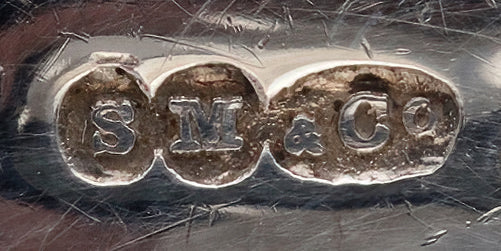
Cover Photo: Sampson Mordan Silver hallmark registered 1906, Author Charles J. Sharp, Source Wikimedia Commons