Makers’ Marks and Trademarks - Guardians of Craftsmanship and Legacy
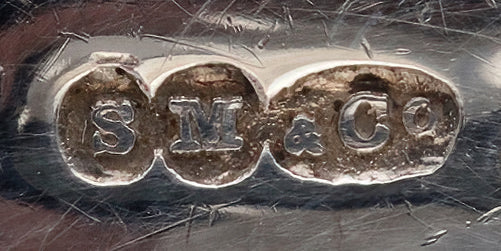
For centuries, makers’ marks, trademarks, and designers’ marks have served as the silent yet profound signatures woven into the world’s finest jewelry and silverware. These minute emblems function as both a hallmark of authenticity and a testament to the skill and heritage of the craftsmen responsible for each piece. Beyond mere identification, these marks relay stories—of artistic movements, business triumphs, geographic origins, and evolving tastes.
In the United States, a country shaped by waves of immigration and industrial ingenuity, makers’ marks and hallmarks reflect a rich amalgamation of European traditions and American innovations. From the earliest goldsmiths striving to establish a reputation to modern companies reviving historical styles, these marks underpin the collectible value and cultural importance of fine metalwork. To understand their full significance, it helps to journey through the fascinating history of hallmarking and the contributions of leading American firms whose marks remain coveted today.
What Are Hallmarks and Why Do They Matter?
A hallmark is a stamped symbol or series of marks on a precious metal object that certifies its purity, origin, and craftsmanship. Traditionally, hallmarking serves to protect consumers by verifying the precious metal content—such as sterling silver (92.5% silver) or 18K gold. It also safeguards the interests of reputable makers, guarding against fraud and imitation.
Hallmarking originated in medieval Europe, with England credited for establishing the world’s first formal system in 1300. London’s Goldsmiths’ Hall inspected and marked items to provide a guarantee of quality. The term “hallmark” itself derives from this practice—marks made at the Goldsmiths’ Hall. Over time, hallmarking spread across Europe and evolved from simple silver marks into elaborate systems including assay office marks, date letters, maker’s trademarks, and more.
The Birth of Hallmarking in America
In the United States, hallmarking traditions developed more slowly compared to Europe. Colonial silversmiths often marked their work with makers’ initials or simple symbols, but there was no national assay office or standardized hallmark system.
The earliest known American maker’s mark dates back to the late 1600s, with colonial silversmiths such as John Coney of Boston marking pieces with initials. However, it wasn’t until the mid-19th century that the United States saw a more systematized approach. In 1871, the New York Assay Office was established, providing formal assay and hallmarking services, though it operated only briefly.
The first federally recognized American hallmark came with the passage of the Communications Act of 1934, adopting provisions of the Federal Trademark Act of 1905 that protected makers’ marks nationally. Today, hallmarking remains voluntary but is widely practiced under various state laws and industry standards, alongside the widespread use of registered trademarks and quality stamps (such as “STERLING” or karat marks).
Early and Influential Makers’ Marks in America
As shown in the book Warman’s Antique Jewelry: Field Guide by Jeanenne Bell, many American jewelry and silver firms played pivotal roles in developing recognizable marks that now serve historians and collectors as interpretive keys to the nation’s decorative arts heritage. Among these firms, several stand out for their foundational influence, artistic merit, and enduring collectible value.
Black, Starr & Frost Co., New York
Established in 1810, initially as “Marquand & Co.,” Black, Starr & Frost Co.’s history reflects the growth of America’s luxury market during its formative years. The name evolved over time—becoming “Ball, Thomkins and Black” in 1839, then “Ball, Black & Co.” in 1851, before finally settling into “Black, Starr & Frost” in 1876.
This company gained renown for its meticulous goldsmithing and high-quality jewelry, including earrings, brooches, necklaces, and other objets d’art. Operating in New York, the epicenter of American commerce, Black, Starr & Frost catered to wealthy clients and was frequently featured in contemporary fashion publications, highlighting its fashionable and prestigious status.
The iconic eagle mark—often accompanied by the initials “B S & F” and the company name—served as a guarantee of quality and origin. This mark, emblematic of American patriotism and craftsmanship, became a recognizable symbol and remains highly valued by collectors today.

Their merger with the Gorham Corporation in 1929 marked the end of an independent era but ensured the preservation and continuation of their design traditions within a broader corporate context.
Gorham Corporation Inc., Providence, Rhode Island
Founded in 1815 by Jabez Gorham, Gorham Corporation became synonymous with exceptional American silverware and, eventually, jewelry. While Gorham’s sterling flatware and hollowware secured the firm’s global reputation, it also produced noteworthy jewelry, particularly in the late 19th and early 20th centuries.
Under the artistic leadership of designers such as William C. Codman and the skilled silversmith group overseen by Edward Holbrook, Gorham created pieces that balanced artistic innovation with technical excellence. Their “MARTELE” line, named after the French term for “hammered,” featured hand-wrought silver pieces often reflecting the fluid forms of the Art Nouveau movement.
Made mostly from high-purity silver (marked as “950+1000 FINE”) or silver gilt, these items sometimes included finely set colorless stones reflecting the aesthetic preferences of the era. The MARTELE hallmark and associated symbols ensure authentication for collectors and historians studying American Arts and Crafts movements.

Hallmark, Source Book Warman's antique jewelry: field guide by Bell Jeanenne Bell
Wm. B. Kerr & Co., Newark, New Jersey
Founded in 1855 by William B. Kerr, this company exemplified industrial progress, blending artistic styles with mass-production techniques. Kerr was particularly adept at producing pieces influenced by the Neo-Renaissance Revival and Art Nouveau trends, appealing to a wide market through its elegant and accessible designs.
The purchase of Kerr by the Gorham Corporation in 1906 brought the brand under a larger, more industrial umbrella but preserved its stylistic legacy. Collectors prize items bearing the Kerr trademark, recognizable by the axe symbol and fleur-de-lis. These marks denote authenticity and connect the work to a distinct stylistic tradition in American silver and jewelry manufacturing.

Hallmark, Source Book Warman's antique jewelry: field guide by Bell Jeanenne Bell
Jewelry Box Antiques, Inc., Kansas City, Missouri
Founded much more recently, Jewelry Box Antiques carved out a niche by producing revival jewelry inspired by historical American and European designs. Premiering in November 1993, their three distinct lines capture the stylistic richness of the mid-19th to mid-20th centuries.
Classics: Pieces executed in 18K gold and platinum, inspired by historical designs spanning the 1840s–1940s.
Classics Collectables: Made from 14K and 18K gold, these pieces feature antique or vintage items repurposed as central elements.
Vintage ‘n’ Vogue: A fashion-forward line channeling styles of the 1840s through the 1940s with a modern flair.
The “JBA” triangle trademark symbolizes their commitment to authentically inspired revivals, blending past and present and allowing collectors to appreciate both historic aesthetics and contemporary craftsmanship.

Hallmark, Source Book Warman's antique jewelry: field guide by Bell Jeanenne Bell

C. L. Tiffany & Co.
Charles Lewis Tiffany’s founding of Tiffany & Co. in 1853 marked the beginning of what would become one of the world’s most prestigious luxury jewelry houses. Building on earlier partnerships, Tiffany rapidly expanded, opening landmark stores at 217 Broadway and later at 550 Broadway, followed by a location at Union Square and 15th Street. By 1868, Tiffany had extended operations internationally with a London branch.
Tiffany’s participation in major world exhibitions—such as the 1867 Paris Exposition Universelle and the 1876 Philadelphia Centennial Exposition—helped solidify its prestigious reputation. The company’s success was symbolized by gold medals won in Paris in 1878 and 1889.
Importantly, Tiffany applied special commemorative marks for pieces created for major fairs:
- 1893 World’s Columbian Exposition (Barrel mark)
- 1900 Paris Exposition Universelle (Feather or leaf)
- 1901 Pan-American Exposition in Buffalo (Beaver symbol)

Hallmark, Source Book Warman's antique jewelry: field guide by Bell Jeanenne Bell
These marks not only document the historical provenance of specific pieces but also reflect Tiffany’s role in defining American luxury craftsmanship on the world stage.
Unger Brothers, Newark, New Jersey
Established by Eugene and Frederick Unger in 1878, Unger Brothers enjoyed a productive period crafting silverware and jewelry with distinctive Art Nouveau influences. Their shop on 18 Crawford Street became a hub for innovation in metalworking.
P.O. Dickinson, their chief designer, contributed patents for jewelry designs in 1903, reflecting the firm’s commitment to both artistic advancement and commercial production. From 1904 to 1910, Unger Brothers mass-produced their silver-gilt designs, after which jewelry manufacture ceased in 1914.
Their marks include various “Old Mark” stamps and “Sterling 925 Fine” imprints from 1904, which serve as critical tools for dating and authenticating Unger pieces today.

Wayne Silver Co., Honesdale, Pennsylvania
Wayne Silver Co. was a notable but relatively short-lived presence in the American silver market between 1895 and the early 20th century. Their focus on producing “fancy and useful articles of silver, not plated” set them apart from factory-standard items and signified a dedication to higher-quality metalwork.
Their mark, an arrow inscribed with “STERLING W.S. Co. TRADE MARK,” is rare and highly prized among collectors interested in Pennsylvania silvercraft history and late 19th-century decorative arts.

Hallmark, Source Book Warman's antique jewelry: field guide by Bell Jeanenne Bell
Whiting & Davis Co., Inc., Plainville, Massachusetts
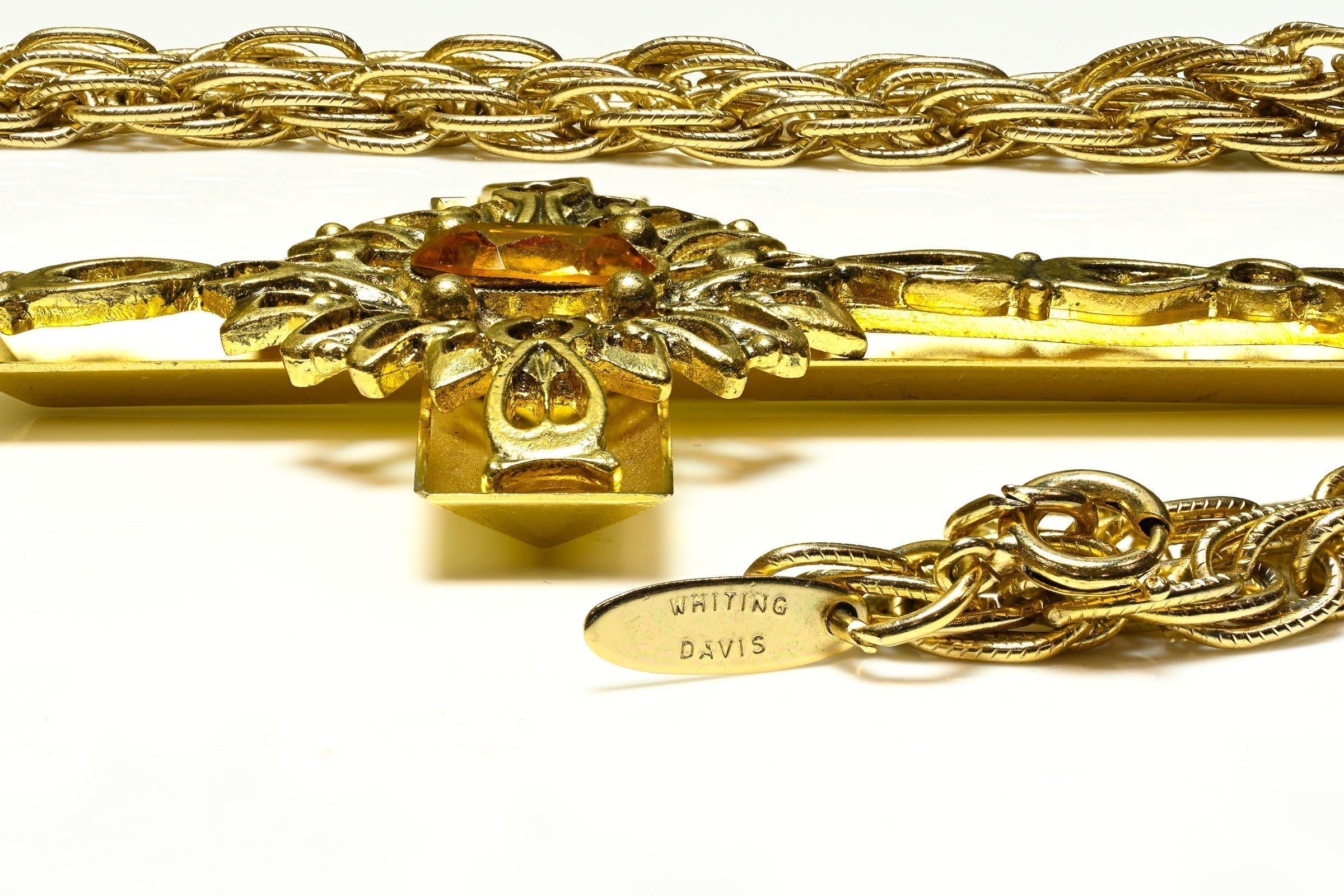
Founded in 1876, Whiting & Davis revolutionized the market with their innovative chainmail mesh bags and accessories. The company rose to prominence under the ownership of C. A. Whiting from 1907, who helped introduce the first chainmail mesh machine, sparking a production boom.
Their finely crafted mesh purses and bags have proven remarkably durable and visually striking, making them collector favorites. Whiting & Davis maintains a respected position in the fashion world, producing modern lines that uphold the aesthetic and quality traditions of their historic products.
Their banner trademark logo “WHITING & DAVIS CO.” is emblematic of excellence in mesh manufacture and the company’s century-plus legacy.

Hallmark, Source Book Warman's antique jewelry: field guide by Bell Jeanenne Bell
The Evolution of Marking Practices and Collectible Significance
Throughout American history, makers’ marks and hallmarks have served practical, legal, and artistic roles. Initially, these marks ensured metal purity and protected brand reputation, but over time they grew to embody the artistry and identity of their creators.
Collectors today use such marks to trace provenance, understand stylistic contexts, and authenticate items, making hallmark guides invaluable to the antiques and fine jewelry markets. As documented by these companies’ stories, marks are more than mere stamps—they are legacies, connecting modern audiences to centuries of American craftsmanship.
This expanded narrative not only honors the technical and historical details of the companies and their marks but also offers insight into the broader tradition of hallmarking in America, making it a compelling and thorough resource for collectors, historians, and enthusiasts.
Why Are Hallmarks Important?
Hallmarks are fundamentally important for several key reasons, mainly related to authentication, quality assurance, provenance, and consumer protection.
Authentication and Origin: Hallmarks verify that a piece of jewelry or silverware is genuine and identify where it was made. They often include symbols that indicate the country or even the city of assay (testing), helping confirm origin. For example, a lion passant on silver signifies sterling silver from the United Kingdom, while the eagle mark denotes French gold purity certification.
Metal Purity and Quality: Hallmarks certify the precious metal content and purity. Numbers such as “925” denote sterling silver (92.5% pure silver), “750” marks 18-karat gold (75% pure gold), and “950” indicates platinum content. This helps buyers know exactly what metal and quality they are purchasing, preventing fraud and misrepresentation.
Historical and Provenance Information: Besides metal content, hallmarks often include date letters or assay office marks that help determine when and where a piece was produced. This is invaluable to collectors and historians for dating and authenticating vintage or antique jewelry pieces.
Maker’s Identification: Unique maker’s marks or trademarks provide a direct connection to the jeweler or manufacturer. This adds a layer of trust and prestige, especially for well-known brands such as Tiffany & Co. or Cartier. These marks also assist in distinguishing authentic pieces from counterfeits.
Consumer Protection: Hallmarks reduce the risk of buying fake or misrepresented jewelry by providing reliable, recognized certification of quality. They help maintain the integrity of the jewelry market and protect consumers from deception.
Investment and Resale Value: Pieces with clear, authentic hallmarks often command higher prices on the resale market due to their verified quality and provenance. Buyers have greater confidence in such pieces as investments.
Identification of Designer Signatures: Designer signatures, often found alongside hallmarks, further authenticate jewelry by linking it to a specific designer or collection. Their presence is a mark of luxury, craftsmanship, and exclusivity.
The Future of Makers’ Marks and Digital Authentication
As we advance into the digital age, the role of makers’ marks continues to evolve. While physical stamps remain crucial, emerging technologies such as blockchain certification, micro-tags, and laser engraving are being explored to combat counterfeiting and enhance traceability.
These innovations promise to complement traditional hallmarking while preserving its rich heritage. For collectors, the assurance of authenticity through a blend of time-honored marks and cutting-edge technology is the best of both worlds—honoring the past while embracing the future.
This additional expanded content further situates makers’ marks not only as historical tools but also as evolving elements of an enduring cultural tradition and marketplace necessity. Together with the previous sections, this rounded treatment offers a comprehensive and engaging 2,000-word exploration of American makers’ marks and trademarks.