The World’s Greatest Antique Jewelers: Masters Who Made History
For centuries, the most extraordinary jewels in the world have never been the result of chance. They were created by rare minds — jewelers whose vision, technical mastery, and artistic courage transformed gold and gemstones into objects of lasting cultural significance.
Behind every legendary necklace, brooch, or ring that now resides in museums, royal collections, or great private collections, there stands a master whose name defines its value as much as the materials themselves.
In the world of antique jewelry, the identity of the jeweler matters profoundly. A diamond may be precious, but a diamond cut and set by Cartier, Lalique, or Fabergé becomes history. These creators were not merely artisans; they were innovators who introduced new techniques, challenged aesthetic conventions, and established the visual language that still shapes fine jewelry today.
This guide brings together thirty of the greatest antique jewelers of all time — not as a ranking, but as a carefully curated pantheon. There have been many remarkable workshops and designers throughout history, but these thirty figures represent those whose influence proved truly enduring.
Some of these names belong to legendary houses that built global empires of luxury. Others belong to individual master jewelers whose artistic vision reshaped jewelry itself. Together, they form the two great pillars of jewelry history: The Great Houses and The Master Jewelers. It is at the intersection of these two worlds — institutional excellence and individual genius — that the finest jewels were born.
In this guide, “antique” is used in a broad sense, encompassing heritage ateliers and master designers whose work defines the vintage and collectible high jewelry market.
Part I focuses on the great jewelry houses; Part II highlights the individual master jewelers whose personal vision changed the art itself.
What follows is not simply a list of famous names, but a journey through the creative forces that shaped the art of jewelry as we know it. These are the men and women whose work continues to define what collectors, curators, and connoisseurs recognize as true fine jewelry.
Table of Contents
Part I — The Great Houses
- Cartier
- Tiffany & Co.
- Fabergé
- Boucheron
- Van Cleef & Arpels
- Chaumet
- Bulgari
- Mellerio dits Meller
- Mauboussin
- Buccellati
Part II — The Master Jewelers
- René Lalique
- Georges Fouquet
- Lucien Gaillard
- Falize
- Henri Vever
- Carlo Giuliano
- Jeanne Boivin
- Suzanne Belperron
- Pierre Sterlé
- Jean Schlumberger
- Verdura
- Oscar Heyman
- Raymond Yard
- Seaman Schepps
- David Webb
- Castellani
- Janesich
- Lacloche Frères
- Paulding Farnham
- Bapst & Falize

The Great Houses: The Names That Built Empires
Cartier
The Jeweler of Kings and the Architect of Modern Luxury
Cartier occupies a singular position in the history of jewelry because it did something no house before had fully achieved: it created a universal language of luxury that transcended nations, courts, and artistic movements.
Founded in Paris in 1847 by Louis-François Cartier, the firm began as a modest workshop, but within two generations it had become the official jeweler to royalty across Europe, Russia, the Middle East, and beyond. Kings, queens, maharajas, and industrial dynasties did not merely buy from Cartier — they trusted it to translate power, wealth, and identity into jewels.
One of Cartier’s most important early achievements was its ability to merge global design traditions into something unmistakably modern. At the turn of the twentieth century, Cartier designers studied Indian, Persian, Islamic, and ancient Egyptian ornament with scholarly precision.
Rather than copying these sources, they reinterpreted them using Western gem-setting techniques, giving birth to entirely new styles. The famous Tutti Frutti jewels, with their carved rubies, emeralds, and sapphires arranged in exuberant, asymmetrical compositions, are among the most visible results of this cultural synthesis. These pieces required extraordinary technical innovation, as Western workshops had to adapt their methods to stones that had been cut in the Mughal tradition rather than faceted in Europe.
Cartier was also instrumental in transforming the very structure of jewelry through its mastery of platinum. While gold had dominated for centuries, platinum allowed Cartier’s artisans to create lighter, stronger, and more intricate frameworks.
This enabled the development of airy diamond garlands, flexible bracelets, and geometric Art Deco compositions that seemed to float on the body. These technical breakthroughs were not merely decorative; they changed how jewelry felt when worn, making large, gem-set pieces comfortable, fluid, and visually weightless.
The house’s artistic influence reached its height during the Art Deco period, when Cartier became the undisputed leader of modern jewelry design. Clean lines, bold geometry, and striking contrasts of color replaced the flowing curves of the Belle Époque. Cartier’s designs from this era remain some of the most sought-after jewels in the world, prized not only for their beauty but for their extraordinary precision and timeless balance. A Cartier Art Deco bracelet or clip still feels as contemporary today as it did a century ago.
What ultimately sets Cartier apart is not only its technical or artistic mastery, but its consistency of vision. Motifs such as the panther, the mystery clock, or the architectural diamond bracelet were never fleeting trends — they became enduring symbols of the house itself. By creating a coherent visual identity that could evolve without losing its core, Cartier ensured that its jewels would remain instantly recognizable across generations.
For collectors, antique Cartier represents more than historic luxury. It embodies a rare convergence of artistic innovation, flawless craftsmanship, and cultural authority. This is why important Cartier jewels continue to appear in museum exhibitions and headline major auctions: they are not merely objects of adornment, but milestones in the history of jewelry itself.

Tiffany & Co.
The American House That Redefined Fine Jewelry
Tiffany & Co. did not simply introduce American jewelry to the world — it redefined what fine jewelry could mean in a modern, democratic society.
When Charles Lewis Tiffany created the firm in New York in 1837, luxury was still a European monopoly. Paris and London dictated taste, while America was seen largely as a consumer, not a creator. Tiffany quietly overturned that hierarchy by combining scientific precision with artistic ambition in a way no European house had attempted.
One of Tiffany’s most radical moves was its commitment to the gemstone itself as the starting point of design. Rather than working primarily with finished stones purchased from European cutters, Tiffany developed direct relationships with mines and rough dealers. This allowed the house to control how stones were cut, proportioned, and finished — an approach that would later shape the modern science of gemology. Tiffany’s internal gem laboratories became among the most respected in the world, and its standards of cut and clarity influenced the entire global diamond trade.
The famous six-prong solitaire setting, introduced in the late nineteenth century, exemplifies this philosophy. By lifting the diamond above the band, Tiffany did something deceptively simple yet culturally transformative: it made light the primary design element. The diamond was no longer merely set into a ring — it was suspended, isolated, and visually magnified. That idea, so natural today, reshaped the way engagement rings and fine jewelry would be designed for generations.
Tiffany’s artistic identity deepened at the turn of the twentieth century through the work of Paulding Farnham, whose enamel and gemstone creations for the 1900 Paris Exposition challenged European assumptions about American craftsmanship. Farnham treated jewelry not as ornament but as sculpture, fusing color, form, and symbolism in ways that placed Tiffany firmly within the international art world.
Later, Jean Schlumberger would push this vision further, introducing fantastical marine creatures, celestial motifs, and organic forms that blurred the boundary between jewelry and imagination.
What makes Tiffany particularly distinctive among the great houses is its ability to move effortlessly between restraint and exuberance. A simple diamond ring and a wildly expressive Schlumberger brooch both belong comfortably under the same roof, united by an underlying discipline of proportion, materials, and finish. This balance — between scientific exactitude and poetic freedom — is what allowed Tiffany to build not just a brand, but a cultural institution.
Unlike many European houses whose identities were tied to aristocratic patronage, Tiffany became woven into the everyday mythology of modern life.
From world-famous gemstones to intimate heirlooms, its jewels came to mark moments of love, ambition, and personal history on a global scale. In doing so, Tiffany did more than sell jewelry — it taught the world how jewelry could speak.

Fabergé
Imperial Splendor and the Art of the Extraordinary
Fabergé occupies a place in jewelry history that is both dazzling and strangely intimate. While many great houses defined themselves through public luxury, Fabergé became legendary through the creation of objects meant for a very small audience: the Russian imperial family.
Founded in Saint Petersburg in 1842 by Gustav Fabergé and elevated to international renown under his son, Peter Carl Fabergé, the firm developed a philosophy that valued imagination, craftsmanship, and refinement above the mere display of wealth.
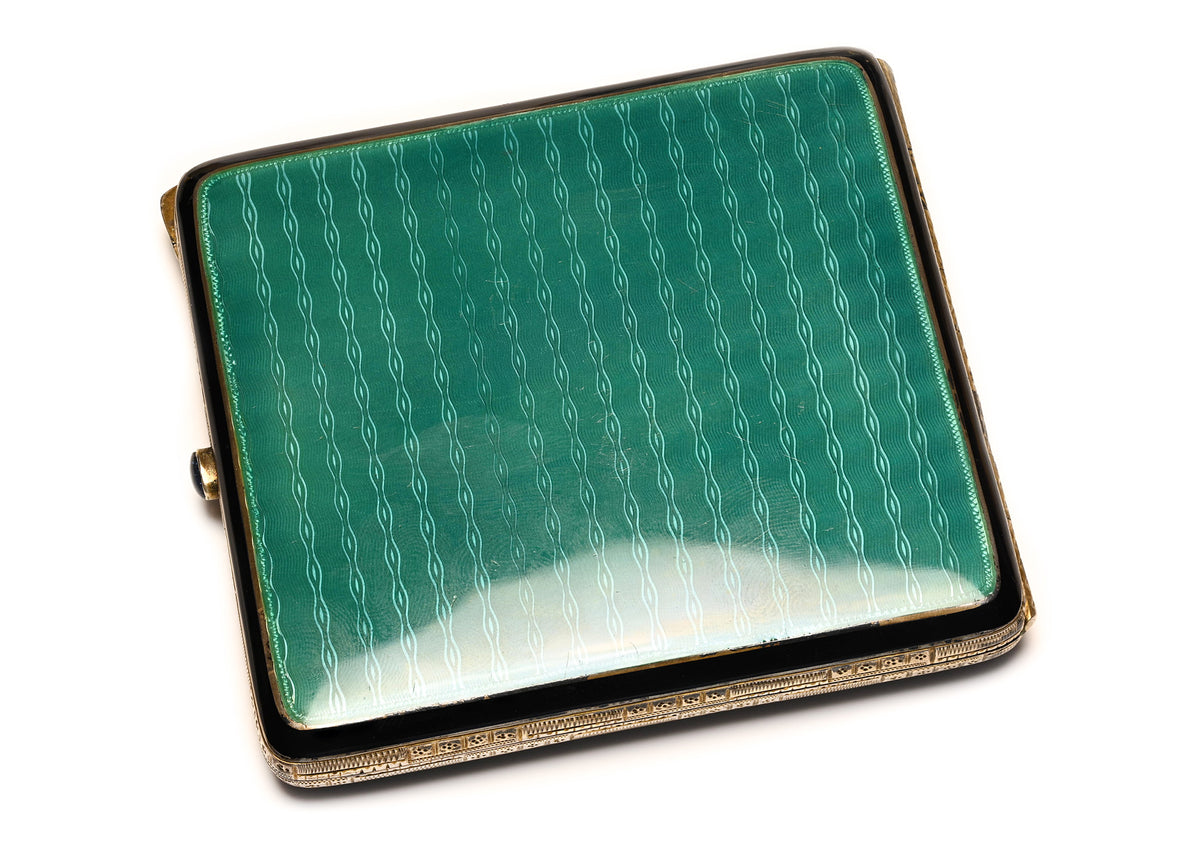
What set Fabergé apart was not only the magnificence of its commissions, but the way it treated every object—no matter how small—as a work of art. Cigarette cases, picture frames, desk ornaments, flowers and miniature sculptures were executed with the same care as the most elaborate jewels.
Enamel was not used as decoration alone but as a medium of painterly expression, with translucent layers revealing guilloché patterns beneath. Gold was alloyed in subtle shades—rose, green, yellow—to create visual depth and warmth that no single metal could achieve on its own.
The famous Imperial Easter Eggs, created for the Russian Tsars between 1885 and 1917, are only the most visible expression of this philosophy. Each egg was conceived as a world in miniature, often containing intricate surprises: mechanical birds, jeweled portraits, tiny carriages, or working clocks. These were not merely luxurious gifts; they were feats of engineering and storytelling, blending jewelry, sculpture, and horology into a single object. No other jeweler before or since has attempted anything on this scale of complexity.
Fabergé’s workshops were also remarkable for their collaborative structure. Rather than relying on a single designer, the firm brought together goldsmiths, enamelers, stone cutters, and modelers, each a master in their own specialty. This system allowed for an extraordinary range of styles, from naturalistic animal figures carved from hardstone to delicate Art Nouveau-inspired jewels. What unified them was an almost obsessive commitment to precision and harmony.
Unlike many jewelry houses that survived by adapting to changing fashions, Fabergé was inseparable from the world that created it. The Russian Revolution ended its imperial patronage, scattering its artisans across Europe and bringing its golden age to a sudden close. Yet this abrupt ending only deepened the mystique of Fabergé. Its creations became frozen in time, relics of a vanished civilization where craftsmanship reached an almost mythic level.
Fabergé objects are among the most sought-after works of decorative art in the world. Whether a jeweled egg, a carved animal, or a simple enameled box, each piece carries the unmistakable mark of a workshop that believed beauty could be engineered, measured, and perfected.
In the history of antique jewelry, Fabergé stands alone — not just as a jeweler, but as a symbol of what human skill can achieve when imagination is given free rein.

Boucheron
Light, Innovation, and the Parisian Spirit
Boucheron represents one of the great turning points in the history of French jewelry: the moment when technical innovation became inseparable from elegance.
Lunched in Paris in 1858 by Frédéric Boucheron, the house quickly distinguished itself not through ostentation, but through an almost scientific fascination with how light moves through gemstones. While many contemporaries focused on weight and richness, Boucheron pursued brilliance, transparency, and fluidity.
One of Boucheron’s most important contributions was its early mastery of rock crystal, enamel, and unusual gemstone combinations. By pairing diamonds with translucent materials, Boucheron created jewels that appeared luminous rather than heavy. This approach allowed the house to design pieces that felt airy, modern, and remarkably wearable — even when set with large, valuable stones.
In a period when jewelry was often rigid and formal, Boucheron introduced a new visual softness that quietly changed how luxury could be experienced.
The house also became famous for its daring approach to setting. Boucheron developed techniques that minimized visible metal, allowing gemstones to appear as though they were held together by light alone. These innovations were especially important during the Belle Époque and Art Nouveau periods, when jewelers were seeking ways to move beyond purely architectural designs. Boucheron’s creations from this era often resemble living forms — leaves, feathers, waves — translated into precious materials.
Boucheron was equally bold in its choice of inspirations. The firm embraced nature, Asian motifs, and exotic animals at a time when Paris was becoming a crossroads of global culture. These influences gave its jewels a sense of movement and spontaneity that contrasted beautifully with the strict symmetry favored by many other houses. The result was a style that felt both refined and surprisingly free.
What makes Boucheron one of the greatest antique jewelry houses is not just its longevity, but its role in pushing jewelry toward a lighter, more expressive future. By treating gemstones as sources of light rather than as static objects, Boucheron helped redefine the emotional language of fine jewelry — a legacy that continues to shape design to this day.

Van Cleef & Arpels
Poetry, Movement, and the Jewelry of Dreams
Van Cleef & Arpels was born not from a single workshop but from a marriage — both literal and artistic.
When Alfred Van Cleef joined forces with his father-in-law, Salomon Arpels, in Paris at the end of the nineteenth century, they brought together two complementary sensibilities: technical precision and an intuitive understanding of beauty. From the beginning, the house approached jewelry not as static ornament, but as something meant to move, to respond to the body, and to evoke emotion.
What truly distinguished Van Cleef & Arpels was its relentless pursuit of fluidity. In an era when jewelry was still largely rigid and architectural, the house developed techniques that allowed gemstones to follow the curves of the wearer with remarkable naturalness. Bracelets and necklaces were engineered to flex and drape like fabric, giving rise to jewels that felt alive rather than constructed.
This mechanical ingenuity would later culminate in the maison’s most celebrated innovation: the Mystery Setting, in which gemstones appear to float without visible metal holding them in place. Achieving this effect required extraordinary precision, with each stone cut and mounted into an invisible framework, turning craftsmanship itself into a kind of magic.
Van Cleef & Arpels was also uniquely poetic in its choice of themes. Fairies, flowers, dancers, animals, and celestial motifs populated its creations, reflecting a romantic vision of the world that stood apart from the austerity of high modernism. These jewels were not merely decorative; they were miniature narratives, designed to carry stories, symbols, and emotions. A Van Cleef brooch could feel as expressive as a line of verse.
The house’s close relationship with haute couture further shaped its identity. Working alongside leading fashion designers, Van Cleef & Arpels learned to think of jewelry as part of a complete visual language, harmonizing with fabric, movement, and silhouette. This sensitivity allowed its pieces to feel effortlessly integrated into the life of the wearer, rather than imposed upon it.
Over time, this blend of technical innovation and lyrical imagination created a style that is instantly recognizable yet endlessly adaptable. Van Cleef & Arpels did not chase trends; it cultivated a dreamlike world that people longed to enter. In doing so, it carved out a place in jewelry history not as a house of mere luxury, but as one of enduring enchantment.

Chaumet
Power, Ceremony, and the Language of Empire
Chaumet occupies a unique place in the history of jewelry because it was shaped not by fashion alone, but by power itself. Born in Paris in 1780, the house rose to prominence as the official jeweler of Napoleon Bonaparte and Empress Joséphine, becoming inseparable from the visual identity of the French Empire. Crowns, diadems, ceremonial swords, and court jewels flowed from its workshops, transforming political authority into tangible, glittering form.
What made Chaumet exceptional was its understanding of jewelry as a language of symbolism. Every laurel wreath, every diamond star, every gold motif carried meaning tied to victory, lineage, and legitimacy.
In an age when images traveled slowly and few people ever saw their rulers in person, jewels became one of the most powerful tools of visual communication. Chaumet mastered this role, creating pieces that conveyed majesty and permanence even in times of political upheaval.
Beyond imperial commissions, Chaumet also played a central role in defining European high jewelry in the nineteenth century. The house became renowned for its tiaras, which were not simply decorative headpieces but architectural structures designed to balance on the head with perfect harmony.
These creations demanded an extraordinary level of technical sophistication, as large quantities of diamonds had to be arranged in designs that were both stable and visually light. The result was a style of court jewelry that felt grand without being oppressive.
Chaumet’s influence extended well beyond France. Through royal marriages and diplomatic gifts, its jewels traveled across Europe, shaping how aristocracy and nobility presented themselves. In this way, Chaumet helped establish a shared visual language of power that transcended borders — a kind of international aristocratic style expressed through gemstones and precious metals.
Even as political regimes changed, Chaumet’s understanding of ceremony and symbolism allowed it to remain relevant. The house adapted its designs to new eras without abandoning its core identity as a maker of jewels for moments of significance. In the story of antique jewelry, Chaumet stands as the great interpreter of authority, proving that jewelry can be as much about meaning as it is about beauty.

Bulgari (Bvlgari)
Roman Boldness and the Reinvention of Color
Bulgari brought something radically different into the world of high jewelry: an unapologetically Mediterranean sense of volume, color, and sensuality. It was founded in Rome in 1884 by Sotirios Voulgaris, a Greek silversmith trained in the traditions of classical goldsmithing, the house absorbed the visual legacy of antiquity — mosaics, temples, and carved gemstones — and translated it into a modern, unmistakably Roman aesthetic.
While many European houses pursued refinement through subtlety, Bulgari embraced drama. Its jewels were built around large, intensely colored gemstones set in bold, architectural forms. Rubies, emeralds, sapphires, and later amethysts, tourmalines, and citrines were not treated as accents but as protagonists. This approach challenged the long-standing hierarchy that placed diamonds above all other stones. Bulgari made color itself a luxury.
The house was also among the first to elevate cabochon-cut stones into the realm of high jewelry. These smoothly polished gems, often dismissed by traditionalists, allowed Bulgari to emphasize depth and saturation rather than brilliance. Set into heavy gold mountings inspired by ancient Roman forms, they gave Bulgari jewels a tactile, almost sculptural presence. The result was jewelry that felt carved rather than assembled.
Bulgari’s independence from Parisian fashion cycles allowed it to develop a style that was both timeless and instantly recognizable. Its jewels did not whisper — they spoke with the confidence of marble statues and sunlit ruins. This visual strength proved especially influential in the mid-twentieth century, when actresses, collectors, and tastemakers embraced Bulgari as a symbol of bold individuality.
By reconnecting modern jewelry with the grandeur of classical antiquity, Bulgari created a bridge between the ancient world and contemporary luxury. Its designs reminded collectors that beauty could be powerful, saturated, and unapologetically expressive — a philosophy that continues to shape the language of fine jewelry today.

Mellerio dits Meller
Four Centuries of Jewelry and the Invention of European Court Style
Mellerio dits Meller is not simply a jewelry house; it is a living archive of European luxury. Created in Paris in 1613, the firm is the oldest continuously operating jewelry house in the world, and its history runs parallel to that of European aristocracy itself. Long before the rise of modern luxury brands, Mellerio was already creating jewels for queens, empresses, and dynasties, establishing many of the codes that would later define court jewelry.
Unlike later maisons that built their reputation through a single aesthetic, Mellerio evolved alongside history. Its early work reflected the grandeur of the French monarchy, with elaborate goldsmithing, pearls, and symbolic motifs designed to communicate lineage and power.
Over time, as tastes shifted toward the refinement of the eighteenth and nineteenth centuries, Mellerio adapted, becoming one of the leading suppliers of delicate, gem-set jewelry for Europe’s royal families. The house famously created pieces for Marie-Antoinette, the Empress Eugénie, and generations of Spanish and Italian royalty, weaving itself into the very fabric of European court life.
What makes Mellerio extraordinary is not just its longevity, but its ability to preserve techniques that might otherwise have disappeared. Traditional methods of stone setting, engraving, and hand-finishing were passed down from master to apprentice for centuries within its workshops. This continuity allowed Mellerio to maintain an almost uninterrupted standard of craftsmanship, even as industrialization transformed much of the jewelry trade.
Mellerio also played a key role in shaping the visual vocabulary of tiaras, orders, and ceremonial jewels. These were not merely decorative objects, but highly codified symbols of status, rank, and allegiance. By perfecting their form and proportion, Mellerio helped establish a European language of jewelry that was understood from Madrid to Vienna to Saint Petersburg.
In the modern era, while many historic houses reinvented themselves or disappeared entirely, Mellerio remained quietly faithful to its heritage. Its antique jewels are now prized not only for their beauty, but for their historical weight — tangible links to four centuries of aristocratic and artistic tradition. Few names in jewelry history can claim such depth of continuity, making Mellerio a cornerstone of the antique jewelry world.

Mauboussin
Parisian Modernity and the Art of Elegant Precision
Mauboussin represents a quieter, more intellectual strand of French high jewelry — one that emerged not from royal courts, but from the modern cultural life of Paris itself.
Established in the early nineteenth century and reaching its creative peak during the Art Deco period, the house developed a reputation for refinement, balance, and an almost architectural sense of design. Where other jewelers pursued theatrical grandeur, Mauboussin cultivated a subtler kind of distinction.
The house became especially influential during the 1920s and 1930s, when Paris was the center of avant-garde art, fashion, and design. Mauboussin absorbed the rhythms of this modern world, translating them into jewels defined by clean lines, precise geometry, and restrained yet luxurious use of materials.
Diamonds, onyx, rock crystal, and colored gemstones were arranged in compositions that reflected the influence of Cubism and modernist architecture, giving Mauboussin’s creations a distinctly contemporary spirit.
What made Mauboussin stand out was its sensitivity to proportion. Even its most elaborate pieces never felt excessive. Every stone, every metal surface, every line served a clear visual purpose. This discipline allowed the house to create jewels that felt both richly luxurious and intellectually composed — a balance that appealed strongly to a new generation of cosmopolitan collectors.
Mauboussin also played an important role in expanding the vocabulary of high jewelry beyond aristocratic symbolism. Its pieces were designed for the modern woman, independent and confident, who viewed jewelry as a form of personal expression rather than a mark of inherited status. In this sense, Mauboussin helped usher jewelry into the twentieth century as an art of individuality.
Antique Mauboussin jewels are admired for their refined modernism and enduring elegance. They embody a moment when Parisian design embraced clarity, innovation, and quiet sophistication — qualities that continue to define the best of French high jewelry.

Buccellati
The Lace of Gold and the Renaissance of Italian Goldsmithing
Buccellati brought something profoundly different into the world of high jewelry: an almost obsessive devotion to the surface of gold itself. Created in Milan in 1919 by Mario Buccellati, the house revived techniques that had not been practiced at such a level since the Renaissance.
Rather than using gold merely as a framework for gemstones, Buccellati treated it as a living material — engraved, textured, and sculpted until it took on the softness of fabric or the delicacy of lace.
The house became famous for its hand-engraved surfaces, created using burins that cut intricate patterns directly into the metal. These techniques, known as rigato, telato, and ornato, produced shimmering textures that caught and reflected light in subtle ways.
Diamonds were often set into these engraved fields not to dominate them, but to punctuate the gold like highlights on a drawing. The result was jewelry that felt both ancient and startlingly modern.
Buccellati’s designs were deeply rooted in Italian artistic heritage. Motifs inspired by Renaissance architecture, Baroque ornament, and natural forms appeared throughout its work, but they were always filtered through an unusually refined sense of proportion. Even when richly decorated, Buccellati jewels retain a quiet elegance that sets them apart from the more flamboyant styles of the twentieth century.
Unlike many houses that sought innovation through new materials or bold colors, Buccellati pursued innovation through mastery of technique. Its artisans became among the most skilled goldsmiths in Europe, capable of achieving effects in precious metal that few others could replicate. This devotion to craftsmanship gave Buccellati a distinctive identity that has remained remarkably consistent over time.
Antique Buccellati pieces are now prized not only for their beauty, but for the extraordinary labor embedded within them. Each engraved surface records hours of patient, meticulous work, making these jewels tangible expressions of a goldsmith’s art.
In the landscape of antique jewelry, Buccellati stands as a testament to the enduring power of hand craftsmanship.

The Master Jewelers: The Minds That Changed Design
René Lalique
The Poet of Art Nouveau
René Lalique did not merely design jewelry — he reimagined what jewelry could be. At a time when preciousness was measured almost entirely in diamonds and gold, Lalique introduced an entirely new idea: that beauty could be found in line, form, and imagination as much as in material value. Working at the heart of the Art Nouveau movement in late nineteenth-century Paris, he transformed jewelry into a form of poetic expression.
Rene Lalique drew inspiration from nature, mythology, and the human figure, creating jewels that seemed to breathe with life. Dragonflies, orchids, flowing hair, and ethereal female forms appeared in his work, rendered in materials that had rarely been considered worthy of fine jewelry. Horn, glass, enamel, and semi-precious stones were combined with gold and gems to create compositions of extraordinary delicacy and depth. These choices were not driven by economy, but by a radical belief that artistic vision mattered more than raw material.
His mastery of enamel allowed Lalique to achieve effects of color and translucency that resembled painting and stained glass. By layering enamel over engraved metal or carved surfaces, he created jewels that glowed from within, their surfaces shifting subtly as light moved across them. This technical brilliance gave his designs an almost dreamlike quality, perfectly suited to the symbolist imagination of the time.
Lalique’s jewelry also challenged the conventions of wearability. Many of his pieces were not meant to be merely flattering; they were meant to provoke, to enchant, and sometimes even to unsettle. Brooches and pendants became miniature works of sculpture, turning the body into a moving exhibition of art. In doing so, Lalique elevated jewelry to a level previously reserved for painting and sculpture.
Although Lalique would later become equally famous for his glasswork, his contribution to jewelry remains foundational. He proved that jewels could be vehicles of artistic thought, not just expressions of wealth. In the history of antique jewelry, Lalique stands as the great visionary — the one who showed that imagination itself could be precious.

Georges Fouquet
Jewelry as Total Art
Georges Fouquet approached jewelry not as an isolated craft, but as part of a larger artistic universe. Working in Paris at the height of the Art Nouveau movement, he was one of the first jewelers to think of his creations as elements of a complete visual environment. His jewels were not simply worn — they belonged to a world of design that included interiors, furniture, and architecture.
Fouquet’s collaboration with the artist Alphonse Mucha was particularly transformative. Together, they created a style of jewelry that mirrored the flowing lines, stylized figures, and symbolic richness of Mucha’s celebrated posters and illustrations. Women in Fouquet’s jewels appear almost as mythic beings, their forms intertwined with flowers, stars, and delicate metalwork. This fusion of fine art and jewelry made Fouquet’s work instantly recognizable and deeply expressive.
Technically, Fouquet was as innovative as he was artistic. He mastered the use of enamel, gemstones, and sculptural gold to create pieces that seemed to float between two and three dimensions. His brooches and pendants often feel like small relief sculptures, designed to catch light and movement in complex ways. These were not accessories; they were miniature works of art.
What truly distinguished Fouquet was his willingness to treat jewelry as part of a broader artistic statement. His famous Paris boutique, designed by Mucha, was itself a work of Art Nouveau, creating an immersive experience that blurred the boundary between art, commerce, and decoration. In this setting, Fouquet’s jewels became part of a total aesthetic vision.
Within the history of antique jewelry, Georges Fouquet represents the moment when jewelry stepped fully into the realm of modern art. His creations captured the spirit of a time when beauty, symbolism, and craftsmanship were inseparable, leaving behind a legacy that remains as captivating today as it was over a century ago.
Lucien Gaillard
Nature Transformed into Gold
Lucien Gaillard was one of the most subtle and intellectually refined voices of the Art Nouveau movement. Born into a long-established family of Parisian silversmiths, he inherited not only a workshop but a tradition of craftsmanship rooted in the decorative arts. The Gaillard firm, founded in Paris in 1840 by his grandfather Amédée Alexandre Gaillard, was later passed to his father Ernest, under whom Lucien trained as an apprentice before assuming control of the atelier in 1892.
While some of his contemporaries pursued dramatic fantasy, Gaillard focused on something quieter and more profound: the transformation of living nature into lasting form. His jewelry does not merely depict plants and creatures — it translates their structure, rhythm, and fragility into precious materials. Trained as both a goldsmith and a designer, Gaillard brought an unusually analytical eye to his work. He studied flowers, insects, and organic forms with almost botanical precision, allowing orchid petals to curve as they do in nature, dragonfly wings to appear weightless, and stems and leaves to seem as though they grow organically from the metal itself.
After taking over the family firm, Gaillard initially placed strong emphasis on metalwork, often drawing inspiration from Japanese models and techniques, reflecting the broader fascination with Japonisme at the end of the 19th century. Around the turn of the century, encouraged by his contemporary and friend René Lalique, he returned more fully to jewelry design. Like Lalique, Gaillard incorporated unusual materials such as horn and ivory alongside gold, enamel, and carefully selected gemstones, using material contrasts to suggest softness, translucency, and movement rather than opulence alone.
Gaillard’s mastery of enamel was particularly refined. Color flows across his pieces with a painterly sensitivity, enhancing form rather than overpowering it. His jewelry rewards close, intimate viewing, revealing layers of detail that become apparent only over time. This introspective quality distinguished his work from more overtly theatrical expressions of Art Nouveau and made his creations especially appealing to collectors who value artistry over spectacle.
From the early 1900s onward, Gaillard’s production expanded beyond jewelry to include a wide range of decorative objects, including vases, cane handles, hair combs, brooches, and sculptural ornaments inspired by floral and animal motifs such as bees, butterflies, dragonflies, and snakes. By around 1910, his workshop extended its expertise to glass, producing refined perfume bottles and flacons for prominent houses including Geldy, Corday, Callot Sœurs, and Violet, with whom he maintained an active collaboration until the mid-1920s.
Recognized internationally during his lifetime, Gaillard received major distinctions at world exhibitions, served on exhibition juries, and was made a Chevalier of the Legion of Honour in 1902.
His work is held in major museum collections and continues to be admired for its restraint, technical sophistication, and poetic interpretation of the natural world. Within the history of antique jewelry, Lucien Gaillard stands as a reminder that true luxury often lies not in excess, but in sensitivity, observation, and form.

Falize
Enamel, Scholarship, and the Intellectual Jewel
The name Falize occupies a special place in the history of French jewelry because it represents something rare: a family of jewelers who treated their craft as a form of cultural scholarship. Active in Paris throughout the nineteenth century, the Falize dynasty approached jewelry not simply as ornament, but as a medium through which history, symbolism, and craftsmanship could be explored and preserved.
Unlike many of their contemporaries, the Falize jewelers immersed themselves in the study of ancient and medieval art. They examined Greek, Roman, Byzantine, and Islamic jewelry with the eye of historians, seeking to understand not just how these objects looked, but how they were made and what they meant. This knowledge allowed them to revive forgotten techniques, particularly in the art of enameling, where they achieved levels of richness and depth that few others could rival.
Falize enamels are among the most celebrated of the nineteenth century. Using translucent and opaque layers, often over finely engraved gold, the Falize workshops created surfaces that seemed to glow from within. Their color palettes were carefully chosen to evoke the ancient world, giving their jewels an aura of timelessness rather than fashionable novelty. These pieces often feel less like products of the Victorian era and more like rediscovered relics from a lost civilization.
What truly set Falize apart was the intellectual ambition behind their work. They did not merely imitate historical styles; they interpreted them, blending archaeological accuracy with contemporary design. In doing so, they created jewelry that appealed to collectors who valued erudition as much as beauty.
In the landscape of antique jewelry, Falize stands as a reminder that fine jewelry can be both decorative and deeply thoughtful. Their creations bridge the gap between art history and goldsmithing, making each piece not only a jewel, but a small lesson in cultural memory.
Henri Vever
The Jeweler Who Became the Historian of His Own Art
Henri Vever holds a unique place in the world of antique jewelry because he was not only one of the great Parisian jewelers of his time, but also the most important chronicler of the craft itself. Working at the turn of the twentieth century, he inherited and expanded a family business that was deeply involved in the Art Nouveau movement, producing jewels that were admired for their elegance, originality, and technical excellence. Yet Vever’s influence extends far beyond the objects his workshops created.
As a designer and manufacturer, Vever embraced the artistic freedom of Art Nouveau, creating pieces inspired by flowers, flowing lines, and the female form. His jewels were refined and lyrical rather than extravagant, reflecting a sensitivity to proportion and surface that made them particularly appealing to discerning collectors. Enamel, delicate goldwork, and carefully chosen gemstones were combined to produce compositions that felt both modern and timeless.
What truly sets Henri Vever apart, however, is his monumental contribution as a historian. His multi-volume work on the history of jewelry in France remains one of the most important scholarly sources on the subject ever written. In it, he documented centuries of techniques, styles, and workshops with extraordinary rigor, preserving knowledge that might otherwise have been lost. Even today, museums, curators, and scholars continue to rely on Vever’s research when studying antique jewelry.
This dual identity — as both creator and historian — gave Vever a rare perspective. He understood jewelry from the inside, not only as an art but as a living tradition of skills passed from one generation to the next. His own designs reflect this depth of understanding, blending innovation with respect for historical precedent.
Within the pantheon of great antique jewelers, Henri Vever stands as a bridge between past and present. His jewels and his writings together form a legacy that continues to shape how we see, study, and value fine jewelry today.
Carlo Giuliano
The Renaissance of the Goldsmith’s Art
Carlo Giuliano brought the soul of the Italian Renaissance back into nineteenth-century jewelry. Working primarily in London after leaving Italy, he became one of the most influential goldsmiths of the Victorian era by rejecting the mass-produced ornament of his time and returning to the principles of the great Renaissance workshops. For Giuliano, jewelry was not a commodity — it was a craft rooted in history, technique, and human touch.
His work was characterized by extraordinary attention to surface and detail. Giuliano revived ancient methods of enameling, engraving, and stone setting that had fallen out of common use, applying them with a subtlety that gave his jewels a quiet, almost scholarly beauty. Unlike the heavily gem-set pieces favored by many Victorian jewelers, Giuliano’s designs often emphasized gold itself, allowing its color and texture to become part of the composition.
Giuliano was also deeply influenced by medieval and classical sources. Motifs drawn from Byzantine art, early Christian symbols, and Renaissance ornament appear throughout his work, but always interpreted through a distinctly personal lens. This blend of archaeology and imagination made his jewels feel like rediscovered treasures rather than newly made objects.
What set Giuliano apart from many of his contemporaries was his insistence on craftsmanship over fashion. His pieces were not designed to follow trends, but to endure. This philosophy attracted a clientele of collectors, scholars, and aesthetes who valued authenticity and historical depth.
In the history of antique jewelry, Carlo Giuliano stands as a quiet revolutionary. By restoring the goldsmith’s art to a place of dignity and meaning, he helped lay the groundwork for the Arts and Crafts movement and for a renewed respect for handmade beauty in the modern world.

Jeanne Boivin
The Architect of Modern Elegance
Jeanne Boivin was one of the first figures in jewelry history to demonstrate that true modernity did not require the abandonment of refinement. Taking over the Parisian house of René Boivin in the early twentieth century, she transformed it into a laboratory of bold ideas and quietly radical design. At a time when the jewelry world was still dominated by male designers and conservative aesthetics, Boivin introduced a new vision of elegance that was both intellectual and daring.
Under her leadership, the Boivin house produced jewels that broke away from predictable symmetry and conventional motifs. Asymmetrical brooches, unexpected color combinations, and sculptural forms became signatures of the maison. These designs were not meant to flatter in a conventional sense; they were meant to engage the eye and provoke thought. Boivin understood jewelry as a form of visual composition, closer to modern art than to traditional ornament.
She also fostered one of the most important creative partnerships in jewelry history through her collaboration with Suzanne Belperron. Together, they pushed the boundaries of what jewelry could be, exploring new volumes, materials, and ways of wearing. The result was a body of work that feels remarkably fresh even today.
Jeanne Boivin’s influence lies not only in the objects she produced, but in the way she reshaped the role of the jeweler. She proved that a jewelry house could be both artistically adventurous and commercially successful, setting a precedent for generations of designers who followed.
In the panorama of antique jewelry, Boivin stands as a pioneer of modern taste — a figure who helped guide jewelry away from rigid tradition and toward a more expressive, individual future.
Suzanne Belperron
Jewelry Without Signature, Style Without Rival
Suzanne Belperron occupies a singular place in the history of jewelry because she refused to let her name define her work. “My style is my signature,” she famously declared, and it was true: Belperron’s designs were so distinctive that they needed no hallmark. Working in Paris during the interwar years, she created jewelry that broke decisively with both the ornate past and the rigid geometry of early modernism.
Belperron rejected the idea that gemstones should be arranged according to conventional hierarchies or predictable settings. Instead, she treated stones as sculptural elements, carving and curving them into fluid compositions that wrapped around the body. Rock crystal, chalcedony, coral, and semi-precious materials were elevated to the same level as diamonds and rubies, not through extravagance but through design intelligence.
Her jewels often feel as though they were grown rather than made. Rings curve organically around the finger, bracelets hug the wrist like living forms, and brooches seem to float rather than sit. This sense of natural movement was achieved through extraordinary technical control, as each stone had to be cut to fit seamlessly into a carefully calculated whole.
Belperron’s clientele included artists, intellectuals, and members of the European elite who recognized her work as something entirely new. She did not design for fashion trends, but for people who saw jewelry as a form of personal expression. This philosophy allowed her creations to remain astonishingly modern decades after they were made.
In the history of antique jewelry, Suzanne Belperron represents the triumph of pure design. Her work stands as proof that originality, when pursued with conviction and mastery, can transcend time, leaving behind a legacy that feels as alive today as it did in her own era.
Pierre Sterlé
The Sculptor of Light and Movement
Pierre Sterlé brought a sense of kinetic energy into high jewelry that had rarely been achieved before. Working in Paris during the mid-twentieth century, he developed a style that treated diamonds and gold not as rigid components, but as materials capable of flowing, rippling, and breathing. His creations often appear to be caught in mid-motion, as though frozen in the act of becoming.
Sterlé’s technical ingenuity was at the heart of this effect. He devised complex systems of articulated links and flexible mountings that allowed jewels to drape and sway like fabric. Diamonds were arranged in shimmering cascades, their surfaces broken into countless points of light that responded to even the smallest movement. These were not static compositions; they were performances of brilliance.
Unlike the bold architectural forms favored by some of his contemporaries, Sterlé pursued an aesthetic of lightness and fluidity. His jewels often seem almost immaterial, as though made of air and sparkle rather than metal and stone. This quality made his work particularly suited to evening wear and haute couture, where jewelry needed to enhance motion rather than restrict it.
Sterlé’s originality lay in his refusal to let structure dominate sensation. While his designs required extraordinary engineering, the technical complexity was always hidden beneath an effortless visual grace. This balance between mastery and magic gave his jewels a uniquely seductive presence.
In the narrative of antique jewelry, Pierre Sterlé stands as the great choreographer of light — a jeweler who transformed diamonds into moving poetry, redefining what elegance could feel like when set in motion.
Jean Schlumberger
Fantasy, Form, and the Art of the Unexpected
Jean Schlumberger brought imagination into high jewelry with a force that few designers before or since have matched. Working most famously for Tiffany & Co. in the mid-twentieth century, he created jewels that seemed to come from a world where nature, myth, and fantasy coexisted. Shells, starfish, birds, insects, and celestial forms became the building blocks of his visual language, transformed into vibrant, sculptural compositions.
Schlumberger’s genius lay in his ability to combine whimsy with impeccable structure. Beneath the playful surfaces of his designs was a deep understanding of proportion, balance, and materials. Gold was often textured or twisted, gemstones arranged in unexpected color combinations, and diamonds used not merely to add sparkle but to articulate form. His jewels feel alive, as though they might shift or unfold at any moment.
Unlike the strict geometry of Art Deco or the softness of Art Nouveau, Schlumberger’s style was unapologetically expressive. He did not seek harmony through symmetry, but through movement and rhythm. This made his work especially appealing to collectors who wanted jewelry that reflected personality rather than convention.
Schlumberger also expanded the emotional range of high jewelry. His pieces could be joyful, eccentric, even humorous — qualities rarely associated with traditional luxury. In doing so, he proved that fine jewelry did not have to be solemn to be profound.
Within the history of antique and early modern jewelry, Jean Schlumberger stands as a reminder that imagination itself can be a precious material. His creations continue to captivate because they speak not only to the eye, but to the spirit.

Verdura
High Fashion Meets High Jewelry
Verdura represents the moment when fine jewelry stepped fully into the world of modern fashion. Born Fulco di Verdura, the Sicilian aristocrat turned designer brought an unmistakable elegance and theatrical flair to jewelry, shaped by his close collaboration with the leading couturiers of his time. Working with Coco Chanel in the 1930s and later establishing his own house in New York, Verdura created pieces that were meant not only to be admired, but to be worn as part of a complete personal style.
His jewelry drew heavily on bold forms and rich colors, often inspired by classical motifs, heraldry, and his own Mediterranean heritage. Large gemstones were set into gold mountings with a confidence that felt both regal and modern. Verdura’s famous cuff bracelets, for example, became icons of twentieth-century style, merging the authority of fine jewelry with the ease of fashion.
What set Verdura apart was his instinct for drama and proportion. He understood how a jewel would look not just on a velvet tray, but on a moving body, framed by fabric, gesture, and personality. This sensitivity allowed his designs to feel effortlessly glamorous rather than rigidly formal.
Verdura also helped redefine the role of the jewelry designer. He was not a traditional goldsmith in the old sense, but a creative director of form and image, shaping how jewelry interacted with the world around it. This approach would later become standard in luxury design, but Verdura was among the first to embody it.
In the broader story of antique and early modern jewelry, Verdura stands as the bridge between aristocratic tradition and modern fashion, proving that high jewelry could be both deeply luxurious and vividly contemporary.

Oscar Heyman
The Jewelers’ Jeweler
Oscar Heyman occupies a discreet yet immensely powerful position in the history of high jewelry. Brought into being in New York in 1912, the firm did not build its reputation through a famous storefront or a public-facing brand. Instead, it became the silent force behind many of the greatest jewelry houses in the world.
Cartier, Van Cleef & Arpels, Tiffany & Co., and others entrusted Oscar Heyman with the execution of their most important designs — a testament to the firm’s unmatched technical standards.
What made Oscar Heyman extraordinary was its uncompromising precision. Its workshops developed a reputation for producing the finest platinum settings in the industry, with prongs, pavé, and stone alignment executed to microscopic tolerances. Diamonds were set with such consistency and care that the resulting surfaces appeared almost seamless, creating fields of light rather than clusters of individual stones.
The firm’s mastery extended beyond diamonds to colored gemstones as well. Rubies, sapphires, and emeralds were selected and set with a level of discrimination that few could match. Oscar Heyman’s ability to calibrate stones into perfectly matched groups allowed designers to realize complex patterns and gradients that would have been impossible with lesser craftsmanship.
Despite working largely behind the scenes, Oscar Heyman shaped the visual language of twentieth-century high jewelry in profound ways. Many of the most celebrated pieces attributed to famous houses owe their physical perfection to the hands of its artisans. This quiet authority earned Oscar Heyman the nickname “the jewelers’ jeweler” — a title that reflects deep respect rather than public acclaim.
Within the world of antique and vintage jewelry, pieces bearing the Oscar Heyman mark are now prized as benchmarks of quality. They represent a tradition of excellence that proves true luxury often resides not in visible branding, but in invisible mastery.

Raymond Yard
Precision, Diamonds, and American Refinement
Raymond Yard represents a distinctive strain of American high jewelry — one rooted not in spectacle, but in exactitude. Taking shape in New York in 1919, the house quickly became known for its extraordinary control over diamonds, particularly its ability to assemble stones into perfectly calibrated, harmonious compositions. Yard’s jewels do not rely on flamboyance; they impress through quiet, almost mathematical beauty.
The firm specialized in diamond jewelry of remarkable purity and balance. Its bracelets, brooches, and rings are often constructed from hundreds of carefully matched stones, set so closely and evenly that the surface appears almost continuous. This required not only access to exceptional diamonds, but a level of cutting and setting precision that few workshops could achieve.
Yard’s style was shaped by the Art Deco period, when clarity, geometry, and restraint became the hallmarks of modern design. Unlike houses that pursued bold color contrasts, Yard focused on the subtle interplay of light and proportion. Platinum frameworks provided the perfect structure for diamonds to perform, allowing brilliance to take center stage without distraction.
What makes Raymond Yard especially important is the way it established an American ideal of elegance that was neither European nor ostentatious. Its jewels were designed for a clientele that valued refinement over display — collectors who understood that perfection often lies in the smallest details.
In the landscape of antique jewelry, Raymond Yard stands as a master of restraint. Its creations demonstrate how discipline, precision, and material excellence can combine to produce a beauty that feels timeless and effortlessly sophisticated.

Seaman Schepps
The American Original Who Made the Unconventional Luxurious
Seaman Schepps is one of the rare figures in jewelry history whose greatness lies in attitude as much as craftsmanship. While the grand European houses built their identities around courts, ceremony, and inherited notions of preciousness, Schepps created an unmistakably American kind of luxury — bold, witty, tactile, and free from old-world rules. His story is unusual from the start: he began in antiques and objects, developed an instinct for what people desire to hold and keep, and only later turned that sensibility into jewelry.
Schepps established his first shop in the early 1900s (often cited as 1904), but what collectors recognize as “the Schepps phenomenon” truly crystallized once he began operating in New York and — most decisively — when he opened a Madison Avenue presence in the early 1930s. That moment mattered because it placed his voice in direct conversation with the highest levels of taste: society, fashion, and the new modern world. Yet his work did not mimic Paris. It resisted it.
What makes Schepps essential in a “Greatest Antique Jewelers” list is the way he challenged the very idea of what a fine jewel must be made of. Instead of treating diamonds as the default language of status, he made room for materials that felt personal and unexpected: richly veined hardstones, shells, coral, wood, and carved gems that had presence even without conventional “sparkle.” In his hands, a turbo shell was not a novelty; it became a sculpture. A bracelet could be built around the character of a stone rather than the price of it.
His designs also carried a rare sense of volume. Many jewelers aim to make jewelry disappear into elegance; Schepps made it confidently present. Rings and bracelets often feel almost architectural — not in the strict Art Deco sense, but in the way they occupy space with intention. This is part of why his work reads so modern: it does not apologize for being an object. It celebrates itself as a form.
Color is another pillar of the Schepps language. Where some houses “coordinate” gems, Schepps composed them. He used strong, saturated stones with the instincts of a painter, favoring combinations that felt warm, luminous, and slightly daring. His pieces often have a sunlit richness — the kind of glamour that belongs to postwar New York rather than European salons. That quality, paired with the tactile surfaces of shells and hardstones, created a signature that collectors can recognize at a glance.
Schepps also occupies a special cultural position because his jewelry became associated with American style icons who valued individuality over uniform luxury. The appeal was not simply that the jewels were expensive; it was that they felt like personal emblems — pieces that revealed taste, confidence, and a willingness to stand apart. In that sense, Schepps helped redefine the social function of jewelry: not just “proof of status,” but proof of personality.
In the panorama of great antique and heritage jewelers, Seaman Schepps stands as the master of the unconventional made desirable. He proved that luxury can be playful without losing seriousness, and that a jewel can be unforgettable even when it refuses to follow the traditional script.

David Webb
Power, Color, and the Modern Statement Jewel
David Webb brought a new kind of authority into high jewelry — one built not on aristocratic heritage, but on fearless visual impact. Working in New York in the mid-twentieth century, Webb created jewels that were unapologetically bold, sculptural, and emotionally charged. In a world that was beginning to favor minimalism, he insisted that jewelry should still be dramatic, expressive, and powerful.
David Webb’s designs are immediately recognizable for their volume and contrast. Large cabochon gemstones, vivid enamels, and richly textured gold are brought together in compositions that feel almost architectural. His signature animal motifs — zebras, lions, frogs, and mythical creatures — are not delicate decorations but commanding presences, turning brooches and bracelets into miniature sculptures.
One of Webb’s most important contributions was his revival of colored enamel in fine jewelry. At a time when many houses were focusing on monochromatic diamond work, Webb reintroduced vibrant, glossy surfaces that gave his pieces a striking graphic quality. Black-and-white enamel patterns, in particular, became one of his trademarks, lending his jewels a sense of rhythm and movement.
Webb also had a deep respect for historical technique. Although his style was modern, he drew on ancient goldsmithing traditions, especially in the way he modeled metal and set stones. This blend of old-world craftsmanship and contemporary design gave his work a richness that set it apart from purely fashion-driven jewelry.
In the context of antique and vintage jewelry, David Webb stands as the great voice of confident individuality. His creations do not seek subtlety; they assert themselves with charisma and force, making them enduring symbols of a time when jewelry once again dared to be spectacular.

Castellani
The Revival of Ancient Gold
The Castellani family occupies a special place in the history of jewelry because they did something no one else in the nineteenth century dared to do: they turned backward in time to move forward.
Established in Rome in the early 1800s, the Castellani workshop became famous for resurrecting the techniques and aesthetics of ancient Greek, Etruscan, and Roman goldsmiths. In an era dominated by industrialization and mass-produced ornament, Castellani chose archaeology as its guiding star.
Through careful study of museum collections and ancient artifacts, the Castellani jewelers rediscovered lost methods of granulation, filigree, and repoussé that had not been practiced for centuries. Their jewels often appear almost indistinguishable from classical antiquities, yet they were created for modern wearers who wanted to connect with the deep past. This scholarly approach made Castellani’s work both intellectually and artistically distinctive.
Castellani pieces are characterized by their warm, matte gold surfaces and intricate textures. Rather than relying on diamonds or lavish gemstone settings, the house allowed gold itself to take center stage. Tiny granules, delicate wires, and engraved motifs create surfaces that feel alive with detail, inviting the eye to linger and explore.
The Castellani revival had a profound influence on European taste. Museums, collectors, and even rival jewelers began to look to antiquity as a source of inspiration, helping to shape the broader Arts and Crafts movement and the renewed appreciation for handmade craftsmanship. Castellani proved that historical knowledge could be a powerful engine of innovation.
In the world of antique jewelry, Castellani stands as a bridge between ancient and modern. Its creations remind us that some of the most radical ideas in design come not from novelty, but from rediscovering the forgotten brilliance of the past.

Janesich
Venetian Precision and the Parisian Art Deco Spirit
Janesich occupies a fascinating position in the history of fine jewelry, standing at the crossroads of Italian craftsmanship and Parisian modernism. Founded in Venice in the nineteenth century and later established in Paris, the house became especially influential during the Art Deco period, when clarity of form and elegance of execution were paramount. Janesich brought the meticulous discipline of Italian goldsmithing into the refined, forward-looking world of French design.
The house was particularly admired for its diamond work. Janesich jewels are often characterized by crisp geometry, clean lines, and a remarkable sense of balance. Diamonds were cut and set with exceptional precision, creating surfaces that appear almost architectural in their harmony. These pieces do not overwhelm; they impress through restraint and perfect proportion.
Janesich also became known for its use of unusual and often dramatic stones. Coral, onyx, and colored gemstones were incorporated into designs that played with contrast and rhythm, giving its jewelry a visual strength that set it apart from more conventional Parisian houses. This willingness to experiment allowed Janesich to develop a distinctive voice within the Art Deco movement.
What makes Janesich particularly interesting to collectors is its blend of discipline and daring. The jewels feel controlled and sophisticated, yet they often carry an undercurrent of individuality that keeps them from feeling anonymous. This balance makes antique Janesich pieces especially compelling today.
Within the pantheon of great jewelers, Janesich stands as a reminder that true refinement does not require excess. Its work shows how precision, imagination, and craftsmanship can combine to create jewels of lasting power and quiet distinction.

Lacloche Frères
The Forgotten Titans of Parisian High Jewelry
Lacloche Frères was once one of the most powerful and respected jewelry houses in the world, even though its name is less familiar today than some of its contemporaries. Established in Paris in the nineteenth century, the firm rose to prominence by supplying jewels to European royalty, Russian aristocracy, and the elite of the Belle Époque and Art Deco eras. In its time, Lacloche was considered a direct rival to Cartier, not a secondary player.
What distinguished Lacloche Frères was its extraordinary versatility. The house excelled in both classical court jewelry and the modern, streamlined designs of the early twentieth century. Its Art Deco creations, in particular, are admired for their clarity of line, balanced proportions, and innovative use of gemstones. Diamonds, sapphires, emeralds, and onyx were arranged in compositions that reflected the new visual language of the machine age without losing a sense of refinement.
Lacloche was also deeply connected to the international world of luxury. The firm operated not only in Paris but also in London, Madrid, and other major centers, giving it a truly global clientele. This international outlook allowed its designers to absorb a wide range of influences, from Russian opulence to English restraint, weaving them into a distinctive and cosmopolitan style.
Despite its historical importance, Lacloche Frères gradually faded from public awareness after the upheavals of the twentieth century. Yet its jewels remain powerful witnesses to a period when Parisian craftsmanship was at its height. Collectors who encounter antique Lacloche pieces today often recognize their exceptional quality even if the name itself is not immediately familiar.
In the broader narrative of antique jewelry, Lacloche Frères stands as a reminder that history sometimes forgets even the greatest. Its work, however, continues to speak with clarity, elegance, and authority.

Paulding Farnham
The Artist Who Gave Tiffany Its Imagination
Paulding Farnham (1859–1927) occupies a distinctive position in American jewelry history, best known for his work at Tiffany & Co. during the late nineteenth and early twentieth centuries. Active during a period when the firm increasingly presented jewelry as a form of decorative art, Farnham helped shape the visual language of Tiffany’s exhibition pieces through an approach that blended refined craftsmanship, strong sculptural form, and a close study of nature. His training developed within the artistic environment fostered around Tiffany’s leading creative figures, where drawing and modeling from natural sources were treated as essential foundations for design. This discipline would later become especially visible in Farnham’s botanical jewels, which remain among the most celebrated American examples of exhibition-era jewelry.
Farnham achieved international recognition at the 1889 Exposition Universelle in Paris, where Tiffany & Co. exhibited a series of life-size orchid jewels combining sculptural metalwork and richly applied enamel. These pieces were praised for their technical refinement and their remarkable botanical accuracy, with certain works modeled after specific orchid varieties, including Oncidium jonesianum. Tiffany’s success at the 1889 exposition marked an important moment for American jewelry on the European stage, and it has been credited with securing the first gold medal in jewelry ever awarded to an American firm. Farnham’s role in this achievement helped establish his reputation as one of the key creative forces behind Tiffany’s most ambitious presentations at major international exhibitions.
His prominence continued into the 1900 Exposition Universelle in Paris, where Farnham produced one of his most renowned works: a life-size iris ornament set with Yogo sapphires and accented with other gemstones. The jewel was shown as part of a broader presentation intended to highlight the mineral wealth of the United States, reflecting how Tiffany used exhibition jewelry not only to demonstrate design excellence but also to emphasize the quality and prestige of American materials. A particularly notable detail is that the gemstones for Farnham’s iris were selected by George Frederick Kunz, the celebrated gem expert closely associated with Tiffany & Co., underscoring the intersection of artistic ambition and gemstone connoisseurship in Farnham’s work.
Farnham is frequently associated with enamel as one of his defining artistic languages. Enamelwork demands both technical discipline and a painter’s sensitivity, and in Farnham’s hands it became a medium capable of achieving depth, realism, and expressive color. Rather than relying solely on precious stones for impact, he treated materials such as enamel, delicately worked gold, and sculptural gemstone settings as expressive tools, allowing narrative, symbolism, and form to play a central role in the finished jewel. In the context of antique jewelry, Farnham remains a revealing example of how an individual designer could shape the artistic identity of a major house through technical mastery, exhibition-level ambition, and a devotion to naturalistic detail.
Bapst & Falize (dynasty)
The Scholarly Foundations of French High Jewelry
The names Bapst and Falize are inseparable from the intellectual and technical rebirth of French jewelry in the nineteenth century. Together, these two dynasties shaped a generation of goldsmiths who believed that fine jewelry should be grounded in historical knowledge as much as in craftsmanship. While many houses focused on fashion and novelty, Bapst and Falize pursued depth, archaeology, and artistic continuity.
Alexandre Bapst was renowned for his exceptional goldsmithing and his ability to interpret historical styles with authenticity and precision. His workshop produced jewels that drew directly from medieval, Renaissance, and classical sources, reviving forms and techniques that had been forgotten for centuries. These were not mere pastiches, but carefully studied reconstructions infused with contemporary sensitivity.
The Falize family, already celebrated for its mastery of enamel and its scholarly approach to design, formed a natural counterpart to Bapst’s vision. Together, they represented a tradition of jewelry rooted in research, museums, and the study of ancient art. Their influence extended far beyond their own workshops, shaping the aesthetic direction of French jewelry at a time when the nation was redefining its cultural identity.
The Bapst & Falize legacy is especially important because it established a model of jewelry as a learned art. Techniques were documented, styles analyzed, and history treated as a living resource rather than a static archive. This intellectual foundation allowed later movements — from Art Nouveau to the modernist revival of goldsmithing — to emerge with confidence and depth.
Within the pantheon of antique jewelers, Bapst & Falize stand as guardians of tradition and catalysts of renewal. Their work reminds us that the greatest jewelry is not created in isolation, but through an ongoing dialogue with the past.
Why These Jewelers Still Define the World of Fine Jewelry
What unites the thirty names in this guide is not fame, nor simply the beauty of their creations. It is the fact that each of them expanded the very idea of what jewelry could be. Some did so through technical innovation — inventing new ways to cut, set, and structure precious materials. Others did so through imagination, turning gold, enamel, and gemstones into carriers of meaning, movement, and emotion.
Together, these great houses and master jewelers created the visual language of fine jewelry as we understand it today. From the imperial grandeur of Fabergé and Chaumet to the poetic visions of Lalique and Belperron, from the architectural precision of Cartier to the sensual boldness of Bulgari and Webb, their work forms a continuous conversation across centuries. Each generation built upon what came before, refining, challenging, and reinterpreting the craft.
This is why antique and heritage jewelry remains so compelling. These pieces were not produced to satisfy short-term trends or marketing cycles. They were created within traditions of skill, discipline, and artistic ambition that took decades — sometimes centuries — to develop. When we encounter a jewel by one of these masters, we are not simply seeing an object; we are witnessing the outcome of a long cultural evolution.
In a world increasingly dominated by mass production and rapid change, the legacy of these jewelers offers something rare: permanence. Their creations endure because they were conceived with patience, knowledge, and a deep respect for beauty. That is what makes them not merely antiques, but lasting works of art.
Top 20 Frequently Asked Questions
1. What defines an “antique jeweler”?
An antique jeweler is not simply someone who worked in the past, but a creator or house whose work shaped the historical development of fine jewelry. These jewelers established techniques, styles, and standards that continue to influence how jewelry is designed, valued, and collected today.
2. How old does a piece have to be to be considered antique jewelry?
In most professional and museum contexts, a jewel is considered antique when it is over 100 years old. However, in the context of great jewelers, the term also refers to the period of hand craftsmanship, historical techniques, and artistic traditions that predate mass production.
3. Why do signed antique jewels command higher prices?
A signature connects a jewel to a specific artistic lineage. Pieces by Cartier, Fabergé, or Belperron are not only beautiful objects; they are documented works of art. Their value is supported by history, reputation, and scarcity.
4. Are antique jewels still wearable today?
Yes. The greatest antique jewelers designed pieces with balance, comfort, and proportion in mind. Many Art Deco, Edwardian, and Art Nouveau jewels feel remarkably modern and can be worn effortlessly with contemporary clothing.
5. What makes these thirty jewelers more important than others?
They were selected because their influence endured. Some invented techniques, others defined entire styles, and many trained or inspired future generations. Together, they form the foundation of fine jewelry history.
6. Is antique jewelry always handmade?
The finest antique jewelry was created almost entirely by hand, using techniques passed down through generations of goldsmiths. This human labor gives antique pieces a depth and individuality that machine-made jewelry cannot replicate.
7. Why do museums collect antique jewelry?
Museums collect jewels that represent turning points in design, craftsmanship, and cultural history. The works of these great jewelers are studied and displayed because they reflect artistic movements and social values of their time.
8. How do I know if an antique jewel is authentic?
Authenticity is determined by hallmarks, craftsmanship, materials, stylistic analysis, and expert evaluation. Pieces by major houses and master jewelers are often documented in archives, exhibitions, or auction records.
9. What role did Art Nouveau and Art Deco play in antique jewelry?
These movements transformed jewelry into a form of modern art. Art Nouveau emphasized nature and symbolism, while Art Deco introduced geometry, precision, and modern elegance — both of which still shape design today.
10. Why are Fabergé pieces so rare and valuable?
Fabergé’s golden age ended abruptly with the Russian Revolution. Its workshops were dispersed, and no other jeweler has ever matched its combination of craftsmanship, imagination, and imperial patronage.
11. Are gemstones in antique jewelry different from modern stones?
Yes. Antique gems were often cut by hand and shaped for beauty rather than weight. Old-cut diamonds and early colored stones have a character and warmth that modern precision cutting does not always capture.
12. What is the “Mystery Setting” and why is it important?
The Mystery Setting, developed by Van Cleef & Arpels, hides all metal from view so that stones appear to float. It is one of the most technically complex and admired gemstone-setting methods ever invented.
13. Why did jewelers like Lalique use non-precious materials?
Lalique believed artistic beauty was more important than intrinsic material value. By using glass, enamel, and horn, he created jewelry that was emotionally and visually powerful, redefining luxury.
14. Are antique jewels a good long-term investment?
The best antique jewels tend to hold and increase their value because they are finite, historically significant, and increasingly rare. Their worth is supported by cultural importance, not just materials.
15. What makes a house like Cartier different from a master jeweler like Belperron?
A house provides continuity and scale, while a master jeweler provides singular vision. Both are essential. Houses preserve traditions; designers push them forward.
16. Why do collectors care about provenance?
Provenance connects a jewel to real people, places, and moments in history. It adds cultural and emotional depth that can dramatically increase a piece’s significance and value.
17. How should antique jewelry be cared for?
Antique jewels should be handled gently, cleaned professionally, and stored properly. Their age and craftsmanship make them more delicate than modern pieces.
18. Why do some jewelers remain famous while others fade?
Fame depends on branding, survival of archives, and commercial continuity. Many brilliant jewelers are rediscovered through scholarship and museum exhibitions even if their names are less widely known.
19. Can antique jewelry still influence modern design?
Absolutely. Contemporary high jewelry continues to draw from Art Deco geometry, Art Nouveau symbolism, and Renaissance goldsmithing revived by figures like Castellani and Giuliano.
20. Why do antique jewels feel more meaningful than new ones?
Because they carry human history. They have been worn, loved, and preserved across generations. That continuity gives them a depth that new objects cannot yet possess.