Renaissance - The Golden Age of Jewelry Art
,The beauty and artistry of jewelry reached new heights throughout the Renaissance, and the jewelry from that period remains just as amazing and captivating today.
The creativity of goldsmiths, whose designs and skills reflected in miniature the artistic and sculptural achievements of the age, was matched by lavish expenditures on personal adornments.

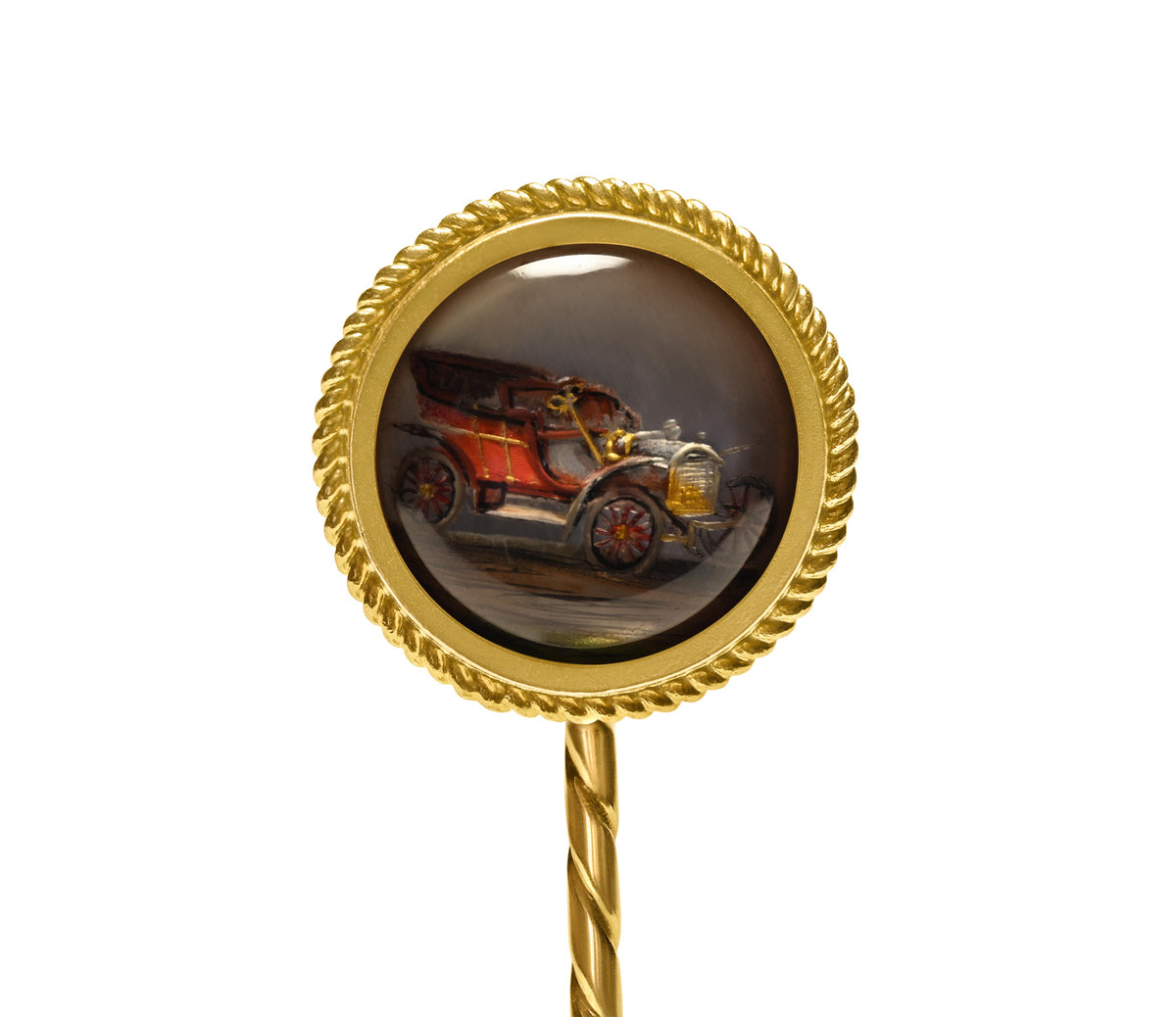
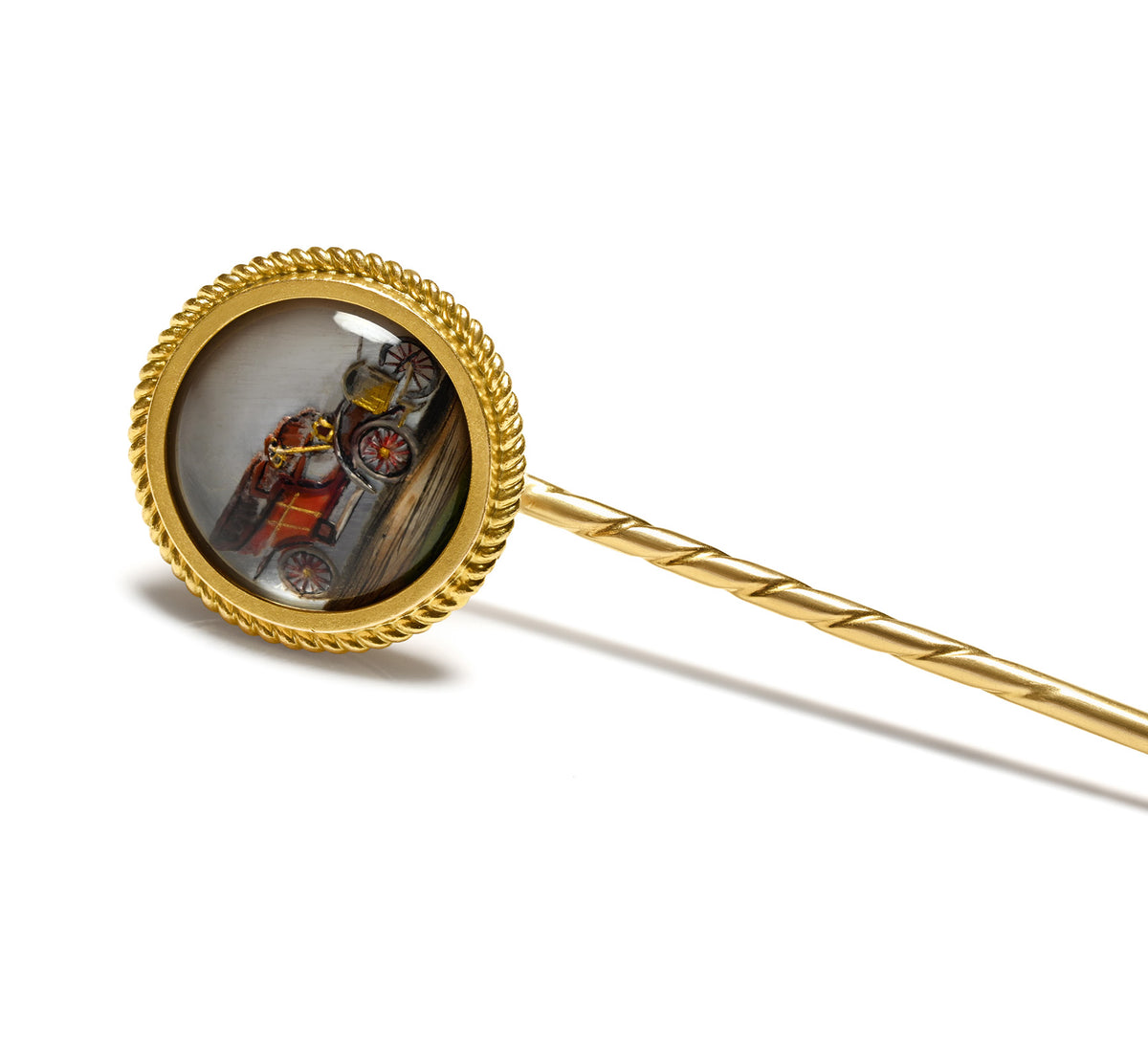
Antique Renaissance revival exceptional gold enamel fob, Source dsfantiquejewelry.com
The Roman Pattern
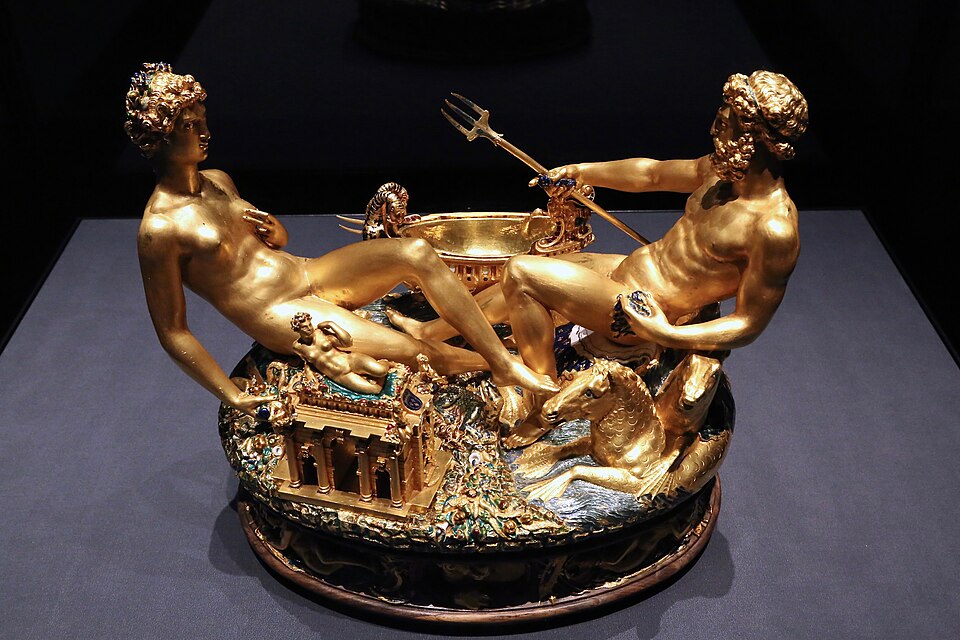
Popes and kings vied for the services of craftsmen like Benvenuto Cellini and others, who adapted the medieval tradition of enameled goldwork to suit the taste for the exotic splendors of the New World and the glories of the classical past. Their work was supported by a steady stream of commissions from royal courts, wrote author and art historian Diana Scarisbrick in her book Jewelry: Ancient to Modern.
However, despite the fact that jewelry design was greatly influenced by the aesthetics of antiquity, little effort was made to revive ancient techniques such as granulation and filigree or to reproduce archaeological styles.
Surface ornamentation derived from remnants of a Roman decorative style known as "grotesques" was the primary means of expressing the departure from the Gothic style.
When adventurous artists explored the underground chambers of Nero's Golden House on the Esquiline Hill, as well as other palaces, villas, and tombs in Rome and Naples, in the early 16th century, grotesque motifs began to emerge.
These underground chambers were referred to as grottoes because of their deep subterranean location, and the stucco and painted decorations that adorned them came to be known as grotesques.
Raphael and Giulio Romano adopted these whimsical motifs, which combined festoons, caryatids, dolphins, masks, cornucopias, thyrsi, pelta-shaped shields, hybrid creatures, animals, satyrs, putti, scrolls, and volutes, to decorate one of the great Vatican loggias.

Roman Fibula with pattern in granulation, Source https://www.metmuseum.org/art/collection/search/253339">https://www.metmuseum.org/art/collection/search/253339, via Wikimedia Commons
François I
From that time on, this space provided generations of designers with the most extensive collection of classical ornamentation.
However, to frame the sequence of paintings on the walls of the Gallery of François I at the Palace of Fontainebleau, Rosso Fiorentino, another Italian artist, created a more substantial framework in 1533–1534, designed to incorporate elaborate grotesque ornamentation.
This decorative device, known as strapwork, was modeled after strips of leather cut into irregular shapes and arranged to stand out prominently.
The broad scrolls of strapwork were developed into intricately interlaced bands known as moresques, inspired by the Oriental arabesque, a stylized plant motif featuring a winding stem that Islamic craftsmen working in damascened brass had brought to Venice.
This style was enthusiastically adopted, particularly by designers in the Low Countries and Germany.
This vocabulary of surface decoration, which included moresques, grotesques, and strapwork, was used in ornamental gemstone-set jewelry or combined with figures drawn from Christian and classical iconography to create multicolored enameled gold ornaments, crafted either in the round or in relief.
Leonardo da Vinci
The high status of the goldsmith and his close relationships with other artists are reflected in the exceptional sculptural and pictorial quality of the surviving pieces. In fact, some of the most renowned figures in Renaissance art, including Leonardo da Vinci's teacher Verrocchio and Ghiberti, who created the golden Gates of Paradise for the Florence Baptistery, were also accomplished jewelers.

Rare 16th-Century Renaissance mechanical treasure chest, Source dsfantiquejewelry.com
In this environment, craftsmen created miniature masterpieces that could rival the works of their counterparts in the major arts, pushing their skills far beyond their traditional limits.
Portraits of courtiers from Venice, Florence, Ferrara, and Milan demonstrate that these jewels were intended to be worn, enhancing the beauty of the hands, hair, necks, and wrists, rather than being kept in collectors' cabinets, just as Italy led the way in architecture, painting, and sculpture.
The new jewelry designs spread beyond Italy, reaching France first, much as wealthy individuals in other European countries had already imported Italian masterpieces of the fine arts.
Benvenuto Cellini was commissioned by François I to establish gem-engraving workshops under the direction of Matteo del Nazzaro, and the king established the collection of the French Crown Jewels in recognition of the importance of jewelry as an emblem of royal splendor.

Portrait of Fracois I, Department of Paintings of the Louvre, Via Wikimedia Commons
The style that emerged from this fusion of French tradition and Renaissance influences is best represented by the exquisite engraved jewelry designs created by Etienne Delaune and Pierre Woeiriot. Catherine de' Medici's arrival in France as the bride of the Dauphin (later Henri II) brought further Italian influence to the country.
German Artists
In the second half of the 16th century, the major trading cities of southern Germany—Augsburg, Nuremberg, and Munich—became the new centers of jewelry design as a result of the French Wars of Religion.
Like Albrecht Dürer, some painters from these affluent centers had deep family ties to the goldsmithing trade and had studied and traveled in Italy.
In addition, Dürer had demonstrated his passion for jewelry design by creating pendants, whistles, and girdle ornaments, while artists such as Cranach accurately depicted jewelry in their portraits.
Artists were encouraged to create designs for a wide audience by the demand for gemstones generated by the wealth of banking and commercial dynasties, particularly the Fuggers of Augsburg.
Several German artists, including Virgil Solis (1514–1562) and Matthias Zundt (1498–1586), as well as talented Flemish artists, including Hans Collaert of Antwerp and Theodor de Bry, who settled in Frankfurt after 1570, produced printed pattern books. All of these individuals were skilled craftsmen with firsthand knowledge of the subjects they illustrated.
Hans Mielich, who worked for Duke Albrecht V of Bavaria to document the jewels of the House of Wittelsbach in an album of miniatures on vellum, created a magnificent record of the beauty of German Renaissance jewelry.
The Vienna Treasury
Under the patronage of Emperor Rudolf II (1570–1612), Prague produced jewelry of equal beauty, exemplified by the Imperial Crown created by Jan Vermeyen and now housed in the Vienna Treasury.

The Crown of Emperor Rudolf II, Source Wikimedia Commons, Author Gryffindor
Across the English Channel, the extravagance of the Tudor court attracted a sizable community of foreign goldsmiths and traders, while the Hungarian and Spanish courts, at opposite ends of Europe, shared a similar taste for lavish displays of clothing and jewelry.
The collection of jewelry designs by the artist Hans Holbein, who entered royal service in 1536, reveals something of the nature of the magnificent pieces created for Henry VIII and his children and documented in their inventories.
Because there were relatively few alternative investment opportunities, courtiers who had grown wealthy through grants of former monastery estates had money to spend on jewels. The confiscation of church treasures also made large quantities of gold and precious stones available.
Queen Elizabeth
To project a magnificent image of consecrated virginity and imperial authority, Queen Elizabeth I constantly wore jewelry, including coronets, necklaces, rings, and pendants pinned to her ruff, bodice, and sleeves, as well as aiglets sewn throughout her gowns. She had also inherited her father's love of gold and gemstones.
Some of the jewels associated with her are so symbolic that their original significance has been lost, while others feature her likeness or refer to significant historical events, such as the defeat of the Spanish Armada.

Portrait of Queen Elizabeth I, Source Wikimedia Commons, Scanned in the US from Sotheby's Catalogue #L07123, Important British Paintings 1500-1850 22 November 2007
The international demand that encouraged artists and jewelers to travel gave rise to an increasingly cosmopolitan style as designs and patterns from Germany, France, and the Low Countries spread across Europe.
A unified market for personal adornment was also created by widespread admiration for classical culture. Without identifying marks, it is extremely difficult to determine the origin of much surviving Renaissance jewelry, as heads of state were constantly exchanging jeweled gifts.
The Spirit
Another concern is authenticity, since most surviving pieces have undergone repairs, and there is no scientific method comparable to the use of X-rays to examine paintings that can reliably determine the extent of restoration they have undergone.
Ironically, the spirit of intellectual inquiry that gave rise to this new style of goldwork and the revival of classical art also contributed to its decline. Scientific advances led to improvements in the cutting of precious stones, which, in turn, paved the way for diamonds to become the dominant material in jewelry.
A comparison between portraits of Charles I, subtly wearing the diamond-set Badge of the Garter and a single pearl-drop earring, and Henry VIII, resplendent in jewels set in enamel, best illustrates this transition.
The Augsburg engraver Daniel Mignot, who created designs based on the visual effect of gemstones arranged in distinct forms around 1600, was a crucial figure in this transition, even though the change itself was almost imperceptible.
As a result, the goldsmith's role was further diminished because, with figural work no longer required, his task was reduced to creating settings that were as inconspicuous as possible while still holding the gemstones securely in place.
Faceting
The practice of faceting, which brings out a gemstone's full fire and brilliance, led to an increasing appreciation of gemstones that had been table-cut or left en cabochon in the 16th century, either as contrasting elements or for their decorative appeal.
The development of rose-cut faceting marked a turning point. An example of this style can be seen in the Lyte Jewel, which James I presented to a Somerset squire in 1611 after the latter had traced the lineage of the royal House of Stuart back to an exile from the Trojan War.

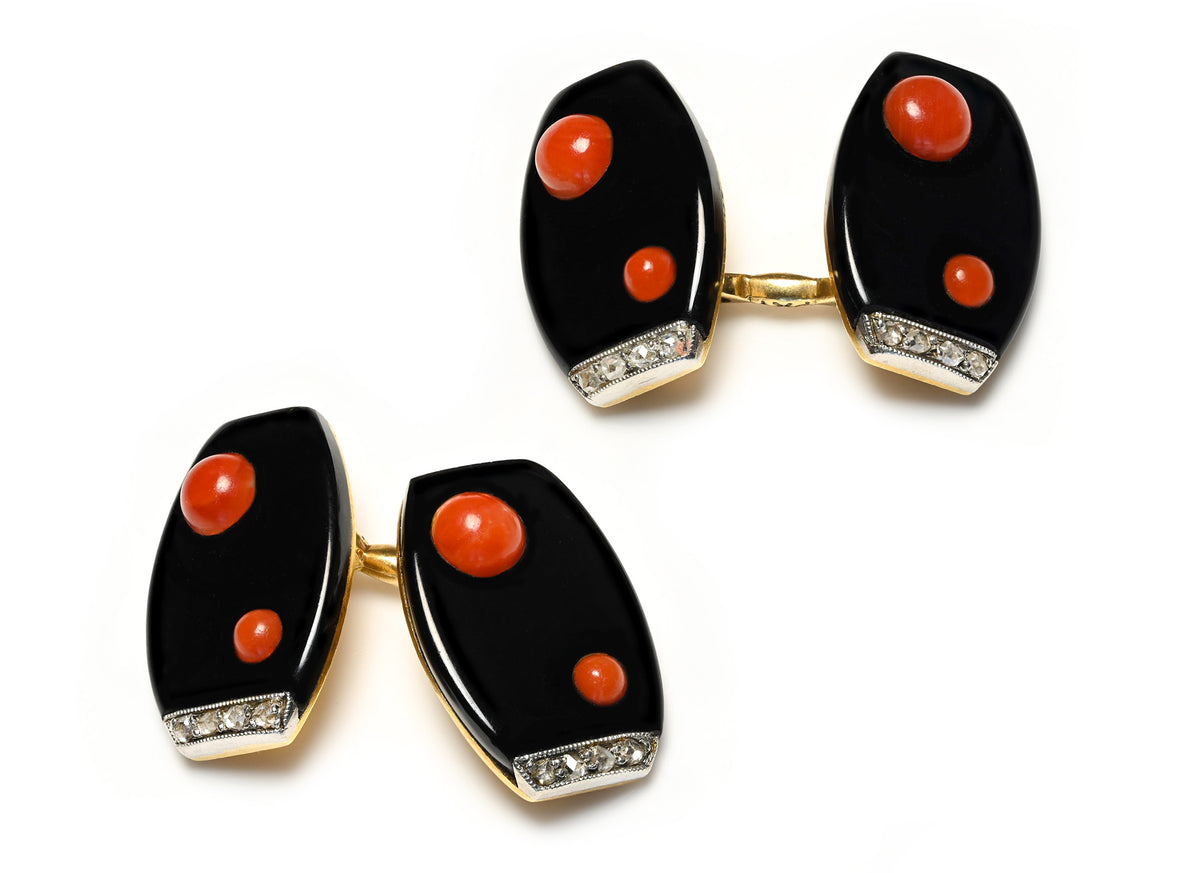
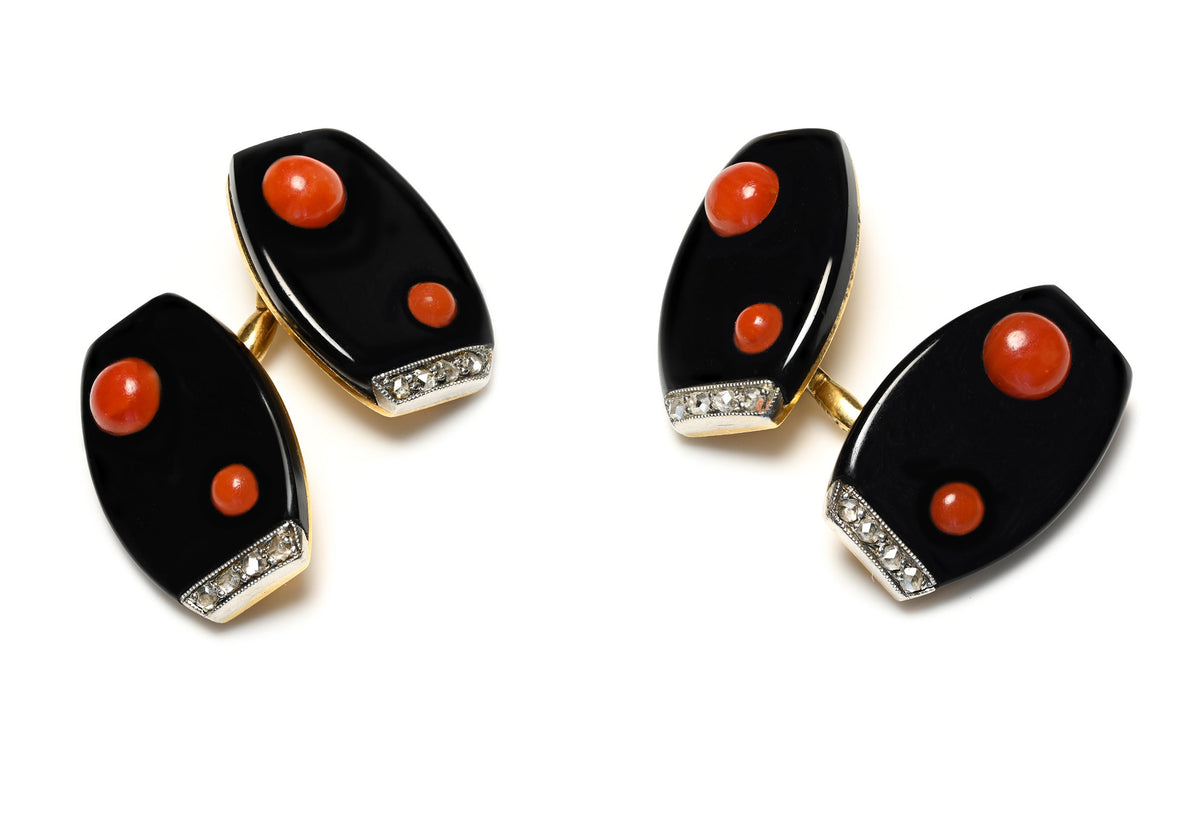
Faceted Diamond Citrine 18K Gold Cufflinks, Source dsfantiquejewelry.com
The increased availability of diamonds on the market following the development of the Golconda mines in Hyderabad, India, and the Brazilian diamond mines provided further impetus for these developments. Cardinal Mazarin was another influential figure whose patronage of lapidaries encouraged advances in gemstone cutting, culminating in the development of the brilliant cut, with its thirty-two facets, by the end of the century.
Louis XIV
Germany lost its leading position in jewelry production because of the Thirty Years' War and concerns over Turkish invasions, while France regained its prominence in the 17th century.
Louis XIV's concept of absolute monarchy was ideally suited to the luxurious image projected by diamonds, and he looked magnificent, glittering in diamond-set parures at the festivities held at Versailles.

Portrait of Louis XIV, Source wartburg.edu via Wikimedia Commons
Despite protests over the crushing weight of such lavish attire, other monarchs required their consorts to follow the same formula in order to project an image of transcendent magnificence. Mary of Modena, the wife of James II of England, gleamed like an angel in jewels reportedly "worth millions of dollars."
Few examples of this diamond jewelry survived the remodeling and alterations prompted by the Rococo style of the following century, and much of what is known about Baroque jewelry comes from pieces featuring engraved designs or set with paste stones, crystals, or marcasite.
An interesting record of this jewelry can be found in the work of Louis XIV's court jeweler, Gilles Legaré, who published his designs in his Livre des Ouvrages d'Orfévrerie in 1663.

Bruder Frank Renaissance Revival Silver Guilloche Enamel Compact, Source dsfantiquejewelry.com
Magnificent Jewels
These pieces also highlight the role of enamel in jewelry during this period. Enamel remained the principal decorative technique used on watches and small cases, while gradually being relegated to the backs and borders of magnificent gemstone-set pieces, where it served as a decorative complement to the stones.
Using the technique developed by Jean Toutin of Châteaudun, their flat surfaces could be painted to resemble miniature reproductions of historical scenes, landscapes, or floral compositions.
Although it had been almost entirely displaced from the settings of the most magnificent jewels, the enameling technique that Renaissance goldsmiths had inherited from their medieval predecessors and perfected in sculptural jewelry was still capable of rivaling the splendors of Baroque art, thanks to Jean Toutin's revival of the art.
This enameling technique could also be applied to rings and slides designed to be threaded onto ribbons and worn around the neck or as bracelets.
Below, we present some of the jewels from that era.
Spanish cross, 16th century

Pendant Cross with Emeralds, 16th century, Walters Art Museum, via Wikimedia Commons
The front is set with table-cut emeralds: seven in oblong collets and four in triangular collets at the terminals. The sides feature arabesques on a black ground, while the edges of the frame are adorned with openwork scrolls. The back is covered with continuous black foliate scrollwork terminating in triangles that enclose rosettes. The front is further embellished with goldwork and a jeweled cross. A suspension loop holds three hanging pearls.
Pendant with the Crucifixion, 16th century

Locket with Scenes of the Crucifixion and Virgin with Child, Walters Art Museum, Aquired by Henry Walters, via Wikimedia Commons
An oval pendant made of enameled gold and agate, enclosing a verre églomisé depiction of the Crucifixion and an inscription from Isaiah 53:5 in Roman capitals: CUIUS LIVORE SANATI SUMUS (By His wounds we are healed). The composition is framed by a black border of lozenges and bars. On the reverse is a similarly framed depiction of the Virgin and Child, accompanied by the inscription AVE SAN(CTA) MARIA MAT(ER) DEI. The pendant is adorned with four openwork coronas above quatrefoils. It has a double suspension loop and a chain, both later replacements.
Similar pendants were acquired in Spain and donated to the Louvre by Baron Davillier, while examples in the Victoria and Albert Museum were acquired from the Treasury of the Virgin of the Pillar in Zaragoza.
French bracelet slides, circa 1700

Portraits of Louis Bourbon and Marie-Adelaide of Savoy, Duke and Duchess of Burgundy, painted enamel on gold, acquired by Henry Walters, Walters Art Museum, via Wikimedia Commons
Portraits of Louis XV's parents, the Duke and Duchess of Burgundy, are enclosed in a pair of oval gold medallions. The duchess is depicted wearing late 17th-century clothing, including a pearl necklace, a bodice edged with diamonds, and girandole earrings. Set with glass and framed by simple rims, these slides can be worn as bracelets by threading them onto ribbons.
Italian Collar of the Order of the Golden Fleece, 16th century

Italian Collar of the Order of the Golden Fleece, 16th century, acquired by Henry Walters, Walters Art Museum, via Wikimedia Commons
This elaborate necklace of encrusted gold and gemstones consists of forty-three links: twenty-one large links in two different designs, twenty-one smaller links, and one connecting link bearing a pendant.
After the tenth link, there are four links, each set with a table-cut emerald in a box collet decorated with white dots on a red cartouche and flanked by two pearls. The links are framed by white openwork settings that alternate between scrollwork and strapwork, accented with red, blue, and green enamel.
A table-cut diamond is set in a box-shaped collet decorated with white dots and flanked by two pearls. The intervening smaller links consist of pierced ovals in complementary colors.
Within an openwork ring set with eight table-cut emeralds in box collets decorated with white dots, connected by red scrollwork and accented with pearls, the pendant features a central hexagonal table-cut emerald mounted in a collet with a white serrated base. It is surrounded by a collar composed of fire steels and flaming flints, the emblems of the Order of the Golden Fleece, outlined in white dots.
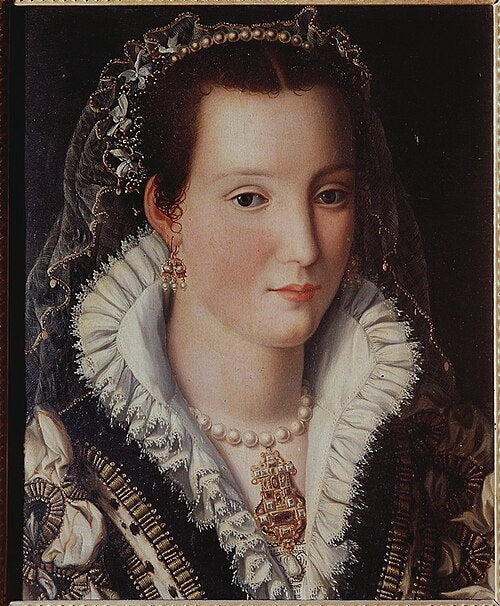
Cover Photo: Portrait of a gentlewoman, Source https://www.europeana.eu/portal/en/record/2048011/work_64159.html?q=bianca+cappello, via Wikimedia Commons