Gübelin, AGL, GIA and SSEF Gemstone Reports: What Collectors Should Know
An exceptional gemstone may have a memorable color, an unusual cut or a compelling history. A laboratory report adds something different: an independent examination of the stone itself. For a collector considering a sapphire, ruby or emerald, the report can help clarify questions about identity, treatment and, when the laboratory can determine it, geographic origin.
The name of the laboratory matters, but the type of report and its actual findings matter just as much. A report identifying a gemstone may not include a geographic origin opinion. Another may provide detailed treatment information or an additional quality assessment. Here is a practical introduction to four laboratories whose reports collectors often encounter.
Gübelin Gem Lab
Gübelin Gem Lab issues gemmological reports based on analysis of a gemstone's identifying properties, inclusions, structure and chemical composition. Its reports can document characteristics relevant to a purchase, including gemstone identity and, where supported by the examination, country of origin. Read the findings on the individual document rather than assuming every report contains the same conclusions.
Gübelin also offers different services, including a Gem Passport and a Gemstone Rating. These are not interchangeable with its full Gemmological Report. If a seller describes a stone as “Gübelin certified,” ask to see which document accompanies it and exactly what that document says.
American Gemological Laboratories (AGL)
AGL's Prestige Report has several levels. Its Identification and Enhancement report addresses the gemstone's identity and detectable enhancements. A Prestige Origin report adds a country-of-origin opinion when that service is available and a conclusion can be reached. Full Grading is a separate level of reporting that evaluates quality characteristics.
This distinction is useful when reading an AGL report: the laboratory name alone does not tell you whether the document includes origin or full grading. Look for the specific report level, then read its enhancement and provenance sections closely.
Gemological Institute of America (GIA)
GIA's colored stone reports identify a gemstone, state whether it is natural or synthetic and disclose detectable treatments. GIA offers both a Colored Stone Identification Report and an Identification and Origin Report. For eligible stones, a geographic origin is included when determinable.
GIA is widely known for diamond grading, but it also examines colored gemstones. A collector should check whether a particular GIA colored stone report includes an origin finding, rather than assuming that every GIA document does—or that GIA reports are relevant only to diamonds.

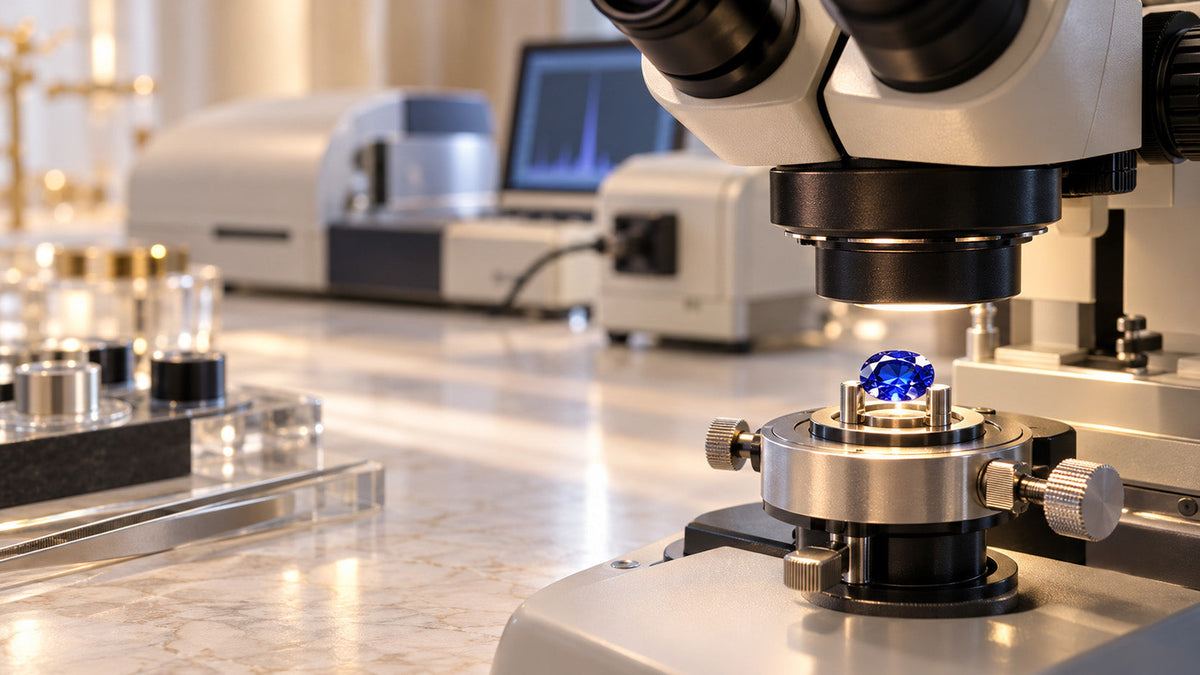
AI-generated illustration created for DSF Antique Jewelry. The report shown is illustrative and is not an actual laboratory document.
Swiss Gemmological Institute SSEF
SSEF explains its report types on its website. A Gemstone Report is issued for a single loose natural gemstone, while a Test Report can cover mounted gemstones and jewelry, among other items. The distinction can matter when a stone is already set in an antique or vintage jewel.
For sapphires, SSEF describes how it reports detected treatments and how it reaches an origin opinion using gemmological observations and reference material. As with any laboratory, the useful information is the conclusion recorded for the specific stone examined, not a general statement about the laboratory.
What to Check Before Relying on a Report
Start by matching the report to the gemstone: compare the photograph, shape, measurements and other identifying details where available. Then read these points in order:
- Identity: What gemstone did the laboratory identify, and is it natural or synthetic?
- Treatment: What does the report say about heating, filling or other detectable enhancements? “No indications of heating” is a specific finding; it does not mean the laboratory has certified every possible characteristic of the jewel.
- Origin: Does this particular report offer a geographic origin opinion? Origin may be undetermined, and an origin opinion is based on the evidence available to the laboratory.
- Scope: Was one stone examined, or were multiple components assessed? A report on a center sapphire should not be treated as a report on its surrounding stones or mounting.
- Documentation: Note the report number and date, and ask to review the complete document rather than relying on a brief sales description.
A gemmological report is also different from an appraisal. It does not, by itself, establish a jewel’s market price, the date of its mounting, a maker’s signature or the history of ownership. Those questions call for additional examination and documentation.
This distinction matters particularly with antique and vintage jewelry. A gemstone may have been cut or carved at a different time from the setting that holds it, and a jewel may have been altered during its life. A laboratory finding about the stone cannot establish whether every component is original to the mounting. Marks, construction, wear and any available provenance help tell that broader story.
Reports also leave room for the collector’s eye. Two sapphires with similar origin and treatment findings can differ greatly in color, transparency, cut and condition. When a stone is carved, the quality and character of the engraving add another dimension. Reviewing the report alongside clear photographs and a careful description of the complete jewel gives a fuller understanding of what makes that particular piece distinctive.
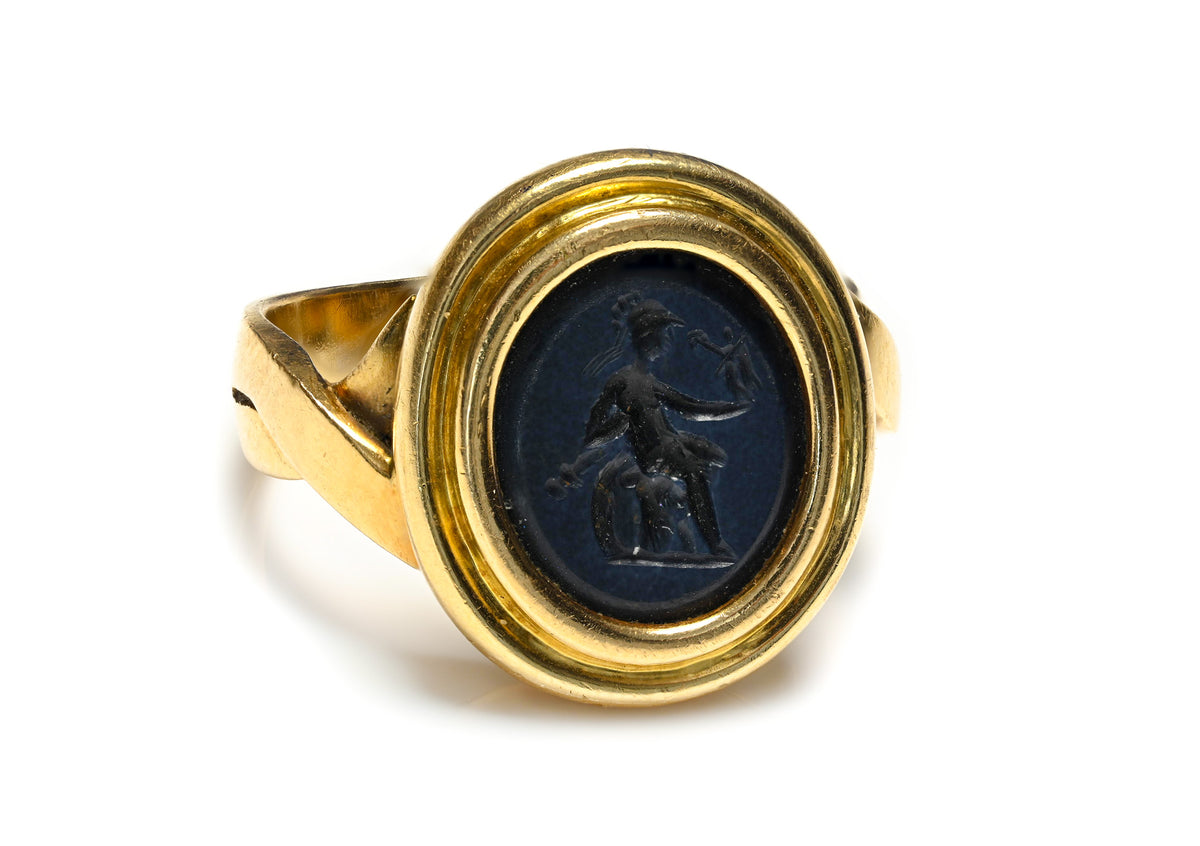
At DSF Antique Jewelry, we describe accompanying reports in the relevant product listing and consider them alongside the jewel’s design, craftsmanship and condition. For one example, our Ceylon sapphire intaglio ring is accompanied by a Gübelin report identifying the center sapphire as natural, of Sri Lankan origin, with no indications of heating. The report’s findings concern that center stone; the intaglio carving and the ring itself invite their own closer examination.
For collectors, the best question is not simply “Which laboratory?” It is “What was tested, which report was issued, and what does it actually say?”

DSF Antique Jewelry’s carved Ceylon sapphire intaglio ring in platinum. The Gübelin report identifies the center sapphire as natural, from Sri Lanka, with no indications of heating.