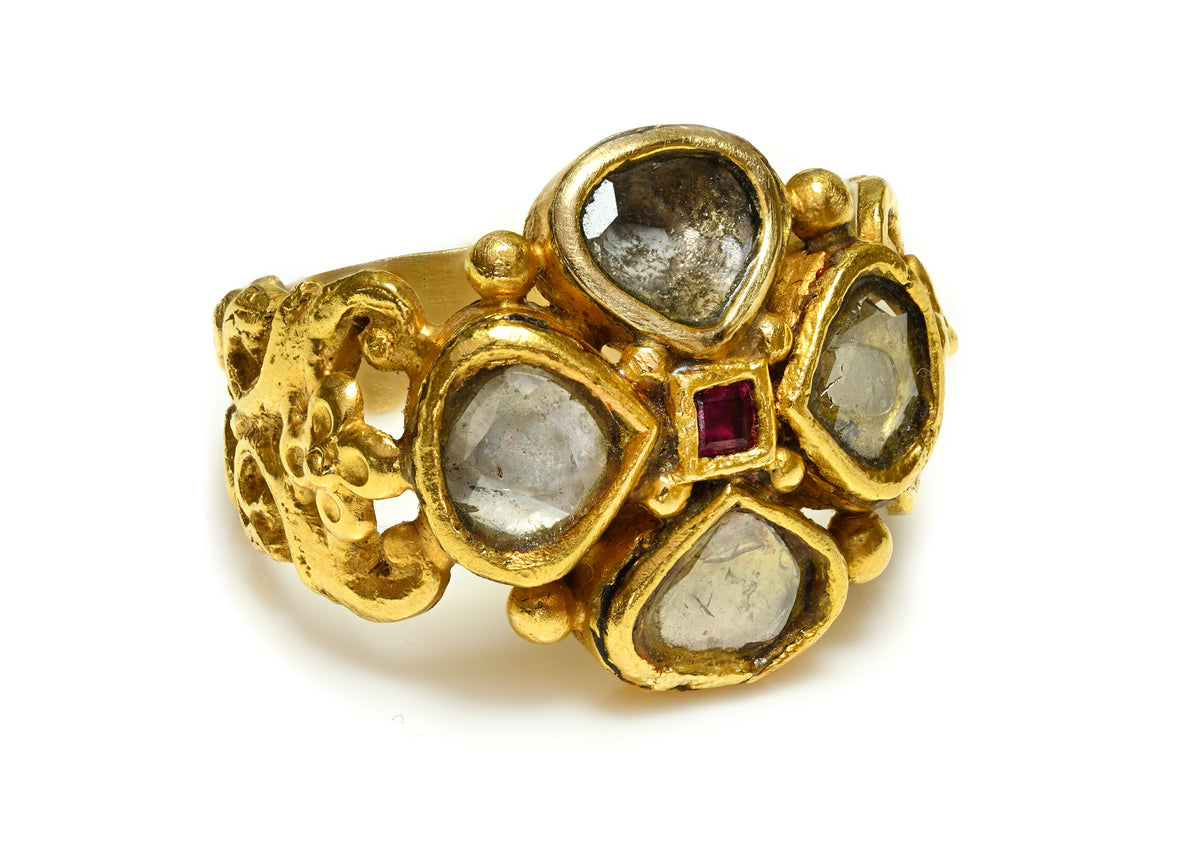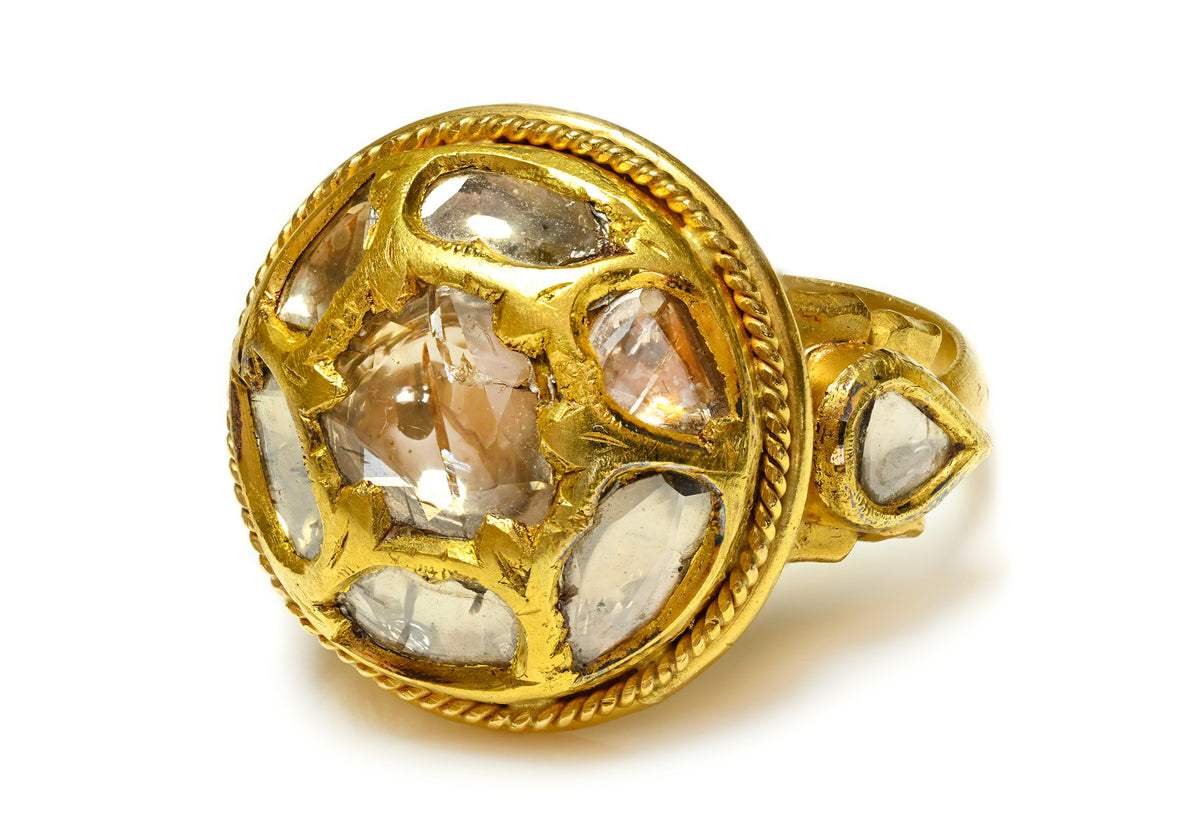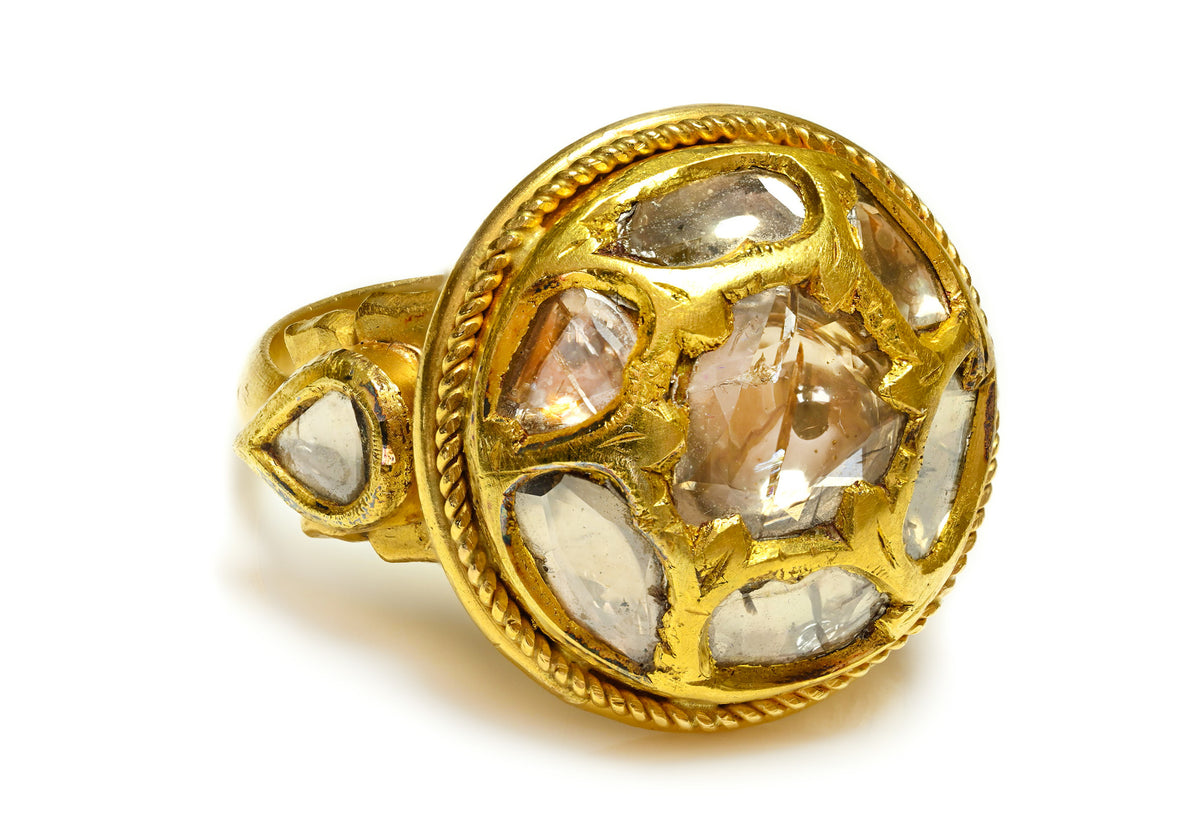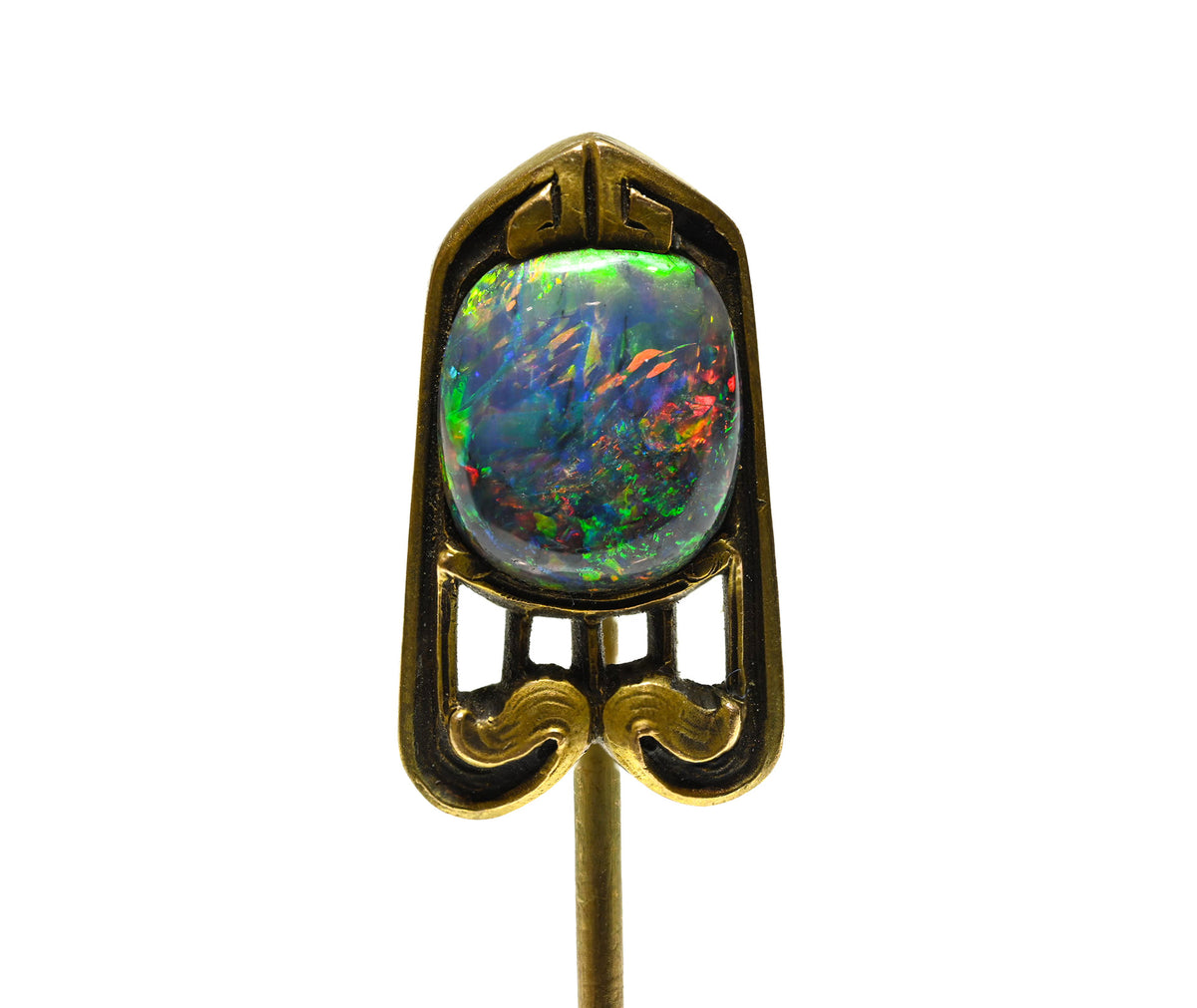
Things You Didn’t Know About Mario Buccellati Jewelry
Mario Buccellati jewelry is often recognized in a second, not a first. A viewer may see an old bracelet, brooch, or ring and immediately sense that it looks unusually refined, without understanding at once what creates that impression. The answer rarely lies in the gemstone alone, or in the prestige of the signature, or even in the age of the piece.
In Mario Buccellati’s work, the fascination often begins in the metal itself: in the way gold is engraved, softened, pierced, and textured until it seems to belong as much to the world of lace, silk, and embroidery as to the world of traditional jewelry.
That is one reason early Mario Buccellati pieces remain so distinctive. They do not rely on a single trick. They do not seduce only through brilliance or scale. They hold attention because they are built from many layers of workmanship at once. A surface may look soft while being cut with extreme control. A jewel may appear airy while remaining structurally exact. A stone may be beautiful, yet the mounting around it refuses to behave like a passive setting. In these pieces, everything is active.
Mario Buccellati’s importance lies partly in the fact that he brought older goldsmithing habits back into modern jewelry without making them feel archaic. His work carried echoes of Renaissance ornament, Venetian lace, historic engraving, ecclesiastical splendor, and Italian decorative richness, yet the final result was never simply nostalgic. It was sharp, wearable, and intensely personal. That mixture is rare. Many jewelers borrow from history; far fewer know how to absorb it so completely that it becomes a living style rather than a quotation.
This is where the subject becomes especially interesting. The least obvious things about Buccellati jewelry are often the most revealing: the tools of illusion, the engraved vocabularies, the hidden discipline behind softness, the way metal is made to appear lighter than it is, and the strange confidence of a house willing to let workmanship compete with gemstones instead of hiding behind them. Those quieter facts are often the ones that stay in the mind longest.
This article focuses on the details that make Mario Buccellati jewelry so distinctive, from fabric-like gold surfaces and old engraving techniques to airy openwork, unusual stone settings, Renaissance echoes, and the qualities that make the earliest pieces especially fascinating.
At a Glance
- Fabric-like gold surfaces
- Historic engraving techniques
- Openwork and lightness
- A different relationship between metal and stones
- The famous tulle effect
- Mario Buccellati’s legend and reputation
- Renaissance influence without revival stiffness
- Why smaller pieces can be especially revealing
- The almost ceremonial mood of certain jewels
- Why the earliest works matter so much
1. Mario Buccellati Did Not Use Gold the Way Most Jewelers Did
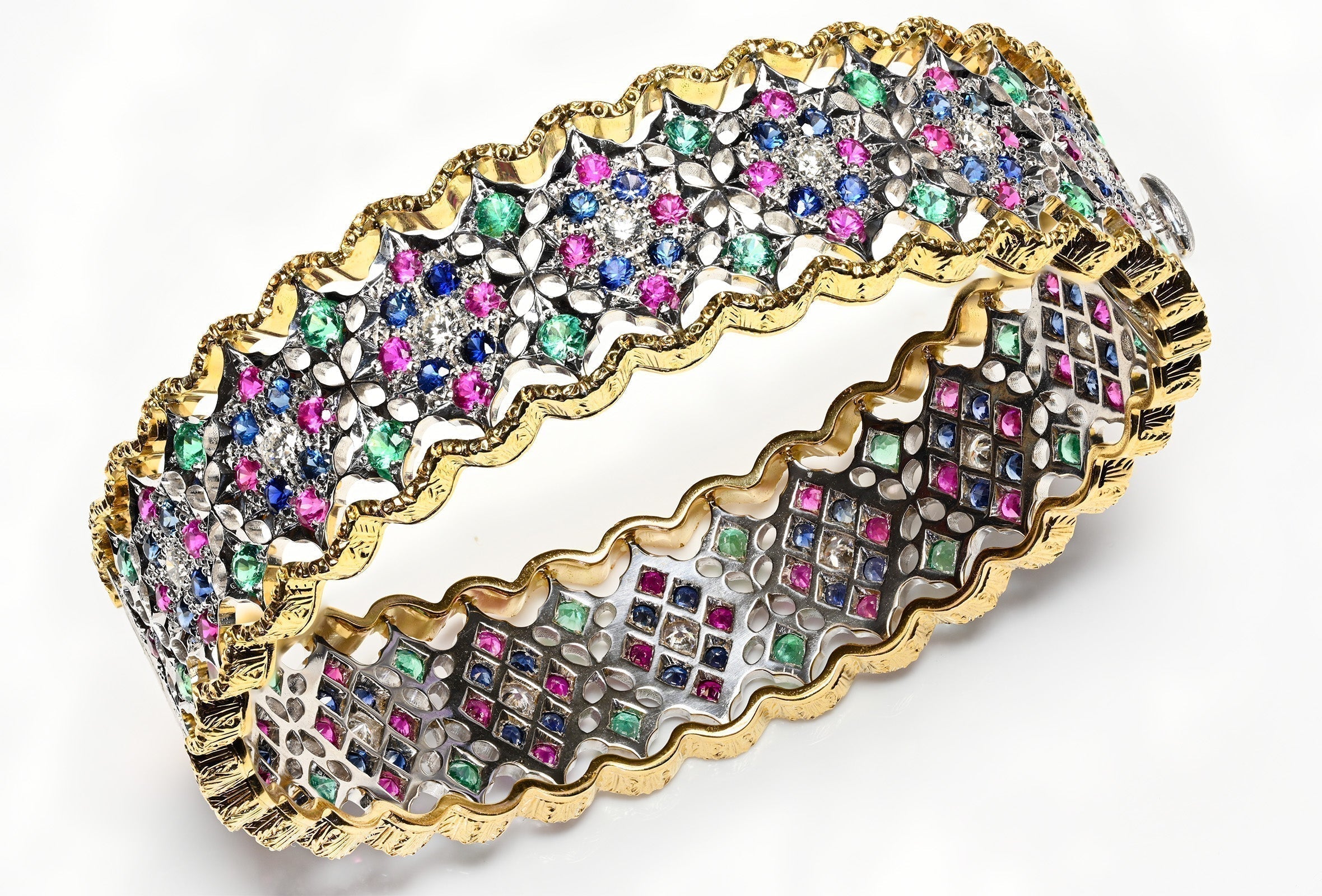
Most jewelers treat gold as a noble constant. It may be polished, shaped, engraved, or set with stones, but it remains recognizably metal: solid, bright, declarative. Mario Buccellati pushed it in another direction. In many of his early pieces, gold does not present itself as hard or triumphant. It seems softened, thinned, almost translated into another visual language. At times it resembles woven fabric. At others, it suggests old lace, tulle, or embroidered cloth. This was not a side effect of decoration. It was one of the central ideas in his jewelry.
That shift matters because it changes the whole emotional character of the object. A polished jewel often announces itself quickly. A Buccellati jewel tends to unfold more slowly. The eye does not stop at shine. It begins to register grain, rhythm, texture, pierced areas, and matte passages. The result is less like looking at a nugget of precious metal and more like studying a precious surface that has been worked until it acquires memory. Gold stops being merely expensive. It becomes expressive.
This is where Mario Buccellati separated himself from many other twentieth-century jewelers. He did not seem satisfied with the natural beauty of precious material. He wanted to alter its temperament. He wanted gold to lose bluntness, to give up some of its force, to become more nuanced. Instead of shouting wealth, it could suggest old textile arts, liturgical treasures, aristocratic embroidery, or fragments of a richer decorative world. Few jewelers have made metal feel so cultivated.
There is something slightly paradoxical in that achievement. Gold is one of the most stable and assertive materials in jewelry history, yet Mario used it to produce delicacy. He did not deny its value; he refined its behavior. That is why so many old Buccellati pieces feel luxurious without feeling aggressive. Their richness is real, but it does not depend on glare. It depends on conversion: hard matter made to look supple, heavy material made to look almost weightless, a precious substance persuaded into elegance rather than spectacle.
What makes this so unusual is that the effect never feels gimmicky. Mario Buccellati was not trying to disguise gold for the sake of novelty. He was expanding what gold could express. In his hands, metal could become softer in mood, richer in suggestion, and far more subtle than the blunt language of shine.

2. His Surfaces Were Built from Old Engraving Languages, Not Generic Decoration
One of the easiest mistakes to make with Mario Buccellati jewelry is to call its surface simply “decorative.” The word is not wrong, but it is far too weak. What appears, at first glance, to be ornament is often the result of very old engraving traditions handled with unusual seriousness. Mario was not sprinkling visual charm onto finished pieces. He was building character into the metal itself.
Once that is understood, the whole jewel reads differently. In ordinary fine jewelry, surface treatment may come late in the process, once the main form is already established. In Buccellati’s work, the surface often feels like the real event. A bracelet, ring, or brooch may derive much of its mood not from outline alone, but from the way light is interrupted, softened, redirected, or absorbed by the engraved skin of the metal. The finish is not cosmetic. It is structural to the whole impression.
This is where names like rigato, telato, segrinato, and ornato become more than technical vocabulary. They point to different ways of giving gold and silver a visual grain. Rigato produces fine parallel lines, so precise that the metal begins to resemble silk under tension. Telato creates a woven or cloth-like effect, which helps explain why certain Buccellati pieces seem closer to textile arts than to standard luxury jewelry. Segrinato introduces a more matte, almost velvety texture. Ornato moves toward richer ornamental patterning. None of these finishes is casual. Each one alters the emotional temperature of the jewel.
What is remarkable is how naturally these effects sit inside the design. In weaker hands, a heavily worked surface can feel fussy, crowded, or anxious. In Mario Buccellati’s work, the engraving usually feels composed. The lines do not chatter. They settle the piece. A plain area of gold becomes more intimate. A floral motif gains softness. A border acquires quiet movement. Even a small section of engraving can change the entire balance of a jewel.
This is also one of the reasons photographs do not always do old Buccellati pieces justice. A camera often catches outline first and detail second. But with Mario Buccellati, detail is not secondary material. It is the thing that gives life to the form. Without the engraved texture, many pieces would lose their atmosphere. They would still be beautiful, but they would no longer possess that unmistakable hush — that softened richness that makes the metal seem touched by time, fabric, and human patience all at once.
There is, too, something deeply revealing in Mario’s choice to lean so heavily on these old surface languages during a period when modern jewelry could easily have moved toward sleekness and simplification. He did not strip gold down. He cultivated it. He treated the surface as a place where history could survive. Not by copying the past literally, but by keeping alive ways of working that carried the memory of older craft worlds.
That is why an early Buccellati jewel can feel unexpectedly full even when the design is not large or ostentatious. The richness is compressed into the surface. It sits in the engraved lines, in the fine control of matte and shine, in the tiny adjustments that prevent metal from ever looking dead. A smooth field of gold declares value. A Buccellati field of gold does something harder: it holds attention.
This is why Buccellati surfaces deserve more attention than they usually receive. They do not simply decorate the jewel. They organize it, soften it, and give it its inner tone.

3. He Made Air Part of the Design
In Mario Buccellati’s jewelry, even the spaces where nothing appears to be happening are doing important work. That is one of the details many people miss at first. They notice the lace-like effect, the delicacy of the outline, the unusual softness of the metal, but they do not always register what is doing so much of the work: the openings, the cut-through passages, the carefully measured gaps that let light pass into the piece instead of stopping at its surface.
This is where Buccellati’s openwork becomes far more interesting than ordinary pierced decoration. In lesser jewelry, perforation can feel like a trick for making a piece lighter or prettier. In his work, it behaves more like structure. The voids organize the rhythm of the jewel. They keep ornament from becoming dense. They give relief to engraving. They let shadow participate. What is removed matters as much as what remains.
That is why so many early Mario Buccellati pieces seem to hover between solidity and fragility. A bracelet may look almost as delicate as lace, yet still hold the authority of worked gold. A brooch may appear airy enough to have been cut from textile, yet retain a crisp architectural order. The eye moves through these jewels differently because it is not being blocked by mass. It is being guided by intervals.
There is a quiet discipline behind that effect. Openwork only looks effortless when it has been resolved properly. Too much removal, and the design turns weak or restless. Too little, and the jewel becomes visually heavy. Mario Buccellati had a remarkable instinct for that balance. His pierced work often feels breathable without ever feeling empty. It lightens the jewel without draining it of richness.
This is also one of the reasons the comparison with lace is more than a metaphor. Lace is not simply pretty pattern; it is pattern organized through absence. Its beauty depends on the relationship between thread and opening, density and release. Buccellati understood that logic perfectly. He translated it into precious metal, not by imitating cloth in a literal way, but by giving gold the same alternation of presence and interval.
Sometimes the effect is almost architectural. Certain pieces feel less like conventional jewelry and more like miniature tracery — the kind of ornament one might associate with carved stone, liturgical metalwork, or finely worked historic objects. That architectural quality prevents the jewels from becoming merely soft. However delicate they appear, there is usually an underlying order holding them together.
Openwork also changes the way light behaves. Instead of bouncing off a flat polished surface, it enters the jewel, passes through it, and breaks around its edges. This creates a more complex visual life. The piece shifts as it moves. Small openings darken and brighten. Engraved borders gain contrast. Stones, when present, can feel less isolated because the whole setting around them has become active.
That interplay between air and metal gives Mario Buccellati jewelry one of its strangest strengths. It looks elaborate, yet never sealed. It feels rich, yet rarely congested. Even when a design is highly worked, it still has room inside it. Few jewelers understood so well that ornament needs breathing space, or that richness becomes more convincing when it is handled with restraint.
That is what gives many of these jewels their peculiar lightness. They do not press themselves on the eye as solid luxury objects. They read more like pattern, interval, and movement.

4. He Did Not Need a Giant Stone to Make a Jewel Memorable
A great deal of fine jewelry is built around a simple premise: first secure attention with the stone, then let the rest of the piece support it. Mario Buccellati was capable of working with important gems, of course, but he rarely seemed interested in letting the entire jewel collapse into a single point of emphasis. In his hands, a gemstone was not always the star in the theatrical sense. More often, it was part of a larger conversation involving texture, spacing, engraving, and proportion.
That difference is easy to underestimate. In many houses, the setting behaves almost like a frame around a painting: elegant, necessary, but clearly subordinate. Buccellati often reversed that logic. He made the surrounding metal so articulate, so alive with workmanship, that the gem entered a fully formed world rather than occupying an empty pedestal. The jewel did not exist merely to exhibit the stone. It had its own atmosphere before the stone was even considered.
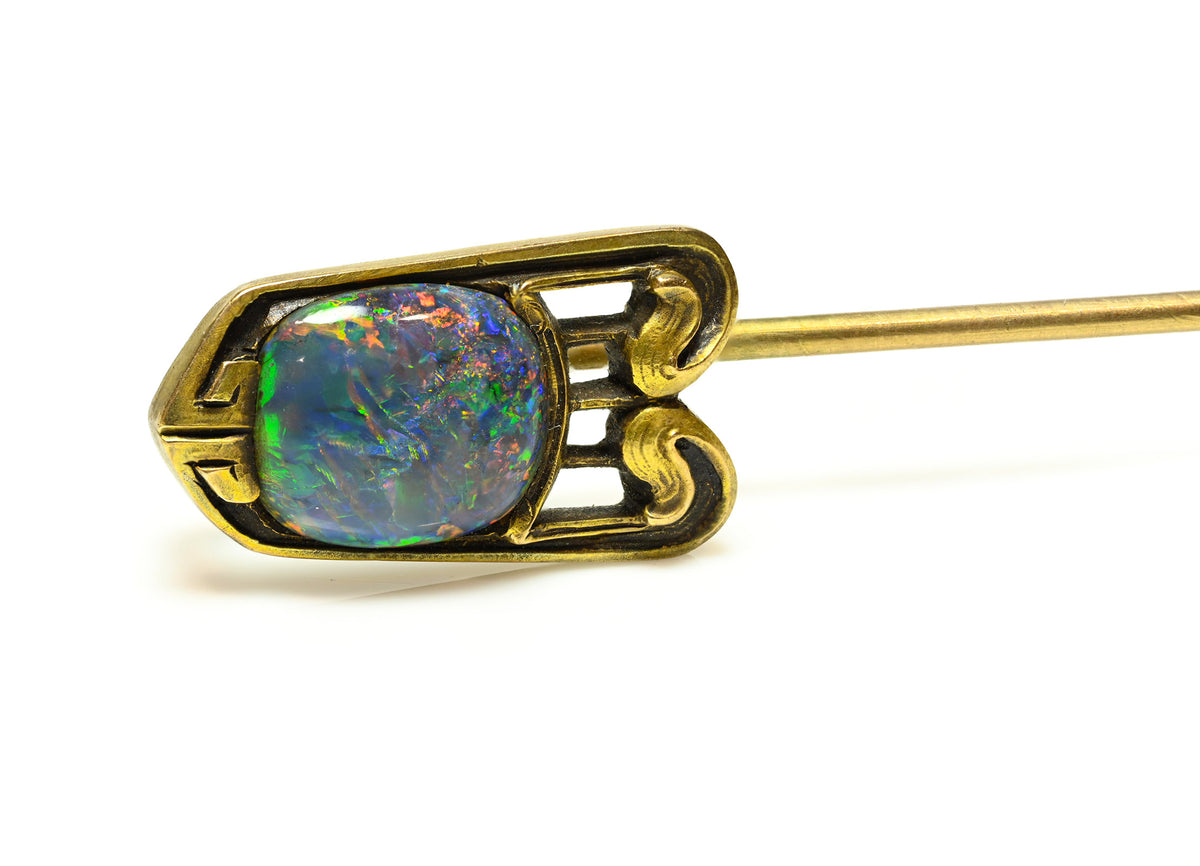
This gave him unusual freedom. He could use diamonds, sapphires, rubies, emeralds, pearls, or cabochons without forcing every design into the same hierarchy. A cabochon in a Buccellati jewel can feel unusually persuasive because the engraved metal around it already has visual warmth. A diamond can appear less stark because it is not stranded on a polished plain. A colored stone can deepen the mood of a piece rather than interrupt it. The setting does not vanish. It participates.
Old Mario Buccellati jewelry often feels more composed than merely impressive for exactly this reason. The eye is not pushed straight toward the biggest element and stopped there. It moves. It notices the edge of a leaf, the softness of a matte passage, the rhythm of pierced work, the contrast between a bright stone and a subdued ground. The gem remains important, but it is no longer carrying the entire burden of meaning. The jewel has been given more than one register.
There is also a kind of confidence in this approach. It suggests a maker who did not need to prove luxury through blunt scale. Mario Buccellati seems to have trusted the intelligence of arrangement: how one material could calm another, how a surface could slow the eye down, how delicacy around a gem could make the gem itself feel more intimate and less declarative. That is a rarer talent than simply acquiring remarkable stones.
In some pieces, the result is almost disarming. A viewer expects the gemstone to dominate, yet keeps returning to the worked metal instead. Not because the stone is weak, but because the setting refuses anonymity. A leaf-shaped surround, a lace-like border, a subtly textured mount — these things continue to hold the gaze long after the gem has made its first impression. The jewel lingers in the mind as a total composition, not a single feature.
That may be one of the quiet reasons Mario Buccellati’s work ages so well. Jewelry built only around spectacle can become predictable once the initial effect wears off. Jewelry built from relationships — stone to surface, color to texture, brilliance to softness — tends to stay alive longer. It offers more to return to.
Mario Buccellati understood something many houses never fully mastered: a jewel becomes richer when the stone does not stand alone. In his best work, gemstone and metal do not compete. They complete one another.

5. The House’s Most Famous Texture Came from a Near-Impossible Idea
Among the details most often admired in old Buccellati jewelry, one stands apart because it feels almost unreasonable: the attempt to make gold resemble tulle. Not simply lace in a broad poetic sense, but something finer, more vaporous, more difficult to reconcile with the nature of metal. It is one of those ideas that sounds elegant in theory and nearly absurd once one pauses to consider what it asks of the material. Gold is dense, obedient to the hand only up to a point, and always in danger of looking too solid. To make it suggest net, veil, or airy textile required more than dexterity. It required stubborn imagination.
This is where the Buccellati vision becomes especially distinctive. Mario Buccellati was not satisfied with making jewels ornate. He wanted them to possess a different physical language from the start. He wanted density to appear light, hardness to appear softened, and richness to avoid heaviness. The tulle-like effect answered all three desires at once. It allowed the jewel to feel intricate without becoming thick, delicate without becoming weak, and precious without looking overburdened.
What makes this so fascinating is that the effect does not announce itself through noise. It is not the kind of virtuosity that shouts. A viewer may simply feel that a piece has unusual softness, unusual air, unusual refinement. Only later does the real achievement begin to register: the surface has been worked so carefully that gold seems to hover between metal and fabric. That threshold is where the magic lies. Buccellati jewelry often looks as though it should not quite be possible.
The resemblance to tulle also changes the emotional register of the jewel. Polished gold has certainty. It is direct, stable, and declarative. Tulle suggests something else entirely — movement, lightness, femininity, ceremony, atmosphere. By pulling gold toward that vocabulary, Mario Buccellati gave metal a more elusive charm. It no longer behaved like a simple emblem of wealth. It began to behave like a cultivated material, one capable of mood.
There is also a subtle boldness in choosing such an effect as a signature. Most great jewelry houses are associated with motifs, stones, or silhouettes that remain legible from a distance. Buccellati tied much of its identity to surface illusion, which is harder to grasp quickly and easier to miss unless one looks with care. That says something important about Mario’s confidence. He was willing to let some of the most important work happen where only an attentive eye would notice it fully.
Seen clearly, the famous tulle-like finish is more than a technical flourish. It shows how far Buccellati was willing to push metal away from its expected behavior. It suggests that refinement does not need to be blunt, that luxury can operate through suggestion rather than force, and that the hand of the maker may leave its deepest mark not in spectacle, but in texture so fine it seems to dissolve before the eye has completely grasped it.
Few effects in jewelry remain so immediately recognizable once the eye learns what to look for. Buccellati did not just make gold beautiful here. He made it seem improbably light.

6. Gabriele d’Annunzio Helped Shape His Aura
Gabriele d’Annunzio occupies an unusual place in the story of Mario Buccellati. He was not just a famous admirer, but one of the figures who helped fix Buccellati’s image in cultural memory. The title often associated with Mario — “Prince of Goldsmiths” — is linked to d’Annunzio, and the phrase captures something essential about how he was perceived: not merely as a successful jeweler, but as a maker with rank, style, and presence.
This connection matters because it places Buccellati in a world larger than commerce. D’Annunzio was drawn to atmosphere, symbolism, cultivated excess, and objects that carried personality. That he responded so strongly to Buccellati makes perfect sense. Mario’s work already possessed the qualities that moved easily in such circles: refinement without coldness, ornament without vulgarity, and craftsmanship strong enough to project identity.
The association also helps explain why Mario Buccellati’s reputation acquired an almost theatrical edge. He was not remembered only as a technician or workshop owner. He became part of a cultural milieu in which jewelry, language, style, and self-presentation overlapped. That kind of aura cannot be manufactured easily. It grows when workmanship is strong enough to attract people who are themselves masters of image.
Seen from that angle, old Mario Buccellati jewelry carries more than technical distinction. It carries the atmosphere of the world that admired it.

7. His Jewelry Was Rooted in the Renaissance, but It Never Felt Like Costume
A lesser designer might have drawn on the Italian Renaissance and ended up with jewelry that looked heavy, literal, or too aware of its own references. Mario Buccellati avoided that trap. He borrowed from the past, but he did not freeze it. His work carries the memory of Renaissance ornament, old ecclesiastical metalwork, antique lace, and richly worked Italian decorative arts, yet the result rarely feels like revival in the stiff sense. It feels inhabited rather than quoted.
That difference is crucial. Historical influence can easily become theatrical in the wrong way. A jewel may end up looking like a prop, something designed to evoke an era rather than to live in the present. Buccellati’s pieces are more subtle than that. They do not copy historical forms wholesale. Instead, they absorb older habits of richness: dense surface treatment, delicately worked borders, ornamental discipline, and a reverence for craftsmanship that treats detail as essential rather than optional.
This is why early Mario Buccellati jewelry can feel old and fresh at the same time. The viewer senses lineage without feeling trapped inside period style. A brooch may carry the gravity of an heirloom, yet still sit with remarkable ease in the modern eye. A bracelet may echo antique workmanship without becoming archaeological. That balance is harder to achieve than it looks. It requires taste sharp enough to know what to inherit and what to leave behind.
Part of his success lay in the fact that he understood history as a living source of form, not a catalogue of motifs. He was not merely reaching into the past for decorative fragments. He was taking from it a standard of making. The older world that mattered to him was a world in which surface mattered, line mattered, finish mattered, and luxury announced itself through labor as much as through material. Those values could be translated without producing a dead imitation of the past.
There is also something unmistakably Italian in the way this translation happens. The richness never feels accidental. It feels cultural. Mario Buccellati’s work belongs to a tradition that does not separate ornament from seriousness, or decoration from dignity. In that sense, his jewelry resists a modern prejudice that equates simplicity with depth and embellishment with excess. Buccellati proves the opposite. Under the right hand, ornament can be exacting, intelligent, and deeply controlled.
That may be why his historical references age so well. Jewelry based too narrowly on fashion dates quickly. Jewelry built from older craft intelligence tends to outlast the moods that produced it. Buccellati’s Renaissance inflections do not pin the work to one passing moment. They give it a longer horizon. The pieces seem connected to time rather than trapped by it.
That balance is one of the reasons the work still feels alive. Mario Buccellati looked backward, but he never produced jewelry that felt trapped in the past.

8. Small Pieces Often Reveal the Most
It is easy to assume that the grandest jewels tell the fullest story. In Mario Buccellati’s case, that is not always true. Some of the clearest evidence of his gift appears in smaller works: a ring, a brooch, a compact bracelet element, or a finely worked pendant. Scale can impress, but small scale exposes discipline. There is nowhere to hide in it.
A large jewel can create drama through spread, movement, and the accumulation of effects. A small one has to earn its importance differently. Every line becomes more consequential. Every engraved passage has to be controlled. Every border, opening, and textured surface must justify itself because there is so little room for waste. This is where Mario Buccellati’s craftsmanship becomes especially convincing. Even when a piece is not monumental, it can feel complete.
That completeness is part of the fascination. A small Buccellati jewel often contains the same values that define the larger works: softened gold, old engraving languages, delicately pierced passages, and a sense that the surface has been considered to the very edge. The scale may shrink, but the ambition does not. In fact, the reduction can make the workmanship feel even more concentrated, as though the whole Buccellati vocabulary had been distilled into a few square centimeters.
There is also a certain intimacy to these smaller pieces that suits Mario’s style remarkably well. His jewelry rarely depends on blunt force. It works through proximity. It asks the eye to come closer. A compact brooch with a beautifully handled border can say more about his hand than a jewel twice its size if the workmanship remains taut and articulate. The effect is less theatrical, but often more persuasive.
This is one reason old Mario Buccellati rings can be so compelling. A ring offers limited space, yet in that small arena one can still find engraved silk-like surfaces, softened edges, subtle volumes, and carefully judged relationships between metal and stone. The same is true of brooches and smaller ornamental elements. They do not feel reduced. They feel compressed in the best sense, dense with intention.
Small scale also sharpens the paradox at the heart of Buccellati’s art. The pieces can look delicate without becoming weak, decorative without becoming loose, historical without feeling burdened. That tension becomes easier to appreciate when the object is not relying on size to create importance. A tiny passage of engraved gold can suddenly carry enormous weight because the hand behind it has left so much thought inside so little material.
Many luxury objects become persuasive through scale. Buccellati could do the opposite. The smaller the surface, the more concentrated the workmanship sometimes feels. A compact ring or brooch may reveal his discipline more clearly than a larger, more immediately impressive piece.
That is part of their charm. They do not depend on size to make their point.

9. Some Pieces Carry an Almost Ceremonial Presence
Not every Mario Buccellati jewel suggests this mood, but some pieces carry a gravity that feels quite different from ordinary luxury jewelry. The effect does not come from severity. It comes from patience, order, and the sense that ornament has been worked with unusual seriousness. In such moments, the jewelry can feel unexpectedly close to ceremonial metalwork or devotional treasure.
That undertone gives the jewelry a different emotional weight. Fashion jewelry often lives in the present tense. It wants to look current, sharp, immediate. Mario Buccellati’s best work often seems to exist in another kind of time. The surfaces look as though they belong to an older discipline of making, one in which richness was inseparable from reverence. Even when the jewel is playful in motif — leaves, flowers, scrolls, soft borders — there is usually a steadiness in the workmanship that keeps it from becoming frivolous.
Part of this comes from the way he handled texture. A highly polished jewel reflects the world around it quickly and aggressively. Buccellati’s engraved and softened surfaces absorb the eye differently. They feel quieter. They do not flash so much as glow. That alone can change the mood of a piece. Add pierced work, old-world patterning, and a carefully judged silhouette, and the jewel begins to suggest not just adornment, but ritualized beauty.
This is where his historical instincts become especially interesting. Mario did not copy devotional objects outright, yet he clearly understood the visual authority they possess: the combination of intricacy, symbolism, and worked preciousness that makes an object feel set apart from ordinary life. Some of that authority slips into his jewelry. A brooch may have the delicacy of lace and still retain a faint ceremonial presence. A pendant may feel intimate and elevated at the same time. A ring may seem decorative until one notices how solemnly the surface has been treated.
There is also a reason this atmosphere suits his work so well. Buccellati never built beauty from speed. His surfaces suggest labor. His forms suggest inheritance. His ornament suggests continuity with older artistic worlds in which luxury and devotion were not always sharply separated. In that context, a jewel can begin to resemble a treasure in the older sense of the word — not just something expensive, but something made with unusual care and given unusual dignity.
That atmosphere gives certain pieces unusual durability. They feel tied less to passing taste than to a slower, older idea of beauty.

10. The Earliest Pieces Matter for Reasons More Subtle Than Age Alone
When people speak about “early Buccellati,” they often mean value, rarity, or proximity to the founder. All of that matters, but it still misses something more interesting. The earliest pieces matter because they preserve the house before it became an institution. In them, the Buccellati language still feels close to its point of ignition. The textures are not yet legacy; they are conviction. The historical references are not brand codes; they are active choices. One senses a maker defining his world in real time.
That is what gives old Mario Buccellati jewelry its particular charge. In later decades, the house continued to produce extraordinary work, but the first period carries a different kind of concentration. The ideas are still close to the hand that insisted on them. The lace-like gold, the engraved skins, the softened brilliance, the patient openwork — all these qualities feel less like signatures being maintained and more like discoveries being pressed into form again and again until they become unmistakable.
There is also something revealing in the mood of those earlier pieces. They often feel less standardized, less settled, and therefore more alive. Not rougher, but closer to decision. One can imagine the insistence behind them more easily: the refusal to leave a surface blank, the preference for nuance over glare, the determination to make metal carry memory. Later prestige can make a house seem inevitable. The early works remind us that nothing about this style was inevitable at all. Someone had to want it badly enough to make it exist.
That is why age, by itself, is not the real point. Plenty of old jewelry is merely old. Early Mario Buccellati pieces are compelling because they show the style before it turned into reputation. They let us see what the house looked like when its aesthetic was still being defined in the clearest possible way — when surface mattered this much, when engraving could compete with gemstones, when softness in gold was being pursued with almost unreasonable persistence.
Seen that way, an early Buccellati jewel is not simply a surviving object from the first chapter of an important maison. It is evidence of a particular standard being set. Not announced in theory, but worked into borders, textures, pierced passages, and controlled silhouettes. The founder does not need to be present in the room; his preferences are already there, fixed in metal.
What these early pieces preserve is not just priority in time, but clarity of intention. They show the Buccellati language before it hardened into reputation.