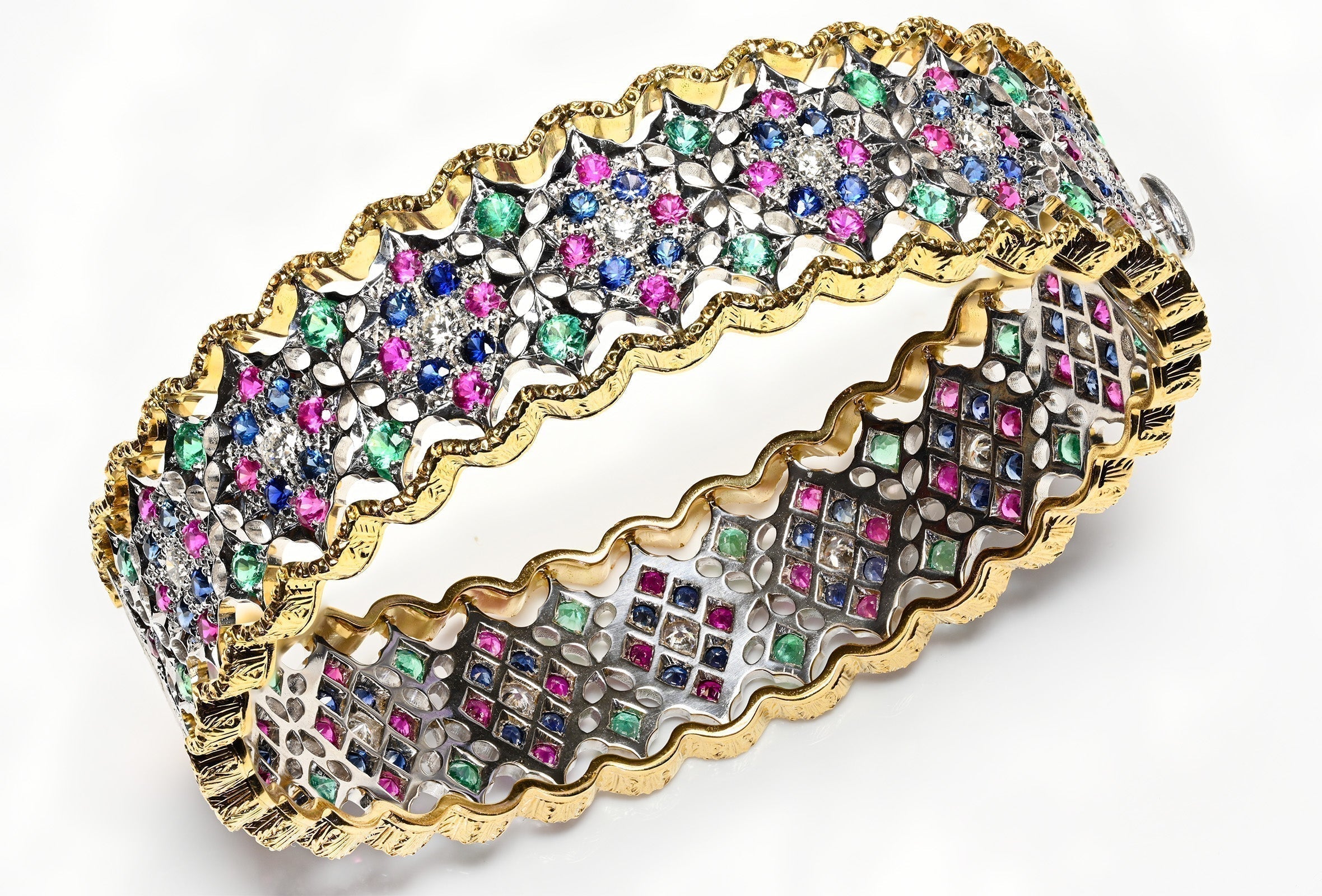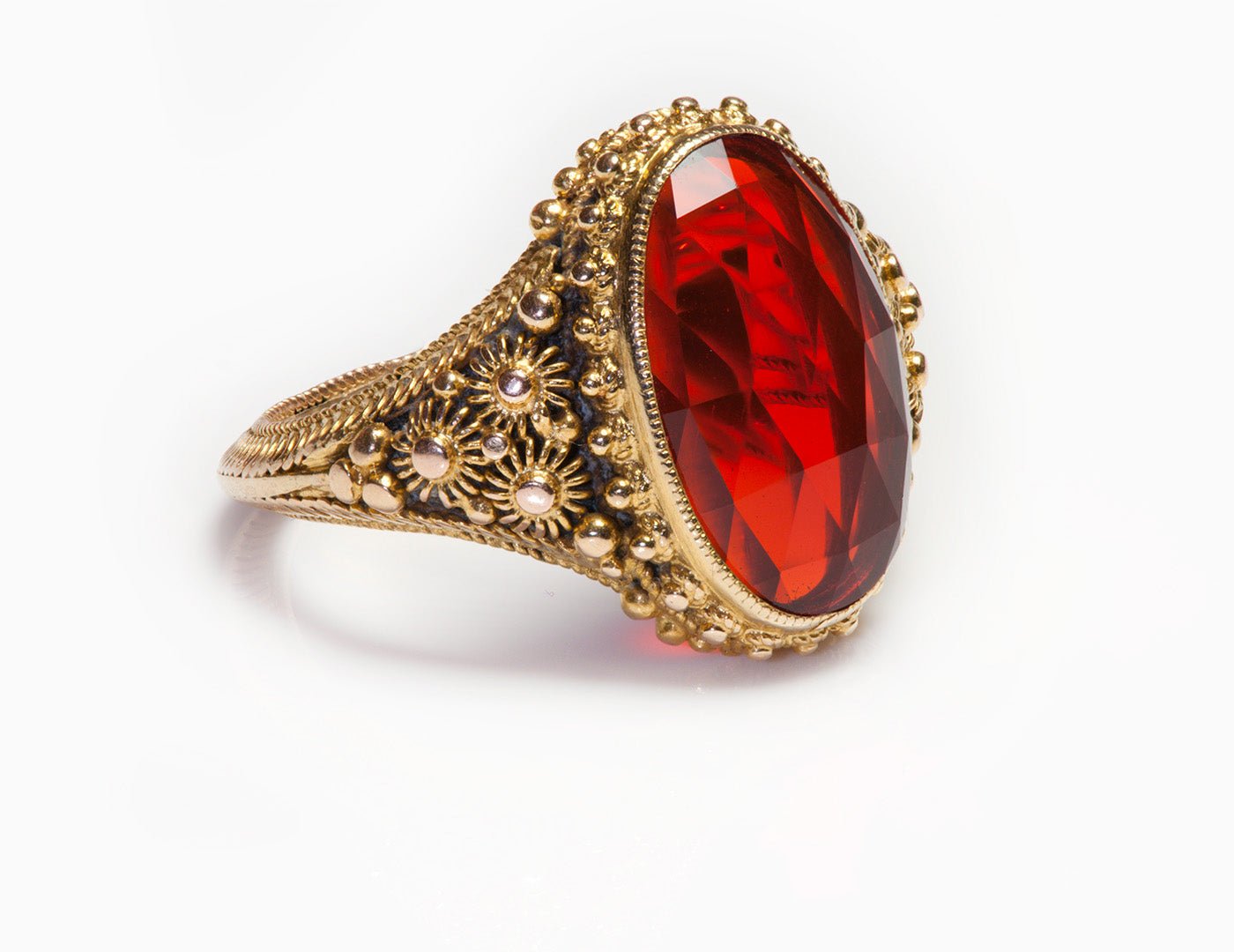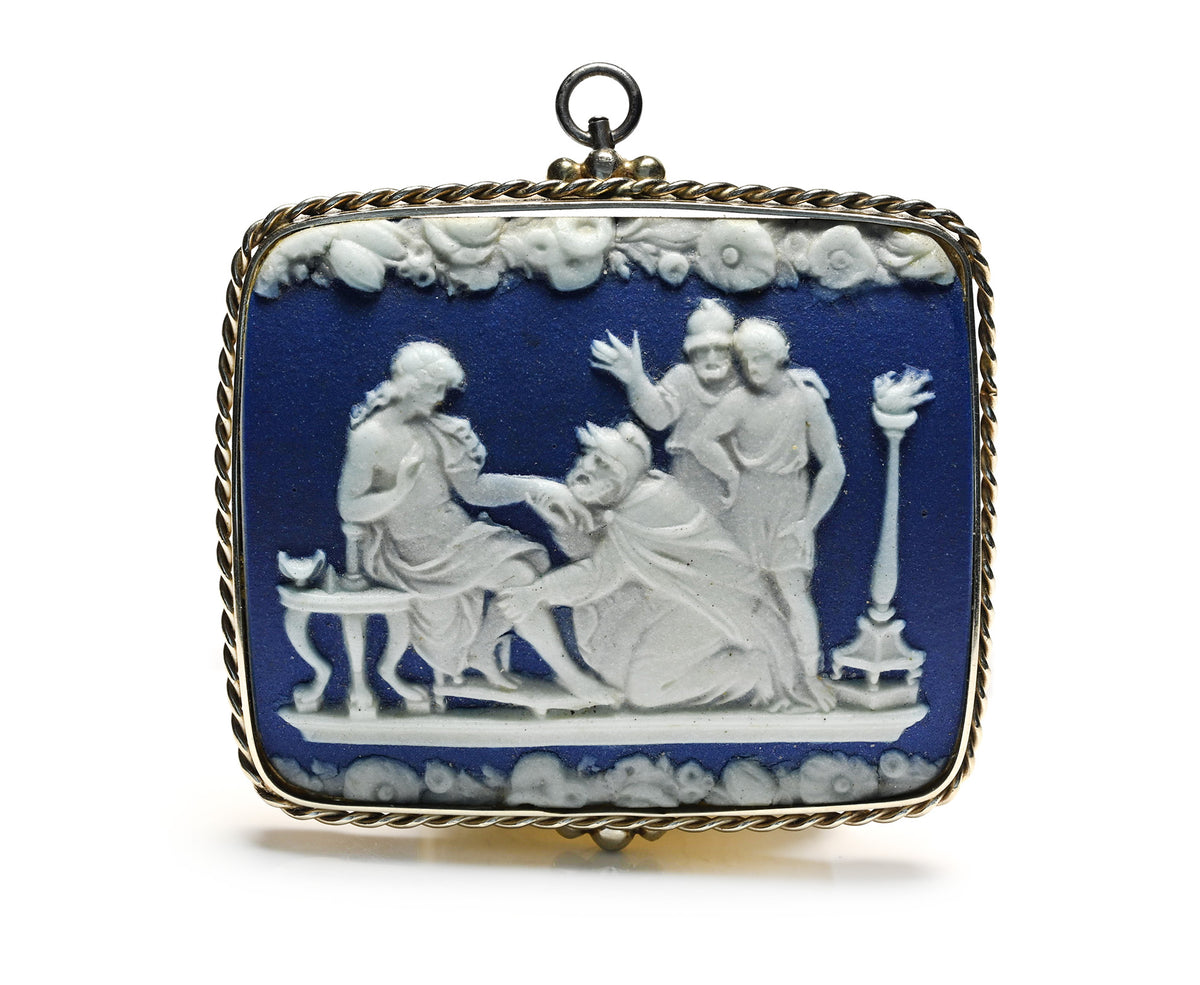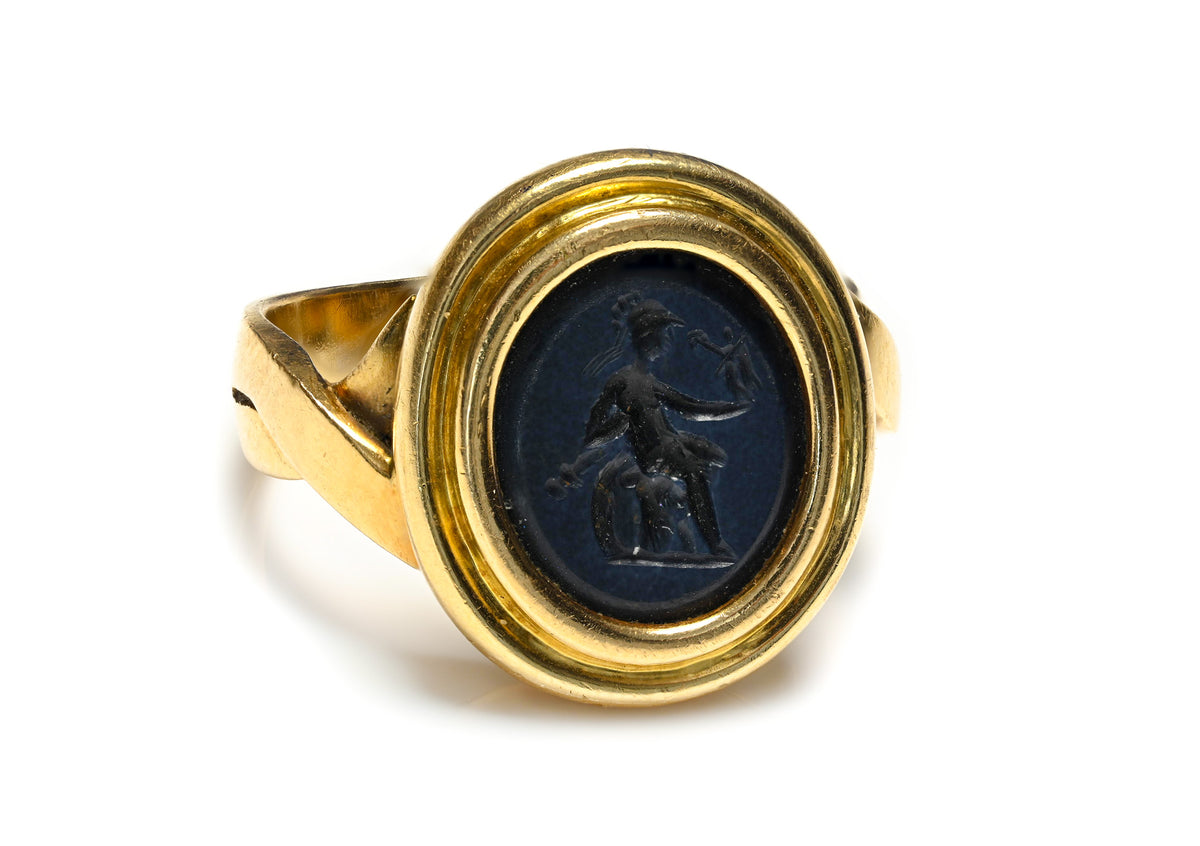
Things You Didn’t Know About The Castellani House
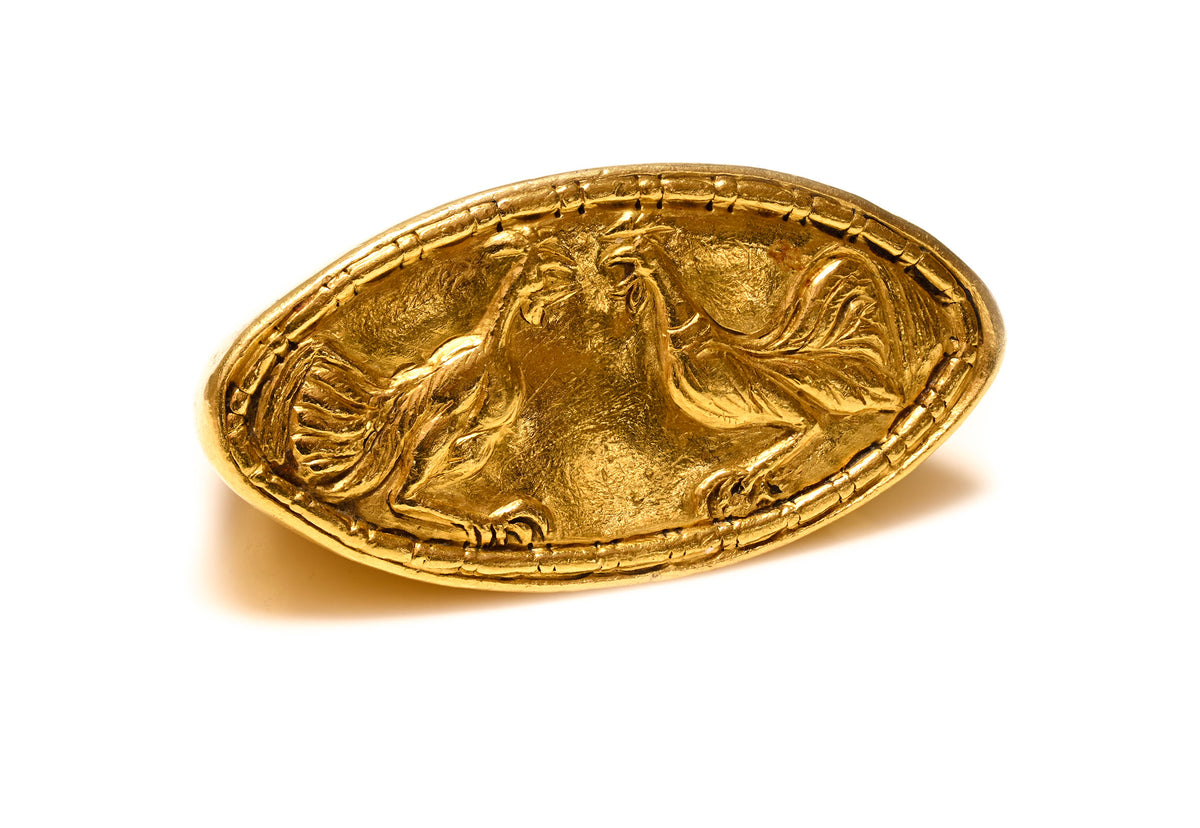
Some jewelry houses are remembered for beauty. Others for innovation, royal clients, or the perfection of a particular style. The Castellani House occupies a rarer place in jewelry history because it brought all these elements together while adding something even more unusual: scholarship. Its jewels were not created only to adorn the body. They were designed to revive a lost visual language, to study ancient craftsmanship, and to give nineteenth-century Rome a renewed artistic voice through gold.
Founded in Rome by Fortunato Pio Castellani in 1814, the house emerged at a moment when Europe was intensely engaged with antiquity. Archaeological discoveries, private collections, museum culture, aristocratic taste, and the Grand Tour had turned ancient objects into powerful sources of inspiration. Yet Castellani did more than respond to this fascination. The family transformed it into a disciplined artistic project, drawing from Etruscan, Roman, Greek, Byzantine, medieval, and Renaissance sources to create jewels that felt rooted in the past without belonging entirely to it.
What made Castellani exceptional was the seriousness behind the beauty. Fortunato Pio Castellani studied not only ancient forms, but also the color, surface, and material presence of old gold. His sons, Alessandro and Augusto, expanded the family’s influence through lectures, exhibitions, collecting, restoration, and international connections. The house examined excavated ornaments, worked with advisers such as Michelangelo Caetani, and drew inspiration from major archaeological collections, including the celebrated Campana collection. In this world, a bracelet, brooch, bulla, necklace, or pair of earrings could become both an ornament and a historical argument.
Castellani jewelry is often associated with the Etruscan Revival, especially because of the family’s famous experiments with granulation and filigree. That label is useful, but incomplete. The Castellani imagination was much broader. Their jewels also absorbed the solemn rhythm of early Christian and Byzantine mosaics, the refinement of Greek ornaments, the symbolism of classical mythology, the richness of Renaissance pendants, and the structural intelligence of ancient chain work. This breadth explains why Castellani pieces rarely feel like ordinary revival jewelry. They carry the weight of research, but they are not dry academic exercises. They are alive with design, texture, and historical imagination.
The house also understood that the past could not be revived through appearance alone. Technique mattered. Surface mattered. The tone of the gold mattered. The smallest granule, the curve of a wire, the rhythm of a chain, the placement of an enamel detail, and the character of an engraved gem all contributed to the impression that a nineteenth-century jewel could converse with antiquity. This attention to detail gave Castellani jewelry a depth that separated it from more superficial historical fashions.
The Castellani story is also the story of nineteenth-century Rome: a city of ruins and politics, excavations and collectors, papal authority and nationalist ambition, aristocratic patrons and foreign travelers. The family’s jewels reflect this atmosphere. They belong to a period when archaeology was changing European taste, when museums were becoming educational institutions, and when the decorative arts were being asked to carry cultural meaning beyond fashion.
For collectors today, authentic Castellani jewelry is valued not merely because it is rare, but because it represents one of the most intellectually ambitious moments in the history of antique jewelry. A Castellani jewel can contain archaeological memory, technical experiment, Roman identity, and refined craftsmanship within the space of a few inches. It is not only a beautiful object. It is evidence of a family’s attempt to restore dignity to ancient goldsmithing and to make the modern world look again at the artistic intelligence of the past.
This article follows the Castellani House through the details that make it so fascinating: the family’s beginnings in Rome, the influence of Michelangelo Caetani, the impact of the Regulini-Galassi tomb, the importance of the Campana collection, the experiments with granulation, the color of ancient gold, the role of museums, the international success of Alessandro and Augusto, and the reason Castellani jewels remain among the most compelling creations in nineteenth-century jewelry.

Table of Contents
- The Roman Beginning: How Fortunato Pio Castellani Built More Than A Jewelry Workshop
- Michelangelo Caetani: The Aristocratic Mind Behind The Castellani Vision
- The Regulini-Galassi Tomb And The Shock Of Etruscan Gold
- The Campana Collection: The Ancient Treasure That Fed The Castellani Imagination
- The Mystery Of Granulation: Castellani’s Search For A Lost Ancient Technique
- The Color Of Ancient Gold: Why Castellani Cared About The Surface, Not Only The Shape
- More Than Etruscan Revival: The Many Historical Worlds Inside Castellani Jewelry
- Micromosaics, Byzantine Echoes, And The Sacred Side Of Castellani Jewelry
- Cameos, Intaglios, And The Art Of Engraved Gems
- Alessandro Castellani: The Voice That Carried The House Beyond Rome
- Augusto Castellani: The Steady Hand Behind The Roman Workshop
- The Castellani School And The Revival Of Roman Craftsmanship
- From Rome To Europe: How Castellani Became An International Name
- Royal Clients, Grand Tour Collectors, And The Culture Of Taste
- Jewelry As Scholarship: Why Castellani Changed The Way People Looked At Ornament
- Castellani And The Museum World: When Jewelry Became Cultural Evidence
- Castellani And Carlo Giuliano: A Connection That Still Fascinates Jewelry Scholars
- How To Recognize Castellani Jewelry
- Why Authentic Castellani Jewelry Is So Rare Today
- Alfredo Castellani And The End Of The House
- The Castellani House: When Revival Became History
The Roman Beginning: How Fortunato Pio Castellani Built More Than A Jewelry Workshop
The Castellani story begins in Rome in 1814, when Fortunato Pio Castellani opened his business on the ground floor of Palazzo Raggi, on Via del Corso. At first glance, this may sound like a conventional beginning: a young goldsmith establishing a workshop in one of the most culturally charged cities in Europe. But the setting matters. Rome was not simply a city with customers. It was a city layered with ruins, churches, excavations, aristocratic houses, artists, antiquarians, and foreign travelers who came searching for the visible remains of the ancient world.
In its early years, the Castellani business was not limited to jewelry. Historical accounts describe it as both a jeweler’s shop and a picture-dealing salon, a detail that helps explain the intellectual atmosphere from which the house later developed. Fortunato Pio was working in a world where art, collecting, archaeology, and commerce frequently overlapped. A client might be interested in a painting, an ancient fragment, a cameo, a jewel, or an object that suggested the refinement of classical culture. Castellani learned to speak to that audience.
At the beginning, his jewelry followed the tastes that dominated the market. French and English styles were influential, especially among the foreign clientele who visited Rome. For a practical craftsman building a business, this made sense. Yet Fortunato Pio gradually understood that Rome itself offered a more powerful source of distinction. Instead of depending on imported taste, he could create a style rooted in the city’s own historical depth.
This shift became decisive. By the 1820s, encouraged by admirers of ancient art, Castellani began to see the potential of jewels inspired by antiquity. The idea was not simply to produce decorative souvenirs for travelers. It was to revive forms, surfaces, and techniques associated with ancient goldsmithing, and to make them desirable to a modern audience. In doing so, Castellani helped move Roman jewelry away from imitation and toward a new artistic identity.
The timing was ideal. Europe was increasingly fascinated by archaeology. Excavations in Italy and beyond were bringing ancient ornaments, vessels, sculptures, and painted objects into public view. Collectors and scholars were studying them with new seriousness. Museums were becoming more important. The Grand Tour had already trained generations of aristocrats and intellectuals to look at Rome as a living archive of civilization. Castellani entered this world not as a passive observer, but as a craftsman capable of translating archaeological fascination into objects that could be worn.
Fortunato Pio’s achievement was therefore larger than the success of a jewelry shop. He helped restore prestige to Roman goldsmithing at a time when Italian jewelry had lost much of its former authority in Europe. His work suggested that the future of Italian craftsmanship might be found not by copying Paris or London, but by studying Etruscan tombs, Roman ornaments, Byzantine mosaics, medieval forms, and Renaissance jewels with fresh attention.
This explains why the Castellani House became so influential. It did not offer novelty in the ordinary sense. It offered memory transformed into design. A Castellani jewel was not merely fashionable; it carried the suggestion of excavation, scholarship, and cultural continuity. From the beginning, the house understood that jewelry could be more than a luxury object. It could become a way for Rome to reclaim its artistic voice.

Michelangelo Caetani: The Aristocratic Mind Behind The Castellani Vision
No history of the Castellani House can be complete without Michelangelo Caetani, Duke of Sermoneta. He was not a jeweler in the professional sense, yet his influence on the house was profound. A scholar, artist, aristocrat, liberal thinker, Dante expert, and passionate admirer of ancient art, Caetani brought to Castellani something that technical mastery alone could not provide: a cultivated historical imagination.
Fortunato Pio Castellani met Caetani in the 1820s, and the relationship quickly became one of the defining collaborations of the house. Caetani was deeply connected to Roman aristocratic society and had the intellectual range to understand jewelry not as isolated ornament, but as part of a wider artistic tradition. Through his advice, drawings, and historical guidance, he helped direct Castellani toward a more ambitious interpretation of ancient and historical design.
His importance lies in the breadth of his taste. Caetani was not interested only in Etruscan art, although that would become one of the most famous sources for Castellani jewelry. His imagination moved across classical, Byzantine, medieval, Renaissance, and early Christian forms. This helps explain why the Castellani style cannot be reduced to a single revival category. The house is often linked with Etruscan Revival jewelry, but its finest works reveal a much wider conversation with the past.
Caetani’s role was especially valuable because he understood how historical inspiration could be adapted without becoming mechanical imitation. A Castellani jewel might begin from an ancient model, but the final object often absorbed influences from several periods. A bracelet could echo Greek or Etruscan forms while using gem settings that suggested Renaissance taste. A micromosaic bracelet could draw from early Christian and Byzantine sources while remaining unmistakably nineteenth-century in its construction. This learned mixture became part of Castellani’s originality.
The Duke of Sermoneta was also connected to specific works and commissions associated with the house. Historical accounts credit him with designs or advisory roles for Castellani jewels, including pieces inspired by ancient ornaments and works made for important patrons. He was linked to the creation of a parure made for the Countess of Crawford, now associated with the Victoria and Albert Museum, and to designs that reveal his broad interest in historical ornament. His name also appears in discussions of jewels shown at nineteenth-century exhibitions, where Castellani works after antique models were presented to an international audience.
Caetani’s influence extended beyond individual designs. He helped shape the intellectual environment in which Castellani operated. Through him, the house became connected not only with aristocratic patrons, but with a way of thinking about jewelry as a historical art. He encouraged the study of ancient models, the adaptation of early Christian and Byzantine motifs, and the disciplined revival of traditional techniques. In this sense, he helped Castellani become more than a workshop. He helped it become a cultural project.
The collaboration between Caetani and Castellani also reveals something important about nineteenth-century jewelry. Great jewels were often the result of networks: goldsmiths, scholars, collectors, aristocrats, archaeologists, restorers, and dealers all contributed to the movement of ideas. Castellani jewelry emerged from precisely such a world. It was made at the bench, but it was also shaped in libraries, salons, museums, archives, churches, and archaeological collections.
This is why Caetani matters so much. He gave Castellani access to a larger visual and intellectual universe. His guidance helped the house avoid mere decoration and pursue something more complex: jewels that could carry the memory of civilizations while still speaking to the taste of the nineteenth century.
The Regulini-Galassi Tomb And The Shock Of Etruscan Gold
The discovery of the Regulini-Galassi tomb at Cerveteri in 1836 was one of the defining archaeological moments behind the Castellani vision. For anyone interested in ancient jewelry, the tomb was not merely an excavation. It was a revelation. The ornaments found there showed a level of technical refinement that challenged nineteenth-century assumptions about ancient craftsmanship and gave new urgency to the study of Etruscan goldsmithing.
The tomb, associated with the ancient Etruscan city of Caere, brought to light objects of extraordinary richness. Among them were gold jewels decorated with granulation, filigree, repoussé work, and complex ornamental patterns. These were not simple ancient adornments. They were evidence of a highly sophisticated goldsmithing culture, capable of manipulating gold with delicacy, precision, and structural intelligence.
For the Castellani family, the impact was profound. The Papal authorities invited them to study the treasures, giving the house direct contact with a kind of ancient workmanship that would shape its future. Fortunato Pio Castellani had already begun moving toward archaeological inspiration, but the Regulini-Galassi discovery gave that direction a more powerful technical and visual foundation. It showed what ancient goldsmiths had achieved and what modern Roman craftsmen might aspire to revive.
The most important lesson came from granulation. The Etruscan jewels revealed surfaces covered with tiny gold spheres arranged in patterns of astonishing subtlety. The effect was not heavy or ornamental in the ordinary sense. It was almost textile-like, turning gold into rhythm, shadow, and texture. To reproduce such work required more than admiration. It required experiment, patience, and a willingness to confront knowledge that had been lost for centuries.
This is why the tomb deserves its own place in the Castellani story. It did not simply provide motifs to imitate. It created a standard. The family could see that ancient jewelry was not primitive, exotic, or decorative in a shallow way. It was technically advanced and artistically disciplined. The challenge was not only to borrow its forms, but to understand its methods.
The Regulini-Galassi treasures also strengthened the association between Castellani and the Etruscan Revival. Etruscan art offered nineteenth-century Italy a powerful cultural resource. It was ancient, local, mysterious, and deeply connected to the soil of the Italian peninsula. For a Roman jewelry house seeking to move beyond dependence on French and English fashion, Etruscan goldwork offered both artistic inspiration and cultural legitimacy.
Yet Castellani’s response to the tomb was not a narrow act of copying. The family absorbed the lessons of Etruscan technique into a broader revival language. Granulation, filigree, warm gold surfaces, ancient forms, and archaeological structures became part of a design vocabulary that could be adapted to necklaces, earrings, brooches, bracelets, bullae, and diadems. A Castellani jewel might not reproduce a Regulini-Galassi object exactly, but it could carry the technical memory of what that discovery revealed.
The discovery at Cerveteri became part of the intellectual foundation of the Castellani House. It pushed the family toward technical research, strengthened its commitment to historical revival, and helped establish the idea that Roman goldsmithing could be renewed through the disciplined study of antiquity.
In the long history of jewelry, few excavations had such an influence on a modern workshop. The Regulini-Galassi tomb gave Castellani a glimpse of ancient mastery. The house spent decades trying to answer it in gold.

The Campana Collection: The Ancient Treasure That Fed The Castellani Imagination
Among the great forces that shaped the Castellani House, few were as important as the Campana collection. This extraordinary group of antiquities, assembled by Giovanni Pietro Campana, Marquis of Cavelli, was one of the most celebrated private collections of the nineteenth century. It included Greek, Etruscan, Roman, and other ancient objects, among them a remarkable number of gold and silver ornaments. For a house devoted to the revival of ancient jewelry, such a collection was not merely impressive. It was a living library of forms, techniques, and ideas.
The Castellani family had close contact with Campana and his collection. They were involved in the acquisition, restoration, cataloging, and study of ancient ornaments, gaining the kind of direct access that most revival jewelers could only dream of. This proximity gave the house an enormous advantage. Castellani did not have to rely only on engravings, vague archaeological reports, or second-hand descriptions. The family could examine ancient jewels closely, study their construction, compare details, and understand how form and technique worked together.
The Campana collection became a reservoir of inspiration. Earrings, diadems, bullae, breast ornaments, chains, pendants, and other ancient jewels provided models for Castellani’s archaeological designs. Some pieces were closely copied; others were reinterpreted more freely. The workshop also possessed plaster casts of jewels, which allowed forms to be studied and repeated even when the originals were no longer available. This explains why certain Castellani jewels feel so archaeologically persuasive: they were born from intimate contact with actual antiquities.
The story of the collection itself was dramatic. Campana, who served as director of the Sacro Monte di Pietà in Rome, was accused of financial misconduct and imprisoned in 1859. Augusto Castellani later defended him, presenting him as a victim of political reprisal rather than simple corruption. Whatever the legal and political realities, the consequence was devastating for Italian cultural heritage. The collection was dispersed, and a major portion of its ancient jewelry eventually passed to France, entering what is now the Louvre.
The Castellani family tried to prevent this loss. Fortunato Pio Castellani and his sons wanted the jewels preserved in Italy, and they proposed financial solutions that might have kept the collection together. One idea involved raising money by exhibiting the jewels to the public. Another suggested that the sale of duplicate pieces could help cover the debt. These efforts failed, but they reveal how strongly the Castellani family understood the cultural importance of ancient jewelry. To them, these ornaments were not only valuable objects; they were evidence of artistic knowledge that belonged to the history of Italy.
For the Castellani House, the Campana collection had a double significance. On one level, it offered models for commercial production. A jewel from the collection could inspire a pair of earrings, a bracelet, a diadem, or a pendant made for a nineteenth-century client. On another level, it gave the family a deeper mission. The collection confirmed that ancient goldsmiths had achieved a sophistication that modern craftsmen had to study with humility.
Several famous ancient jewels from Campana’s collection left traces in the Castellani repertoire. Diadems, enamelled earrings, bullae, and ornaments decorated with granulation and filigree became sources for revivalist creations. The ancient stephane found at Palo in Etruria, praised by nineteenth-century observers, inspired one of Castellani’s most admired archaeological essays. Other objects, such as the celebrated bulla associated with Chiusi, encouraged later interpretations by Castellani and by other revivalist jewelers.
The influence of Campana also helps explain why Castellani jewelry can feel so specific. Many revival jewels of the nineteenth century borrowed the “look” of antiquity in a general way. Castellani went further. The house studied known objects, traced their origins, and built modern jewels from a close reading of ancient prototypes. Even when the final design was adapted or embellished, it retained the authority of research.
This relationship with the Campana collection also places Castellani within the larger history of museums and collecting. The nineteenth century was a period when ancient objects moved between private collections, state authorities, dealers, scholars, and emerging public museums. Standards were not the same as they are today, and the movement of antiquities often involved complicated questions of ownership, national identity, and cultural preservation. Castellani stood at the center of this world, acting as goldsmiths, restorers, advisers, collectors, and interpreters.
In the end, the Campana collection did not remain in Rome as the Castellani family had hoped. Yet through Castellani jewelry, many of its forms and technical lessons continued to circulate. Ancient ornaments that might have remained behind museum glass were transformed into modern jewels, studied by craftsmen, worn by collectors, and admired in international exhibitions. The collection’s physical dispersal was a loss, but its artistic influence survived in gold.
The Campana collection gave Castellani access to masterpieces of ancient jewelry; Castellani, in turn, helped make those ancient ideas visible to a modern public.
The Mystery Of Granulation: Castellani’s Search For A Lost Ancient Technique
If one technique defines the fascination of Castellani jewelry, it is granulation. Tiny spheres of gold, sometimes almost impossibly small, arranged in borders, clusters, and delicate ornamental fields, gave ancient Etruscan jewels a surface unlike anything produced by ordinary nineteenth-century workshops. To modern eyes, granulation may look like decoration. To the Castellani family, it was a technical mystery, an archaeological challenge, and a measure of artistic seriousness.
The problem was simple to describe and difficult to solve: ancient goldsmiths had known how to attach minute gold granules to a gold surface without flooding the design with visible solder. The result was precise, textured, and alive with light. By the nineteenth century, this knowledge had largely disappeared. Jewelers could admire ancient granulated ornaments, but reproducing the effect with the same refinement was another matter entirely.
For Castellani, granulation became more than an ornamental feature. It became a declaration of intent. The family wanted to prove that Roman goldsmithing could recover the dignity of ancient craftsmanship, not by copying shapes alone, but by studying the physical language of ancient jewels. Granulation, with its demanding precision, offered the perfect test.
Castellani’s experiments were long and complex. Alessandro Castellani later explained that the best results were achieved through the use of an arsenite flux and extremely fine solder. This detail is important because it shows that the family approached the problem through technical investigation rather than romantic guesswork. They were testing materials, heat, surface preparation, and joining methods in an attempt to approximate ancient effects.
Modern examination has shown that Castellani’s granulation, impressive as it is, was not identical to the finest ancient examples. Scientific studies of certain pieces have suggested the use of solder, while ancient techniques may have relied on processes that allowed granules to fuse more subtly to the surface. In some Castellani jewels, microscopic inspection has found that the granules, although beautifully arranged, can appear slightly clogged by the metal beneath them. Ancient Etruscan granulation often appears freer, finer, and less visibly interrupted by soldering material.
This difference should not be seen as failure. It is part of the historical truth of Castellani’s achievement. The family was working in the nineteenth century, trying to reconstruct methods that had been lost for centuries, using the scientific and workshop knowledge available to them. Their success was not that they became ancient Etruscan goldsmiths. Their success was that they revived the ambition to work at that level.
The visual effect remains extraordinary. On a Castellani jewel, granulation gives the gold a tactile intelligence. It breaks the surface into rhythm and shadow. It creates borders that seem woven rather than applied. It allows a jewel to feel ancient without requiring heavy ornament. A small brooch, pendant, or pair of earrings can acquire architectural presence through the disciplined placement of tiny gold spheres.
Granulation also helped distinguish Castellani from many other revival jewelers. Archaeological style became fashionable in the nineteenth century, especially after exhibitions and discoveries made ancient designs more visible. But not every jeweler who adopted ancient motifs understood the discipline behind them. Castellani’s use of granulation signaled that the house was interested in technique, not just appearance.
For collectors today, Castellani granulation remains one of the clearest signs of the house’s identity. It is delicate but never weak, learned but never lifeless. It rewards close looking. From a distance, the jewel may appear serene and balanced; under magnification, it reveals patience, calculation, and the long shadow of Etruscan mastery.
In this sense, granulation is more than a decorative technique in Castellani jewelry. It is a symbol of the house itself: a modern attempt to approach the ancient world with reverence, intelligence, and extraordinary discipline.

The Color Of Ancient Gold: Why Castellani Cared About The Surface, Not Only The Shape
One of the most refined aspects of Castellani jewelry is also one of the easiest to overlook: the color of the gold. The house did not seek only to reproduce ancient forms. It tried to recreate the visual character of ancient gold itself — that warm, soft, slightly archaeological surface that differs so much from the bright polish of conventional nineteenth-century jewelry.
For Fortunato Pio Castellani, this was not a secondary matter. If a jewel was meant to evoke Etruscan, Greek, Roman, Byzantine, or medieval sources, the metal had to carry part of that memory. A jewel could have the correct silhouette and still feel false if the surface looked too modern. Castellani understood that antiquity was not only a matter of motif. It was also a matter of texture, tone, and light.
This concern led him toward chemical and electrochemical experiments. In 1826, Fortunato Pio addressed the Accademia dei Lincei in Rome on the chemical coloring of gold and the application of electrotype and related processes to gilding. The subject may sound technical, but it reveals the artistic seriousness of the house. Castellani was trying to solve a visual problem through science: how could modern gold be made to suggest the depth and softness of ancient metal?
The result became one of the signatures of Castellani jewelry. Many pieces have a distinctive surface quality, less aggressive than highly polished gold and more closely aligned with the appearance of excavated ornaments. The gold seems to absorb and return light with restraint. It does not merely shine; it glows with a controlled warmth. This surface helped Castellani jewels feel archaeologically persuasive, even when their designs were modern reinterpretations rather than exact copies.
The question of color was also connected to construction. In reviving techniques such as granulation and filigree, the workshop had to join small elements of gold to larger surfaces. If solder was used, differences in metal composition could affect the final appearance. Scholars have suggested that gilding or surface treatment may have helped unify the color of finished pieces, disguising technical joins and giving the jewel a more ancient-looking finish.
This may explain why some Castellani pieces, when later exposed to heat during repair or alteration, lost part of their original surface character. Once the outer layer was affected, a redder tone beneath could appear. Such details remind us that the Castellani effect was not accidental. It depended on careful control of surface, chemistry, and finish.
The color of Castellani gold also had symbolic power. Ancient gold had survived burial, time, and historical distance. Its surface carried the aura of continuity. By imitating that tone, Castellani gave new jewels a sense of archaeological dignity. A nineteenth-century necklace or brooch could appear as though it belonged to a much older civilization, not because it was deceptive, but because it was designed to speak the same visual language.
This approach separates Castellani from many revival jewelers who treated ancient motifs as decorative patterns. For Castellani, the past was not a costume placed on a modern object. It had to enter the material presence of the jewel. The tone of the gold, the grain of the surface, the disciplined restraint of the finish, and the relationship between shine and shadow all contributed to the final impression.
In a broader sense, this concern with surface reflects the intellectual character of the house. Castellani jewelry was built from close looking. The family studied not only what ancient ornaments represented, but how they were made, how they aged visually, how their surfaces interacted with light, and why they produced such authority even in small scale. Their work shows that historical design requires more than quotation. It requires sensitivity to matter.
For collectors today, this is one of the quiet pleasures of authentic Castellani jewelry. The beauty is not only in the design, but in the atmosphere of the metal. The gold has a particular gravity. It does not behave like ordinary gold jewelry of the period. It seems to carry the memory of excavation, study, and patient experiment.
In Castellani’s hands, gold was never just a precious material. It became a historical medium.

More Than Etruscan Revival: The Many Historical Worlds Inside Castellani Jewelry
The Castellani House is often introduced through the phrase “Etruscan Revival,” and for good reason. The family’s study of Etruscan goldwork, especially granulation and filigree, became one of the defining achievements of the house. Yet this label, while useful, can also narrow the way we understand Castellani jewelry. The Castellani imagination was never confined to one ancient civilization, one technique, or one archaeological vocabulary.
The house moved across history with remarkable freedom. Its jewels could draw from Etruscan tombs, Greek ornaments, Roman bullae, Byzantine mosaics, early Christian symbols, medieval reliquaries, Renaissance pendants, and later historical portraiture. This variety was not random. It reflected the way nineteenth-century scholars, collectors, and artists often experienced the past: as a vast visual archive in which different periods could be studied, compared, and reinterpreted.
For Castellani, antiquity was not a fixed style. It was a source of structure, proportion, symbolism, and technique. A pair of earrings might recall ancient prototypes from Vulci or the Campana collection. A bracelet might echo Hellenistic forms while introducing gemstone settings that suggested Renaissance taste. A pendant could be inspired by medieval devotional jewelry yet finished with the surface treatment and gold color associated with archaeological revival. This layering of references gave Castellani pieces their distinctive richness.
The family’s interest in Byzantine and early Christian art is especially important. Rome offered endless sources for this kind of study: churches, basilicas, catacombs, mosaics, inscriptions, and sacred ornament. Castellani did not treat these sources as secondary to classical antiquity. Instead, the house absorbed their severity, symbolism, and decorative rhythm into jewels that often feel more architectural than sentimental.
The Renaissance also entered the Castellani vocabulary. Historical accounts mention pendants in sixteenth-century style, enriched with enamel, rubies, pearls, diamonds, sapphires, intaglios, or cameos. These jewels show that the family did not see the Renaissance as a break from antiquity, but as another chapter in the long history of European ornament. A Renaissance-inspired Castellani jewel could carry classical references, colored enamel, engraved gems, and architectural composition within the same design.
Medieval sources were equally important. One of the most fascinating examples is the family’s interest in the fourteenth-century Founder’s Jewel at New College, Oxford. Castellani produced versions inspired by this medieval object, adapting its architectural format and enriching it with gemstones and enamel. Such works show how deeply the house engaged with historical jewelry beyond the Etruscan world. Castellani was interested in the full evolution of ornament, from ancient tombs to medieval treasuries.
This breadth also reflects the influence of advisers and collaborators such as Michelangelo Caetani. His taste moved across classical, Byzantine, medieval, and Renaissance sources, and his involvement helped prevent the Castellani style from becoming a narrow archaeological formula. Under this kind of intellectual guidance, the house developed a design language that was historical without being rigid.
What unites these different influences is not period accuracy in the modern academic sense, but seriousness of study. Castellani jewels rarely feel like casual historical costumes. Even when they combine sources freely, they do so with a sense of structure and purpose. The family understood that each historical period had its own visual grammar: the rhythm of Etruscan granulation, the solemnity of Byzantine mosaic, the narrative richness of medieval ornament, the color and drama of Renaissance enamel.
This is why Castellani jewelry continues to reward close looking. At first glance, a piece may seem simply “archaeological.” On deeper examination, it may reveal a dialogue between several worlds. A chain might suggest ancient construction, a pendant form might recall a Renaissance jewel, the surface of the gold might evoke excavated antiquity, and the ornament might carry Byzantine or early Christian echoes. The jewel becomes a meeting point rather than a quotation.
The phrase “Etruscan Revival” remains useful, but it should be seen as only one doorway into the Castellani universe. The house’s true achievement was larger: it transformed the study of historical ornament into a living design language. Castellani did not revive one past. It created jewels in which many pasts could speak at once.

Micromosaics, Byzantine Echoes, And The Sacred Side Of Castellani Jewelry
When people think of Castellani jewelry, they often imagine granulated gold, Etruscan forms, ancient bullae, and archaeological necklaces. Yet one of the most refined dimensions of the house lies in its use of micromosaic work and its fascination with early Christian and Byzantine art. This side of Castellani is quieter than the Etruscan Revival, but it reveals the same seriousness of study and the same desire to turn historical sources into jewelry with depth.
Rome was an ideal place for such inspiration. The city offered not only classical ruins, but also basilicas, catacombs, mosaics, inscriptions, reliquaries, and sacred architecture. For a family interested in the entire history of ornament, early Christian and Byzantine art could not be ignored. These traditions offered a different kind of beauty from Etruscan goldwork: less sensual, more solemn; less focused on surface brilliance, more concerned with symbol, rhythm, and spiritual gravity.
Castellani approached micromosaic jewelry in a way that differed from much of the nineteenth-century market. Micromosaics were already popular among travelers to Italy, especially as souvenirs of the Grand Tour. Many were charming and highly skilled, showing views of Roman monuments, landscapes, ruins, or famous works of art. But Castellani pushed the medium toward something more historically ambitious. Instead of using mosaic only as picturesque decoration, the house connected it to the visual authority of ancient churches, Byzantine ornament, and early Christian imagery.
This distinction matters. A conventional micromosaic jewel might invite the wearer to remember Rome as a destination. A Castellani micromosaic jewel could suggest Rome as a civilization. The difference is subtle but important. Castellani was not merely producing sentimental souvenirs; the house was creating jewels that absorbed the visual language of sacred and imperial art.
The influence of Ravenna was especially powerful. The mosaics of Ravenna, with their intense colors, formal figures, gold grounds, and severe beauty, offered nineteenth-century artists a model of ornament that was both ancient and spiritual. For Castellani, such sources helped expand the meaning of jewelry beyond personal adornment. A bracelet or brooch could carry echoes of basilica walls, sacred pattern, and early Christian symbolism, reduced to intimate scale without losing its dignity.
Michelangelo Caetani and other learned advisers helped guide this side of the house’s work. Historical accounts mention Caetani, together with Count Olsoufieff, as important figures in the Castellani family’s study of early Christian and Byzantine mosaics. The family searched Roman basilicas, catacombs, and other ancient sites for motifs and models. These studies were not casual. They formed part of the same larger project that shaped Castellani’s archaeological jewelry: the revival of historical ornament through careful observation.
The best Castellani micromosaic jewels avoid excessive sweetness. They often possess a restrained, almost architectural quality. Their beauty comes from order, color, proportion, and the tension between miniature scale and monumental reference. This is why some Castellani mosaic bracelets feel closer to fragments of sacred decoration than to ordinary jewelry. They are portable, but they seem to belong mentally to walls, apses, chapels, and ancient interiors.
This approach also helped elevate micromosaic work as a serious jewelry art. In lesser hands, micromosaics could become merely decorative pictures set into gold. Castellani treated the medium as part of a broader historical vocabulary. The mosaic was not an insert added to a jewel; it was integrated into the object’s intellectual and formal structure. Gold, pattern, image, and historical source worked together.
The early Christian and Byzantine influence also complicates the way we understand the Castellani style. It shows that the house was not interested only in pagan antiquity or classical elegance. Castellani moved easily from mythological subjects to sacred motifs, from Etruscan tombs to Roman churches, from ancient chains to mosaic surfaces. Its vision of the past was not narrow. It was layered, like Rome itself.
For collectors, this side of Castellani can be especially rewarding because it is less immediately obvious. A granulated Etruscan Revival jewel announces its archaeological ambition at once. A micromosaic bracelet or Byzantine-inspired ornament may require a slower reading. Its references are quieter, but they reveal the same disciplined mind behind the house’s work.
In the end, Castellani’s micromosaic jewelry proves that the family did not simply revive ancient techniques. It revived ways of seeing. It taught nineteenth-century jewelry to look not only at tombs and treasures, but also at churches, mosaics, sacred spaces, and the visual memory of early Christianity. Through these works, Castellani showed that jewelry could carry the spiritual and artistic atmosphere of entire civilizations in miniature form.
Cameos, Intaglios, And The Art Of Engraved Gems
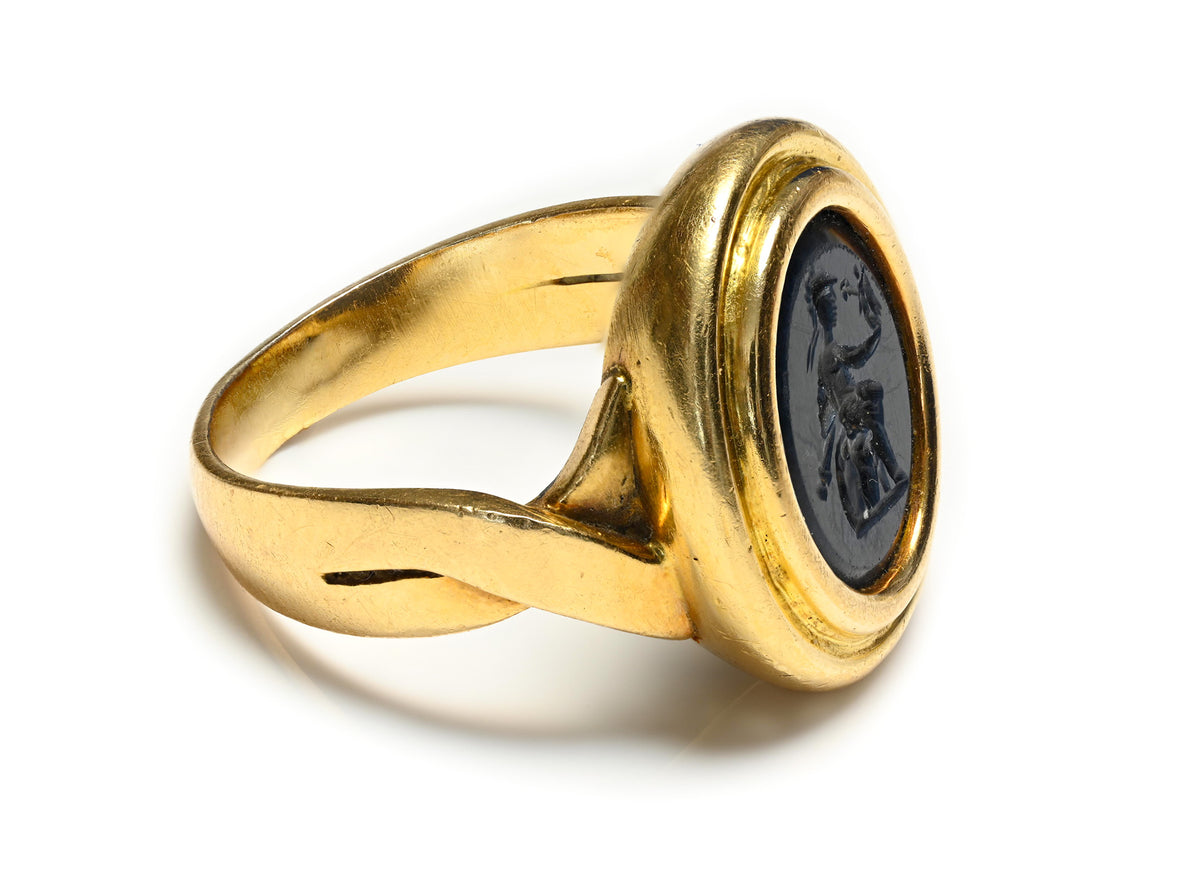
One of the most refined aspects of Castellani jewelry is the use of engraved gems. Cameos and intaglios appear throughout the history of jewelry, from antiquity to the Renaissance and beyond, but in the Castellani world they carried special meaning. They were not added only for decoration. They helped connect a nineteenth-century jewel to the long tradition of classical art, mythology, portraiture, and learned collecting.
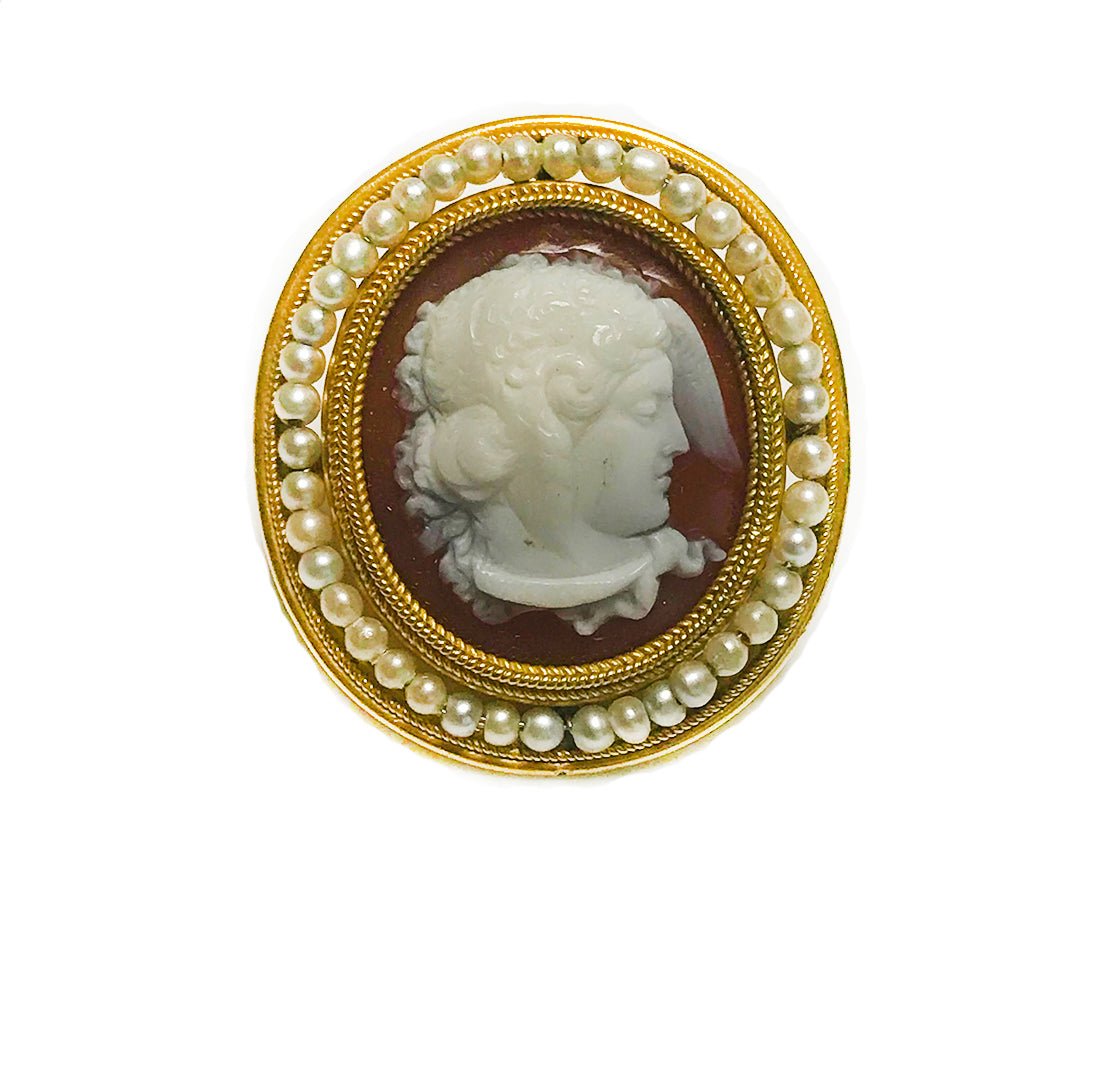
Engraved gems were central to ancient jewelry culture. A small stone could carry the image of a god, hero, ruler, animal, mythological scene, or symbolic device. Intaglios were often used as seals, while cameos developed a powerful decorative and artistic role. By the nineteenth century, these objects were admired by collectors not only for their beauty, but for their link to ancient civilization. They were miniature works of sculpture, small enough to be worn, but rich enough to suggest entire worlds of history.
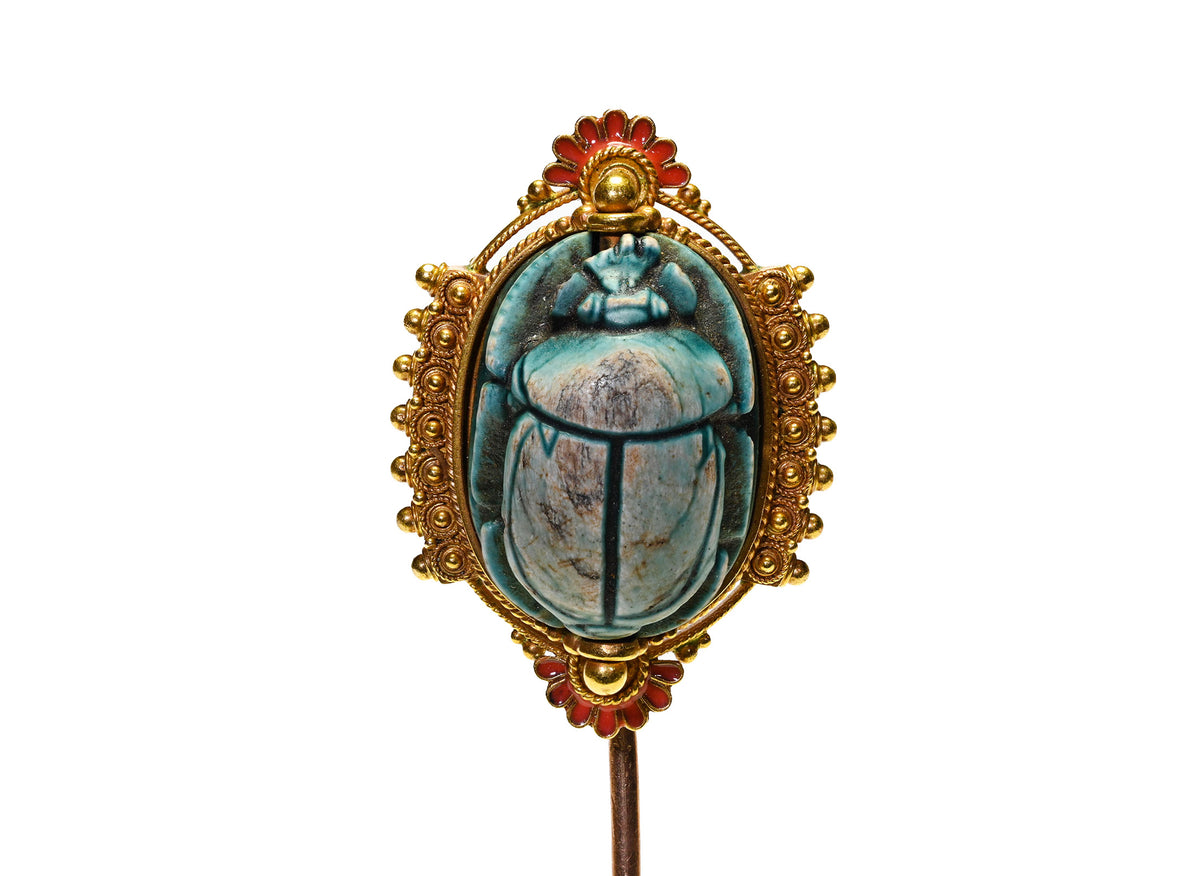
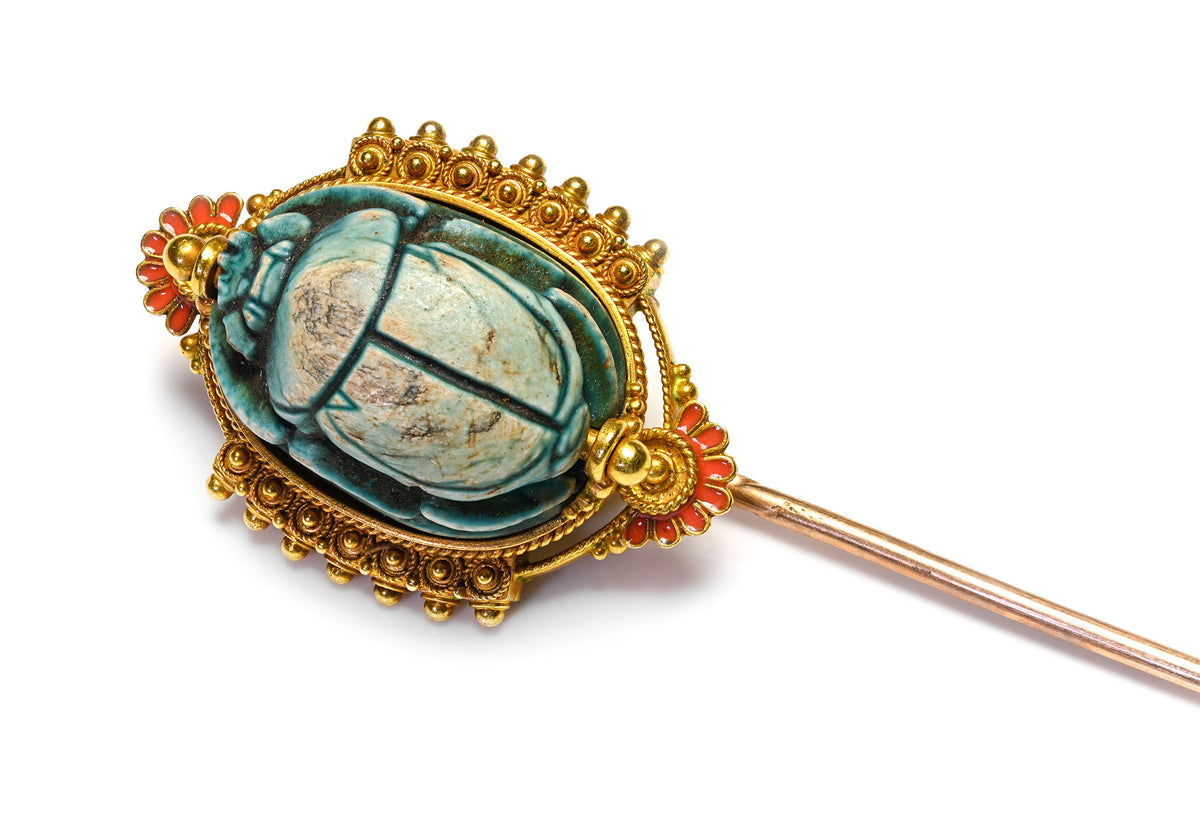
The Castellani family understood this perfectly. Their jewels often incorporated cameos, intaglios, scarabs, and engraved stones in settings that evoked archaeological or Renaissance sources. A pendant might center on an intaglio, a brooch might frame a carved gem, or a necklace might combine historical goldwork with a stone whose subject seemed to belong to antiquity. In such pieces, the gem was not merely the central ornament. It acted almost like a historical voice inside the jewel.
This use of engraved gems also suited the learned nature of the house. Castellani jewelry often asks the viewer to read, not only to admire. A carved stone introduces subject matter: a profile, a figure, a myth, a symbol, a scene. The surrounding goldwork then becomes a frame of interpretation. Granulation, filigree, warm gold color, enamel, or ancient-inspired chains all reinforce the impression that the jewel belongs to a larger historical imagination.
The house did not rely only on ancient stones. Historical sources indicate that the Castellani workshops included gem engravers capable of producing cameos and intaglios in the antique manner. One name associated with this world is Gaetano Trabacchi, mentioned in discussions of engraved gems and connected to the production of stones used in Castellani jewelry. This detail is important because it shows again that the house’s revival was not limited to metalwork. It extended into glyptic art, the ancient discipline of carving images into stone.
The presence of modern engraved gems made in historical style also complicates the interpretation of Castellani pieces. A jewel may look ancient in spirit, but its components may belong to different moments: a nineteenth-century gold setting, a newly carved intaglio in classical style, a genuine ancient stone, or a later adaptation of a Renaissance form. This mixture was not necessarily deceptive. It was part of the revivalist language of the period, in which ancient and modern elements could be brought into conversation.
Cameos and intaglios also helped Castellani move between different historical worlds. A classical intaglio could strengthen the archaeological character of a jewel. A Renaissance-style cameo could connect the piece to sixteenth-century ornament. A scarab might suggest Egyptian or Etruscan collecting taste. A mythological subject could add narrative and intellectual interest. Through these stones, Castellani could give a jewel meaning beyond its structure.
This is especially important because archaeological revival jewelry could sometimes risk becoming purely formal: chains, borders, granules, and ancient shapes. Engraved gems added image and story. They gave the jewel a face, a figure, or a symbolic center. In doing so, they made Castellani pieces more readable to educated collectors, who were often familiar with classical mythology, ancient history, and Renaissance art.
The use of engraved gems also reflects the collector’s culture surrounding Castellani. Nineteenth-century connoisseurs valued objects that required knowledge. A cameo or intaglio was not appreciated only for craftsmanship; it invited identification. Who is represented? What period does the style recall? Is the subject classical, mythological, imperial, or allegorical? What does the stone contribute to the meaning of the jewel? These questions made the object more engaging.
In the hands of Castellani, an engraved gem became more than a precious insert. It was part of a historical composition. The gold setting did not overwhelm it; it gave it context. The jewel became a meeting place between sculpture, archaeology, ornament, and personal adornment.
This is why cameos and intaglios deserve a place in any serious discussion of the Castellani House. They show that the family’s revival of the past was broad and deeply layered. Castellani did not only study ancient metal. It studied ancient image-making. It understood that a jewel could carry history through technique, through form, through surface, and through the carved image held at its center.
Alessandro Castellani: The Voice That Carried The House Beyond Rome
If Fortunato Pio Castellani gave the house its foundation and technical direction, Alessandro Castellani gave it an international voice. His life was far from straightforward. Political conviction, exile, personal tragedy, and physical injury all interrupted what might have been a conventional career in the family workshop. Yet these difficulties pushed him toward a different role, one that became essential to the reputation of the Castellani House.
Alessandro was one of Fortunato Pio’s sons chosen to continue the family business, together with his younger brother Augusto. In another life, he might have worked more directly in the workshop. Instead, his involvement in liberal politics led to imprisonment and exile, while the loss of his wife and son marked his personal life with deep sorrow. A hunting accident cost him an arm, further limiting his participation in the physical labor of jewelry making. These experiences did not remove him from the family enterprise; they changed the way he served it.
Rather than becoming primarily a bench goldsmith, Alessandro became a collector, antiquarian, writer, lecturer, and foreign representative of the house. This was not a secondary position. It was through Alessandro that Castellani jewelry acquired much of its intellectual and international prestige. He understood that the family’s work needed explanation. Archaeological jewelry was not merely another fashion. It required context: ancient sources, lost techniques, excavated models, historical forms, and the ambition to restore dignity to modern craftsmanship.
Alessandro became one of the great interpreters of this mission. In Paris, he addressed members of the Académie des Inscriptions et Belles-Lettres on the jewelry of the ancients. In London, he spoke before the Archaeological Institute, presenting ideas that were later circulated under the title “Antique Jewellery and its Revival.” These lectures mattered because they placed Castellani jewelry inside a scholarly conversation. They showed that the house was not simply selling ornaments inspired by antiquity, but participating in the study and revival of ancient art.
His presence in Paris was especially important. In the early 1860s, Alessandro opened a branch of the firm on the Champs-Élysées, bringing Castellani jewelry into direct contact with one of Europe’s great centers of taste, collecting, and luxury. Parisian society was receptive to objects with archaeological prestige, and Alessandro’s ability to speak as both dealer and scholar gave the jewels an aura that ordinary commercial promotion could not achieve.
He also traveled to London, where the British interest in archaeology, museums, and industrial design created another fertile environment for Castellani’s work. London was not only a market; it was a place where decorative arts were being studied with institutional seriousness. The South Kensington Museum, later the Victoria and Albert Museum, belonged to a culture that believed objects could educate craftsmen and improve design. Castellani jewelry, with its technical ambition and historical references, fit naturally into that world.
Alessandro’s role also helps explain the later connection between Castellani and Carlo Giuliano. Giuliano’s early career developed under strong Castellani influence, and his London work became one of the great chapters of nineteenth-century revival jewelry. The relationship between the two names shows how ideas moved across borders through people, workshops, branches, exhibitions, and personal networks. Castellani was Roman in origin, but Alessandro helped make it European in reach.
His lectures and writings were not abstract scholarship detached from commerce. They were part of a larger strategy, but a sophisticated one. Alessandro knew that a Castellani jewel gained meaning when the viewer understood its source. A bulla was not merely a pendant. A granulated border was not merely texture. A micromosaic bracelet was not simply decorative color. Each element belonged to a history of forms and techniques. By explaining this history, Alessandro increased the intellectual value of the jewels.
This is one reason Castellani became so admired by connoisseurs. The house offered not only objects, but also a way of seeing them. Alessandro taught clients and audiences to look at jewelry with archaeological attention. He invited them to compare modern goldwork with ancient prototypes, to appreciate technical revival, and to understand ornament as evidence of civilization.
In a century when many jewelers built reputations through royal patronage or fashionable novelty, Alessandro helped Castellani build a reputation through knowledge. His voice made the house credible to scholars, attractive to collectors, and fascinating to museums. He turned the family’s jewelry into a subject worthy of lectures, publications, and historical debate.
For this reason, Alessandro Castellani should not be remembered only as the representative of a jewelry firm. He was one of the figures who helped redefine what a jeweler could be in the nineteenth century. Through him, the Castellani House became not just a maker of revival jewels, but an interpreter of antiquity for the modern world.
Augusto Castellani: The Steady Hand Behind The Roman Workshop
If Alessandro Castellani carried the family name across Europe through lectures, exhibitions, and international relationships, Augusto Castellani gave the house continuity, discipline, and institutional strength in Rome. His role was less theatrical than Alessandro’s, but no less important. In many ways, Augusto was the figure who kept the workshop grounded while the Castellani reputation expanded beyond Italy.
Born in 1829, Augusto was one of the sons selected by Fortunato Pio Castellani to continue the family business. When Alessandro’s political struggles, exile, and personal misfortunes interrupted his direct participation in the workshop, the practical direction of the firm increasingly fell to Augusto. He became the manager, organizer, and guardian of the Roman operation at a time when Castellani jewelry was becoming one of the most admired expressions of nineteenth-century archaeological revival.
Augusto’s strength was his ability to combine technical seriousness with cultural ambition. He was not simply preserving a family business. He was helping sustain a project that linked craftsmanship, archaeology, collecting, restoration, and national artistic identity. The Roman workshop under his direction remained deeply connected to ancient models, but also to the larger goal of reviving Italian goldsmithing after a period of dependence on foreign styles.
His involvement with the Campana collection was particularly important. The study and restoration of ancient ornaments gave Augusto direct access to some of the finest surviving examples of classical goldwork. This experience sharpened his understanding of ancient techniques and forms, while also supplying the workshop with models that could be adapted into new jewelry. Through this contact with actual antiquities, Castellani pieces gained a level of archaeological authority that many competitors could not match.
Augusto also inherited the educational ideals of his father, especially the belief that Roman craftsmanship could be renewed only through serious training and the study of historical models. This commitment would later connect the Castellani name not only with exceptional jewels, but also with a broader effort to strengthen the artistic preparation of Italian goldsmiths.
His career unfolded during a period of intense change in Italy. The nineteenth century was marked by political upheaval, the movement toward national unification, and debates about how a modern Italian identity should be expressed in art and industry. For the Castellani family, jewelry was part of that conversation. Reviving ancient techniques was not only a matter of aesthetic preference. It was a way of arguing that Italy possessed its own deep artistic resources and did not need to depend entirely on Paris or London for standards of taste.
Augusto’s work gained recognition through major exhibitions. Together with Alessandro, he helped present Castellani jewelry at important international events, including Florence, London, Paris, and Vienna. These exhibitions placed the house before a wider audience and helped establish archaeological revival jewelry as one of the defining styles of the period. By the late 1860s and early 1870s, Castellani was no longer a Roman curiosity. It was a European phenomenon.
One of Augusto’s most prestigious achievements was his work for the House of Savoy. In 1868, in collaboration with Michelangelo Caetani, he created a gold parure for Margherita of Savoy, who had become hereditary princess. The set reportedly included a diadem of oak leaves and acorns, earrings, a brooch, and a necklace. This commission strengthened Castellani’s connection with the royal world and helped earn Augusto the title of supplier to the Royal House.
The symbolism of such a commission is worth noting. Oak leaves, acorns, winged figures, and classical forms were not neutral decorations. They carried associations of strength, victory, continuity, and historical legitimacy. In the hands of Castellani, royal jewelry could become part of a larger visual language that connected modern Italy with ancient and historical ideals.
Augusto’s later years also show his lasting importance to Italian decorative arts. He remained connected to the preservation of the family’s artistic heritage and to the broader question of how craftsmanship should be taught, collected, and understood. In 1912, he received the Knight’s Cross of the Labor of Italy for his merits in the field of artistic jewelry, a recognition that confirms how strongly his work was tied to national culture, not merely private luxury.
Without Augusto, the Castellani House might have remained brilliant but unstable. His management gave the workshop endurance. His technical and historical seriousness maintained the quality of its production. His commitment to education and preservation connected the family’s work to a wider vision for Italian craftsmanship.
Alessandro gave Castellani its public argument. Augusto gave it structure. Together, the brothers transformed their father’s workshop into one of the most intellectually ambitious jewelry houses of the nineteenth century.
The Castellani School And The Revival Of Roman Craftsmanship
The Castellani House was not content to produce exceptional jewels for private clients. It also wanted to revive craftsmanship itself. This ambition led Fortunato Pio Castellani, with the advice and support of Michelangelo Caetani, to establish a school for goldsmiths in Rome around 1840. The school is one of the clearest signs that Castellani saw jewelry as a cultural mission, not merely a family business.
The purpose of the school was practical and idealistic at the same time. It aimed to train craftsmen in ancient and traditional techniques, including goldsmithing, glyptics, and minute mosaic work. It also sought to preserve forms of popular and regional jewelry that might otherwise have been dismissed or forgotten. In this sense, the Castellani project reached beyond elite archaeological revival. It was also concerned with the survival of local artistic memory.
This was important because Italian jewelry had lost much of its former international force by the early nineteenth century. French fashion dominated the luxury market, and many Italian workshops followed foreign taste rather than developing a confident local language. Fortunato Pio Castellani believed that a renewal was possible, but only if craftsmen were educated through contact with historical models and serious technical training.
The school helped support this renewal. According to Alessandro Castellani’s later reflections, the opening of the school and the admiration generated by the return to ancient traditions encouraged the growth of new Roman workshops. He described how, within a few years, several goldsmiths’ workshops appeared in Rome almost as if by magic. The phrase may be enthusiastic, but it captures the atmosphere of revival that surrounded the Castellani family’s work.
The school also shows how closely Castellani linked art and education. A technique such as granulation could not be revived by desire alone. It had to be studied, practiced, tested, and taught. The same was true of filigree, micromosaic work, engraved gems, and historically informed design. Castellani understood that without skilled hands, historical taste would remain superficial.
This concern placed the family within a broader nineteenth-century debate about museums, schools, and industrial art. Across Europe, institutions were being created to improve design education and raise the standard of craftsmanship. England, Austria, Germany, Russia, and France all developed models that connected museums with technical training. Alessandro Castellani later lamented that Italy did not yet have enough such institutions, especially in its major centers of production.
His criticism was not simply administrative. It came from a deep belief that craftsmanship required structure. A country with a great artistic past could not rely only on memory or pride. It needed schools, collections, museums, and public investment to train artisans capable of competing internationally. For Castellani, the revival of Roman jewelry was inseparable from the education of Roman goldsmiths.
The school also helped define the moral tone of the house. Castellani’s revival was not about producing fashionable antiquarian ornaments for wealthy clients alone. It was about restoring dignity to manual skill. Ancient goldsmiths were treated as masters, not anonymous laborers. Modern craftsmen were encouraged to see themselves as heirs to a serious artistic tradition.
This attitude gave Castellani jewelry much of its authority. The pieces were not made in a workshop indifferent to history. They came from an environment in which history, technique, teaching, and national artistic identity were intertwined. A Castellani jewel could therefore stand as an object of luxury, but also as evidence of a larger program: the renewal of Italian craftsmanship through the study of the past.
In this sense, the Castellani school was one of the house’s most important achievements. It helped transform archaeological admiration into living practice. It trained hands, sharpened eyes, preserved techniques, and encouraged a generation of craftsmen to look again at the ancient and traditional arts of Italy.
The Castellani House is remembered today for its jewels, but its educational ambition deserves equal attention. Fortunato Pio Castellani did not only want to create beautiful objects. He wanted to rebuild a craft culture capable of producing them.
From Rome To Europe: How Castellani Became An International Name
The Castellani House was born in Rome, but its reputation could not remain confined there. By the middle of the nineteenth century, the family’s jewelry had begun to attract the attention of collectors, aristocrats, scholars, and museums beyond Italy. What started as a Roman revival of ancient goldsmithing became a European phenomenon, carried by exhibitions, lectures, royal commissions, foreign branches, and the growing fascination with archaeology.
This expansion did not happen by accident. The Castellani family understood that their jewels needed the right audience. Archaeological revival jewelry required clients who could appreciate more than brilliance or rarity. It appealed to people who saw beauty in historical reference, technical difficulty, and cultural meaning. Rome provided the source, but Paris and London offered stages where Castellani’s ideas could be tested before an international public.
Paris was especially important. In the early 1860s, Alessandro Castellani opened a small but successful branch on the Champs-Élysées, placing the house directly inside one of Europe’s most powerful centers of fashion, collecting, and luxury. Yet Castellani did not enter Paris simply as another jeweler seeking fashionable clients. Alessandro arrived as a cultivated interpreter of ancient jewelry, capable of explaining the intellectual world behind the objects. This gave the house a distinctive authority.
In Paris, Alessandro lectured before learned audiences and presented Castellani jewels to circles that valued antiquity, scholarship, and artistic revival. His ability to connect jewelry with archaeology helped distinguish the house from competitors whose work was more purely decorative. A Castellani jewel could be admired for its design, but it could also be discussed as evidence of historical research. This combination made it particularly appealing to collectors and connoisseurs.
London offered a different but equally important environment. The British world of the mid-nineteenth century was deeply invested in museums, exhibitions, and the improvement of industrial design. The South Kensington Museum, later the Victoria and Albert Museum, was founded partly on the belief that artists and craftsmen could learn from exemplary objects. Castellani jewelry fitted this mission beautifully. Its pieces were not only luxurious; they demonstrated techniques, structures, and historical design principles that could educate modern goldsmiths.
The International Exhibition of 1862 in London marked a major moment in the house’s wider recognition. Castellani’s presentation of archaeological revival jewelry attracted attention for its technical ambition and its revival of ancient models. The family’s work appeared as something more than fashion. It seemed to offer a new path for modern jewelry, one that restored dignity to craft by returning to ancient sources.
The Paris Exposition of 1867 further confirmed the influence of the Castellani style. By then, archaeological jewelry had become so fashionable that many jewelers displayed works inspired by ancient forms. This was both a triumph and a challenge for Castellani. The house had helped create the taste, but the taste had now spread beyond it. Archaeological motifs could be imitated easily; the deeper discipline behind them could not.
This distinction matters. Castellani’s international reputation did not rest only on the fact that the jewels looked ancient. It rested on the perception that the family had earned the right to use ancient forms. Their connection to archaeological collections, their study of granulation, their work with historical advisers, their lectures, and their participation in museum culture all gave their jewels a seriousness that many followers lacked.
The house also benefited from the international movement of people and objects. Collectors traveled between Rome, Paris, London, and other European centers. Antiquities moved from private collections into museums. Publications illustrated ancient ornaments and revival jewels. Exhibitions placed objects from different countries side by side. In this mobile world, Castellani jewelry became a kind of ambassador for Roman craftsmanship.
Its success was also connected to the political and cultural climate of Italy. During the period of Italian unification, the revival of ancient and historical forms carried a deeper meaning. It suggested continuity between modern Italy and the civilizations that had once flourished on its soil. Castellani jewels could therefore be read not only as luxury ornaments, but as expressions of cultural identity.
By the 1870s, Castellani had become one of the essential names in archaeological revival jewelry. Its influence reached collectors, museums, and rival jewelers. Its works appeared in exhibitions, entered important collections, and helped shape the visual vocabulary of nineteenth-century historical jewelry. The family had succeeded in turning a Roman workshop into an international authority.
Yet the house never lost its Roman center. Even when its jewels traveled through Paris, London, and beyond, their power came from Rome: from its ruins, its churches, its ancient tombs, its aristocratic salons, its scholars, and its layered history. Castellani became international precisely because it was so deeply rooted in place.
This is one of the reasons the house remains compelling today. Castellani jewelry does not represent a generic European revival style. It represents Rome speaking to Europe through gold.
Royal Clients, Grand Tour Collectors, And The Culture Of Taste
The success of the Castellani House depended not only on technical brilliance, but also on the existence of a highly educated audience. Castellani jewelry appealed to people who wanted more than sparkle. Its clients and admirers included aristocrats, collectors, foreign travelers, scholars, and members of royal circles — people who understood, or wished to be associated with, the cultural prestige of antiquity.
Rome was the perfect setting for such a clientele. For generations, the city had been one of the great destinations of the Grand Tour. British, French, German, American, and other travelers came to Rome to see ruins, churches, galleries, excavations, and ancient sculpture. Many returned home with objects that signaled education and taste: paintings, bronzes, cameos, mosaics, antiquities, or jewels inspired by the classical world.
Castellani jewelry fitted this culture with unusual precision. It was portable, precious, and intellectually charged. A visitor to Rome could acquire not merely a jewel, but a fragment of Roman historical imagination. Unlike an ordinary souvenir, a Castellani piece carried the authority of study, archaeological reference, and difficult technique. It allowed the wearer to display not only wealth, but cultivated taste.
This distinction is essential. The Castellani House did not create jewels for clients interested only in luxury. Its best audience was made of people who wanted objects with meaning. A granulated bracelet, a bulla pendant, a micromosaic jewel, or an intaglio brooch suggested knowledge of ancient forms and participation in a sophisticated cultural world. To wear Castellani was to align oneself with archaeology, Roman history, and the prestige of the past.
The house’s connections with aristocratic patrons strengthened this reputation. Lucien Bonaparte appears among the notable names associated with the early Castellani clientele, while later commissions connected the family to important Italian and European circles. Such relationships helped the house move beyond the status of a local Roman workshop and into the world of elite collecting.
One of the most significant royal connections involved Margherita of Savoy. In 1868, Augusto Castellani, working in collaboration with Michelangelo Caetani, created a gold parure for her that reportedly included a diadem of oak leaves and acorns, earrings, a brooch, and a necklace. The symbolism of such a set was carefully chosen. Oak leaves and acorns suggested strength, continuity, and rootedness, while other classical elements could evoke victory, nobility, and historical legitimacy.
This commission was not merely a matter of courtly adornment. In the context of nineteenth-century Italy, jewelry could carry political and cultural meaning. The newly forming Italian national identity looked toward the ancient past as a source of dignity and continuity. A Castellani jewel made for a royal figure could therefore do more than decorate. It could visually connect modern Italy with the artistic authority of antiquity.
The Countess of Crawford is another figure associated with Castellani’s aristocratic world. A parure made by the house and linked to her entered the history of important collections, with Michelangelo Caetani credited in connection with its design or advisory background. Such pieces show how Castellani jewelry circulated among people who collected not only for personal adornment, but also for historical and artistic value.
Grand Tour collectors and royal patrons helped create the ideal market for Castellani. They were prepared to value a jewel because of its references, not only because of its stones. This mattered greatly. Many Castellani pieces are not gem-heavy in the way some later luxury jewelry would be. Their value often lies in the goldwork, the technique, the design source, the maker, and the cultural idea behind the object.
This gives Castellani jewelry a different kind of prestige. It is not built primarily on carat weight or ostentation. It is built on connoisseurship. The person who understood Castellani understood why a granulated border could be as important as a diamond, why the tone of gold mattered, why a micromosaic surface could evoke Ravenna, or why a bulla form could carry ancient Roman associations.
The international exhibitions of the nineteenth century expanded this audience even further. In London, Paris, Florence, and Vienna, Castellani jewels were presented before visitors who came to compare the finest achievements of art, industry, and craftsmanship. These exhibitions helped transform archaeological revival jewelry from a Roman specialty into an international taste.
Yet Castellani’s appeal always remained linked to Rome. Even when the jewels were bought by foreigners or admired in Paris and London, they carried the atmosphere of Roman antiquity. They suggested tombs, museums, basilicas, aristocratic salons, excavations, and the slow recovery of ancient techniques. This made them especially desirable to collectors who wanted objects with a sense of place.
For that reason, the Castellani clientele was not simply buying jewelry. It was buying entry into a cultural conversation. A Castellani jewel said that the wearer valued history, understood craftsmanship, and recognized the artistic power of the ancient world. In the nineteenth century, that message could be as impressive as any gemstone.
Jewelry As Scholarship: Why Castellani Changed The Way People Looked At Ornament
One of the most important things to understand about the Castellani House is that it treated jewelry as a serious historical art. This may seem obvious today, when major museums display ancient and nineteenth-century jewels as objects worthy of study. But in the early and mid-nineteenth century, jewelry was still often discussed mainly in relation to luxury, fashion, personal adornment, or courtly display. Castellani helped shift that conversation.
For the Castellani family, a jewel was not only an object of beauty. It could also be a document. A pair of earrings could preserve knowledge of ancient construction. A bracelet could demonstrate a lost method of surface decoration. A bulla could connect Roman childhood, Etruscan form, and nineteenth-century archaeological revival. A micromosaic jewel could carry the memory of early Christian art. Even the color of the gold could become part of a historical argument.
This approach gave Castellani jewelry an unusual authority. The house did not create revival jewels simply because historical styles were fashionable. It studied the past with discipline. The family examined ancient ornaments, worked around archaeological collections, restored objects, gathered plaster casts, collaborated with scholars and aristocratic advisers, and presented its ideas in lectures and exhibitions. In doing so, it blurred the boundary between workshop, museum, and archive.
Alessandro Castellani was central to this transformation. His lectures in Paris and London helped explain the sources and ambitions behind the family’s work. He did not present jewelry as a minor decorative art. He spoke about ancient jewelry as evidence of civilization, technique, taste, and historical continuity. Through him, Castellani jewels gained a language that collectors and institutions could understand. The objects were beautiful, but they were also intelligible.
This mattered greatly in the nineteenth century, when museums were becoming more important as educational institutions. The South Kensington Museum in London, later the Victoria and Albert Museum, was founded in a spirit of practical instruction. Its collections were meant to improve design, educate craftsmen, and raise the quality of industrial and decorative arts. Castellani jewelry fitted naturally into this environment because it could be admired, studied, and used as a model.
A Castellani bracelet, for example, could teach more than taste. It could show how ancient-inspired chain work was constructed, how granulation might be arranged, how filigree created rhythm, how hinges could be integrated into ornament, how enamel contributed color without overwhelming the gold, and how a modern jewel could be built from historical principles. This educational value helped distinguish Castellani from jewelers whose work was admired only for luxury.
The family’s relationship with museums and collections also affected the status of jewelry itself. Ancient gold ornaments were no longer seen only as treasures dug from the earth. They became evidence of technical intelligence. Modern revival jewels were no longer mere imitations. At their best, they became experiments in historical reconstruction and artistic interpretation. Castellani stood precisely at this crossing point.
This explains why the house attracted not only clients, but connoisseurs. To own or admire a Castellani jewel was to participate in a cultured conversation about antiquity. The wearer or collector could appreciate the object for its design, but also for its references: Etruscan tombs, Roman bullae, Greek earrings, Byzantine mosaics, Renaissance pendants, ancient chain work, museum collections, and archaeological discoveries. The jewel became a portable form of knowledge.
This scholarly dimension also helped protect Castellani jewelry from becoming ordinary fashion. Fashion changes quickly. Knowledge gives an object a longer life. Because Castellani jewels were built from studied sources and difficult techniques, they remained meaningful even after the archaeological revival style declined. Their value did not depend only on whether the style was fashionable in a given decade. It depended on the depth of the historical project behind them.
There is also a larger cultural point here. Castellani helped argue that jewelry deserved the same serious attention given to sculpture, painting, architecture, and ancient metalwork. The house showed that small objects could carry large histories. A jewel could be intimate in scale and monumental in meaning. It could be worn on the body, but still belong to the world of museums, archives, and scholarship.
This is why Castellani’s legacy continues to feel unusually modern. Today, collectors increasingly value provenance, technique, cultural context, and historical specificity. Castellani understood all of this long before such language became common in the luxury market. The family knew that a jewel becomes more powerful when its beauty is supported by knowledge.
In this sense, the Castellani House did not only revive ancient jewelry. It elevated the act of looking at jewelry. It taught collectors to ask where a form came from, how a technique was achieved, what civilization shaped a motif, and why a piece of gold could carry the memory of an entire artistic world.
Castellani And The Museum World: When Jewelry Became Cultural Evidence
The Castellani House belongs to the history of jewelry, but it also belongs to the history of museums. This is one of the reasons its importance has endured. Many nineteenth-century jewelers produced beautiful ornaments, yet far fewer created objects that institutions wanted to preserve, study, exhibit, and use as examples of artistic method. Castellani achieved that rare position.
The connection between Castellani and the museum world grew naturally from the family’s way of working. Their jewels were based on ancient sources, archaeological study, restoration, collecting, and technical revival. They were not merely fashionable objects made for a season. They carried information. A Castellani jewel could demonstrate how a nineteenth-century workshop interpreted an Etruscan ornament, how ancient chain work was understood, how granulation was revived, or how Renaissance and Byzantine references were adapted into modern form.
This made Castellani jewelry valuable to museums not only as decoration, but as evidence. Museums could use such pieces to show the relationship between ancient art and modern craftsmanship. They could place them within a broader conversation about historical design, technical education, and the revival of lost methods. In the nineteenth century, this was especially important because museums were increasingly seen as places where artists, artisans, and manufacturers could learn from exemplary objects.
The South Kensington Museum in London, later the Victoria and Albert Museum, played a key role in this educational vision. Its collections were not gathered only for admiration. They were intended to improve design and craftsmanship. When Castellani jewels entered such collections, they did so partly because they could serve as models. Their granulation, filigree, chain construction, enamel, and archaeological forms could instruct young goldsmiths and designers.
This educational value explains why certain Castellani pieces were acquired even when they were modern rather than ancient. A nineteenth-century jewel by Castellani could be meaningful because it revealed how ancient principles had been studied and reworked. It stood between past and present. For a museum concerned with the progress of decorative arts, that position was extremely useful.
The Victoria and Albert Museum, the British Museum, the Louvre, the Metropolitan Museum of Art, and the Museo Nazionale Etrusco di Villa Giulia are all part of the larger landscape in which Castellani jewelry has been preserved and interpreted. These institutions help confirm the status of the house. Castellani pieces are not only rare objects on the private market; they are also part of the public history of art and design.
The Villa Giulia in Rome holds special importance because it connects the Castellani name back to its deepest roots: Etruscan antiquity, Roman collecting, and the family’s own legacy. The Castellani collection preserved there includes ancient and modern jewels that help scholars understand both the sources and the revival. In such a setting, the distinction between original antiquity and nineteenth-century interpretation becomes especially rich. The two are not confused, but they are allowed to speak to each other.
This museum presence also changes how Castellani jewelry is valued. A jewel associated with a famous luxury house may be admired for beauty, maker, rarity, and provenance. A Castellani jewel adds another dimension: it belongs to a documented tradition of study and technical revival. Its significance can be compared with ancient prototypes, nineteenth-century publications, exhibition records, and institutional collections. This gives the object a depth that extends beyond the ordinary language of luxury.
The relationship between Castellani and museums also reflects a wider nineteenth-century belief: that great craftsmanship could educate society. Jewelry, though small, was not considered trivial when it embodied technical knowledge and historical intelligence. A brooch or bracelet could become a teaching object. It could help revive a craft, refine taste, and preserve memory.
There is something particularly fitting about Castellani jewels in museums. The family itself studied museum-like collections, restored ancient objects, worked with casts, learned from archaeological finds, and transformed those lessons into new designs. When their own jewels later entered museums, the circle was completed. Objects inspired by antiquity became historical artifacts in their own right.
For today’s collectors, this institutional recognition matters. It confirms that Castellani jewelry is not simply desirable because it is scarce. It is desirable because it belongs to a serious artistic lineage. Each piece sits at the intersection of private adornment and public culture. It can be worn, collected, studied, and exhibited, which is a rare combination in the world of jewelry.
The museum world helps us understand why Castellani remains so compelling. The house did not create jewels that merely resembled the past. It created jewels that made the past visible, teachable, and newly desirable. That is why its work continues to stand not only in jewelry collections, but in the larger history of decorative art.
Castellani And Carlo Giuliano: A Connection That Still Fascinates Jewelry Scholars
The history of Castellani cannot be separated entirely from the history of Carlo Giuliano. The two names are often discussed together because they belong to the same nineteenth-century world of revival jewelry, archaeological imagination, Renaissance references, technical ambition, and international taste. Yet their relationship is not simply a matter of stylistic similarity. It reflects the movement of people, ideas, workshops, and artistic methods between Rome, Naples, London, and Paris.
Carlo Giuliano, born in Naples, became one of the most celebrated revivalist jewelers working in London. His jewels are especially admired for their refined enamel work, Renaissance-inspired compositions, archaeological details, and unmistakable sense of color. But before Giuliano became fully established as a major name in his own right, he developed under the strong influence of the Castellani circle.
Alessandro Castellani is believed to have played an important role in Giuliano’s early London career. When Alessandro visited England in the early 1860s, it is very likely that he helped establish Giuliano in Frith Street as manager of the London branch connected to the Castellani enterprise. This was a decisive moment. London was a major center of wealth, collecting, museum culture, and international clientele. To bring a Castellani-influenced workshop into that environment meant placing archaeological and historical revival jewelry before one of the most sophisticated markets in Europe.
The connection between Castellani and Giuliano also reminds us that nineteenth-century jewelry houses did not develop in isolation. Designs, techniques, craftsmen, and ideas moved through personal relationships. A jeweler trained in one environment might carry its vocabulary elsewhere, adapt it to a different market, and eventually create a distinct identity. Giuliano’s later work is not simply Castellani jewelry under another name, but the early influence is important to understand.
This relationship has also created interesting questions of attribution. Some jewels long associated with Castellani bear monograms or marks that have been debated by scholars. Certain marks appear to show back-to-back “C” letters, traditionally linked to Castellani. Others, however, have been interpreted as possibly forming a “C” and a “G,” suggesting an early Carlo Giuliano mark, especially when the jewel has a Giuliano-related provenance or stylistic features that point toward London.
Such details may seem small, but in serious jewelry scholarship they matter greatly. A monogram can change the understanding of a jewel’s maker, date, workshop, and market context. It can also reveal how closely connected the Castellani and Giuliano worlds were during Giuliano’s early career. The border between influence and attribution is not always simple.
The stylistic overlap is understandable. Both houses valued historical sources. Both were interested in ancient and Renaissance forms. Both treated jewelry as something more serious than passing fashion. Both produced objects that appealed to educated collectors rather than merely to clients seeking brilliance. Yet their artistic personalities were not identical. Castellani’s work often feels more archaeological, more Roman, more connected to the study of ancient gold. Giuliano’s mature work often leans more strongly toward Renaissance revival, color, enamel, and jewel-like architectural composition.
This distinction is useful for collectors. A Castellani piece often asks to be compared with antiquity: Etruscan granulation, Roman bullae, Greek earrings, ancient chains, Byzantine mosaics. A Giuliano piece often invites comparison with Renaissance pendants, enamelled jewels, heraldic color, and courtly ornament. Of course, there are exceptions, and both names crossed stylistic boundaries. But the general difference helps explain why each house occupies its own place in nineteenth-century jewelry history.
The London connection also helped spread the language of archaeological revival jewelry beyond Rome. Through Giuliano and other jewelers influenced by Castellani, the revival style adapted to British taste. It became more international, more varied, and sometimes more decorative. What began as a Roman project of historical recovery entered a broader European conversation about the value of the past in modern design.
This is why the Castellani-Giuliano relationship remains so fascinating. It is not just a footnote. It shows how a style becomes a movement. One workshop develops an idea; another absorbs and transforms it; exhibitions, patrons, museums, and collectors carry it further. The result is a network of jewels that share a historical language while preserving individual voices.
For anyone studying antique jewelry, this connection is a reminder to look carefully. A revival jewel may carry multiple histories at once: the ancient source that inspired it, the nineteenth-century workshop that made it, the market that received it, and the later scholarship that tried to identify it. Castellani and Giuliano stand side by side in this story, not because they are the same, but because their differences reveal the richness of the revivalist world they helped create.
How To Recognize Castellani Jewelry
Recognizing Castellani jewelry requires more than noticing an ancient-looking design. The house inspired many followers, and archaeological revival jewelry became fashionable across Europe in the second half of the nineteenth century. As a result, not every jewel with granulation, filigree, micromosaics, or classical motifs can be safely called Castellani. True identification depends on a combination of design, technique, marks, provenance, construction, and expert examination.
One of the first elements to consider is the character of the gold. Castellani jewels often have a distinctive surface quality: warm, controlled, and less aggressively polished than much conventional nineteenth-century jewelry. The gold may suggest the visual atmosphere of ancient ornaments rather than the bright finish of later commercial pieces. This surface is not simply a matter of age. It reflects the house’s deliberate interest in the color and texture of ancient gold.
Granulation is another important clue, though it must be approached carefully. Castellani is strongly associated with the revival of granulated goldwork, especially in the Etruscan manner. On many pieces, tiny gold spheres create borders, patterns, and textured fields. The effect is usually disciplined rather than excessive. However, granulation alone does not prove Castellani authorship. Other nineteenth-century jewelers also used the technique, sometimes under the direct or indirect influence of the Roman house.
Filigree can also be significant. Castellani jewels often show fine wirework arranged with architectural clarity. The ornament tends to feel integrated into the design rather than simply applied for richness. In the best examples, granulation, filigree, chain work, and surface treatment work together to create a jewel that feels structurally intelligent. Nothing appears accidental, even when the design is highly decorative.
The forms themselves can provide useful evidence. Castellani drew from ancient bullae, Greek earrings, Etruscan ornaments, Roman pendants, Byzantine mosaics, medieval jewels, Renaissance pendants, and classical engraved gems. A piece may include amphora-like pendants, archaeological chain work, scarabs, intaglios, micromosaic panels, or a bulla form. But again, the presence of such motifs is not enough. Castellani’s importance created imitators, and many revival jewels borrowed similar sources.
Marks and monograms are important, but they must be read with caution. Some Castellani jewels bear marks associated with the house, including forms traditionally understood as back-to-back “C” letters. Yet attribution can be complicated, especially because of the historical relationship between Castellani and Carlo Giuliano. Some marks once associated broadly with Castellani have been reconsidered by scholars in connection with Giuliano or other workshop contexts. A mark should therefore be treated as evidence, not as the entire conclusion.
Provenance can be extremely valuable. A jewel with a documented history, a known sale record, a museum comparison, or a connection to an old collection may be easier to evaluate than an isolated piece. Castellani jewelry often circulated among connoisseurs, aristocratic patrons, and collectors, so documentation can add significant weight. Without provenance, close technical and stylistic analysis becomes even more important.
Construction is another area where experts look carefully. Castellani pieces often show sophisticated chain work, careful hinges, precise borders, balanced proportions, and a strong relationship between ornament and structure. The jewel should not only look ancient in style; it should show a disciplined understanding of how historical jewelry was built. This is especially true for pieces inspired by ancient prototypes from collections such as Campana or from known archaeological discoveries.
Micromosaic jewels require their own attention. Castellani micromosaics often differ from ordinary tourist pieces because they tend to draw from early Christian, Byzantine, or historically serious sources rather than simple scenic souvenirs. The mosaic work may have a restrained, architectural quality, and the gold setting should support that mood. A picturesque Roman view set in gold is not automatically Castellani; the intellectual character of the design matters.
Engraved gems can also help shape an attribution, but they can complicate it as well. Castellani used cameos, intaglios, scarabs, and carved stones, including works produced in the antique manner by skilled engravers. A jewel may contain an ancient stone, a nineteenth-century carved gem, or a historical-style intaglio made for revival jewelry. The relationship between the stone and the gold setting must be studied carefully.
The most convincing Castellani jewels usually show harmony between all these elements. The gold surface, the technical details, the historical source, the construction, the mark, and the provenance should support one another. If a piece has only one Castellani-like feature, caution is necessary. A true attribution should emerge from the whole object.
For collectors, the safest approach is to treat Castellani identification as a specialist field. Museum comparisons, scholarly catalogues, auction records, and expert opinions are essential. The house’s influence was so wide that many jewels can be accurately described as Castellani-inspired, archaeological revival, or in the manner of Castellani without being authentic works by the firm.
This distinction does not make those jewels uninteresting. Many nineteenth-century revival pieces are beautiful and historically valuable in their own right. But authentic Castellani jewelry occupies a special position because it comes from the workshop that helped define the movement. To recognize it properly, one must look beyond style and study the entire object with patience.
Why Authentic Castellani Jewelry Is So Rare Today
Authentic Castellani jewelry is rare for reasons that go far beyond age. Many jewels from the nineteenth century survive, and archaeological revival jewelry was widely imitated during the period. Yet true Castellani pieces occupy a much narrower category. They belong to a specific Roman workshop, a specific family tradition, and a specific cultural moment in which archaeology, craftsmanship, collecting, and national artistic identity came together with unusual force.
The first reason for this rarity is the nature of the production itself. Castellani jewelry was never ordinary mass-market jewelry. Even when the house became internationally admired, its most important pieces required careful design, specialized techniques, and a deep knowledge of ancient models. Granulation, filigree, micromosaic work, engraved gems, complex chain construction, and historically informed settings demanded time and skill. Such jewels were not produced in the same way as simpler commercial ornaments.
Another reason is that many important Castellani pieces entered museums, institutional collections, and long-established private collections. Once a jewel becomes part of a museum collection, it usually disappears from the market. This is especially true for pieces that help explain the history of archaeological revival jewelry or that can be compared with ancient prototypes. The more significant a Castellani jewel is historically, the less likely it may be to appear for sale.
The house’s own relationship with museums and collectors also contributed to this pattern. Castellani jewels were valued early by connoisseurs, scholars, and institutions that understood their importance. They were not always treated as disposable fashion objects. Many were preserved because their owners recognized their connection to ancient art, technical revival, and Roman craftsmanship. This helped protect some pieces, but it also reduced the number available to later collectors.
Attribution adds another layer of rarity. Because Castellani influenced so many other jewelers, the market contains many archaeological revival pieces that resemble the house’s work without being by Castellani. Some are excellent jewels in their own right, but they are not the same thing. Distinguishing an authentic Castellani jewel from a Castellani-inspired piece requires expert analysis, careful comparison, and often provenance. This means that confirmed examples are much rarer than the broader category of revival jewelry.
Marks are helpful, but they are not always simple. As with many nineteenth-century workshops, signatures, monograms, later attributions, and workshop relationships can complicate the picture. The historical connection with Carlo Giuliano adds further nuance, especially for pieces associated with London or early revivalist networks. A jewel may look convincing, but without strong evidence, scholars and collectors must remain cautious.
The materials themselves also affect survival. Delicate granulation, enamel, micromosaic panels, and fine chain work can be vulnerable to damage, repair, or alteration. Over more than a century, jewels may be resized, repaired, cleaned too aggressively, reset, or modified to suit later taste. Such interventions can affect both condition and attribution. A Castellani jewel that survives with its original character intact is therefore especially desirable.
Rarity is also connected to taste. Castellani jewelry was never designed to appeal only through diamonds or gemstone weight. Much of its value lies in goldwork, technique, historical source, and maker. For a long time, this required a more specialized kind of collector. Today, as interest in provenance, craftsmanship, and museum-quality jewelry has grown, authentic Castellani pieces have become even more sought after by those who understand their place in decorative art history.
The most desirable examples often combine several forms of importance: a clear Castellani attribution, refined technique, strong design, good condition, documented provenance, and a relationship to known ancient models or museum-held comparisons. When these qualities appear together, the jewel becomes more than rare. It becomes a historical object of exceptional interest.
This is why even small Castellani pieces can carry great weight. A pair of earrings, a brooch, a bulla pendant, or a bracelet may contain the entire philosophy of the house in miniature: ancient inspiration, disciplined technique, Roman identity, and scholarly design. The value does not depend only on size. It depends on what the object represents.
For collectors today, authentic Castellani jewelry stands among the most compelling categories of nineteenth-century antique jewelry. It is rare because it belongs to a narrow and remarkable intersection of art, archaeology, craftsmanship, and history. To own or even study such a piece is to encounter one of the most ambitious attempts ever made to bring the ancient world back into the language of wearable art.
Alfredo Castellani And The End Of The House
The later history of the Castellani House is inseparable from Alfredo Castellani, the son of Augusto and the last major figure in the family line of jewelers. Compared with Fortunato Pio, Alessandro, and Augusto, Alfredo is often less discussed. He did not become famous through lectures, public arguments, or dramatic international expansion. Yet his role was essential because he helped preserve the material and historical legacy of the family.
Alfredo inherited a house that had already achieved extraordinary prestige. By the time he took over the Roman shop, Castellani was no longer merely a successful jewelry business. It had become a name associated with archaeological revival, ancient techniques, museum collections, royal commissions, and Roman craftsmanship. This was a difficult inheritance. To continue such a legacy required not only technical ability, but also respect for the past created by his father, uncle, and grandfather.
Unlike Alessandro, Alfredo did not build his reputation as a lecturer or public intellectual. Unlike Augusto, he did not become the central figure of the great mid-nineteenth-century expansion. His contribution was quieter. He practiced the family art, maintained relationships with collectors, and remained attached to the preservation of the Castellani heritage. Because of this, his importance has sometimes been underestimated.
One of Alfredo’s most valuable contributions was his role in preserving the family’s collections and archives. The Castellani name had always been linked to collecting, restoration, and the study of ancient objects. By safeguarding part of this inheritance, Alfredo helped ensure that later generations could study not only the jewels themselves, but also the intellectual world from which they emerged. Without such preservation, the history of the house would be far more fragmented.
This is especially important in relation to the Museo Nazionale Etrusco di Villa Giulia in Rome, where the Castellani legacy remains deeply significant. The collections associated with the family allow scholars and visitors to see the dialogue between ancient jewelry and nineteenth-century revival work. In that setting, Castellani can be understood not only as a maker of beautiful objects, but as a bridge between archaeology and modern craftsmanship.
Alfredo’s later years also reflect the changing world around the house. By the early twentieth century, the artistic and commercial climate had shifted. Archaeological revival jewelry no longer occupied the same position it had held during the great decades of Castellani’s fame. New styles, new markets, and new ideas of luxury were emerging. Art Nouveau had already transformed jewelry at the turn of the century, and Art Deco would soon bring a very different visual language to the international stage.
In this changing environment, the Castellani House belonged increasingly to history. Its greatest innovations had come from a nineteenth-century world shaped by excavation, classical scholarship, the Grand Tour, museum culture, and the desire to revive ancient craftsmanship. That world did not disappear completely, but it was no longer the dominant force in modern jewelry design.
The house closed in 1930, after Alfredo Castellani’s death. The closing marked the end of a family enterprise that had lasted more than a century. Yet it did not mark the end of Castellani’s importance. By then, the house had already entered museum collections, scholarly literature, and the imagination of collectors. Its jewels had become historical objects in their own right.
There is something fitting about this ending. Castellani began by studying the past and trying to bring ancient goldsmithing back to life. Over time, the house itself became part of the past it had once honored. Its jewels moved from workshop and salon into museum case, catalogue, auction record, and scholarly debate. The revival became heritage.
Alfredo’s role in that transition deserves recognition. He may not have been the most celebrated Castellani, but he helped carry the family name into the twentieth century and preserve enough of its legacy for future study. Through him, the story did not simply end with the closing of a shop. It continued as cultural memory.
The Castellani House closed its doors, but the artistic argument it had made remained open: that jewelry could be a serious historical art, that ancient craftsmanship could inspire modern creation, and that a small object of gold could carry the memory of civilizations.
The Castellani House: When Revival Became History
The Castellani House began with an act of looking backward. Fortunato Pio Castellani and his sons turned toward ancient jewelry, excavated ornaments, Etruscan granulation, Roman forms, Byzantine mosaics, medieval objects, Renaissance pendants, and the technical intelligence of vanished workshops. Yet the result was not an escape into the past. It was one of the most original artistic projects of the nineteenth century.
What makes Castellani so remarkable is that the family treated history as a living material. Ancient jewels were not admired from a distance; they were studied, handled, restored, drawn, discussed, and reimagined. Their forms became modern jewels. Their techniques became technical challenges. Their surfaces became lessons in color and light. Their survival became an argument for the dignity of craftsmanship.
This is why Castellani jewelry cannot be understood only as revival jewelry. Revival can sometimes imply imitation, but Castellani’s achievement was more complex. The house did not merely repeat ancient forms. It created a new nineteenth-century language from them. Each jewel carried a tension between then and now, between archaeology and fashion, between scholarship and adornment, between the museum case and the human body.
The family’s importance also lies in the way it helped restore confidence to Roman goldsmithing. At a time when much of European luxury followed French and English taste, Castellani showed that Rome could offer something different: not novelty for its own sake, but depth. The city’s ruins, collections, churches, tombs, and archives became sources for a jewelry language that was unmistakably rooted in place. Castellani gave Rome a way to speak through gold again.
The house also changed the status of the jewel itself. A Castellani piece could be worn, but it could also be studied. It could belong to a private collection, but also to a museum. It could please the eye, but also raise questions about ancient technique, cultural memory, provenance, and artistic transmission. This dual nature is one of the reasons Castellani remains so compelling to collectors and historians.
In the modern jewelry world, where value is often measured through gemstones, carat weight, brand recognition, or visual impact, Castellani offers another standard. Its greatest pieces remind us that significance can come from research, craftsmanship, restraint, and historical intelligence. A granulated border, a micromosaic panel, a carefully colored gold surface, or a carved intaglio can carry as much meaning as a large precious stone.
The closing of the Castellani House in 1930 did not end its influence. By then, its jewels had already entered museums, scholarly discussions, and important collections. The family’s revival of ancient jewelry had itself become part of history. What began as homage to antiquity became a chapter in the heritage of European decorative art.
For today’s collectors, Castellani represents one of the highest expressions of nineteenth-century antique jewelry. Its pieces are rare, intellectually rich, and technically fascinating. They reward close looking and careful study. They remind us that jewelry can preserve more than beauty; it can preserve questions, methods, ideals, and fragments of civilization.
At DSF Antique Jewelry, where historically significant pieces are valued not only for their materials but for the stories they carry, the Castellani House stands as one of the most inspiring names in the world of antique jewelry. Its legacy proves that a jewel can be more than an ornament. In the right hands, it can become a conversation across centuries.