Chinese Jade: Eternal Moonlight Captured in Stone
Jade shimmers with the quiet glow of eternity, weaving together the dreams of emperors and the silent wisdom of the earth into a single luminous presence. No civilization has honored jade as profoundly as China, where its transformation into art has spanned over seven millennia and helped shape the very identity of a people.
The Essence and Symbolism of Jade
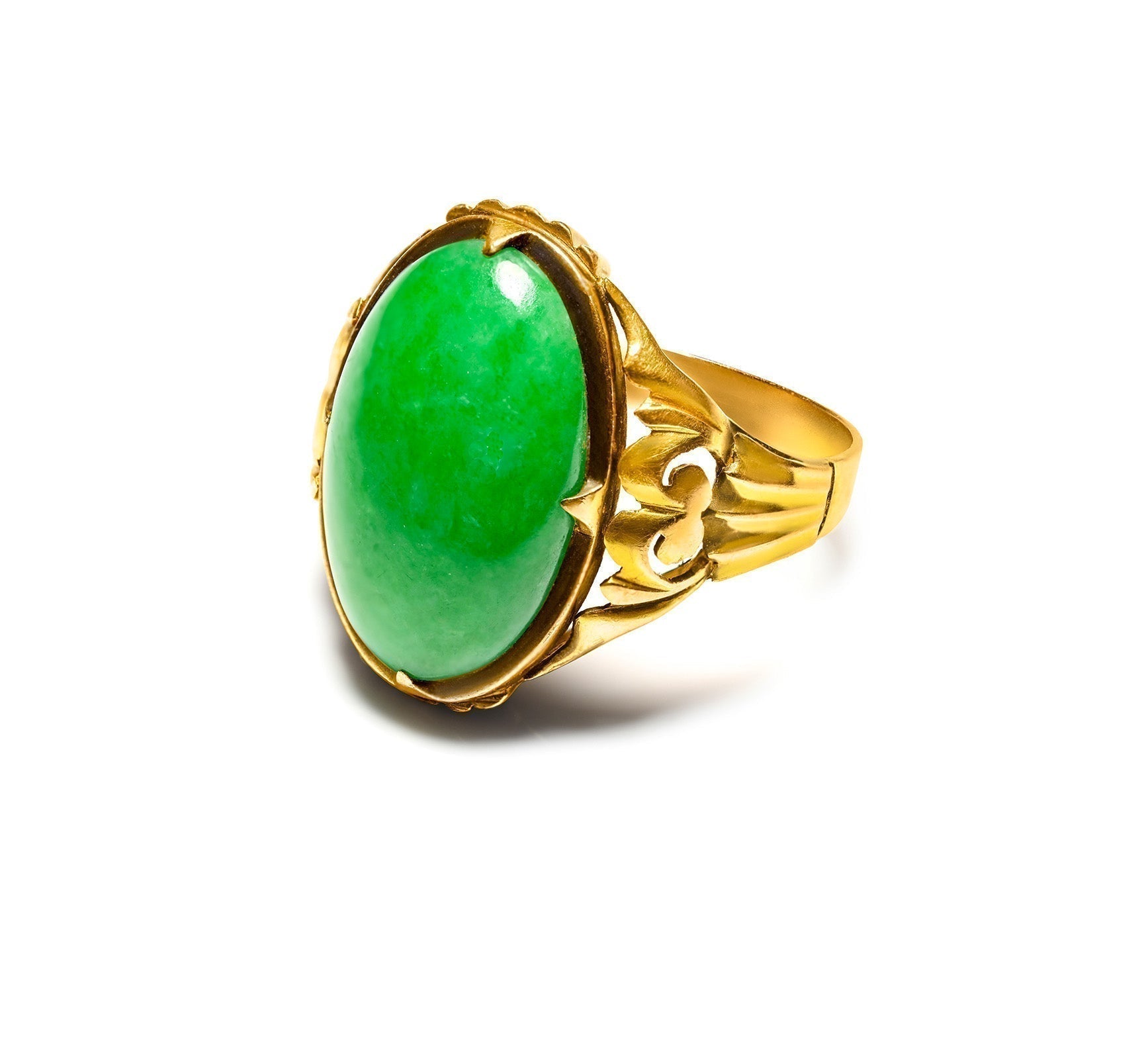
Jade—encompassing both nephrite and jadeite—has held a unique and revered place in Chinese history, symbolizing authority, virtue, and cosmic harmony. Although highly valued in regions such as Mesoamerica and the Pacific, nowhere has jade assumed such sustained philosophical and political significance as in China.
While the term “jade” is sometimes loosely applied to other stones, true jade occupies an unparalleled position in the history of art.
Its extraordinary toughness, resulting from densely interwoven fibrous crystals, made jade exceptionally durable. This allowed it to be shaped into both functional and ceremonial objects from the earliest periods of Chinese civilization. As in ancient Mexico, the distinction between utilitarian tools and sacred ornaments was often fluid. From the dawn of Chinese culture, jade objects were inseparable from identity, ritual, and power.
Confucian philosophers described jade as embodying five virtues: kindness (its warmth and luster), rectitude (its translucency), wisdom (its resonant tone when struck), bravery (its resistance to breaking), and purity (its smooth yet defined edges).
Jade thus became not merely an adornment but a moral metaphor—an ethical ideal materialized in stone. Its exceptional craftsmanship and aesthetic refinement were deeply intertwined with religious practice, particularly within the framework of Confucianism, Taoism, and Buddhism.
Since antiquity, jade ornaments have consistently held a status above ordinary luxury. Their enduring prestige remains one of the most remarkable and somewhat mysterious aspects of Chinese material culture.

Early Jade Cultures and Ritual Objects
According to the remarkable book Pierres de lumière et objets précieux by Henri Jean Schubnel, the earliest jade artifacts in China date back more than 7,000 years. Particularly sophisticated pieces emerged during the Liangzhu culture (c. 3400–2200 BCE), where jade objects were primarily ceremonial rather than utilitarian.
Among the most significant early forms were:
-
Bi: a flat disc with a central perforation, symbolizing heaven
-
Cong: a square tube with a circular interior, symbolizing earth
These forms became central to ritual life and imperial symbolism, remaining in use well into the early 20th century.
The Nanjing Museum preserves some of the oldest known jade objects, including amulets and ritual plaques. Many early pieces were semicircular or quarter-circle pendants pierced at both ends for suspension, reflecting spiritual beliefs and protective symbolism associated with jade.
Other ritual objects included:
-
Gui: a blade-shaped object used in sacrificial ceremonies
-
Huang: a crescent-shaped ornament associated with winter and the north
-
Zhang: a ceremonial axe
The Book of Rites from the Zhou dynasty codified their ceremonial use, firmly linking jade objects to cosmology, seasonal cycles, and imperial authority.

Jade in Dynastic China: Power, Prestige, and Spirituality
Shang and Zhou Dynasties
During the Shang dynasty (c. 1600–1046 BCE), jade carving reached new levels of technical and symbolic sophistication. Jade was fashioned into ceremonial weapons, fittings for bronze vessels, and ritual objects such as bi discs and cong tubes.
Small figurines, masks, and animal carvings from this period may represent early mingqi—spirit objects intended to accompany the deceased into the afterlife.
In the Zhou dynasty (1046–256 BCE), jade usage became increasingly systematized. Scepters of varying shapes denoted noble rank and were used in political and military contexts.
Jade plugs and plaques were placed in burials to seal bodily orifices, believed to preserve the soul and protect the body from corruption. Stylistically, Zhou jades evolved from the rigid patterns of the Shang period toward more abstract and flowing motifs, mirroring broader shifts in ritual structure and governance.
The Han Dynasty: Apotheosis of Jade Burial Art
By the Han dynasty (206 BCE–220 CE), jade’s funerary role reached its zenith. Members of the imperial family and high nobility were sometimes buried in elaborate jade suits sewn together with gold thread.
One of the most famous examples is the tomb of Prince Liu Sheng and Princess Dou Wan at Mancheng. The princess’s burial suit incorporated thousands of jade plaques connected by gold wire, reflecting the belief that jade could preserve both body and spirit.
Texts from earlier dynasties, including the Zhou and Shang, record jade’s association with the four cardinal directions and cosmic balance. Bi discs and plaques were sometimes decorated with grooves or spiral motifs, emphasizing their symbolic alignment with heaven and eternity.
Jade also functioned as a marker of political authority. From the Qin dynasty (221–207 BCE) onward, jade seals served as emblems of imperial legitimacy. Officials and rulers used jade insignia to validate documents and assert sovereignty. The presentation of jade objects during court ceremonies reinforced hierarchical order and divine mandate.
Ceremonial objects such as the ku (an elongated axe form) and the xue (associated with divination and sovereignty) embodied both spiritual and temporal authority. The bi disc, in particular, became a symbol of the ruler’s connection to heaven and was often presented to feudal lords as a sign of imperial favor.
Artistic Evolution and Technical Mastery
Jade’s remarkable hardness made it one of the most challenging materials to carve. Artisans relied on abrasives such as corundum and developed increasingly sophisticated polishing and engraving techniques over centuries. The evolution of jade carving may be traced through five major peaks, from the late Neolithic period to the Qing dynasty (1644–1911).
Each era introduced new decorative languages—spirals, dragons, animal motifs, and abstract geometries—while technical mastery steadily advanced.
Important archaeological discoveries, such as the 1977 excavation of a tomb near Changshan (dating to approximately 323 BCE in the kingdom of Zhongshan), revealed intricate spiral motifs arranged in concentric patterns. These decorations became emblematic of ritual authority and aristocratic identity.
The discovery of the tomb of King Wen of Yue (d. 496 BCE) significantly reshaped scholarly understanding of late Zhou jade styles. Previously believed to derive from much older traditions, the geometric ornamentation of this period is now understood within a more complex developmental framework.
King Wen’s tomb contained over 1,000 jade plaques along with numerous gold ornaments, weapons, and ceremonial objects. These artifacts represent one of the most impressive assemblages of ancient Chinese jade ever discovered.
Among the notable finds were:
-
A large bi disc decorated with dragon motifs
-
A jade staff carved in the shape of a tiger and inscribed with the word “Divine”
-
A gold seal topped with a turtle, engraved with the name “Taisi”
Within a lacquered wooden box, 43 engraved jade objects were uncovered, demonstrating the abundance and sophistication of Western Han craftsmanship. These pieces reveal a shift from earlier temple ornamentation toward more bronze-inspired forms, with dragons and spiral motifs echoing decorative traditions in metalwork.
Han jade art is distinguished by its naturalistic tendencies and refined symbolic language. Lotus-shaped cups, preserved in collections in Nanjing and Taipei, exemplify the Han mastery of nephrite carving, despite the technical challenges posed by the material.
Jade in Later Dynasties: Ming, Qing, and Beyond
Relatively few exceptional jade pieces survive from the Six Dynasties period (3rd–6th centuries), yet the tradition of animal figurines, architectural ornaments, and finely carved ritual objects continued uninterrupted.
A notable example is a pale green jade sculpture of a reclining horse with a dragon or lion resting upon its back, discovered in the tomb of a nobleman near Wuxi. Inscribed as originating from imperial workshops, the piece testifies to the enduring prestige of jade craftsmanship inherited from earlier Han traditions.
From antiquity through the Han dynasty, jade carving evolved in parallel with other luxury arts, including goldsmithing and ceramics. Jade coffins, jade belts worn by emperors, and ornaments placed directly around burial chambers demonstrate how deeply jade permeated elite ritual life.
While bronze ritual vessels dominated the Zhou period, under the Qin and Han dynasties glazed ceramics and jade increasingly replaced bronze in funerary contexts.
In certain Zhou tombs, thousands of objects were discovered within bronze vessels, including hundreds of jade items of exceptional quality. These were often commissioned by princes and high-ranking officials, reinforcing jade’s association with status and imperial favor.
During the Ming dynasty (1368–1644), jade retained its prestige, particularly in personal ornaments such as hairpins, pendants, and belt plaques often set with precious stones. In Southeast Asia, including Java and Siam, Chinese nephrite and goldsmithing were highly prized.
Jade pieces recovered from tombs were frequently large and substantial, sometimes shaped like ceremonial bonnets and adorned with motifs such as dragons carrying pearls. Imperial crowns were similarly classified by rank, with the most elaborate designs incorporating multiple dragon forms.
Symbolic imagery flourished in Ming jade carving:
-
The Buddha symbolized happiness and longevity.
-
The hare represented Taoist associations with immortality.
-
The dragon and phoenix signified imperial harmony.
White jade was prized for its translucency, while green and gray nephrite were widely used. Blue jade was considered particularly precious. Cylindrical forms decorated with spirals, as well as cups carved from single blocks of stone and adorned with upright dragons, reveal the extraordinary technical mastery achieved during this period.

The Qing Dynasty: Regulation, Expansion, and Global Fascination
The Qing dynasty (1644–1911) witnessed the flourishing of private jade workshops, especially from the 17th century onward, as both domestic and international demand increased. Western collectors—including Cardinal Mazarin, Louis XIV, and members of the Medici family—acquired Chinese jades, though not all pieces represented the highest artistic standards.
Emperor Kangxi (r. 1662–1722) actively promoted craftsmanship by establishing numerous palace workshops dedicated to artistic production. Jade engravers within the imperial ateliers developed innovative designs inspired by palace aesthetics and decorative traditions of the Forbidden City. Some Qing jades preserved today in the Palace Museum in Taipei even display stylistic influences from Mughal India, reflecting cross-cultural artistic exchange.
Jade production during the Qing period was carefully regulated, reinforcing its association with imperial power and Buddhist symbolism. Zodiac animals—including the horse, goat, ram, and elephant—appeared frequently in jade art.
The dragon remained a central symbol of transformation and longevity, while the falcon came to represent purity and enlightenment. Even creatures such as butterflies, lizards, and snakes found a place within jade iconography.
Popular forms included melon-shaped cups and vessels carved as fish or ducks adorned with lotus blossoms. These designs gained popularity particularly after the fall of the Ming dynasty and continued until the Opium War in 1840.

Jade in Daily Life, Belief, and Trade
Jade’s significance extended beyond imperial courts into daily life and spiritual belief. The use of snuff, introduced to China in the late 16th and early 17th centuries by the Jesuit missionary Matteo Ricci, gave rise to finely carved jade snuff bottles believed to possess medicinal properties and enhance vitality.
Within Sino-Annamite traditions, miniature jade objects were attributed magical powers. They were thought to protect children, bring prosperity and longevity, promote love and fertility, and even serve medicinal functions. These beliefs expanded particularly during the Qing period and remain embedded in cultural memory.
Large sacred mountains carved from jade or lapis lazuli could reach heights of 50 to 60 centimeters, some originating from blocks weighing several tons. Miniature jade landscapes—known since the Southern Tang dynasty (923–937)—were displayed in private chambers as symbols of spiritual retreat and meditation. These objects transformed carved stone into contemplative microcosms.
In Taoist symbolism, the gourd-shaped vessel represented a miniature universe containing gold, jade, birds, and paradisiacal abundance. Taoist practitioners carried talismans engraved with the Five Sacred Mountains, believed to ward off evil and harmonize cosmic forces. Such objects allowed meditation upon the universe itself, linking the human spirit to the sacred landscape.
The Chinese miniature garden may thus be understood as a spiritual counterpart to the Western notion of the hidden or secret garden—an enclosed realm of contemplation and transcendence.
A Civilization Carved in Jade
From Neolithic ritual forms to imperial regalia and global collections, jade has remained a cornerstone of Chinese civilization’s worldview.
Its power lies not only in technical mastery or aesthetic refinement, but in its profound symbolic resonance—linking heaven and earth, embodying virtue, and bridging the human and the divine.
Across more than seven millennia, jade has transcended the category of ornament. It has become philosophy in stone, authority made visible, and memory carved into permanence.
Bibliography
Schubnel, Henri Jean. Pierres de lumière et objets précieux.