
Edwardian to Art Deco Gold & Platinum Calibre Ruby Diamond Geometric Stick Pin
Late Edwardian to Art Deco Gold & Platinum Calibre Ruby Diamond Geometric Stick Pin
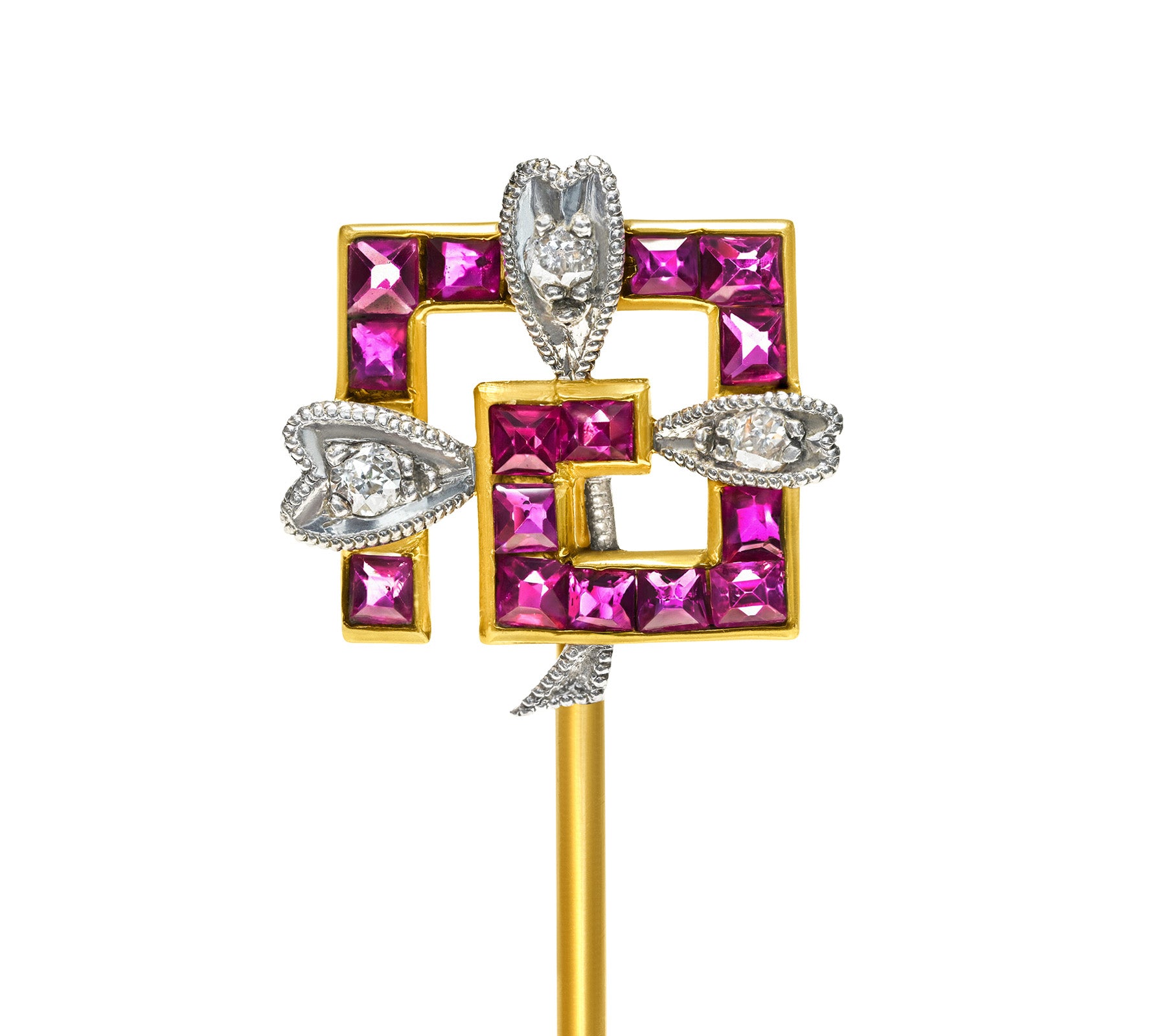
This refined stick pin captures a pivotal moment in jewelry history, marking the transition from the graceful delicacy of the Edwardian era to the structured elegance of early Art Deco. Crafted in gold with platinum-topped elements, the design reflects both technical precision and artistic evolution.
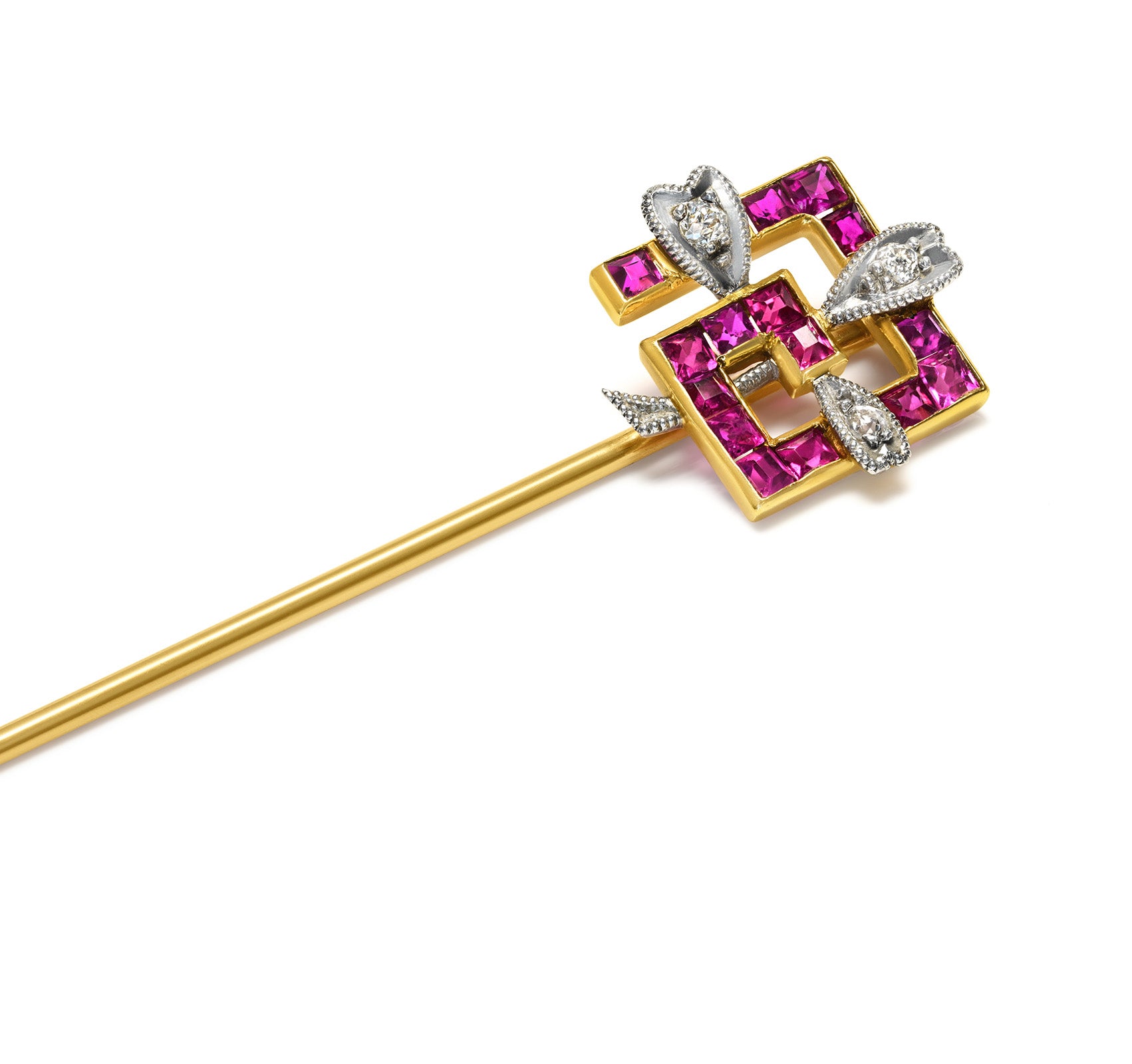
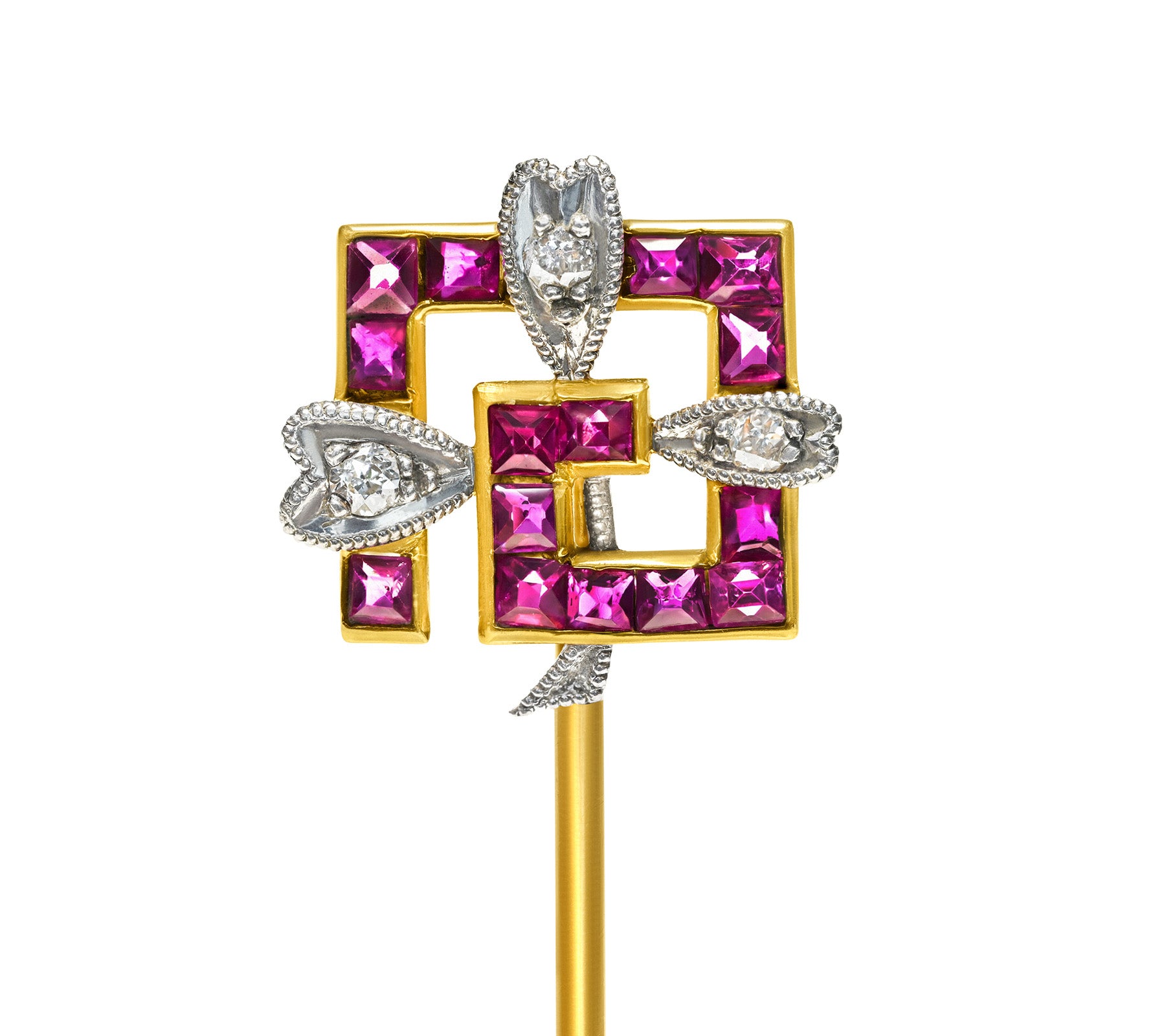
At its center is a bold geometric composition reminiscent of a stylized Greek key or stepped architectural motif. The strong symmetry and clean lines signal the modern direction jewelry was taking in the 1910s, while fine milgrain detailing and platinum settings preserve the refinement associated with Edwardian craftsmanship.
The border is set with precisely cut calibre rubies, carefully fitted to follow the angular outline — a technically demanding technique requiring exceptional skill. Their vivid red tone contrasts beautifully with the brilliance of the old-cut diamonds, mounted in platinum to enhance light and definition. The result is a piece that feels both architectural and elegant.
Created circa 1910–1920, this jewel represents the shift toward modern geometry while retaining the delicacy of earlier design. A sophisticated and highly collectible example of early 20th-century transitional jewelry.
Key Features
• Period: Late Edwardian to Early Art Deco, circa 1910–1920
• Metal: Gold with platinum accents
• Gemstones: Calibre-cut rubies and old-cut diamonds
• Design: Geometric motif with architectural influence
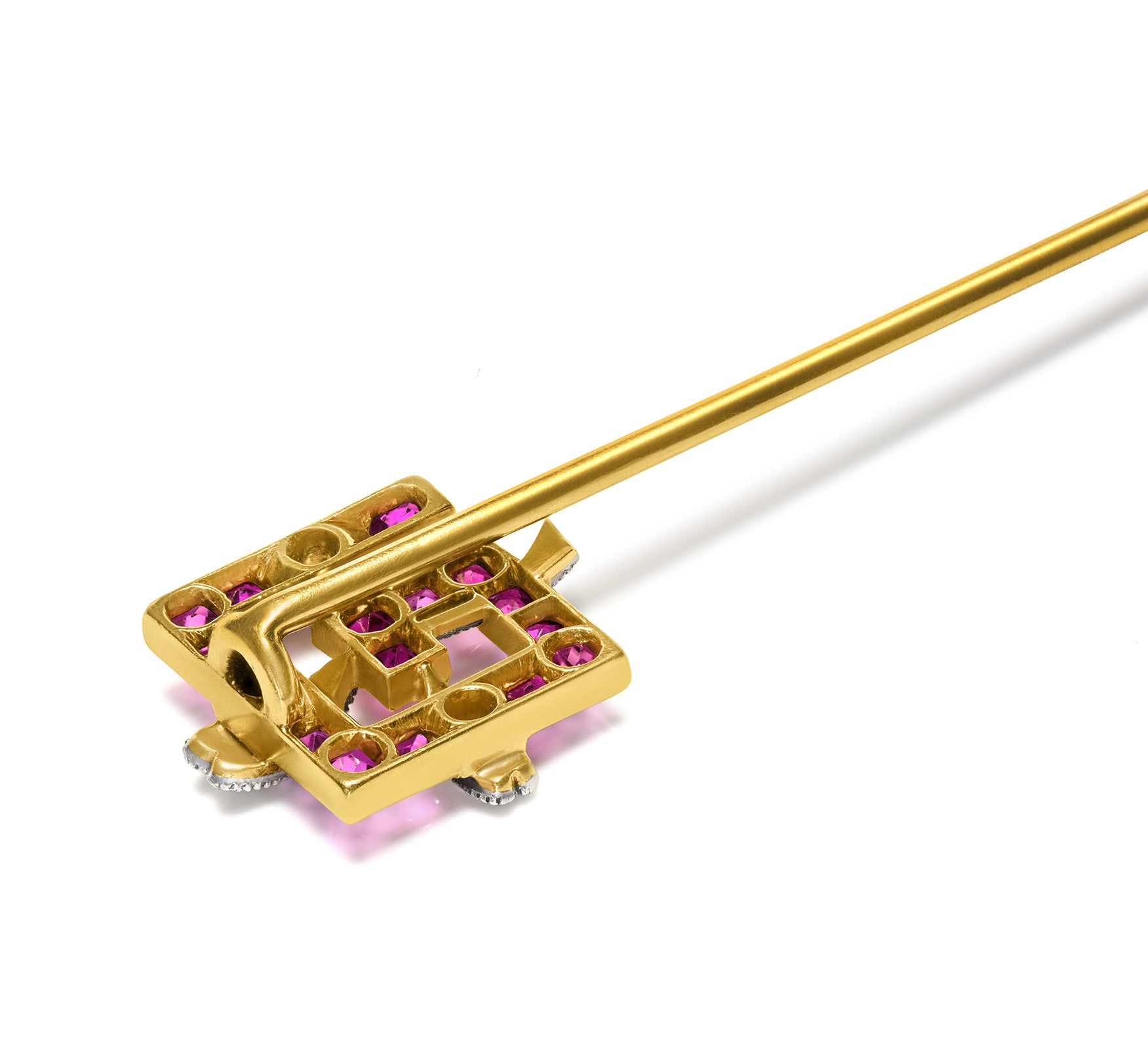
• Technique: Platinum-topped diamond settings with fine milgrain detail
• Category: Fine Stick Pin / Lapel Pin
A distinguished addition to any serious collection of early 20th-century jewelry, reflecting both historical importance and enduring style.
Email us or give us a call: (929) 316-2746. For our shipping and refund policy please see our terms & conditions.

The DSF Promise
Buy with confidence. Every piece is backed by:
• Authenticity — examined and verified before listing
• Condition — carefully inspected and honestly described
• Insured shipping — fully insured, signature required
• 32-day returns — available on eligible, unaltered items
• Private appointments — available in New York
• Experience — over 50 years of fine jewelry expertise
How do I know a piece is authentic, and can I trust DSF?
Buying fine jewelry online takes trust, especially at this level. DSF Antique Jewelry is a New York–based dealer with over 50 years of fine jewelry expertise. Every piece is examined for authenticity and condition before it is listed — we assess hallmarks, maker's marks, metal content, gemstones, and construction consistent with the stated period or designer. For signed pieces such as Cartier, Buccellati, or Van Cleef & Arpels, we verify maker's marks and signatures. We're glad to send additional photographs of any hallmark, or speak with you directly, before you decide.
Why does antique gold look different, and is surface wear normal?
Antique pieces were often made in gold standards less common today, such as 15ct (used in Britain only between 1854 and 1932), 9ct, or higher-karat continental gold, which give a warmer tone than typical modern 14k. Light surface wear, softened edges, and a gentle patina are normal and expected on antique jewelry — they reflect the age and authenticity of the piece, not flaws. We describe the true condition of every item honestly in its listing.
What do the hallmarks and maker's marks mean?
Hallmarks are small stamped marks that identify the metal standard, and often the maker, assay office, and date. They are one of the best tools for authenticating antique jewelry. We identify and explain the marks we find on each piece in its description, and we're happy to send close-up photographs of any hallmark on request so you can see exactly what you're buying.
Can pieces be resized or adjusted?
It depends on the piece. Many antique rings can be resized, but bands with all-around engraving, thin shanks, or gemstones near the base may be limited in how far they can safely go, and some pieces are best left as-is to preserve their integrity. We list each item's measurements as they currently are. If you're unsure whether something can be safely adjusted, contact us before buying and we'll give you an honest assessment for that specific piece.
How should I care for and store fine jewelry?
Clean gently with a soft cloth, avoid harsh chemicals, ultrasonic cleaners, and chlorine, and store pieces separately so they don't scratch one another. Remove rings and bracelets for heavy manual tasks. Antique gold is softer than modern alloys, so period pieces are best enjoyed with normal care. Treated well, fine antique jewelry lasts for generations — many of our pieces are already a century or more old and still beautiful.
Choose options
Proud Member of Respected Jewelry Industry Organizations
These memberships reflect DSF Antique Jewelry’s commitment to integrity, education, and responsible practices within the jewelry trade.


Please wait...
Make An Offer
Thank you for your interest. Please submit your offer, and we’ll get back to you.
