Gems in Human History - The Evolution and Enduring Importance
From the earliest days of humanity, gems have been more than mere objects of beauty—they have been symbols of power, tokens of fortune, and witnesses to the evolution of human society.
Their story is deeply interwoven with the development of technology, art, and cultural exchange, as evidenced by remarkable archaeological finds across the globe.
Gems as Objects of Desire, Symbolism, and Magic
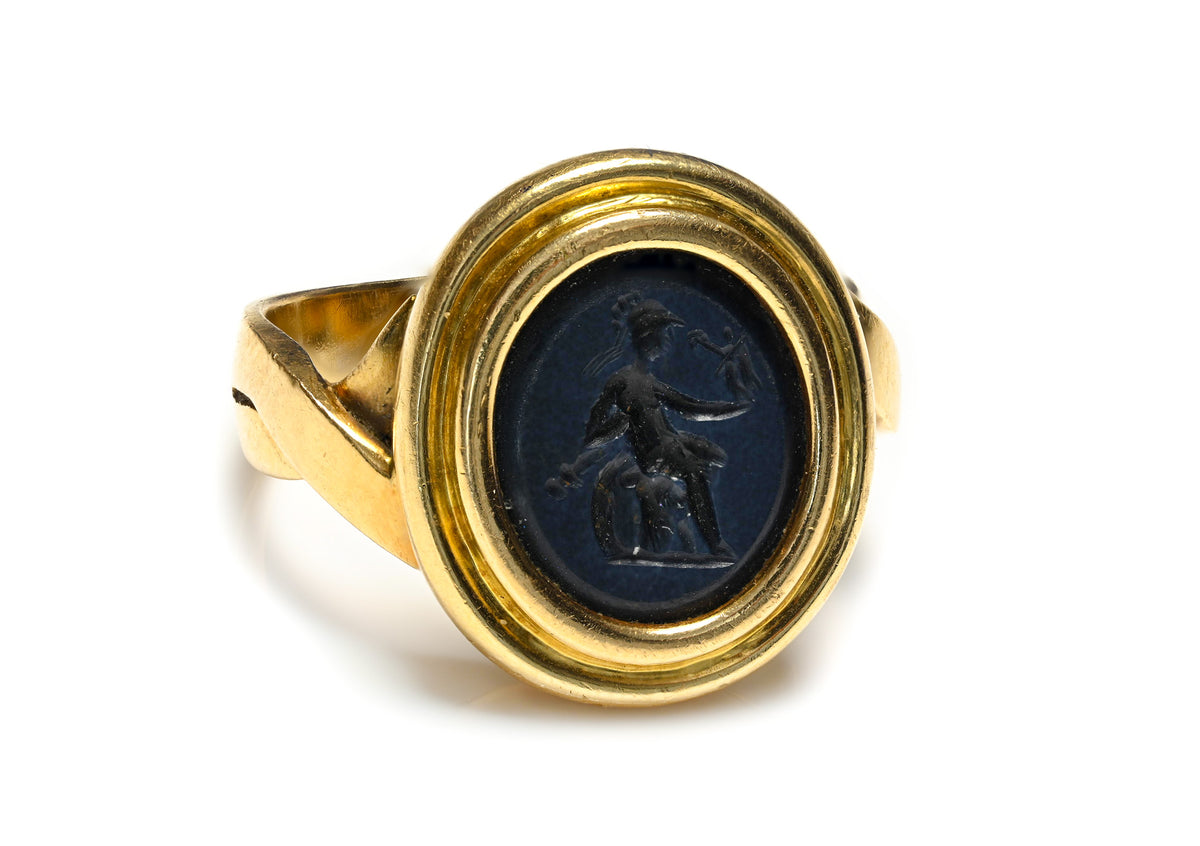
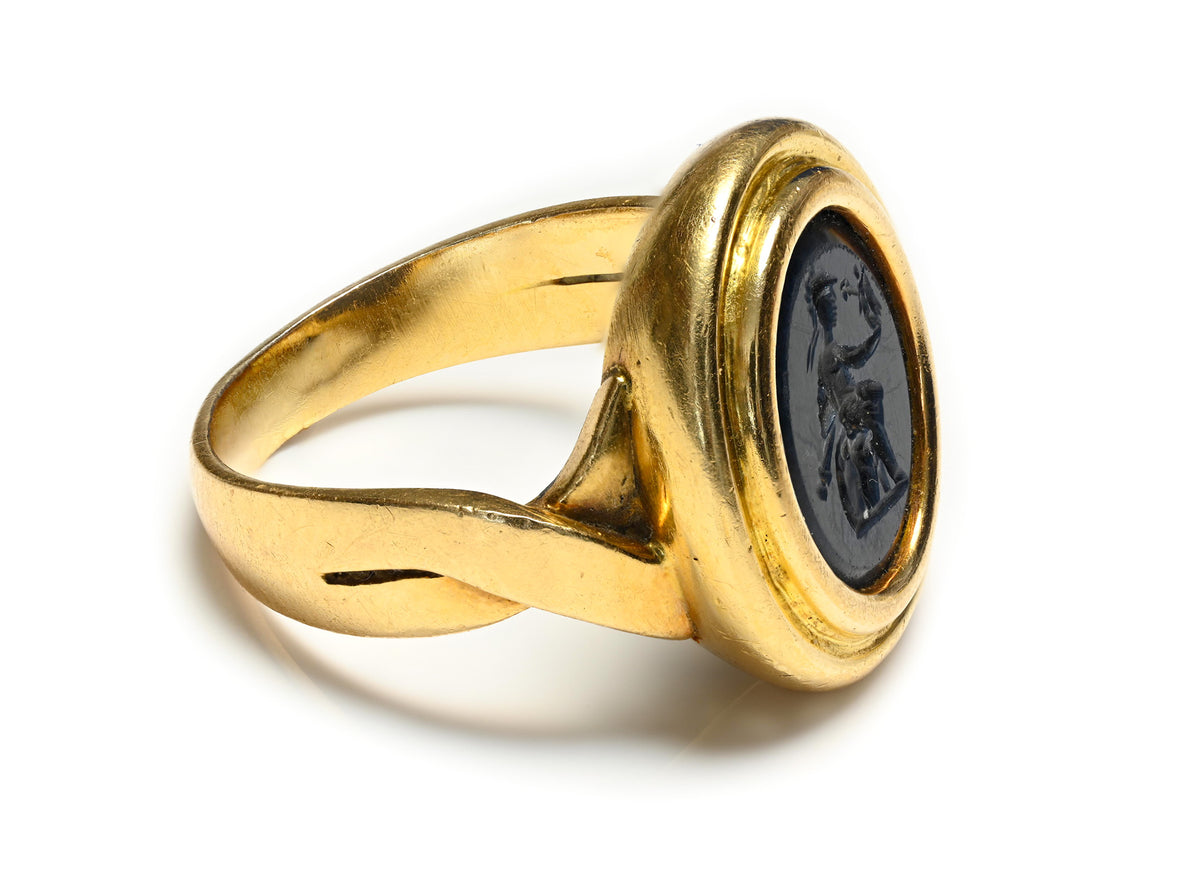
Since the Neolithic era, precious stones have been coveted not only for their beauty and rarity but also for their supposed magical and therapeutic properties. In the ancient Near East, for example, gems were engraved with protective symbols, such as the "prophylactic eye," believed to ward off evil.
Seals made of hard stones imparted a sense of inviolability to stamped documents and objects. These beliefs persisted across centuries, with gems retaining their aura of mystery and power even as societies evolved through the Middle Ages and Renaissance.
Gem symbolism often relied on sympathetic magic—the belief “like affects like.” A gem’s color, texture, or name dictated its purpose (e.g., bloodstone linked to blood, emeralds to poison protection).
Gem symbolism often relied on sympathetic magic—the belief “like affects like.” A gem’s color, texture, or name dictated its purpose (e.g., bloodstone linked to blood, emeralds to poison protection).
From Late Antiquity through the Renaissance, numerous lapidaries (treatises on gems) emerged—like Marbode of Rennes’s De Lapidibus or Al-Biruni’s Book of Precious Stones—describing the therapeutic and magical properties of over 60 different stones.
According to the comprehensive book "Stones of light and precious objects" by Henri Jean Schubnel, during the Middle Ages, gemstones such as amethyst, sapphire, ruby, emerald, and diamond were viewed as embodiments of divine perfection. They were believed to radiate heavenly light and confer spiritual power.
Renaissance thinkers like Marsilio Ficino and Paracelsus saw gems as conduits for planetary and cosmic energies. Ficino used them in magical invocations; Paracelsus and others incorporated stones into alchemical and medical practices
The legendary Seal of Solomon, often depicted as a ring engraved with a star or pentagram, became a potent talisman in Jewish, Islamic, and Christian mysticism—thought to provide command over spirits and protection.
According to the comprehensive book "Stones of light and precious objects" by Henri Jean Schubnel, during the Middle Ages, gemstones such as amethyst, sapphire, ruby, emerald, and diamond were viewed as embodiments of divine perfection. They were believed to radiate heavenly light and confer spiritual power.
Renaissance thinkers like Marsilio Ficino and Paracelsus saw gems as conduits for planetary and cosmic energies. Ficino used them in magical invocations; Paracelsus and others incorporated stones into alchemical and medical practices
The legendary Seal of Solomon, often depicted as a ring engraved with a star or pentagram, became a potent talisman in Jewish, Islamic, and Christian mysticism—thought to provide command over spirits and protection.

Prehistoric Tools and Early Artistic Mastery
Long before gems adorned crowns and jewelry, early humans valued certain minerals for their hardness and durability.
Archaeological discoveries in East Africa—such as choppers found in Kenya, Tanzania, and Ethiopia—date back 2 to 3 million years and were crafted from materials like basalt, quartzite, and obsidian. These tools, some made from rare stones like nephrite jade and jadeite, mark the first known use of gem materials by humans.
In Western Europe, vast flint deposits enabled Paleolithic populations to develop advanced knapping techniques. The "laurel leaves" of the Solutrean culture in France, for instance, are flint blades up to 35 centimeters long and only 8 millimeters thick, knapped with the precision of a jeweler. These artifacts, now housed in museums such as the National Museum of Saône-et-Loire, reflect an early pursuit of technical perfection and aesthetic beauty.
At Spiennes in Belgium, archaeologists uncovered extensive flint mining operations, with extraction pits and underground galleries stretching for kilometers. Specialized knapping workshops, separate from living areas, reveal the emergence of professional lapidaries as early as the Neolithic.
In Western Europe, vast flint deposits enabled Paleolithic populations to develop advanced knapping techniques. The "laurel leaves" of the Solutrean culture in France, for instance, are flint blades up to 35 centimeters long and only 8 millimeters thick, knapped with the precision of a jeweler. These artifacts, now housed in museums such as the National Museum of Saône-et-Loire, reflect an early pursuit of technical perfection and aesthetic beauty.
At Spiennes in Belgium, archaeologists uncovered extensive flint mining operations, with extraction pits and underground galleries stretching for kilometers. Specialized knapping workshops, separate from living areas, reveal the emergence of professional lapidaries as early as the Neolithic.
The Birth of Glyptics and Ornamentation
The Upper Paleolithic period saw the rise of sculpture and engraving, with miniature female figurines—often called "Venuses"—crafted from a variety of materials: mammoth ivory (Willendorf, Austria), steatite (Monruz-Neuchâtel, Switzerland), calcite (Brassempouy, France), and even baked clay (Lespugue, France).
These figurines, sometimes covered with red ochre or decorated with tattoos, are believed to be linked to fertility cults and demonstrate the symbolic and artistic use of gems and minerals.
Gems as Trade Goods and Markers of Exchange
With the advent of the Neolithic, the economic value of gems grew as populations spread and trade networks expanded.
Obsidian, prized for its sharpness and beauty, became a key commodity, traded over thousands of kilometers from sources in Italy (Lipari, Pantelleria), Hungary, Armenia, and beyond. Obsidian artifacts found at Neolithic sites in Mexico and the southern United States attest to the vast reach of these early exchange networks.
Amber, too, was highly prized. The oldest stone bracelets made from amber have been found near the Sambian Peninsula (Baltic), as well as in Denmark, Poland, Finland, Romania, and Italy. Amber was collected after storms along the Polish coast (Kluipeda, Gdansk) and was used for beads, pendants, and even as currency. The techniques used to craft these objects—sawing, drilling, polishing—demonstrate remarkable skill among Neolithic lapidaries.
Stone bracelets, often custom-made, have been unearthed in Poland (Wroclaw), Germany (Wobedez), and Armenia, typically crafted from schist, marble, or lapis. The leftover stone discs from bracelet production were sometimes repurposed into rings or pendants, hundreds of which have been found in ancient underground sites in Armenia.
Amber, too, was highly prized. The oldest stone bracelets made from amber have been found near the Sambian Peninsula (Baltic), as well as in Denmark, Poland, Finland, Romania, and Italy. Amber was collected after storms along the Polish coast (Kluipeda, Gdansk) and was used for beads, pendants, and even as currency. The techniques used to craft these objects—sawing, drilling, polishing—demonstrate remarkable skill among Neolithic lapidaries.
Stone bracelets, often custom-made, have been unearthed in Poland (Wroclaw), Germany (Wobedez), and Armenia, typically crafted from schist, marble, or lapis. The leftover stone discs from bracelet production were sometimes repurposed into rings or pendants, hundreds of which have been found in ancient underground sites in Armenia.


Regional and Cultural Specificity: Gems in Traditional Societies
Even as some societies advanced, others retained ancient traditions, with stone remaining a primary material for tools, weapons, and ornaments. Ethnographic and archaeological evidence from the Pacific Islands, New Zealand, and Papua New Guinea reveals the enduring importance of gems in ritual and social life.
New Caledonia: The Kanak people extracted apple-green jade from Ouen Island, crafting ceremonial axes called Giokono. These axes, polished with shark skin and decorated with braided plant fibers, served as currency and symbols of peace, exchanged among tribes and even across the sea to the Loyalty Islands.
New Zealand: The Maori prized nephrite jade (pounamu) from the Teremakau and Anahura rivers. Ceremonial adzes (toki para tangata) and pendants (tiki) were crafted for chiefs and important rituals. Tiki pendants, representing stylized human heads, were gender-specific talismans, believed to house ancestral souls and confer spiritual power.
Papua New Guinea: Tribes in the upper Wesa and Ye valleys carved ceremonial axes from amphibole schists or serpentinites. These axes, up to 75 cm long, played central roles in animist religious ceremonies and were passed down as dowries for young brides.
New Caledonia: The Kanak people extracted apple-green jade from Ouen Island, crafting ceremonial axes called Giokono. These axes, polished with shark skin and decorated with braided plant fibers, served as currency and symbols of peace, exchanged among tribes and even across the sea to the Loyalty Islands.
New Zealand: The Maori prized nephrite jade (pounamu) from the Teremakau and Anahura rivers. Ceremonial adzes (toki para tangata) and pendants (tiki) were crafted for chiefs and important rituals. Tiki pendants, representing stylized human heads, were gender-specific talismans, believed to house ancestral souls and confer spiritual power.
Papua New Guinea: Tribes in the upper Wesa and Ye valleys carved ceremonial axes from amphibole schists or serpentinites. These axes, up to 75 cm long, played central roles in animist religious ceremonies and were passed down as dowries for young brides.
The Splendor of Gems Through History
Gems of the Ancient World
Born of magic, gems first arrived from the Orient, where they held deep symbolic meaning. The Assyrians and Babylonians believed these stones had magical properties and that each gem’s personality was determined by the gods.
In Babylonian medicine, as in all ancient magical practices, gems and other stones were used according to the “doctrine of signatures”—the belief that a stone’s appearance or name suggested its healing power.
In Babylonian medicine, as in all ancient magical practices, gems and other stones were used according to the “doctrine of signatures”—the belief that a stone’s appearance or name suggested its healing power.
As early as the second millennium BCE, ground gemstones were administered in potions, selected either for their resemblance to the afflicted organ, a name with a relevant association, or simply because a legend claimed that a particular stone had cured a god. This practice persisted for centuries.
According to legend, in the time of Ninurta, stones fought alongside or against the god in a great battle. After his victory, Ninurta rewarded his mineral allies with high honors while relegating his enemies to the most menial uses—like the dust on roads. (One can imagine that the finest gems wisely chose to side with the victor!)
According to legend, in the time of Ninurta, stones fought alongside or against the god in a great battle. After his victory, Ninurta rewarded his mineral allies with high honors while relegating his enemies to the most menial uses—like the dust on roads. (One can imagine that the finest gems wisely chose to side with the victor!)
Banded agate was highly prized for making royal seals believed to offer protective magic, while lapis lazuli from Afghanistan was considered the most precious blue stone (known as Ukni). One incantation declared: “The magnificent stones, the stones of abundance and joy, let them enter the bodies of the gods.”
Stones were also used for amulets, weights, and from the fourth millennium BCE onwards, in goldsmithing and seal-making—cylinder seals, amulets, beads of rock crystal, jasper, carnelian, chalcedony, and agate.
As the Persians conquered Assyria, Nineveh, Babylon, Asia Minor, and Egypt, they gained access to enormous treasures: vast quantities of gold, silver, and priceless gems. Excavations at Susa and Persepolis have revealed some of these hoards. Alexander the Great famously cataloged the loot he acquired—over a thousand talents of gold and silver—staggering deposits of wealth stored in temples.
It was during Alexander’s reign that sapphire entered Western awareness (diamond was used only in powder form by Greek engravers). After Alexander’s empire splintered, Ptolemy received Egypt, with its rich gold and emerald mines. Alexandria, a cultural beacon, became the most radiant city of the Mediterranean.
As the Persians conquered Assyria, Nineveh, Babylon, Asia Minor, and Egypt, they gained access to enormous treasures: vast quantities of gold, silver, and priceless gems. Excavations at Susa and Persepolis have revealed some of these hoards. Alexander the Great famously cataloged the loot he acquired—over a thousand talents of gold and silver—staggering deposits of wealth stored in temples.
It was during Alexander’s reign that sapphire entered Western awareness (diamond was used only in powder form by Greek engravers). After Alexander’s empire splintered, Ptolemy received Egypt, with its rich gold and emerald mines. Alexandria, a cultural beacon, became the most radiant city of the Mediterranean.
The Romans, enriched by the spoils of Alexander’s conquests, pushed their reach into India. Apart from Greek and biblical texts, little written evidence survives about the gem trade in Asia Minor and the Near East; archaeological excavations have filled in many gaps. For India, however, sources from the first millennium BCE—corroborated by both archaeology and Pliny’s Natural History—testify to its longstanding gem traditions.

The Vedas, India’s ancient sacred texts, frequently mention precious stones. Indian writings also detail mining, the evaluation of gems, and their use in jewelry and medicine. Kautilya’s Arthashastra (4th century BCE) discusses goldworking, gem appraisal, and the use of precious stones in royal treasuries. From this time forward, gems were highly valued and rulers vied to possess them.
Early Indian traditions speak of necklaces of pearls and gemstones, rings, bracelets, diadems, earrings, nose rings, anklets, pendants, and foot ornaments. Diamonds were reserved for royalty, and ruby was regarded as the sun’s stone. Heavy, opaque, colored gems were especially prized, especially in necklaces.
Excavations in necropolises in Pondicherry revealed funerary urns with gold jewelry and rubies from the Kushan period (2nd century CE), reflecting the ancient connection between gems and status. The Caraka Samhita, attributed to the physician Caraka in the Kushan era, recommends wearing gemstone jewelry for health and prosperity.
In ancient India, a young man of good standing was expected to learn about gemstones and how to judge their quality. Texts like the Ratnapariksha advised: “When a battle looms, it is wise to wear a flawless emerald, for it ensures victory.”
In ancient India, a young man of good standing was expected to learn about gemstones and how to judge their quality. Texts like the Ratnapariksha advised: “When a battle looms, it is wise to wear a flawless emerald, for it ensures victory.”

Gem value was judged by weight; a fine emerald could cost more than a ruby, though a flawed emerald might equal a ruby’s worth. Statues and temple treasures of ancient India and Sri Lanka often featured women adorned with opulent jewelry—tiaras, diadems, necklaces, earrings, bracelets, belt buckles, and toe rings.
During the Gupta and Kushan periods (4th–6th centuries CE), rubies, sapphires, emeralds, and diamonds were popular, set in gold, silver, or copper depending on their quality.
This Indian tradition favored green and red gems, while blue sapphires and pink spinels were frequently exported. Ancient agates came from India’s western regions, where workshops dating to the 3rd millennium BCE were found along the Narbada River.
This Indian tradition favored green and red gems, while blue sapphires and pink spinels were frequently exported. Ancient agates came from India’s western regions, where workshops dating to the 3rd millennium BCE were found along the Narbada River.
India also supplied chrysoberyl, cat’s-eye, garnet, beryl, topaz, turquoise, and other gems from alluvial deposits, mines, and riverbeds. Emeralds were sourced from India, Pakistan, and Afghanistan.

In the 18th century, the Srirangam temple in southern India held a treasure trove of 70,000 rubies, 224 kilograms of silver, and 93 kilograms of precious stones. This treasure was managed like a bank, supporting hundreds of priests while remaining intact.
Temples across southern India received donations of stones and gold. When Indian goldsmithing flourished, gems were set using closed settings, often in bezels, rarely exceeding twelve carats each.
In a description of the legendary Peacock Throne of the Mughal emperors—a wonder of the world—it was said that more than six throne feet, weapons, shields, bows, quivers, and even cushions and steps were studded with gems.
In a description of the legendary Peacock Throne of the Mughal emperors—a wonder of the world—it was said that more than six throne feet, weapons, shields, bows, quivers, and even cushions and steps were studded with gems.
Around the main throne were about one hundred cabochon rubies, each weighing two hundred carats, with countless other flawless rubies, emeralds, and diamonds. A single emerald with six facets was described as the largest in the world. Diamonds ranged from eight to 140 carats. The red velvet parasols were embroidered and fringed with pearls.
The throne’s construction, begun by Tamerlane and completed by Shah Jahan, was said to have cost 107,000 laores of rupees—equivalent to more than sixty million livres—and took seven years and the best Mughal craftsmen to complete. Behind the main throne stood a smaller, tub-shaped one, also a masterpiece of gems, with no key.