
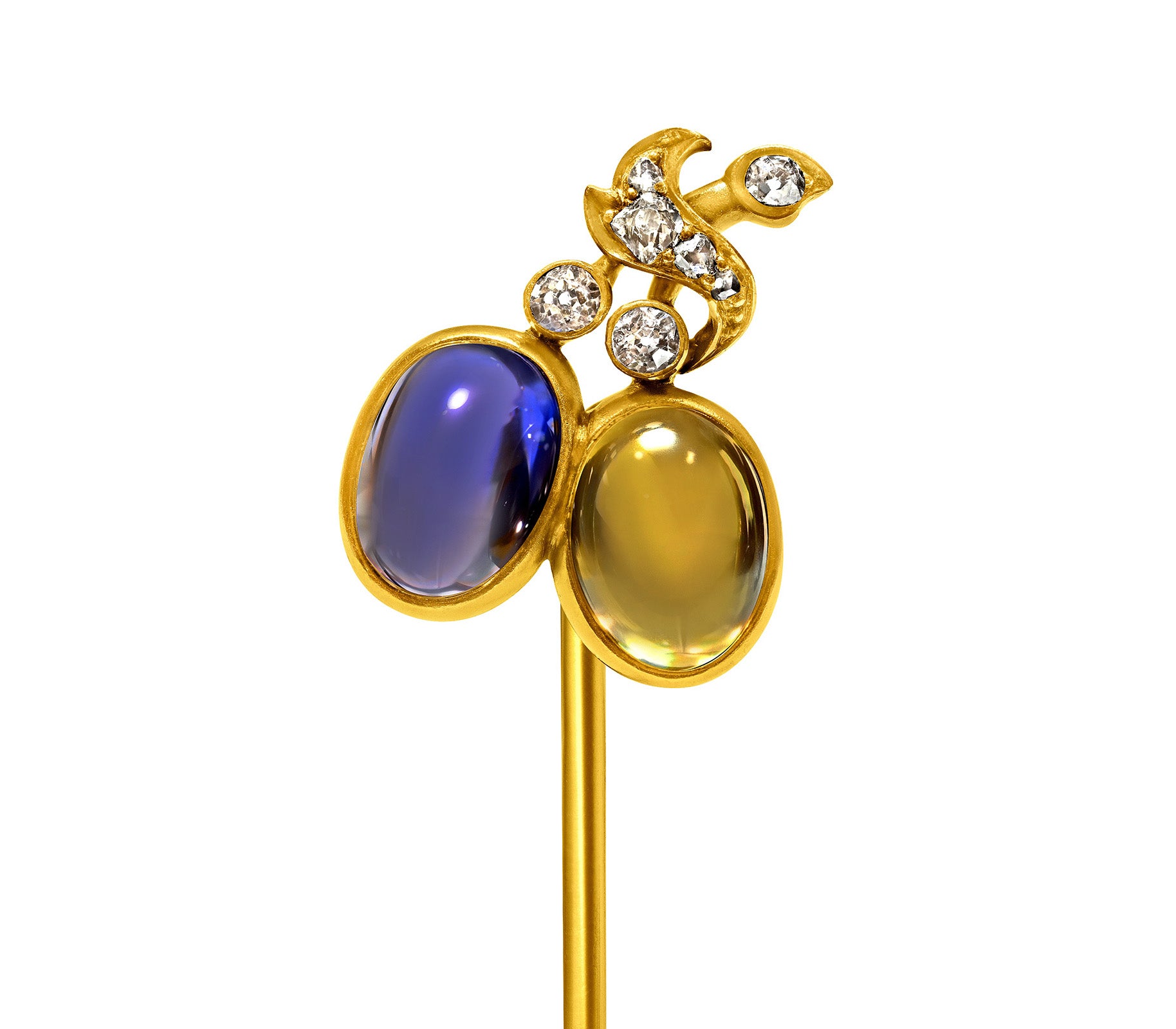
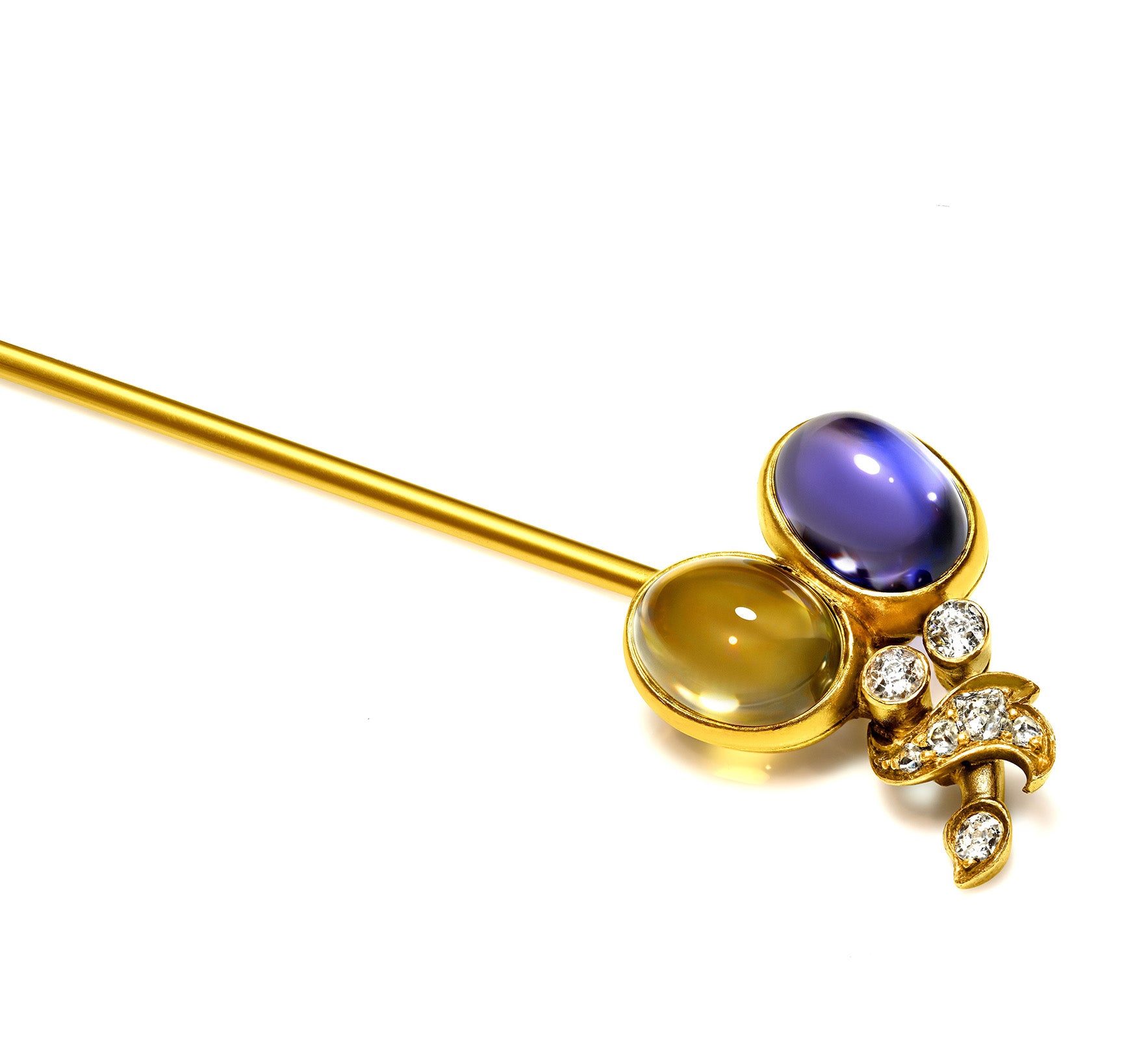
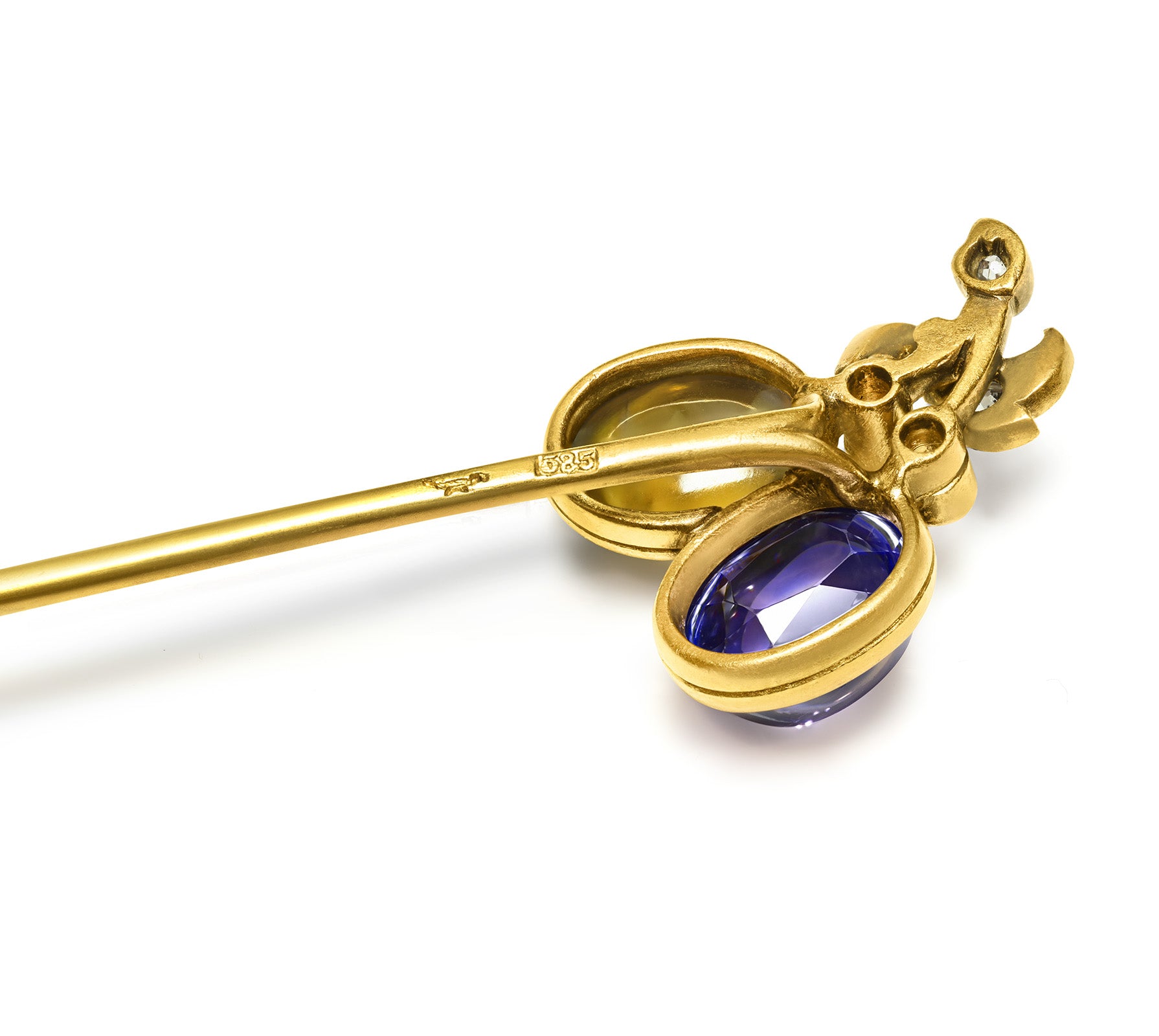
Antique Austrian Hallmarked Gold Stick Pin with Sapphire, Diamond Citrine
Austrian Gold Stick Pin with Sapphire, Diamond & Citrine
This refined antique stick pin showcases the elegance and craftsmanship associated with late 19th and early 20th-century Austrian jewelry. Crafted in solid gold and bearing an Austrian hallmark, the design is centered by a harmonious trio of gemstones — a richly colored sapphire, a luminous diamond, and a warm golden citrine — arranged in a balanced and highly decorative composition.
The contrast between the deep blue of the sapphire, the brilliance of the diamond, and the honeyed glow of the citrine creates a subtle yet sophisticated play of color, typical of fine Austro-Hungarian gem-setting traditions. During this period, stick pins were worn as discreet yet meaningful expressions of personal style, favored by gentlemen for formal attire and by collectors today for their charm, rarity, and versatility.
Austrian hallmarked jewels are particularly prized for their strict metal standards and exceptional craftsmanship, making this piece not only a decorative accessory but also a small collectible artifact of European goldsmithing history.
Elegant, wearable, and historically significant, this antique stick pin offers a beautiful glimpse into the refined taste and artistry of Central European jewelry design.
Email us or give us a call: (929) 316-2746. For our shipping and refund policy please see our terms & conditions.

The DSF Promise
Buy with confidence. Every piece is backed by:
• Authenticity — examined and verified before listing
• Condition — carefully inspected and honestly described
• Insured shipping — fully insured, signature required
• 32-day returns — available on eligible, unaltered items
• Private appointments — available in New York
• Experience — over 50 years of fine jewelry expertise
How do I know a piece is authentic, and can I trust DSF?
Buying fine jewelry online takes trust, especially at this level. DSF Antique Jewelry is a New York–based dealer with over 50 years of fine jewelry expertise. Every piece is examined for authenticity and condition before it is listed — we assess hallmarks, maker's marks, metal content, gemstones, and construction consistent with the stated period or designer. For signed pieces such as Cartier, Buccellati, or Van Cleef & Arpels, we verify maker's marks and signatures. We're glad to send additional photographs of any hallmark, or speak with you directly, before you decide.
Why does antique gold look different, and is surface wear normal?
Antique pieces were often made in gold standards less common today, such as 15ct (used in Britain only between 1854 and 1932), 9ct, or higher-karat continental gold, which give a warmer tone than typical modern 14k. Light surface wear, softened edges, and a gentle patina are normal and expected on antique jewelry — they reflect the age and authenticity of the piece, not flaws. We describe the true condition of every item honestly in its listing.
What do the hallmarks and maker's marks mean?
Hallmarks are small stamped marks that identify the metal standard, and often the maker, assay office, and date. They are one of the best tools for authenticating antique jewelry. We identify and explain the marks we find on each piece in its description, and we're happy to send close-up photographs of any hallmark on request so you can see exactly what you're buying.
Can pieces be resized or adjusted?
It depends on the piece. Many antique rings can be resized, but bands with all-around engraving, thin shanks, or gemstones near the base may be limited in how far they can safely go, and some pieces are best left as-is to preserve their integrity. We list each item's measurements as they currently are. If you're unsure whether something can be safely adjusted, contact us before buying and we'll give you an honest assessment for that specific piece.
How should I care for and store fine jewelry?
Clean gently with a soft cloth, avoid harsh chemicals, ultrasonic cleaners, and chlorine, and store pieces separately so they don't scratch one another. Remove rings and bracelets for heavy manual tasks. Antique gold is softer than modern alloys, so period pieces are best enjoyed with normal care. Treated well, fine antique jewelry lasts for generations — many of our pieces are already a century or more old and still beautiful.
Choose options
Proud Member of Respected Jewelry Industry Organizations
These memberships reflect DSF Antique Jewelry’s commitment to integrity, education, and responsible practices within the jewelry trade.


Please wait...
Make An Offer
Thank you for your interest. Please submit your offer, and we’ll get back to you.
