Men’s Jewelry as Miniature Art: Antique Cufflinks and Stick Pins, 1850–1950
From Victorian cravat pins to Art Deco dress sets, cufflinks and stick pins gave jewelers a remarkably small canvas on which to express craftsmanship, symbolism, humor, and personal identity.
Jewelry does not need to be large to command attention. Some of the most imaginative objects produced by nineteenth- and early twentieth-century jewelers were designed to occupy only a few centimeters of fabric: a stick pin set into a cravat or lapel, or a pair of cufflinks fastening a formal shirt.
Between approximately 1850 and 1950, these accessories developed far beyond their practical origins. They became miniature works of art—carved, modeled, engraved, enameled, gem-set, and sometimes engineered with mechanisms as sophisticated as their decoration.
From Function to Personal Expression
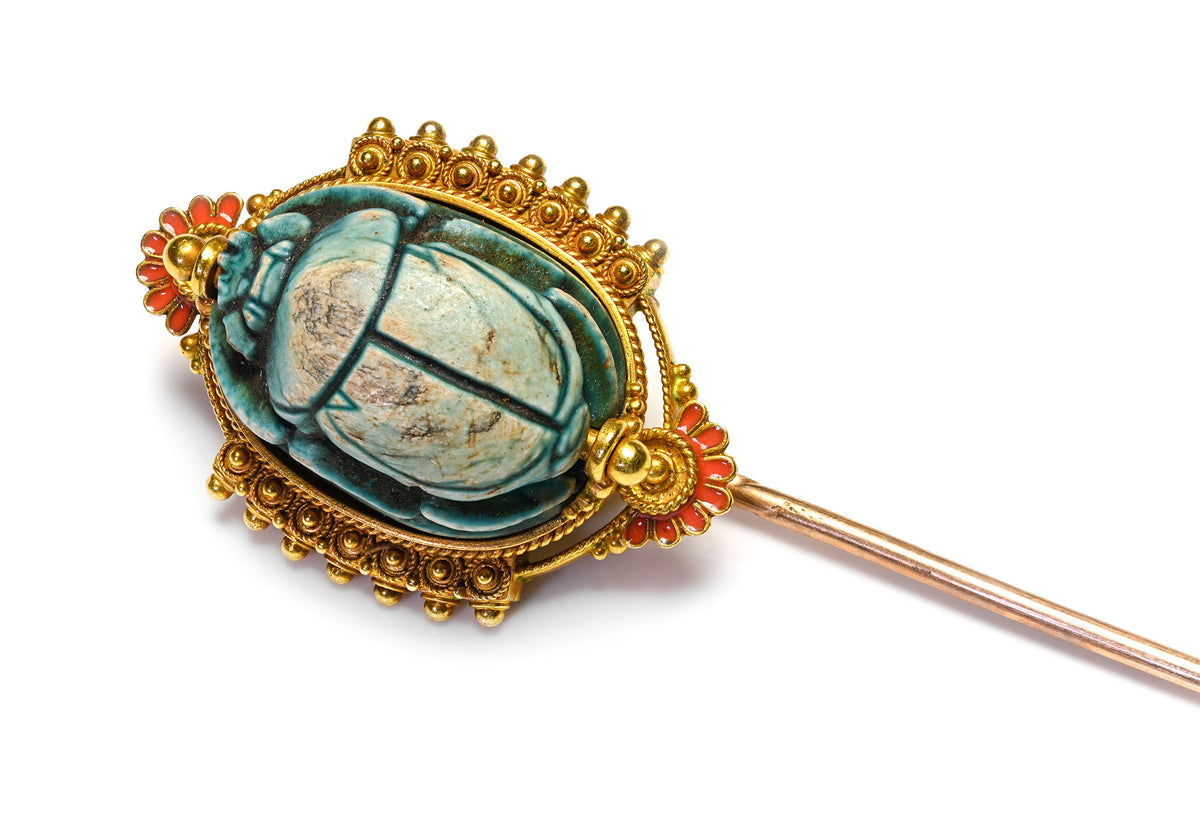
Stick pins were originally used to secure cravats, scarves, and ties. Their long stems provided a practical fastening, while their visible heads offered an opportunity for ornament. By the second half of the nineteenth century, jewelers were producing examples that ranged from discreet pearls and gemstones to elaborate animals, mythological characters, sporting subjects, vehicles, flowers, and symbolic forms.
Cufflinks served an equally practical purpose, joining the buttonholes of a shirt cuff. Yet their paired construction introduced a different design challenge. Each component had to be visually balanced, comfortable to wear, and securely connected through a chain, rigid bar, or articulated fitting.
In both forms, function became the foundation for artistic expression.

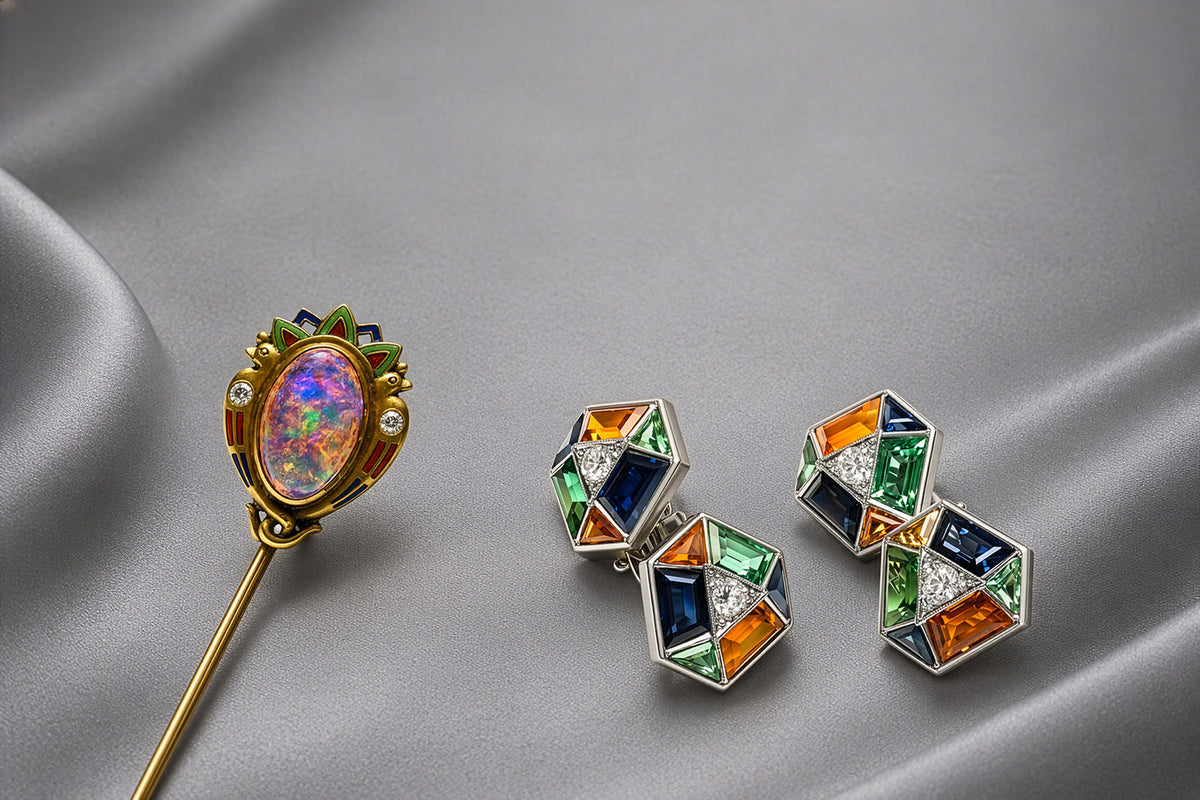
An Art Deco platinum cufflink design set with multicolored sapphires. View this piece at DSF Antique Jewelry.
Victorian Imagination in Miniature
Victorian jewelry embraced symbolism, storytelling, natural history, sport, mythology, and sentiment. Stick pins were particularly suited to this visual language because their small decorative heads could represent almost any subject.
Dogs, owls, snakes, frogs, bats, horseshoes, flowers, theatrical figures, and classical characters appeared in sculpted gold, often enriched with enamel, natural pearls, old-cut diamonds, garnets, rubies, sapphires, or opals. A jeweled eye or carefully modeled expression could give a tiny figure surprising personality.
The range of subjects also reflected the interests of the wearer. Equestrian scenes, boxing gloves, athletes, early motor cars, soccer players, weightlifters, and other sporting designs transformed personal enthusiasm into wearable identity. More theatrical creations—including harlequins, satyrs, and Mephistopheles figures—revealed the period’s fascination with literature, performance, folklore, and the unusual.
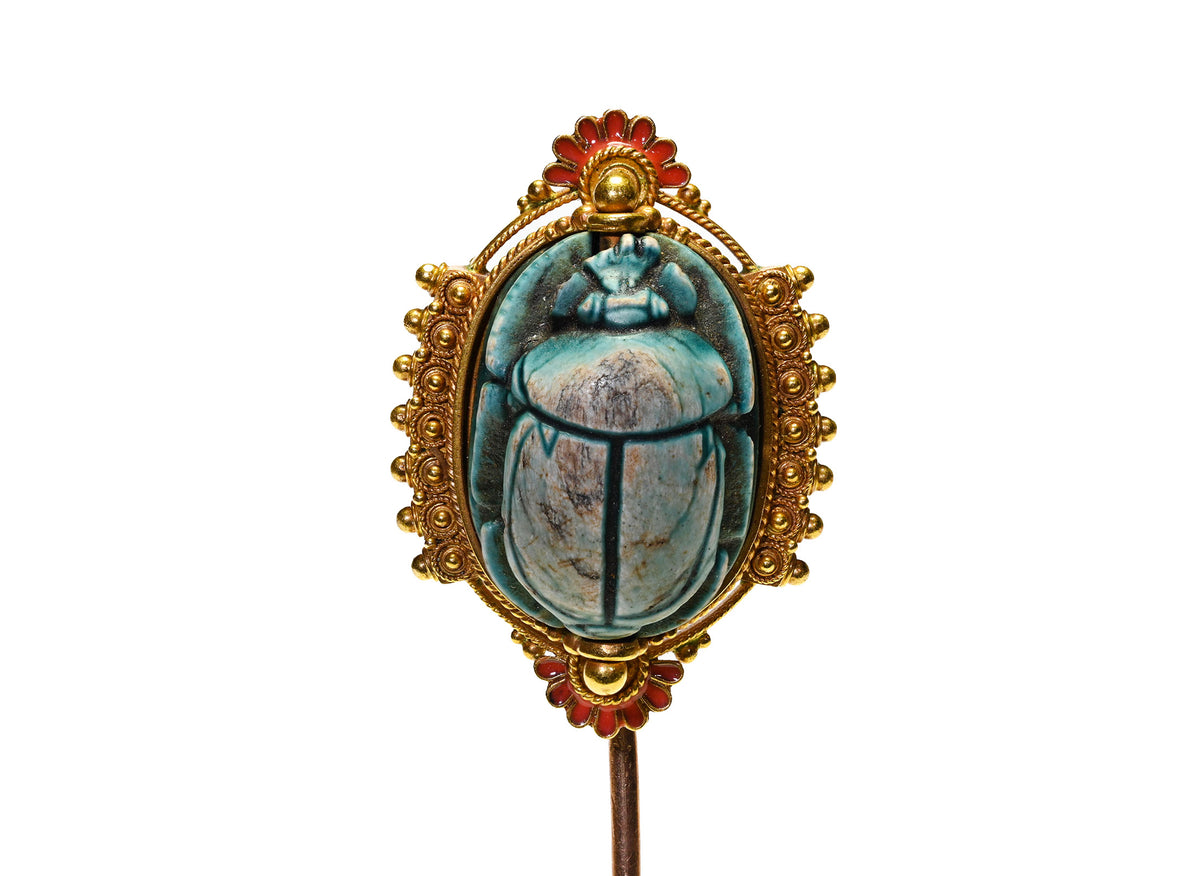
Cufflinks likewise carried meaning. Crests, monograms, animals, archaeological motifs, and finely engraved patterns could suggest family, profession, travel, cultural interest, or membership in a particular social world.

Black Opal Diamond Gold Stick Pin – Art Nouveau View this piece at DSF Antique Jewelry.
Art Nouveau and Edwardian Refinement
Around the turn of the twentieth century, the flowing naturalism of Art Nouveau brought a different sensibility to small jewels. Birds, flowers, insects, serpents, and other organic subjects were interpreted through sinuous goldwork, softly colored gemstones, opals, and translucent enamel.
Because stick pins were intimate in scale, their artistry often reveals itself gradually. A small bird may combine several colors of enamel; a flower may hold a diamond at its center; an apparently simple gemstone may prove to be carved as an intaglio or mounted within an unusually refined setting.
Edwardian jewelers frequently favored a lighter visual effect. Platinum, diamonds, calibrated colored stones, and delicate reversible constructions allowed stick pins and cufflinks to appear elegant without feeling heavy. Swivel designs could present different surfaces or gemstone combinations, adding mechanical ingenuity to their decorative appeal.
Signed examples by houses such as Cartier, Tiffany & Co., Black, Starr & Frost, Charlton & Co., and other distinguished makers demonstrate how seriously leading jewelers approached these small-scale accessories.
Rare Gemstones on a Small Canvas
The modest dimensions of a stick pin did not prevent jewelers from using exceptional materials. Natural pearls, fine opals, unheated sapphires, Colombian emeralds, diamonds, and carved gemstones could all be incorporated into these designs.
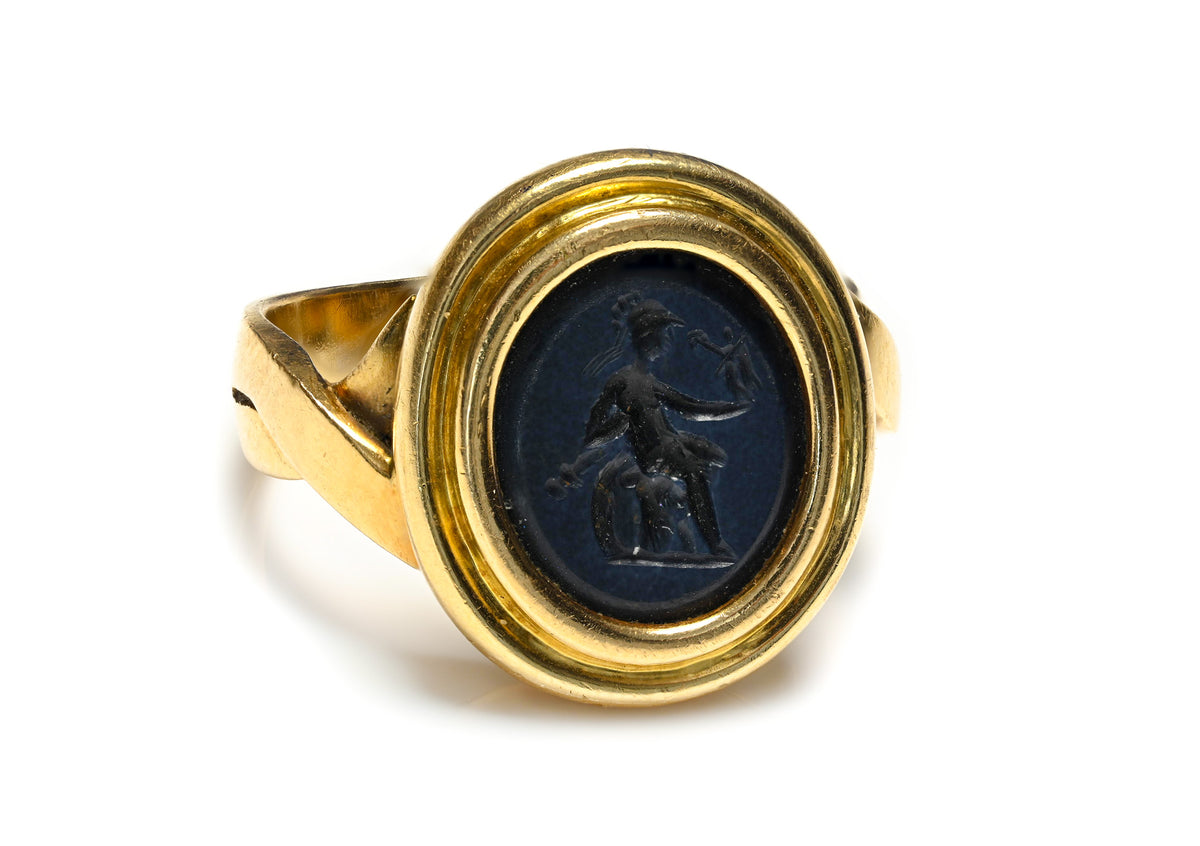
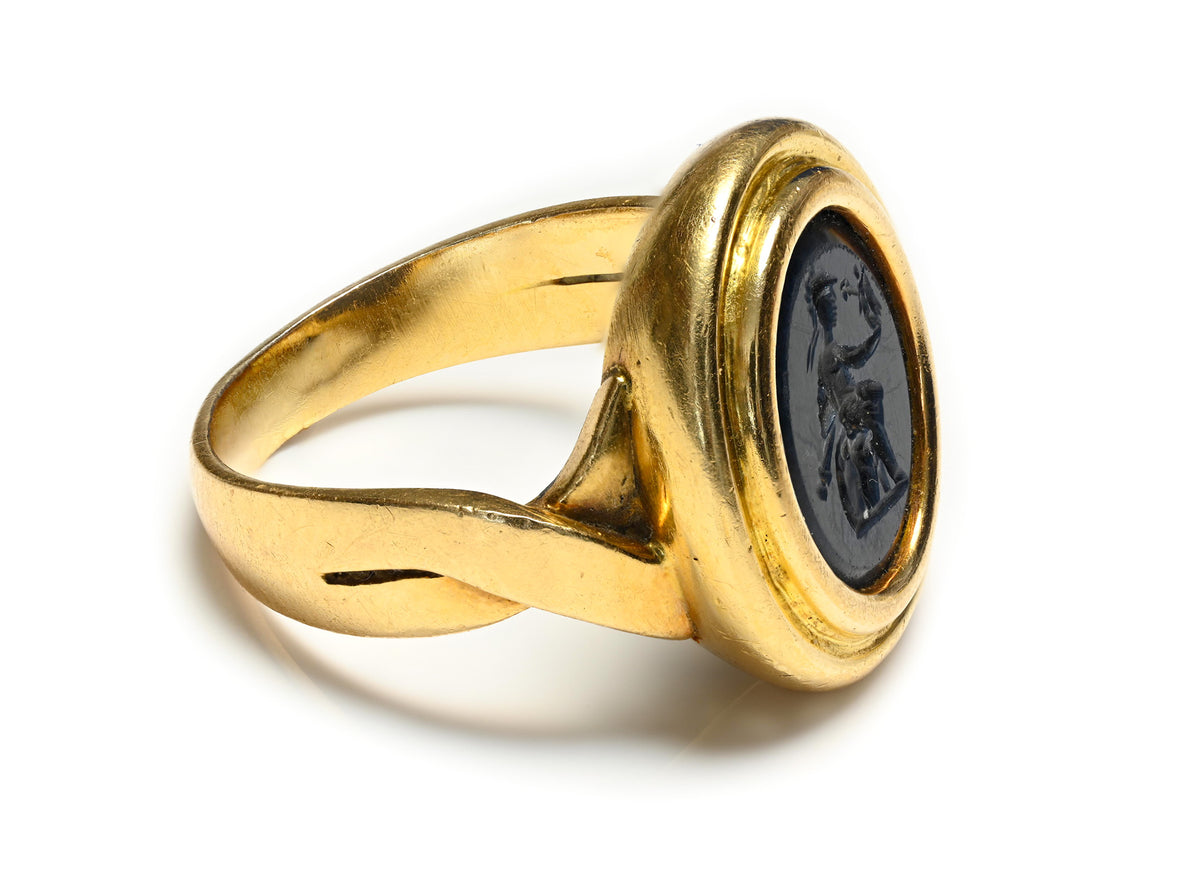
A significant gemstone mounted as a stick pin may seem unexpected today, but the format allowed a remarkable stone to be worn close to the face and appreciated without the larger structure required by a ring or pendant. A carved sapphire intaglio, for example, combines the rarity of the gemstone with the additional artistry of engraving—turning a small accessory into an object of gemological, historical, and sculptural interest.
This combination of rare material and miniature craftsmanship is one reason exceptional stick pins increasingly appeal not only as accessories, but also as collectible objects.
Art Deco Geometry and Modern Dress
During the 1920s and 1930s, Art Deco design replaced much of the softness of Art Nouveau with geometry, contrast, and architectural precision. Platinum, diamonds, onyx, emeralds, rubies, sapphires, rock crystal, and richly colored hardstones became especially effective in cufflinks and formal dress sets.
The limited surface of a cufflink encouraged disciplined design. Circles, rectangles, stepped borders, radiating patterns, and opposing fields of color could produce a strong impression without unnecessary scale. Black onyx against diamonds and platinum created dramatic contrast, while carnelian, lapis lazuli, and colored sapphires introduced depth and individuality.
Complete dress sets—including cufflinks and matching shirt studs—represent an especially refined form of period dressing. When preserved together, they reveal how jewelers developed a unified design across several separate components.
The Art Hidden in Construction
The front of a jewel may attract the eye, but the reverse often reveals its quality.
Fine cufflinks require secure and carefully balanced fittings. Chain connections must move freely, rigid bars must align correctly, and double-sided designs must appear finished from every angle. Stick pins may incorporate removable guards, reversible heads, swivel mechanisms, or complex settings that are largely invisible when worn.
Engraving, enamel application, stone setting, carving, modeling, and polishing all become more demanding when performed on such a reduced scale. The best examples reward magnification: a tiny hallmark, a finely rendered animal, a concealed hinge, or a perfectly fitted gemstone can disclose the standards of the workshop responsible for it.
Collecting Cufflinks and Stick Pins Today
Although cufflinks and stick pins were historically associated with men’s dress, their appeal today is not limited by gender or traditional rules of wear. Stick pins can be placed on lapels, jackets, scarves, ties, hats, or displayed as miniature works of decorative art. Antique cufflinks continue to accompany formal clothing, but they are also collected for their design, maker, materials, mechanical construction, or historical character.
For collectors, condition and originality remain important. Attention should be given to the security of fittings, evidence of repair or alteration, the condition of enamel, gemstone integrity, maker signatures, and period hallmarks. Provenance and gemological documentation may add further significance when they are available and verifiable.
Most importantly, each piece should be considered as a complete object. Materials contribute to its importance, but so do imagination, proportion, execution, rarity, and the story expressed within its remarkably small dimensions.
Across Victorian symbolism, Art Nouveau naturalism, Edwardian refinement, and Art Deco geometry, cufflinks and stick pins demonstrate that scale never limited the ambition of the jeweler. These objects remain personal, wearable, and endlessly varied—small jewels capable of preserving an entire era’s craftsmanship and character.
Explore DSF Antique Jewelry’s collections of antique and vintage stick pins and vintage, antique and estate cufflinks.