The Jewelry Art Movement, 1940–1980: From Collective Trauma to Artistic Transformation
A New Art Form Emerges
The history of American jewelry as an art form in the twentieth century is a remarkable narrative of transformation.
According to the comprehensive study One of a Kind: American Art Jewelry Today by Susan Grant Lewin, before the 1940s, jewelry - both in the United States and abroad- was largely defined by tradition, technical mastery, and the value of precious materials.
Jewelers operated within inherited hierarchies of goldsmithing, gem-setting, and academic design, producing work for a clientele accustomed to luxury, permanence, and refinement. Yet within four decades, from 1940 to 1980, an extraordinary change took place. Jewelry became recognized not merely as personal adornment but as a serious artistic practice capable of intellectual rigor, narrative expressiveness, and conceptual depth. That shift - the emergence of the Studio Jewelry Movement - was shaped by cultural, educational, and artistic forces that converged in mid-century America.
The evolution of American jewelry in the mid-twentieth century is one of the most remarkable transformations in modern craft history.
Jewelry - once confined to the world of trade skills, luxury materials, and decorative convention - became a dynamic artistic medium between 1940 and 1980. During these decades, a generation of jewelers emerged who rejected the implicit hierarchy that placed goldsmithing below “fine art.” They questioned every inherited rule: Why should jewelry be made of precious metals? Why should it be symmetrical? Why should it follow fashion? Why should it not be as conceptually rich as sculpture or as emotionally resonant as painting?

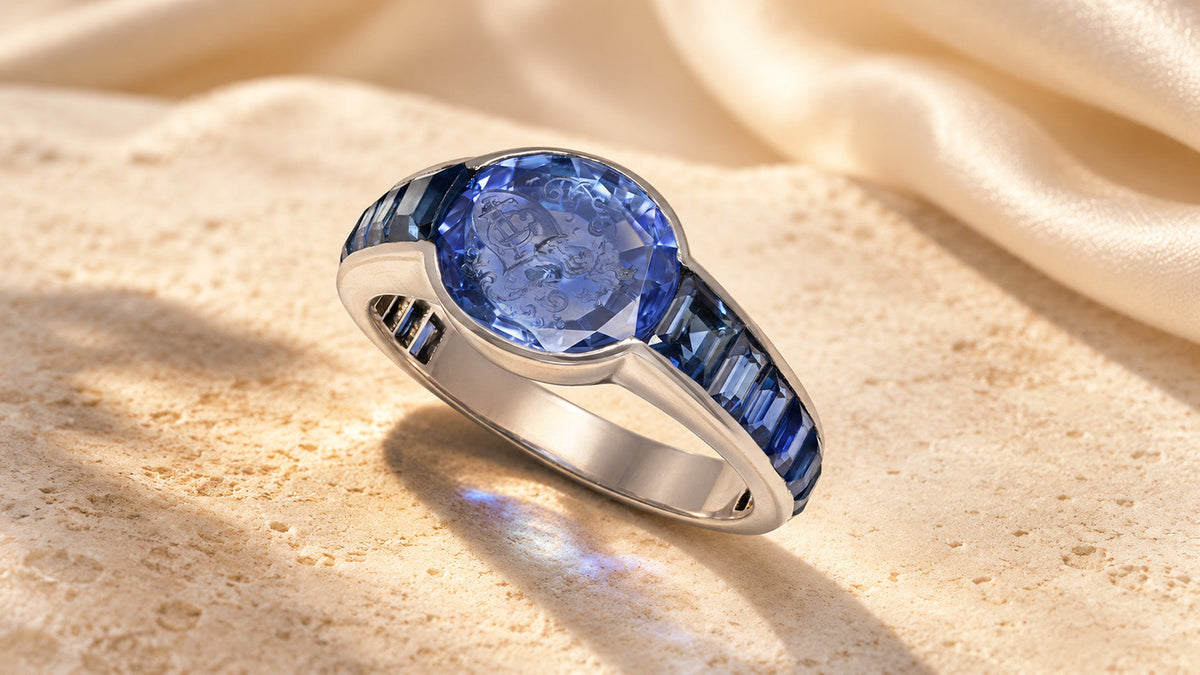
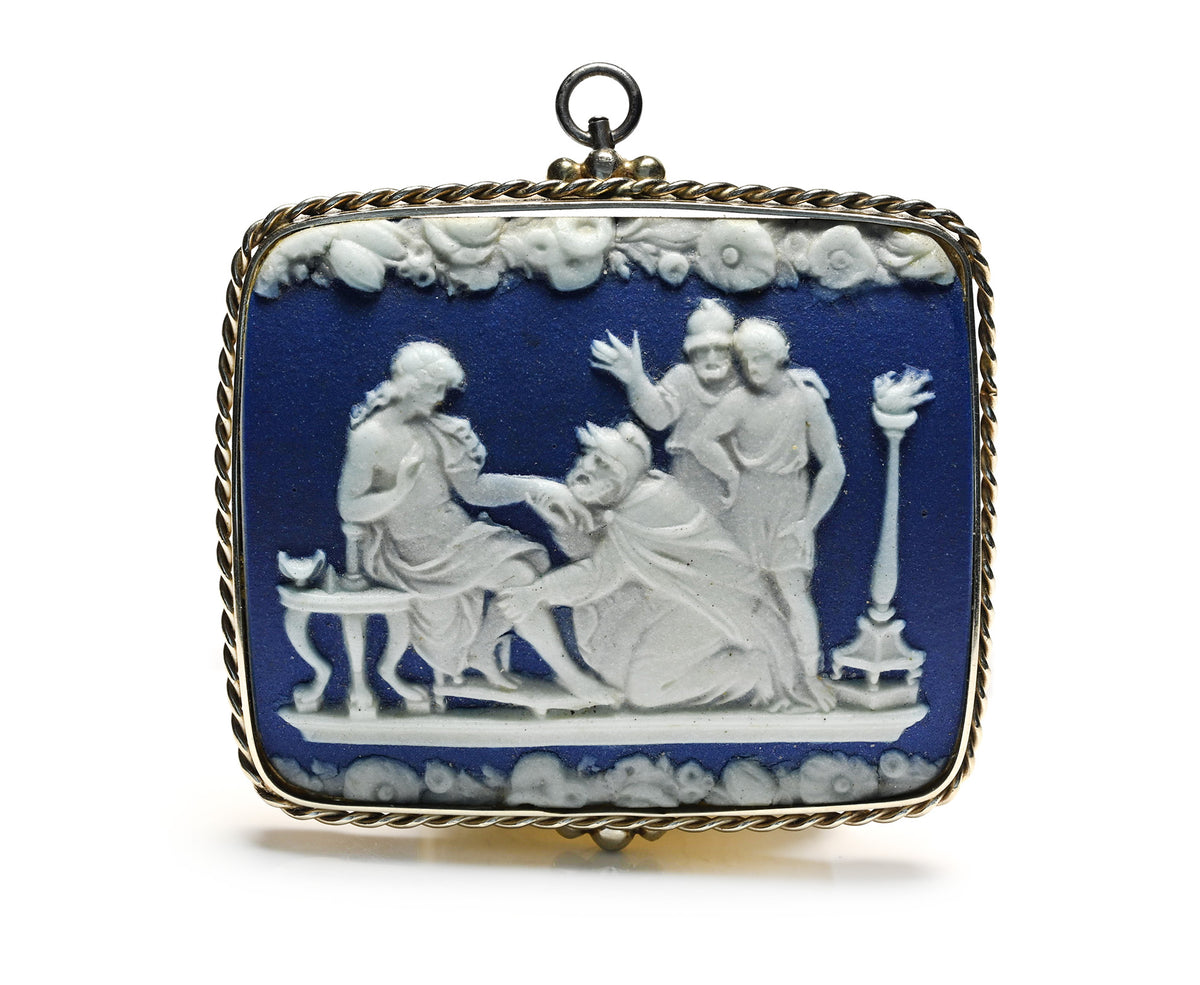
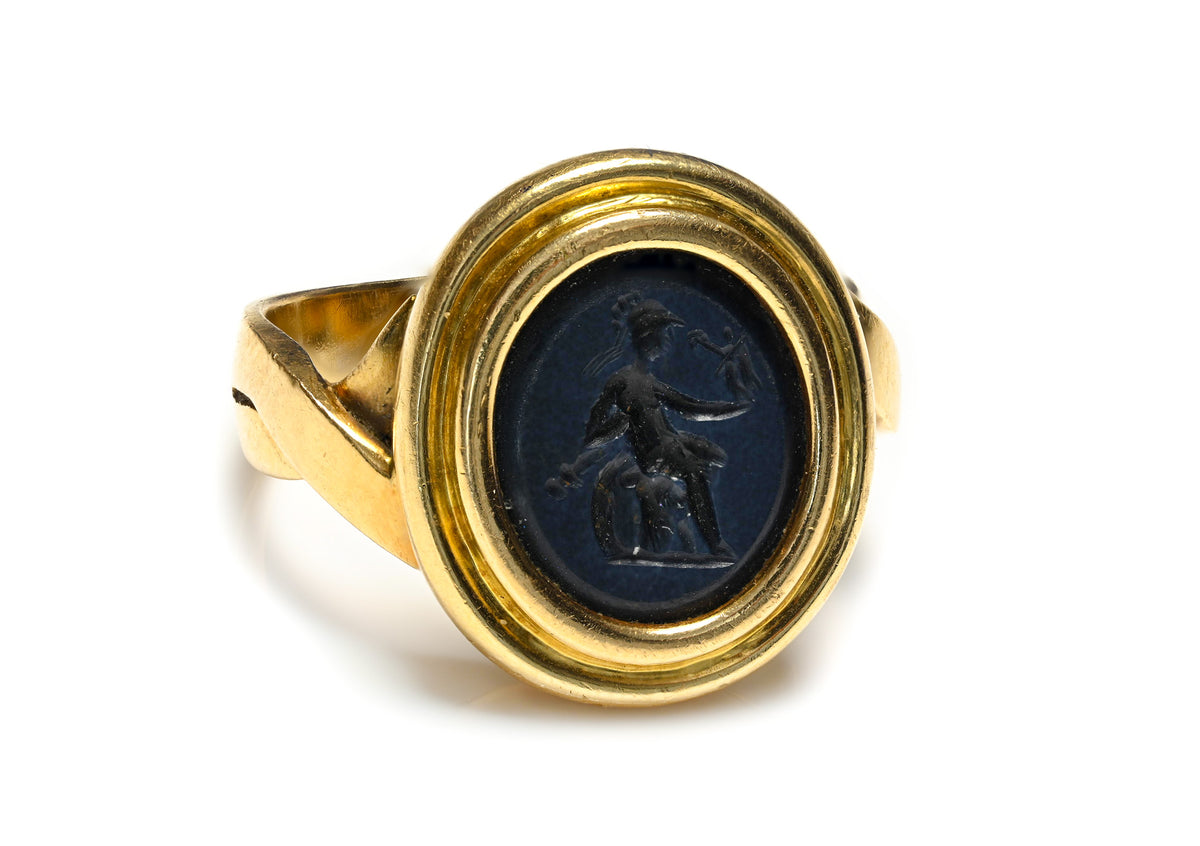
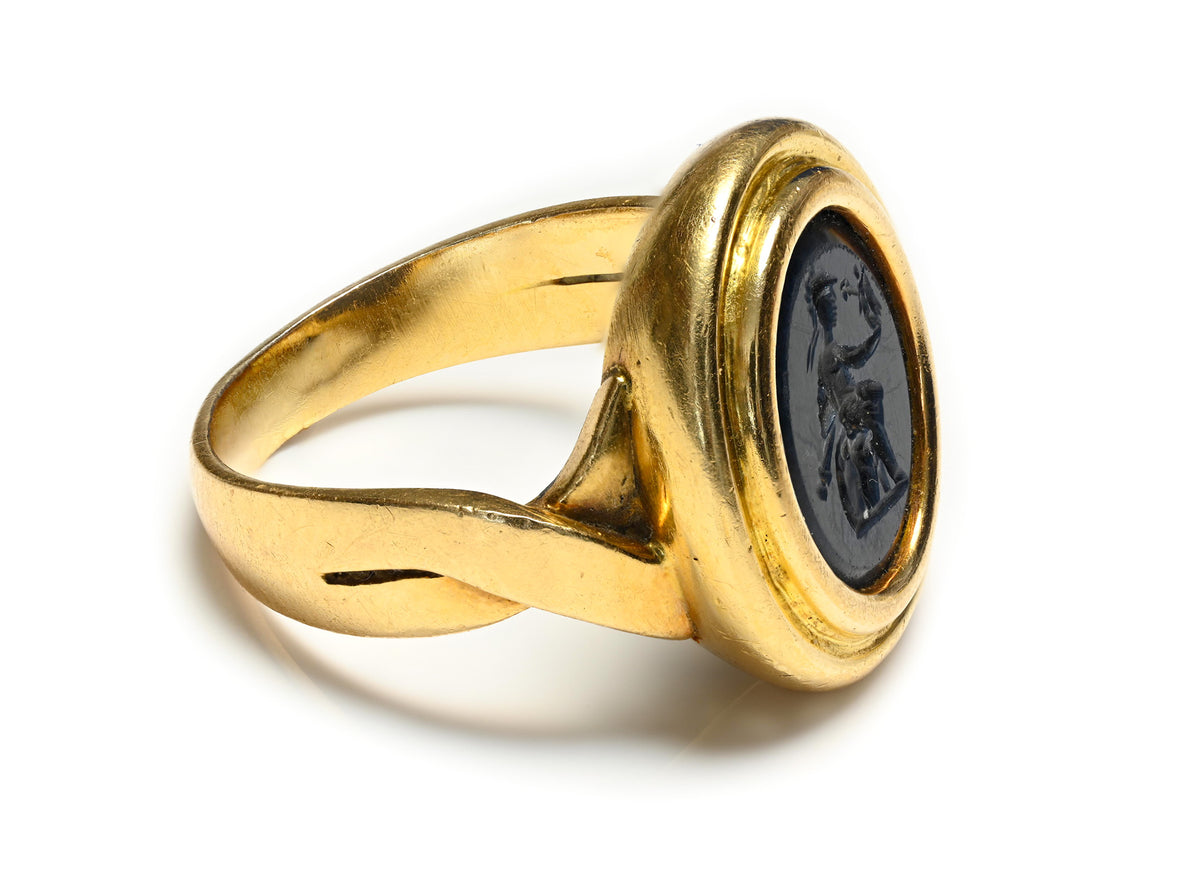
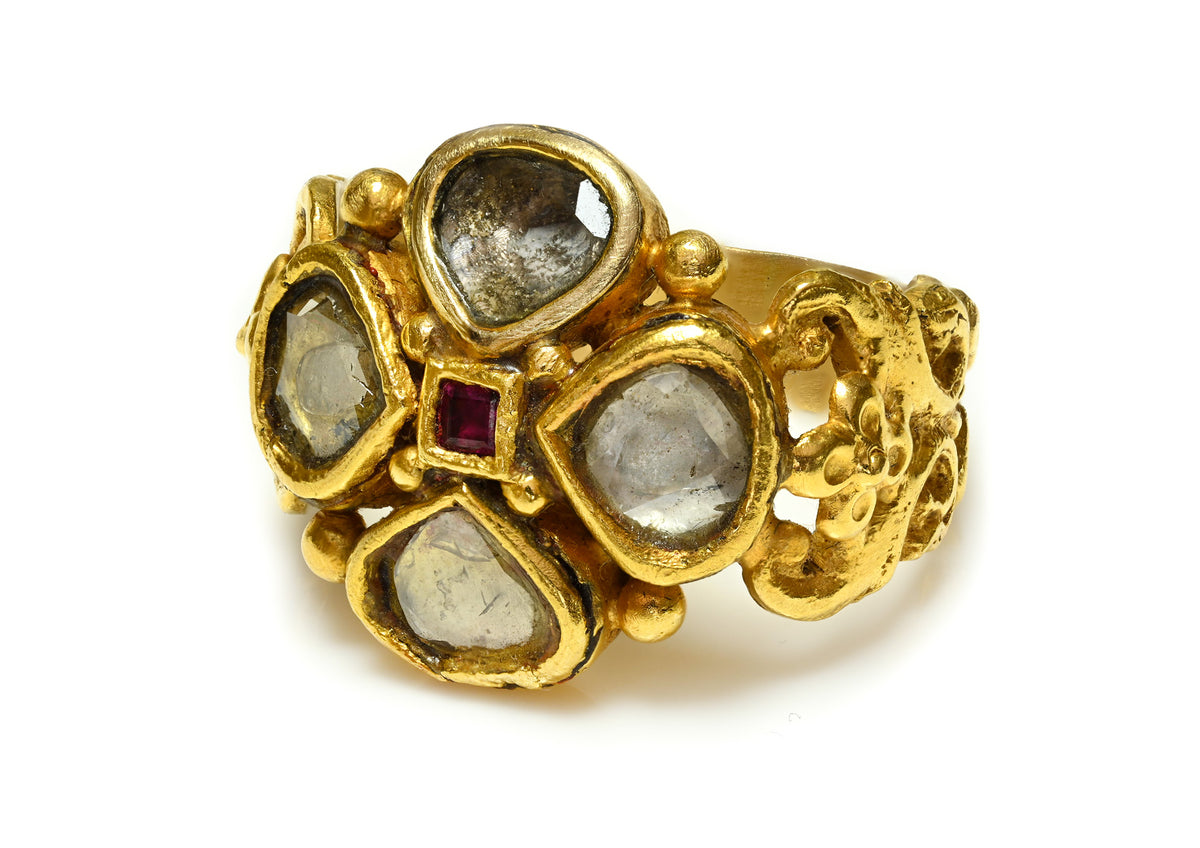
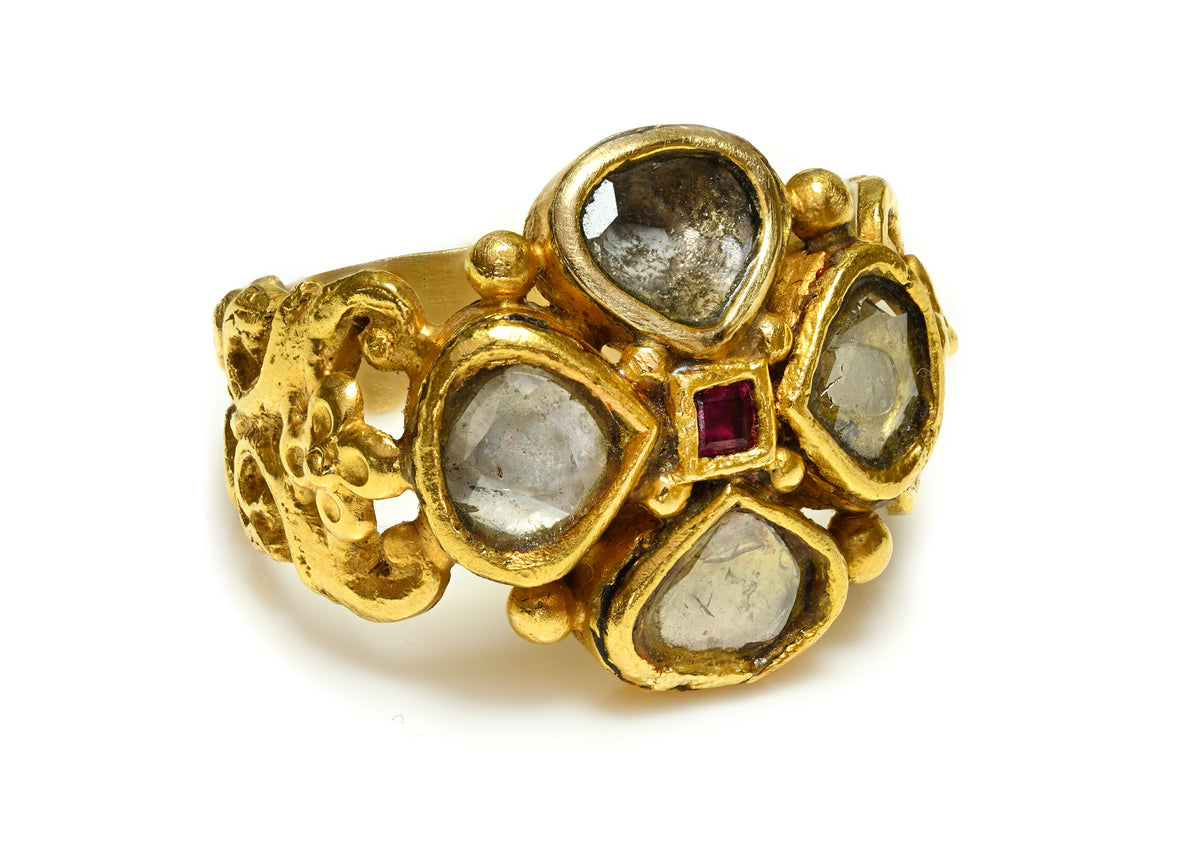
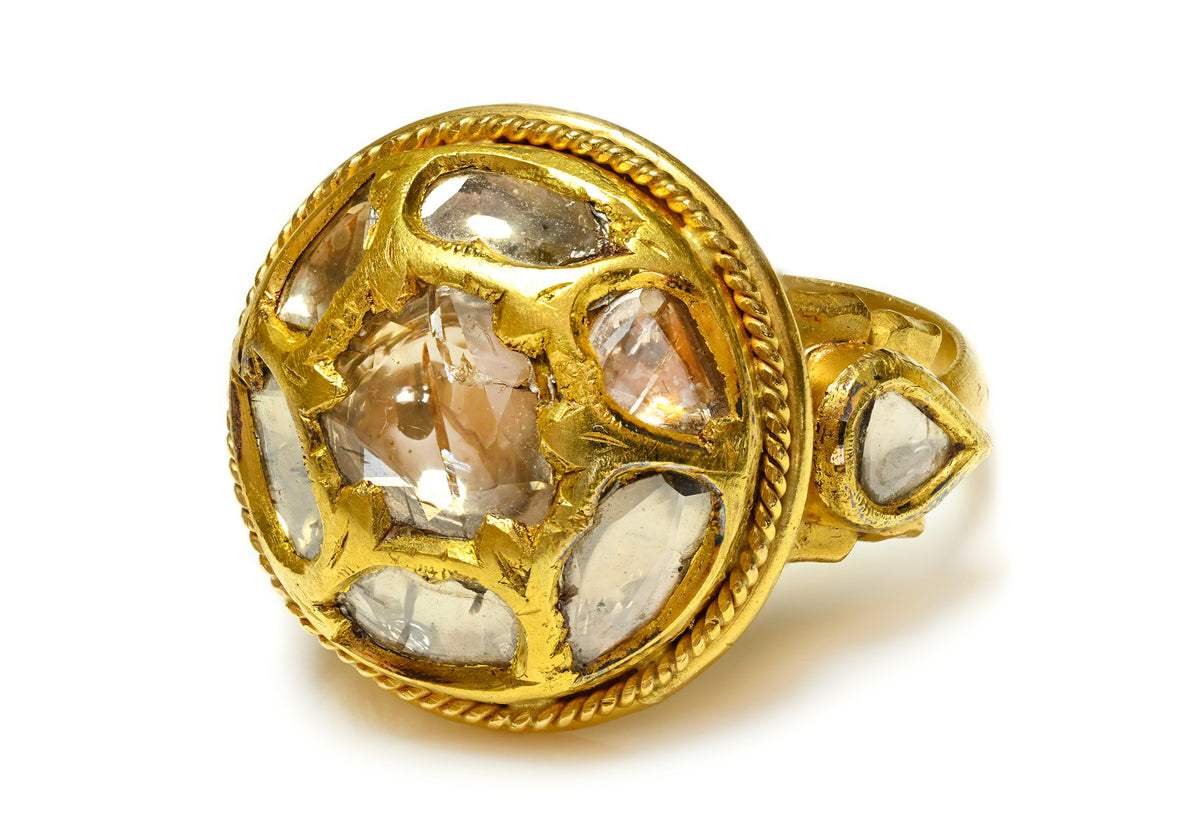
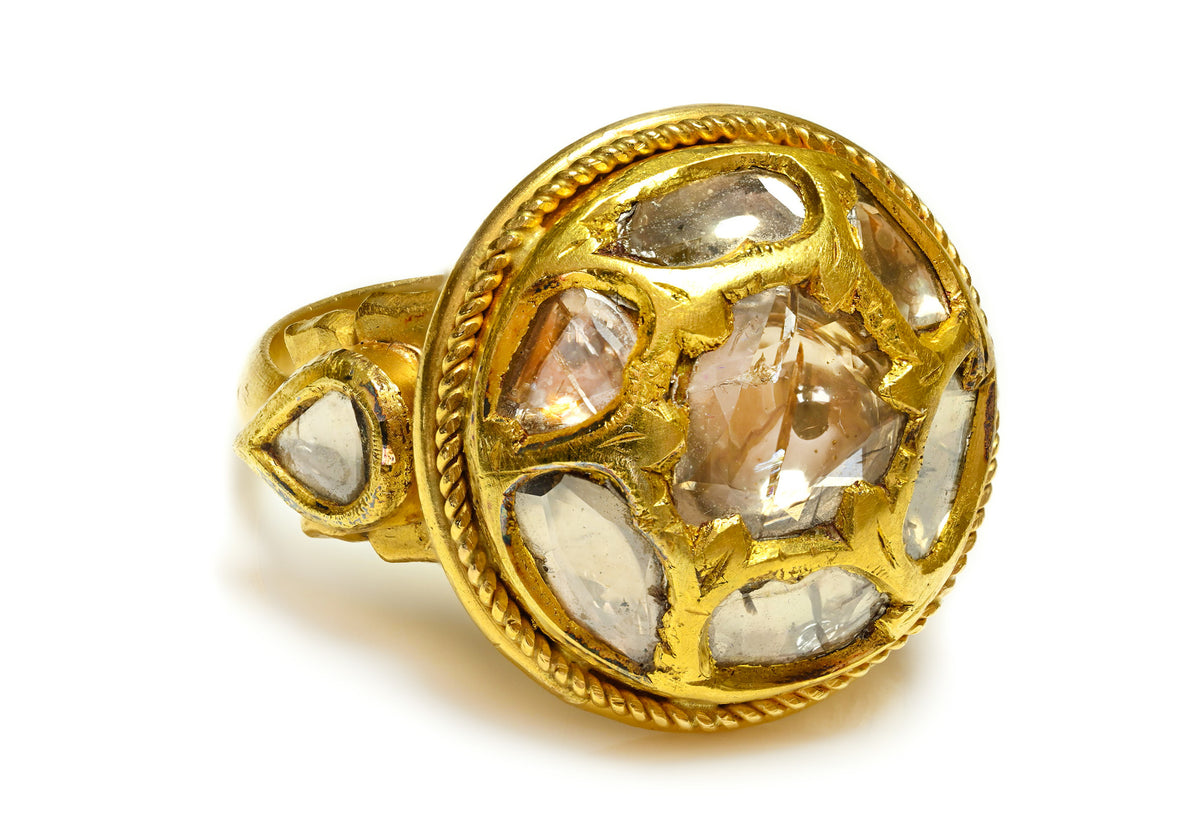
Modernistic ring, Source DSF Antique Jewelry
The answers they forged transformed the identity of the field. The Studio Jewelry Movement did not simply create new techniques; it challenged the fundamental purpose of jewelry and asserted its capacity to serve as a vehicle for personal, political, and conceptual expression.
This expanded narrative explores that transformation in depth. It weaves cultural history, educational context, and detailed biographical expansions of all major figures into a single continuous chapter that more fully captures the complexity and richness of the movement.
Cultural Conditions: Trauma, Renewal, and the Search for Meaning
The emergence of studio jewelry cannot be separated from the cultural climate of mid-century America. By the early 1940s, the United States had experienced the Great Depression, rapid industrialization, and the mobilization of an entire population for World War II. These decades left psychological, economic, and social marks that profoundly shaped artistic desires.
When the war ended, Americans faced a contradiction: tremendous optimism paired with lingering trauma. While a new middle class blossomed and consumer culture expanded, artists and intellectuals questioned the alienation inherent in mass production and industrial modernism. The handmade object became a symbol of human presence - something that resisted mechanized sameness. Craft was resurging not merely as a hobby but as a cultural necessity.
Jewelry, in particular, had the potential to offer closeness, tactility, and meaning. Its scale made it intimate; its placement on the body made it performative; its materials made it symbolic. Many postwar artists saw in jewelry the ability to bring art into daily life. Instead of hanging on a wall, art could travel through the world on a living body.
This shift was also influenced by a reaction against prewar aesthetic norms. The streamlined geometry of the 1920s and 1930s - celebrated in industrial design - felt impersonal after the war. Artists longed for warmth, organic form, and expressive imperfection. Jewelry provided a fertile arena for exploring these desires.
Educational Roots: How Craft Entered the American Imagination
The Studio Movement did not arise spontaneously; it relied heavily on the educational reforms of the 1930s and 1940s. Beginning with New Deal programs, metalsmithing entered public school curricula and teacher training programs. Students learned forging, chasing, soldering, and basic metal manipulation - not to prepare for a trade but to foster creativity and manual skill.
After the war, veterans’ rehabilitation programs formalized crafts as therapeutic practices. Hospitals and rehabilitation centers taught woodworking, ceramics, and metalsmithing, introducing thousands of young men to tools and materials they had never previously encountered. For many, metalwork became a lifelong passion.
Simultaneously, universities began integrating metal arts into fine arts departments. This was revolutionary. Institutions such as Cranbrook Academy of Art, the School for American Craftsmen, Indiana University, and the University of Kansas developed comprehensive programs that paired jewelry with sculpture, modernist design philosophy, and art criticism. Students at these schools were encouraged not only to master technique but also to articulate conceptual intent. This idea - that jewelry could and should have an intellectual foundation - set the stage for transformation.
By the late 1950s, university-trained jewelers became the backbone of the movement, shaping curricula, mentoring students, and publishing technical research. Academic legitimacy enabled the movement to grow far beyond the studio bench.
Modernist Beginnings in New York: A New Kind of Jeweler Appears
New York City - already a center of modern art - was the birthplace of the American Studio Jewelry Movement. European avant-garde artists and intellectuals fleeing World War II brought modernist ideas into the American cultural matrix. The proximity of jewelers to painters, sculptors, dancers, and architects produced a cross-disciplinary energy that fundamentally shifted the identity of the field.
Paul Lobel: From Industrial Designer to Modernist Jeweler
Born in Romania and raised in New York City, Lobel trained at the Pratt Institute and began his career as an industrial designer in the 1920s. He became well known for designing radios, lamps, silverware, furniture, and graphic works that reflected the clean lines and streamlined aesthetics of the modernist age.
By the late 1930s and early 1940s, Lobel shifted his focus to handcrafted jewelry. Drawing on his design background, he created pieces characterized by bold geometric forms, folded metal planes, and sculptural abstraction. Unlike traditional jewelers, Lobel avoided gemstones and instead emphasized the expressive possibilities of silver, brass, and copper. His brooches, pendants, and bracelets echoed the language of modern sculpture, bridging industrial design and wearable art.

Vintage Paul Lobel Silver Necklace, Source DSF Antique Jewelry
Lobel was one of the first American jewelers to sell studio-made modernist jewelry in major department stores, making avant-garde design accessible to a wider public. His work was exhibited widely during his lifetime and was included in the 1946 exhibition Modern Handmade Jewelry at the Museum of Modern Art.
Today, Paul Lobel is recognized as a foundational figure whose early experiments helped legitimize jewelry as a form of modern artistic expression. His work helped establish modernist jewelry as a legitimate American style distinct from European traditions.
Sam Kramer: The Surrealist Metalworker and Cultural Outlier
Sam Kramer (1913–1964) was one of the most eccentric and influential figures in the American Studio Jewelry Movement. Born in Pittsburgh, Pennsylvania, Kramer originally studied psychology at the University of Pittsburgh before turning toward the arts. His early exposure to Surrealism, modernist sculpture, and New York’s bohemian culture would later shape his unconventional approach to jewelry.

Metalware by Sam Kramer, in the Milwaukee Art Museum, Source Wikimedia Commons, Author, Saiko
After moving to Greenwich Village in the late 1930s, Kramer opened a small studio and shop that quickly became a cultural landmark. The space - cluttered with fossils, seashells, glass eyeballs, bone fragments, miniature dolls, and assorted curiosities—served as both a workshop and a Surrealist installation. Visitors entered not merely a jewelry store but a world of imaginative oddities that reflected Kramer’s fascination with the subconscious and the irrational.
Kramer’s jewelry was radically distinct from the refined, gemstone-centered traditions of mid-century American jewelry design. Working primarily in silver, he created cast and fabricated pieces featuring lumpy biomorphic forms, asymmetrical contours, and unpredictable textures. He incorporated unusual materials such as taxidermy eyes, found objects, pebbles, shells, hand-cut stones, and fragments of ivory or horn. Each piece embodied a playful, dreamlike quality, often merging humor with psychological tension.
Philosophically, Kramer saw jewelry as a portal into the wearer’s personality. He produced hand-typed, often tongue-in-cheek manifestos and pamphlets in which he encouraged customers to embrace imperfection, spontaneity, and Surrealism as pathways to authenticity. His approach challenged the prevailing assumption that jewelry must be symmetrical, precious, or decorative; instead, he proposed that jewelry could be expressive, emotional, and even subversive.
Despite his outsider persona, Kramer was widely respected in artistic circles. His work appeared in leading craft exhibitions and was embraced by New York’s avant-garde intellectuals, dancers, writers, and artists. His pieces became signatures of the countercultural identity of the Village during the 1940s and 1950s.
Kramer continued to work until his untimely death in 1964 at the age of 50. Though his career was relatively short, his influence was profound. He paved the way for later experimental jewelers who embraced found materials, psychological content, and Surrealist aesthetics. Today, Kramer is recognized as a visionary who expanded the boundaries of jewelry, transforming it into a site of imagination, rebellion, and personal symbolism.
Art Smith: African Diaspora Aesthetics and Sculptural Wearability
Born Arthur George Smith in Cuba to Jamaican parents and raised in Brooklyn, Smith grew up in a culturally rich Afro-Caribbean household that would later inform aspects of his artistic sensibility. His early interest in the arts led him to apply to Cooper Union, where he received a full scholarship—an extraordinary accomplishment in an era when opportunities for Black artists were severely limited.
At Cooper Union, Smith studied architecture and drawing, developing the spatial awareness and sensitivity to form that would characterize his later work. He apprenticed with Winifred Mason, one of the first Black jewelers working professionally in New York. Mason introduced him to metalwork, Afro-Caribbean symbolism, and the idea of jewelry as a form of cultural expression. Under her mentorship, Smith began to see jewelry not as mere ornament but as a medium with sculptural and emotional potential.

Art Smith Necklace, Milwaukee Art Museum, Source Wikimedia Commons, Author Saiko
In 1946, Smith opened his own studio and shop in Greenwich Village, an area that was then a thriving hub of avant-garde thought, dance, jazz, and LGBTQ+ culture. His studio became a meeting place for artists, dancers, intellectuals, and performers. This environment profoundly influenced Smith’s aesthetic. He collaborated closely with dancers and choreographers, observing how jewelry moved across the body in motion—a perspective that made his work uniquely kinetic and body-centered.
Smith’s jewelry is characterized by sweeping curves, elongated loops, and bold, sculptural silhouettes. Image, here. Working primarily in silver, brass, and copper, he created pieces that extended beyond the contours of the body, wrapping around the neck, arm, or wrist in graceful arcs. His inspiration drew from multiple sources: African and pre-Columbian art, biomorphic Surrealism, jazz rhythms, Alexander Calder’s mobiles, and the organic forms of sculptors such as Jean Arp and Barbara Hepworth.
Crucially, Smith saw the body as an integral element of the artwork. His jewelry was incomplete until worn; the piece and the wearer entered into a dynamic dialogue. Many of his iconic bracelets and neckpieces rely on counterbalance and movement, making the wearer a performer within the sculptural space of the design.
Despite facing racial discrimination throughout his career, Smith gained significant recognition. His work appeared in fashion magazines, was sold in major department stores, and adorned dancers, models, and public figures. In 1969, he received a major exhibition at the Museum of Contemporary Crafts (now the Museum of Arts and Design), which cemented his reputation as one of the most innovative jewelers of the 20th century.
Art Smith continued working until his death in 1982, leaving behind a legacy of jewelry that is at once modernist, sculptural, culturally resonant, and deeply humanistic. Today, his pieces are featured in major museum collections - including the Smithsonian, the Brooklyn Museum, and the Cooper Hewitt - and he is celebrated not only as a master metalsmith but as a trailblazing Black artist whose contributions helped shape the language of contemporary wearable sculpture.
Ed Wiener: Eclecticism and Accessible Modernism
Ed Wiener (1918–1991) was an influential American modernist jeweler whose eclectic style, openness to experimentation, and commitment to accessible design helped shape the early decades of the Studio Jewelry Movement. Born in Providence, Rhode Island, Wiener grew up in a working-class Jewish family. He did not originally train as an artist; instead, he entered the garment trade and worked in fashion-related jobs throughout the 1930s. This early exposure to clothing, accessories, and everyday design would later inform his sensitivity to how jewelry interacts with the body and with personal style.
During World War II, Wiener served in the U.S. Army. After his service, he settled in Greenwich Village - then a creative epicenter alive with jazz musicians, painters, craft workers, poets, and political radicals. This vibrant cultural environment had a profound effect on him. With no formal art school training, Wiener taught himself metalsmithing through experimentation, observation, and the informal mentorship of other Village artists. His natural curiosity and designerly intuition pushed him quickly toward a modernist aesthetic.

Ed Wiener Gold Earrings, Source DSF Antique Jewerly
Wiener’s early work was characterized by clean geometric forms, hammer-textured surfaces, and a focus on sterling silver, which he preferred for its versatility and affordability. As his style evolved, he began incorporating enamels, semiprecious stones, and bold color contrasts. Unlike many jewelers who sought a single, cohesive personal style, Wiener embraced eclecticism. His work ranged from refined modernist pieces influenced by Cubism, to playful, Klee-like designs, to highly patterned enamels that hinted at folk art and world crafts.
A central belief behind Wiener’s practice was that jewelry should reflect the cultural spirit of its time. He frequently described jewelry as a “badge” - an outward sign of personal identity and a marker of one’s relationship to modern art. This idea resonated deeply with the intellectual and artistic community of Greenwich Village, and Wiener’s shop became a staple of the neighborhood’s creative life. Artists, actors, and writers wore his pieces as declarations of individuality.
In the 1950s and 1960s, Wiener became increasingly involved in craft education, especially through the Haystack Mountain School of Crafts in Maine. As both teacher and mentor, he shaped generations of young metalsmiths, sharing not only technical skill but also an ethos of openness, experimentation, and cultural awareness. His approach encouraged students to see jewelry not as a commodity but as an evolving artistic language.
Wiener’s work was exhibited nationally and internationally. He participated in the landmark Modern Handmade Jewelry exhibition at the Museum of Modern Art in 1946, one of the earliest museum-level recognitions of studio jewelry in the United States. Over the next four decades, his pieces appeared in galleries, craft fairs, design magazines, and museum collections, helping bring modernist jewelry into the American mainstream.
Despite his growing reputation, Wiener maintained a down-to-earth philosophy. He rejected luxury’s elitism and believed in designing for real people. His materials—primarily silver and enamel - were chosen deliberately to keep his work financially accessible. This democratic impulse aligned him closely with the values of the wider Studio Jewelry Movement, which sought to free jewelry from the conventions of preciousness.
Ed Wiener continued working until his death in 1991. Today, he is remembered not only as a modernist innovator but as a central connector - an artist who bridged the early avant-garde, the craft community, and the public. His legacy lives on in museum collections, in the continued influence of his students, and in the enduring vitality of modernist jewelry in America.
The West Coast Revolution: Structure, Light, and Technical Precision
While New York fostered abstraction and Surrealism, the West Coast produced a more architectural, light-based jewelry aesthetic. California modernism was deeply informed by Asian art, nature, engineering, and Bauhaus pedagogy.
Margaret De Patta: Constructivist Visionary and Optical Innovator
Margaret De Patta combined rigorous Constructivist theory with lapidary experimentation. Born in Oregon and educated in fine art, she relocated to Chicago in the late 1930s to study at the New Bauhaus under Moholy-Nagy. His emphasis on light, transparency, modular construction, and perceptual experience profoundly shaped her work.
Working with lapidary Francis Sperisen, she developed “opticuts” - stones with knife-edge facets that created internal reflections and floating illusions. Unlike traditional jewelers who used stones as status symbols, De Patta used stones as sculptural elements interacting with space and light.

Margaret De Patta Metalware in the Milwaukee Art Museum, Source Wikimedia Commons, Author, Saiko
Her settings were engineered with mechanical precision: girdle-less mountings, suspended stones, open planes, and cantilevered structures. De Patta also co-founded the Metal Arts Guild and championed the belief that jewelry was a democratic art form meant to enrich everyday life.
Her influence remains unmatched; she is widely considered one of the most important American jewelers of the twentieth century.
Merry Renk, Florence Resnikoff, and Irena Brynner: The Bay Area Triad
These three artists - each with distinct backgrounds - formed a powerful nucleus of innovation in San Francisco’s Metal Arts Guild.
Merry Renk, born in 1921, mastered techniques requiring immense control: anticlastic raising and heat coloring of stainless steel. She also created elaborate mobiles and public sculptures, applying metalsmithing principles at larger scales.

Merry Renk Bracelet, Source Wikimedia Commons
Florence Resnikoff, initially a painter and enamelist, transitioned to metalsmithing and became one of the earliest adopters of anodized titanium and niobium. Her work introduced vivid new palettes and demonstrated how industrial processes could enrich studio craft.
Irena Brynner, born in Vladivostok and raised in Shanghai, studied sculpture before turning to jewelry. Her forms reflected Asian calligraphy, Zen aesthetics, and a sensitivity to negative space. She was also a well-known opera singer—her interdisciplinary background enhanced her sculptural intuition.
Bob Winston: Organic Casting Pioneer
Bob Winston experimented obsessively with molten metal, developing organic casting methods that allowed silver to flow into coral-like forms. His intuitive approach—letting metal behave naturally - contrasted with the precision of De Patta’s work but added an important organic dimension to West Coast jewelry.
Winston’s influence was profound; he helped shape the aesthetics of many Bay Area jewelers and laid the groundwork for the later Funk movement. See image, here.
Building Identity: Institutions, Workshops, and Professional Networks
The Studio Jewelry Movement gained strength through community formation.
Silversmithing workshops in the late 1940s and 1950s connected jewelers from disparate regions. Artists like Alma Eikerman, John Paul Miller, Margaret Craver, and Philip Morton shared techniques, debated theory, and established standards of craftsmanship.
The founding of the Society of North American Goldsmiths (SNAG) in 1969 provided:
- annual conferences
- critical discussion
- professional advocacy
- educational resources
- exhibitions
and, most importantly, Metalsmith, the first scholarly journal dedicated to metal arts.
This institutional support ensured the movement’s sustainability.
The 1960s: Pop, Politics, and the Funk Sensibility
The cultural revolution of the 1960s transformed jewelry into a tool for social critique.
Pop Jewelry and Mass Culture Irony
Christian Schmidt’s Medal of Honor mocked institutional authority by assembling trivial materials into faux-military regalia. His work reflected skepticism toward nationalism at the height of Cold War anxieties.
J. Fred Woell, a former photographer and musician, used pop-culture ephemera—comic buttons, political pins, and toy parts—to critique consumerism. He rejected precious materials entirely, asserting that meaning mattered more than value. Woell became one of the most influential conceptual jewelers of his generation.
The Funk Movement: Anti-Refinement and Emotional Rawness
California Funk embraced irreverence, humor, and anti-establishment impulses.
Ken Cory created jewelry that merged technical skill with satirical commentary. His work often juxtaposed traditional craft with pop-culture kitsch.
Ramona Solberg collected beads, amulets, and charms from around the world, integrating them into bold wearable assemblages. She questioned Western hierarchies of “high” art by incorporating everyday artifacts.
Together, Funk jewelers shattered expectations of refinement and opened the door to narrative jewelry.
Technical Revivals: Rediscovery of Ancient Processes
Mid-century jewelers engaged deeply with historical techniques.
Margaret Craver: Renaissance Enameling
Margaret Craver was a pivotal figure in the development of American studio jewelry, known equally for her technical innovation and her transformative influence on metalsmithing education. Trained in metalwork, enameling, and design during the 1930s, Craver became a driving force behind the elevation of jewelry from craft tradition to contemporary art.
Her most significant artistic contribution was the revival of the lost Renaissance technique en résille - a complex process in which tiny enamel fragments are suspended within rock crystal. Through years of research, experimentation, and collaboration with lapidaries and conservators, Craver single-handedly restored this centuries-old technique, expanding the technical and aesthetic possibilities available to modern jewelers. Her en résille works remain landmark achievements in twentieth-century metalsmithing.
Equally important was Craver’s role as an educator and movement builder. She organized influential postwar metalsmithing workshops in the late 1940s and 1950s, bringing together artists such as John Paul Miller, Philip Morton, and Alma Eikerman. These gatherings created a national network of jewelers, facilitated the exchange of advanced techniques, and laid the foundation for the professional structure that studio jewelry later relied upon.
John Paul Miller: Master of Granulation
John Paul Miller (1918–2013) was one of the most technically accomplished and intellectually rigorous American jewelers of the twentieth century, celebrated especially for his revival and mastery of granulation, an ancient Etruscan technique that he elevated to unprecedented levels of precision. Born in Huntingdon, Pennsylvania, Miller demonstrated an early aptitude for both art and scientific observation - a duality that would define his career. He studied at the Cleveland Institute of Art (CIA), where he trained initially as an industrial designer before gravitating toward metals under the influence of master silversmith Kenneth Bates.
Shortly after graduating, Miller joined the faculty of the Cleveland Institute of Art, beginning a teaching career that would last more than forty years. His pedagogical approach was a blend of artistic inspiration and disciplined technical inquiry, emphasizing craftsmanship, structural clarity, and the integration of natural forms into design. Except for a period of service in the U.S. Army during World War II, Miller remained closely tied to the Cleveland school throughout his life, shaping generations of metalsmiths through his meticulous skill and quiet, analytical teaching style.
Miller became widely known for his extraordinary work in granulated gold. Fascinated by ancient Etruscan artifacts, he spent years investigating the metallurgical mysteries behind their construction. Through extensive experimentation - meticulous, scientific, and at times obsessive - he rediscovered the principles of diffusion bonding, the technique by which microscopic gold granules are fused to a gold base without solder. Miller approached granulation with both artistic sensitivity and empirical rigor, eventually achieving levels of refinement that rivaled antiquity and, in many cases, surpassed it.
His granulated pieces often depict organic life forms - insects, crustaceans, sea creatures, and reptiles - rendered with astonishing anatomical delicacy. Rather than idealizing nature, Miller portrayed it with naturalist accuracy, capturing the textures of exoskeletons, the geometry of shells, and the segmented rhythms of arthropod bodies. Many of his works evoke the intricate beauty of a scientific illustration brought into three-dimensional, wearable form.
Beyond granulation, Miller was a master of multiple traditional techniques, including cloisonné and champlevé enameling. He combined enamel and granulated gold in ways that created luminous, richly textured surfaces. His color sense, though controlled and often subtle, added depth to pieces that already possessed remarkable structural complexity.
Philip Fike: Classical Roots and Contemporary Interpretation
Fike studied fibulae, torcs, and ancient fastening devices. His jewelry emphasizes functional integrity and structural clarity, merging classical restraint with modern sensibility.
The 1970s: Academic Expansion and Conceptualization
By the 1970s, the movement entered an intellectually rich period.
Albert Paley: Dramatic Form and Sculptural Heroism
Albert Paley, originally trained as a jeweler, eventually transitioned to monumental sculpture. But his early jewelry of the 1970s was groundbreaking—large, forged pieces that evoked Art Nouveau, Surrealism, and architectural ornamentation. His jewelry was physically and emotionally assertive.
Robert Ebendorf: Narrative Assemblage and Emotional Resonance
Ebendorf transformed found objects into deeply personal jewels. Through ticket stubs, newspaper clippings, photographs, and debris, he captured memory and contradiction. His work suggested that jewelry could tell stories rather than simply decorate the body.
Mary Lee Hu: Weaving Metal Into Life
Mary Lee Hu’s woven wire structures—coiled, braided, knitted—use metal as textile. She merged mathematical precision with organic flow, producing jewelry that feels both ancient and futuristic.
Pluralism and Postmodern Material Explorations (1970–1980)
New materials transformed the landscape.
Refractory Metals: A New Spectrum
Florence Resnikoff, Helen Shirk, and David Tisdale pioneered anodized titanium and niobium jewelry, exploring brilliant colors previously impossible in metal. Their adoption of industrial processes expanded the field’s material vocabulary.
Wearable Sculpture: Robert Lee Morris
Robert Lee Morris created large, sculptural forms inspired by tribal jewelry, bone structures, and ritual. His influence extended beyond the studio: his collaborations with designers like Donna Karan shaped fashion jewelry of the 1980s.
Plastics, Resins, and Synthetic Materiality
Cara Croninger cast hand-colored polyester resin into bold, primal forms. Her jewelry resembled talismans carved from futuristic stone.
Narrative Worlds: Richard Mawdsley
Mawdsley built miniature universes inside bracelets, pendants, and vessels. His pieces combined impeccable soldering skill with surreal storytelling.
Conceptual Landscapes: Claus Bury
Though German, Bury profoundly influenced American jewelers. His “necklace landscapes” treated jewelry as a conceptual diagram—an early form of postmodern sculptural thinking.
Public Recognition: Good as Gold (1981)
The Smithsonian’s SITES exhibition Good as Gold gathered decades of innovation into one comprehensive display. It revealed jewelry as a pluralistic, conceptually rich, materially diverse art form. This exhibition signaled widespread recognition of studio jewelry as a legitimate culture-shaping discipline.
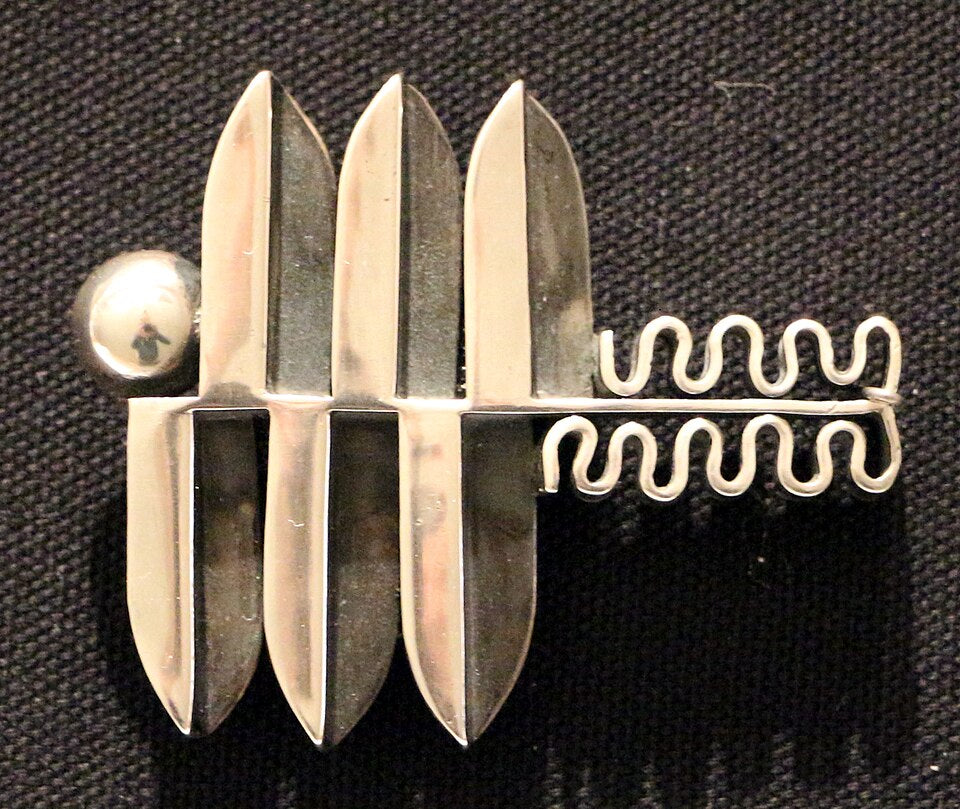
Cover Photo - Metalware in the Milwaukee Art Museum, Margaret de Patta, Source Wikimedia Commons, Author Saiko