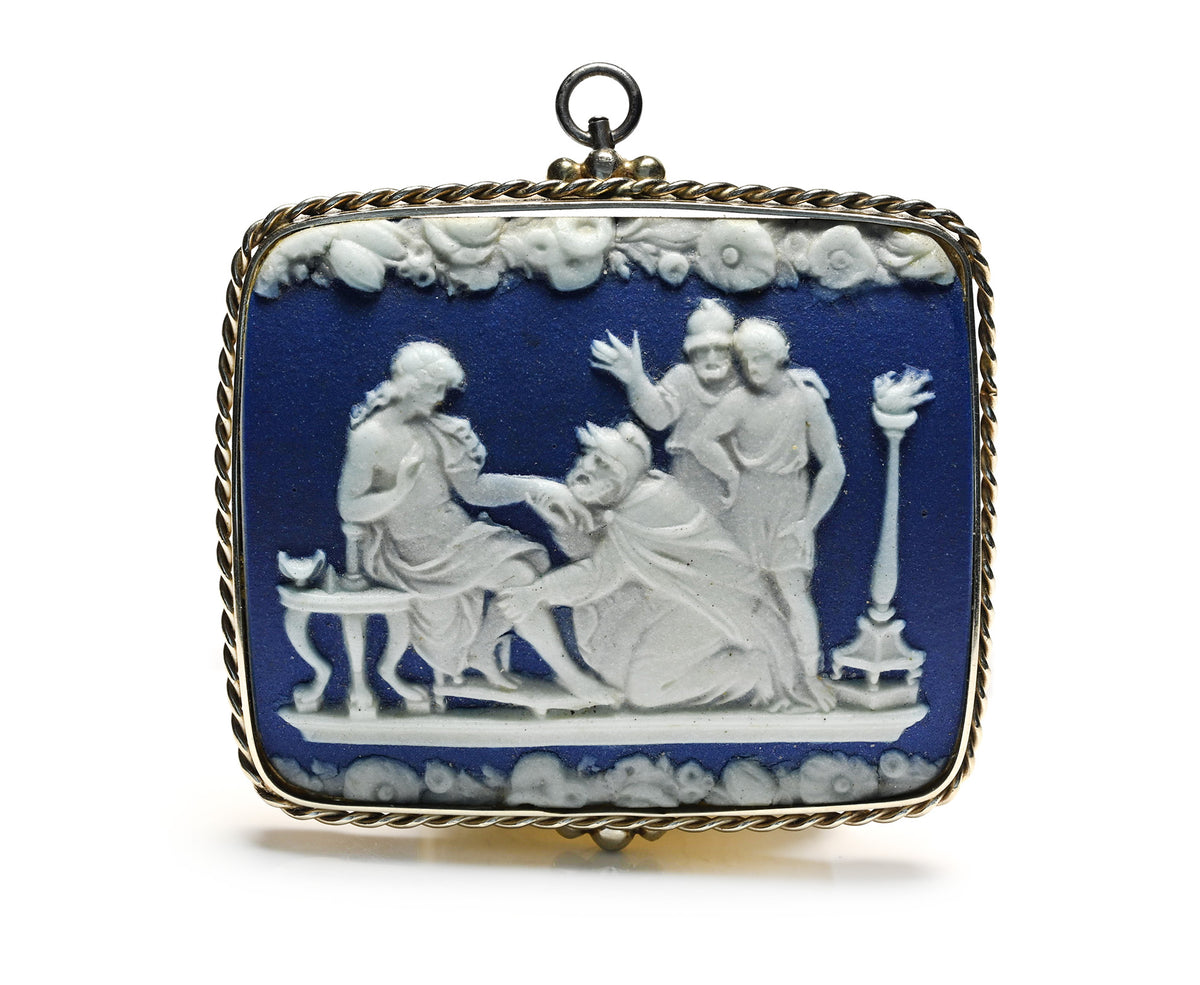
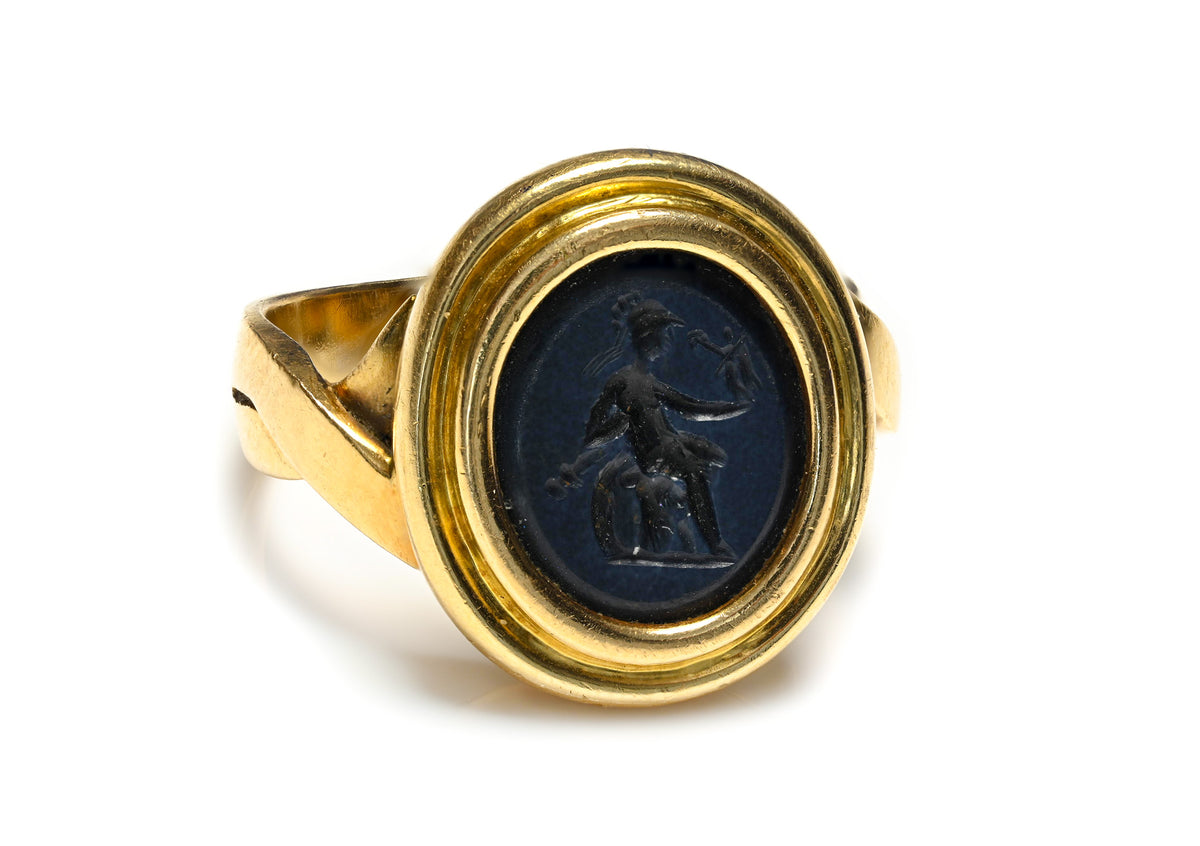
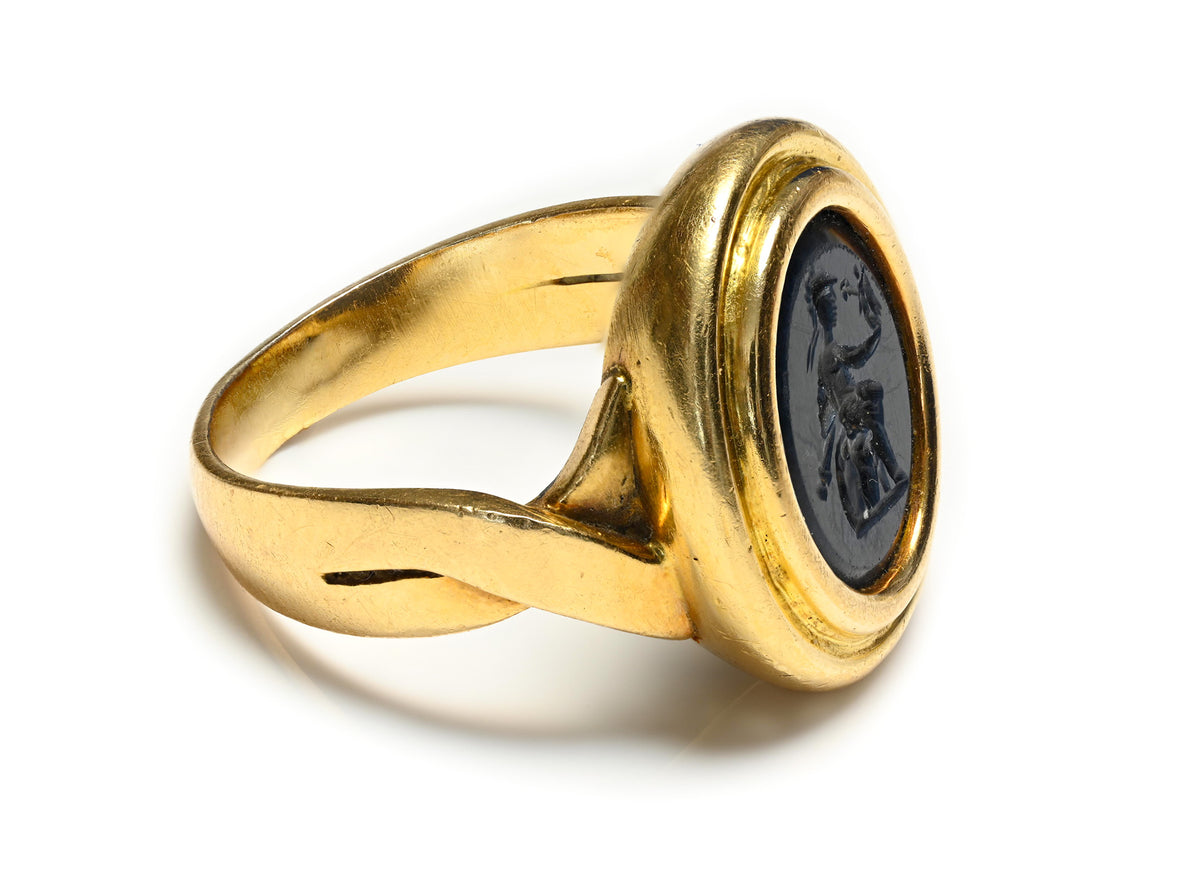
Lyngurium appeared in three varieties—fiery, saffron-colored, and green—said to come from Germany and believed to cure colic, jaundice, and scrofula (the “king’s evil”).
Ligurites, similar to the Alectorius, were said to attract straw, relieve intestinal pains, and sharpen eyesight. It was used by physicians in eye salves and was likely akin to the jacinth.
Nicolo, of blue and black hues, was believed to make the wearer victorious and beloved by the people. The name was fancifully connected to the Greek meaning “Victor of Nations.”
Opal was praised above all for strengthening eyesight and protecting against eye diseases. Its shimmering colors, combining the supposed virtues of many gems, made it a favorite of poets and mystics. Petrus Arlensis, in 1610, declared that an opal in his possession “shone with such grace and majesty that all the beauty of the heavens might be seen within it,” its mere appearance being capable of inspiring awe and devotion.

Opal Jewel, Source DSF Antique Jewelry
Otalaunius was believed to preserve eyesight and conceal the wearer from view when properly enchanted—“a most admirable property.”
Otiobolus, a stone that rattled when shaken, was said to break any metal, wood, or rock if mixed with basil juice, the blood of a swift, and other ingredients, then applied by touch.
Quiritias, a magical gem found in the nest of the hoopoe, was believed to compel confession if placed upon the breast of a sleeping person.
The origin and virtues of coral are vividly described by Orpheus in one of the most poetic passages of his work (v. 505):
Poem by Orpheus
“The Coral too, in Perseus’ story famed,
Against the scorpion is for virtue named;
This also a sure remedy will bring
For murd’rous asps, and blunt their fatal sting.
Above all gems in potency ’t is raised
By bright-haired Phœbus, and its virtues praised:
For in its growth it shews a wondrous change—
True is the story though don’t deem it strange.
A plant at first it springs not from the ground,
The nurse of plants, but in the deeps profound.
Like a green shrub it lifts its flowery head
Midst weeds and mosses of old Ocean’s bed.
But when old age its withering stem invades,
Nipped by the brine its verdant foliage fades;
It floats amid the depths of Ocean tossed,
Till roaring waves expel it on the coast.
Then in the moment that it breathes the air
They say, who’ve seen it, that it hardens there.
For as by frost congeal’d and solid grown,
The plant is stiffened into perfect stone;
And in a moment in the finder’s hands
Late a soft branch, a flinty coral stands.
Yet still the shrub its pristine shape retains,
Still spread its branches, still the fruit remains.
A sweet delight to every gazer’s eye,
My heart its aspect fills with speechless joy.
My longing gaze its beauty never tires
But yet the prodigy with awe inspires.—
Though to the legend I full credit give,
Scarce do I hope it credence will receive:
But yet to men, I ween, no lying fame
Has sung the terrors of the Gorgon’s name;
While tale the feat of Perseus, high
On airy wings careering through the sky,
Or how the hero slew ‘neath Atlas’ rocks
The dire Medusa tressed with snaky locks:
Monster invincible, with eyes of Hell,
Fatal to all on whom her glances fell;
Who under that intolerable eye
To marble statues stiffen as they die.
E’en Pallas shrunk, indomitable Maid,
To meet the terrors of that look afraid;
And warned her brother of the golden glaive
To avert his eyes as he the death-blow gave.
Hence by a while he won the monster’s head,
And severed from the neck her serpents dread,
And stealing from behind, with crafty skill,
Drew round her neck the curved Cyllenian steel.
Though slain the Gorgon, yet her face retains
Its ancient terrors, and its force remains,
And many yet were fated through its might
The realms to enter of eternal night.
Dripping with blood the hero seeks the shore;
And while he cleanses from his hands the gore,
Still warm, still quivering, lays his trophy down
On the green sea-weeds all around him strewn.
Whilst, tired by toil and by his weary way,
His limbs he strengthens in the cooling sea,
Pressed ‘neath the head the plants upon the shore
Soaked by the stream, grow crimson with dripping gore.
The rushing breezes, daughters of the flood,
Upon the boughs congeal the clotted blood,
And so congeal they seem a real stone;
Nor only seem, to real stone they are grown.
What, of its softness though no trace remains,
The withered plant its pristine form retains:
Tinged by the blood that from the trophy flows,
Instead of green, with blushing red it glows.
Struck with surprise the dauntless hero stands,
E’en wise Minerva his amazement shares,
And that her brother’s fame may last for aye
Gives lasting virtue to the coral spray,
Ever its ancient nature thus to change.
She next endows the stone with influence strange:
For to the gem protective force she lent
To guard mankind on toilsome journeys bent;
Whether by land their weary way they keep,
Or brave in ships the perils of the deep;
Of furious Mars to ’scape the lightning sword,
Or murderous onslaught of the robber horde;
Or when vexed Nereus tosses all his waves,
The potent Coral trembling sailors saves.
If they with vows the warlike, blue–eyed Maid,
Invoke, and claim in deep distress her aid.
The hid pollution which brings ruin down
On all the house, e’en to its lord unknown,
All baleful practice wrought by sorcery dire
Against thy weal when envious foes conspire;
For all these evils by benignant heaven,
The Coral surest antidote is given.
Pound this, and mix it when thou sowest thy grain
It shall avert all damage from the plain:
The drought which parches with destruction sere
The milky juices of the swelling ear;
The million darts which, flung by driving hail,
With hopeless wound thy smiling crops assail;
Destructive insects too it scares away,
The caterpillars’ troop, the worms’ army;
The rust which, falling on thy corn from high,
Reddenes the ear, and burns its substance dry;
The host of flies, the locust’s countless swarms,
E’en Jove’s dread lightnings from thy land it charms;
Such honour pays he to the glorious deed
Of his great son, and grants the worthy meed.
And this, returning from earth’s farthest shore,
His choicest boon to man sage Hermes bore;
But thou, still mindful of the powerful charm,
Drink this in wine and murderous asps disarm.”
Virtues of Various Stones
Amber – Like jet, amber was believed to possess strong protective properties, especially for ailments of the throat. In antiquity, it was commonly made into necklaces for children and women for this purpose. If placed upon the left breast of a sleeping wife, it was thought to compel her to confess her misdeeds. Its fumes were also believed to repel venomous creatures. In an unusual test of chastity, amber steeped in water for three days and then drunk was said to force an unchaste woman to immediately expel it.
Selenites (Moonstone) – This gem was believed to mirror the phases of the moon, its color waxing or waning in accordance with lunar change. During the waxing of the moon, it was used to cure consumption; during the waning phase, it was valued for divination and fortune-telling. When washed in water and the water then taken into the mouth, thoughts of future events would either persist if destined or vanish instantly if not meant to occur.

Moonstone Ring, Source DSF Antique Jewelry
Topaziza (Peridot) – A golden-green gem of striking luster. The oriental variety was said to resist the file, while the occidental variety, more green in tone, could be worked more easily. When immersed in boiling water, it was believed to cool the liquid instantly. It was also thought to calm lust, soothe madness and frenzy, heal hemorrhoids, increase wealth, avert sudden death, and attract favor from powerful individuals.

Peridot Diamond Ring, Source DSF Antique Jewelry
Turquoise – A stone especially favored by riders, believed to prevent a horse from tiring or throwing its rider. It was also said to benefit eyesight and protect against accidents and sudden misfortune.

Turquoise Glass Beads Flower Cuff Bracelet, Source DSF Antique Jewelry
Hydras (Serpentine) – Considered effective against rheumatism and ailments caused by excess moisture in the body. It was believed capable of curing dropsy if held in the sun for three hours, causing the patient to sweat out excess fluid—though caution was advised, as it might also deplete vital bodily moisture. Taken internally, it was said to treat kidney stones, neutralize venomous bites, and deter serpents.
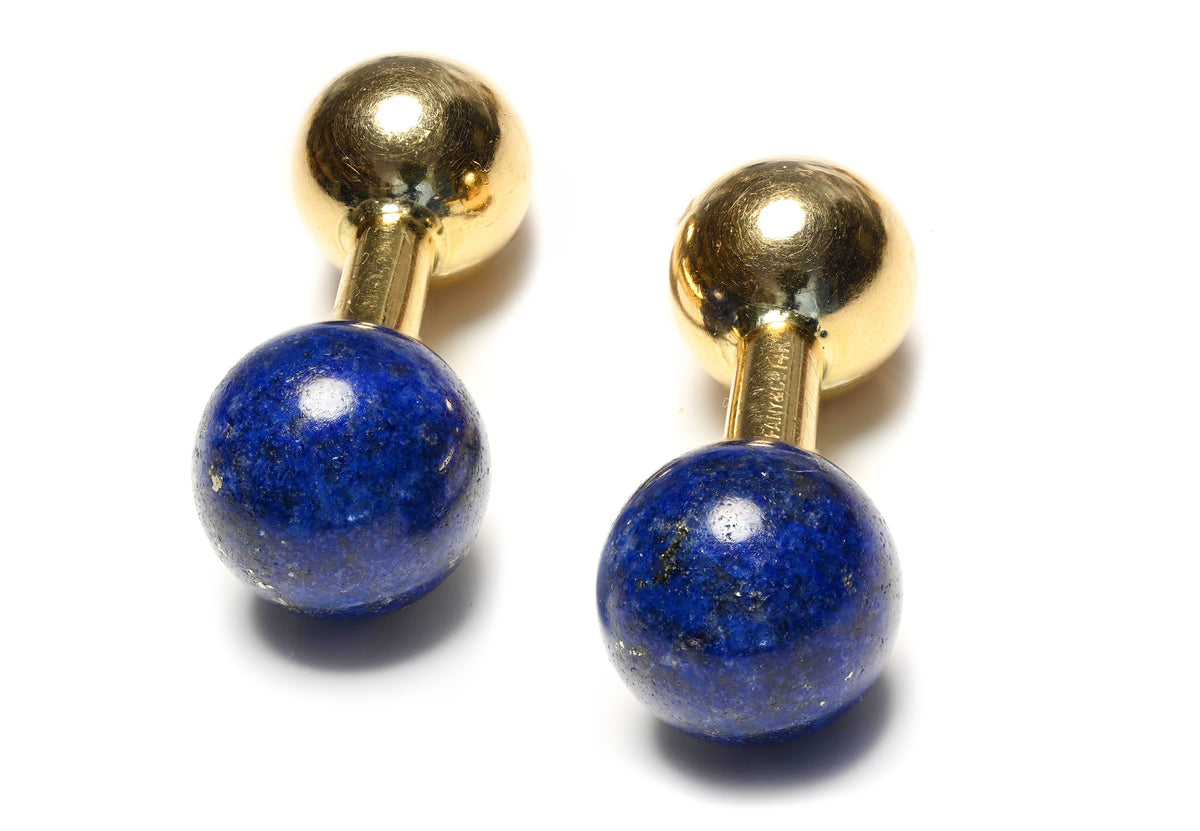
Zumech Lazuli (Lapis Lazuli) – A stone admired for its deep celestial beauty and used medicinally to relieve melancholy. It was also the source material for the famed pigment ultramarine.

Lazuli Diamond 18K Gold Figural Pendant Brooch, Source DSF Antique Jewelry
Ziazia – A multicolored stone, containing black, white, and other hues, said to provoke litigious behavior and cause terrifying dreams in those who possessed it.
Sapphirine (Hyacinth) – Camillo Leonardo, adapting the work of Marbodus, describes this variety of hyacinth in multiple forms: Citrini (lemon yellow), Granati (pomegranate red), and Veneti (sky blue). The Veneti, also called water-gems, were considered the hardest and most difficult to cut, yet paradoxically the least valuable. The blue sapphirine was regarded as the finest variety, though historical descriptions reveal considerable confusion among pale sapphires, rubies, topazes, and Roman hyacinths