
Art Deco Brüder Frank Plique-à-Jour Enamel Agate Silver Compact
An Exceptionally Rare Brüder Frank Viennese Compact with Plique-à-Jour and Guilloché Enamel, Natural Agate and a Richly Gilded Interior
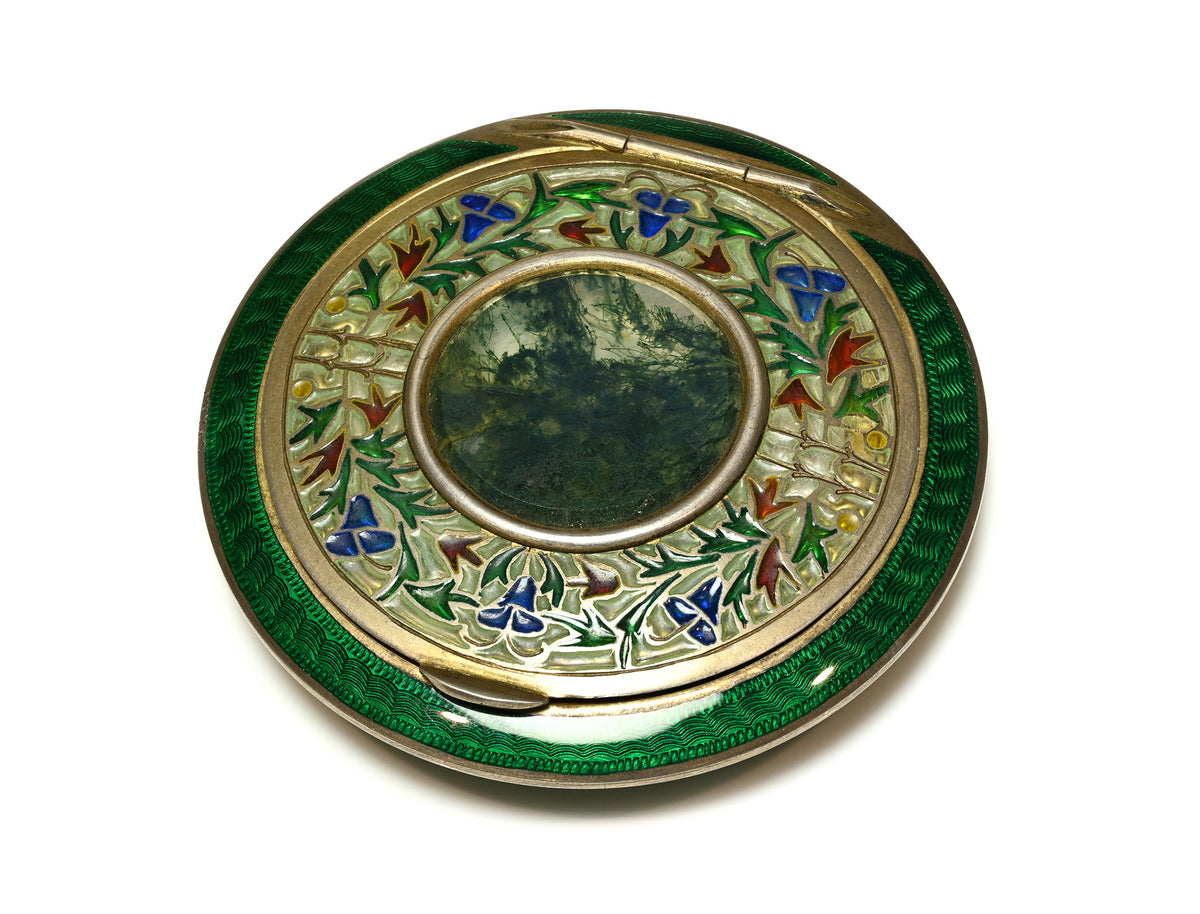
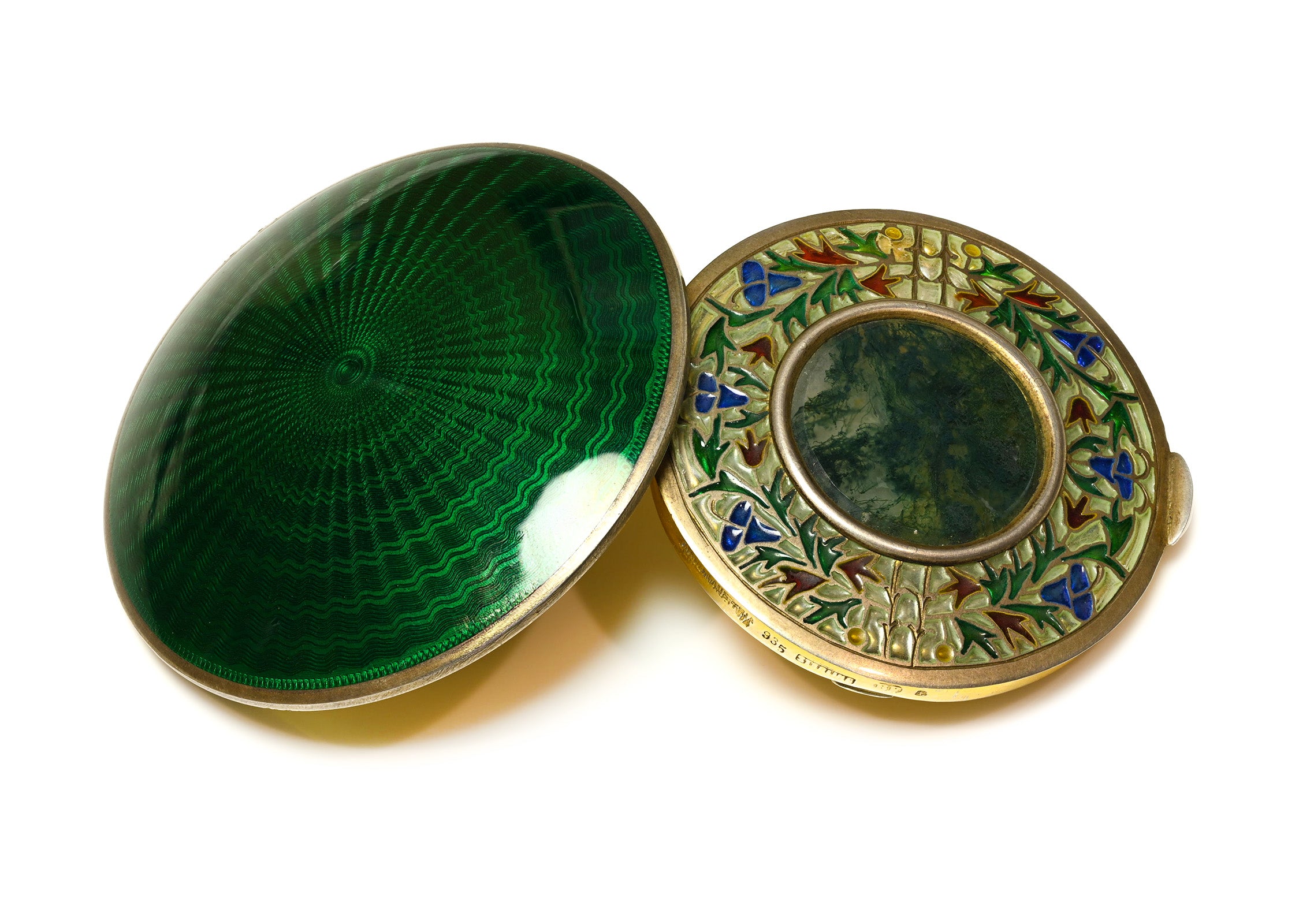
Created in Vienna during the Art Deco era, this extraordinary compact by Brüder Frank is distinguished by an exceptionally rare combination of plique-à-jour enamel, green guilloché enamel, natural agate and gilded 935 silver.
The circular lid is centered by a remarkable agate panel displaying dramatic moss-like dendritic inclusions. Resembling a miniature landscape captured within stone, its natural pattern provides an organic focal point unlike any traditionally painted decoration.
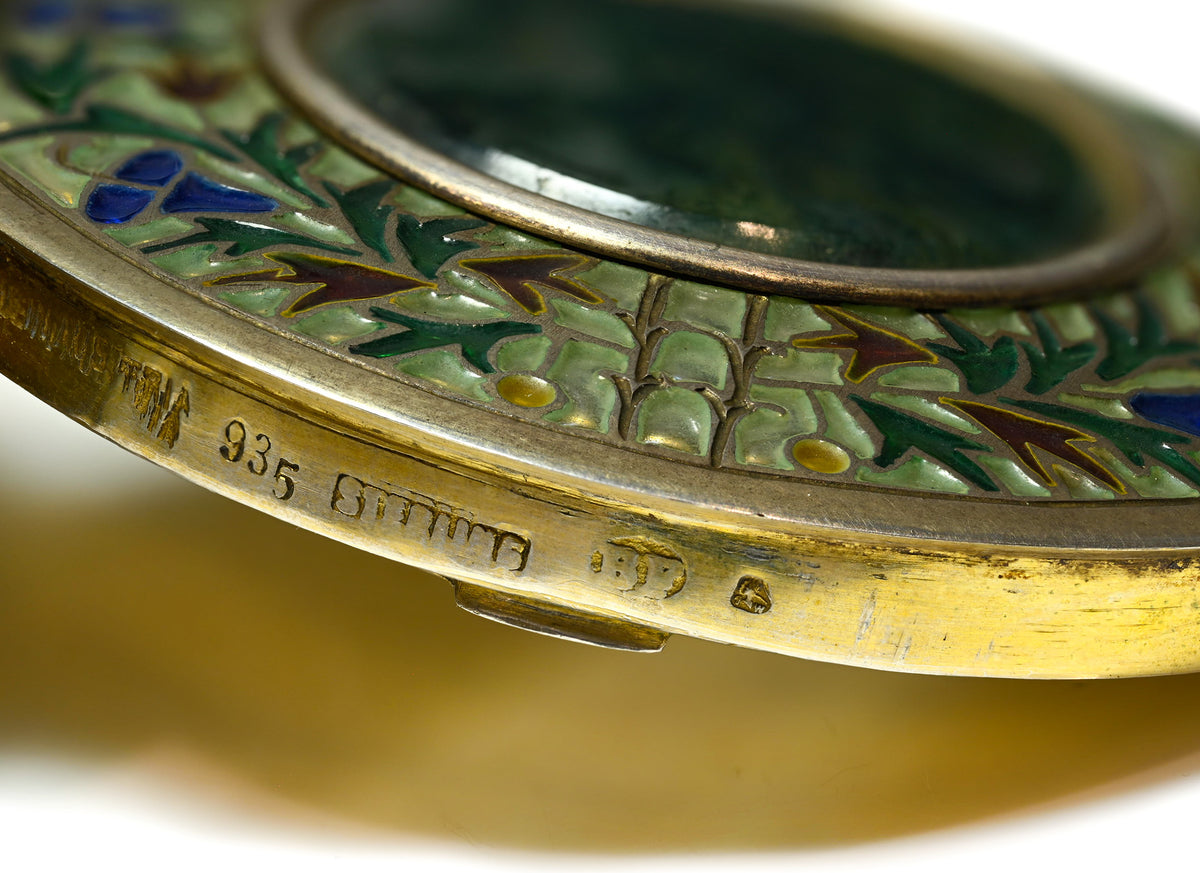
Surrounding the agate is an extensive floral composition executed in plique-à-jour enamel, with translucent shades of green, cobalt blue, red, amber and pale opalescent enamel suspended within delicate silver cells. Meaning “letting in daylight,” plique-à-jour is created without a permanent metal backing, allowing the enamel to transmit light like miniature stained glass.
This demanding technique requires exceptional control during repeated firings. Because the enamel is both technically difficult to produce and inherently fragile, comparatively few period compacts employing extensive plique-à-jour work have survived in well-preserved condition. The technique is considerably rarer than conventional painted, champlevé or guilloché enamel.
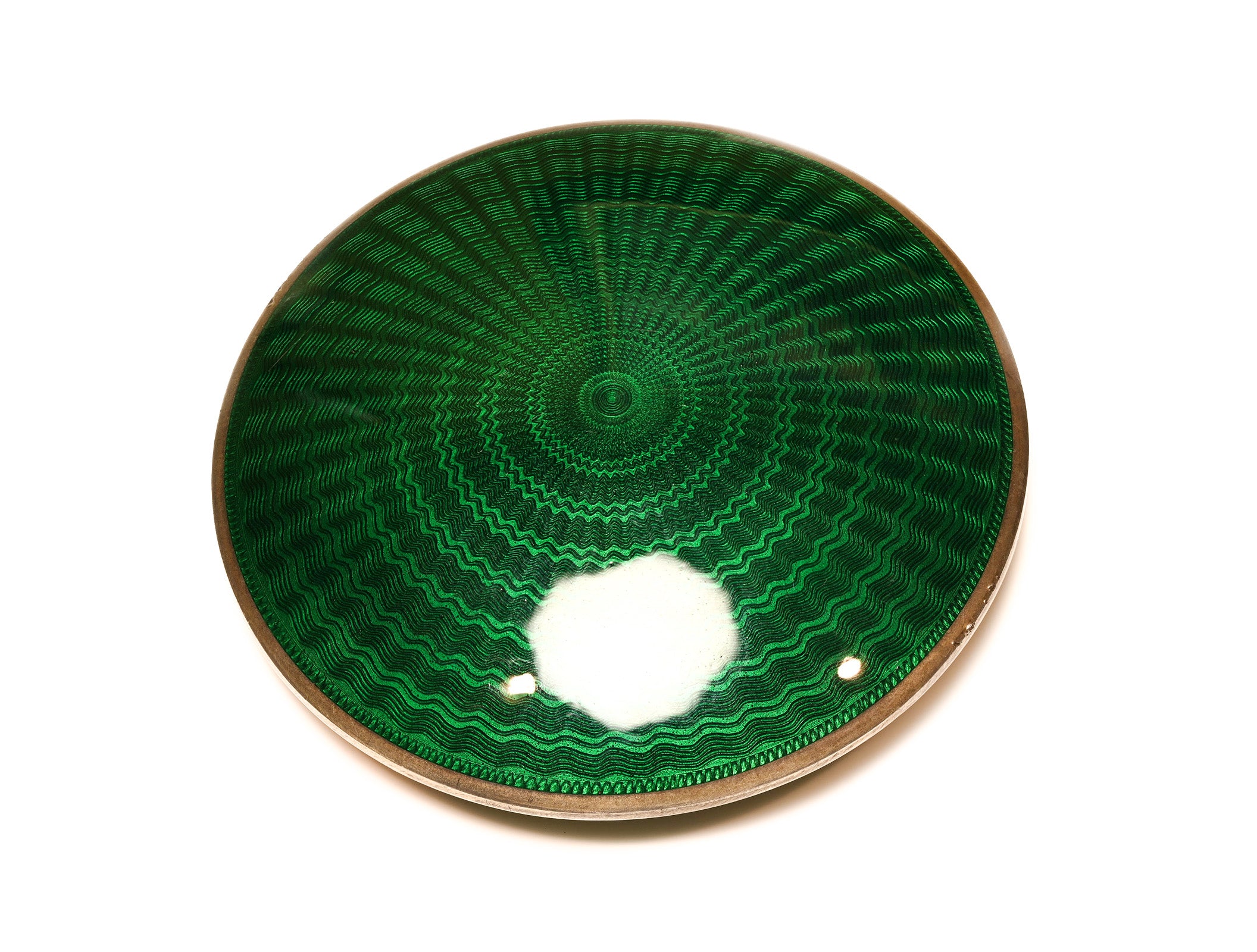
A deep emerald-green guilloché enamel border frames the plique-à-jour decoration and continues across the reverse. The finely engine-turned pattern beneath the translucent green enamel creates movement and depth as the compact is viewed from different angles. Its rich green coloring forms an especially harmonious relationship with the natural dendritic formations visible within the agate.
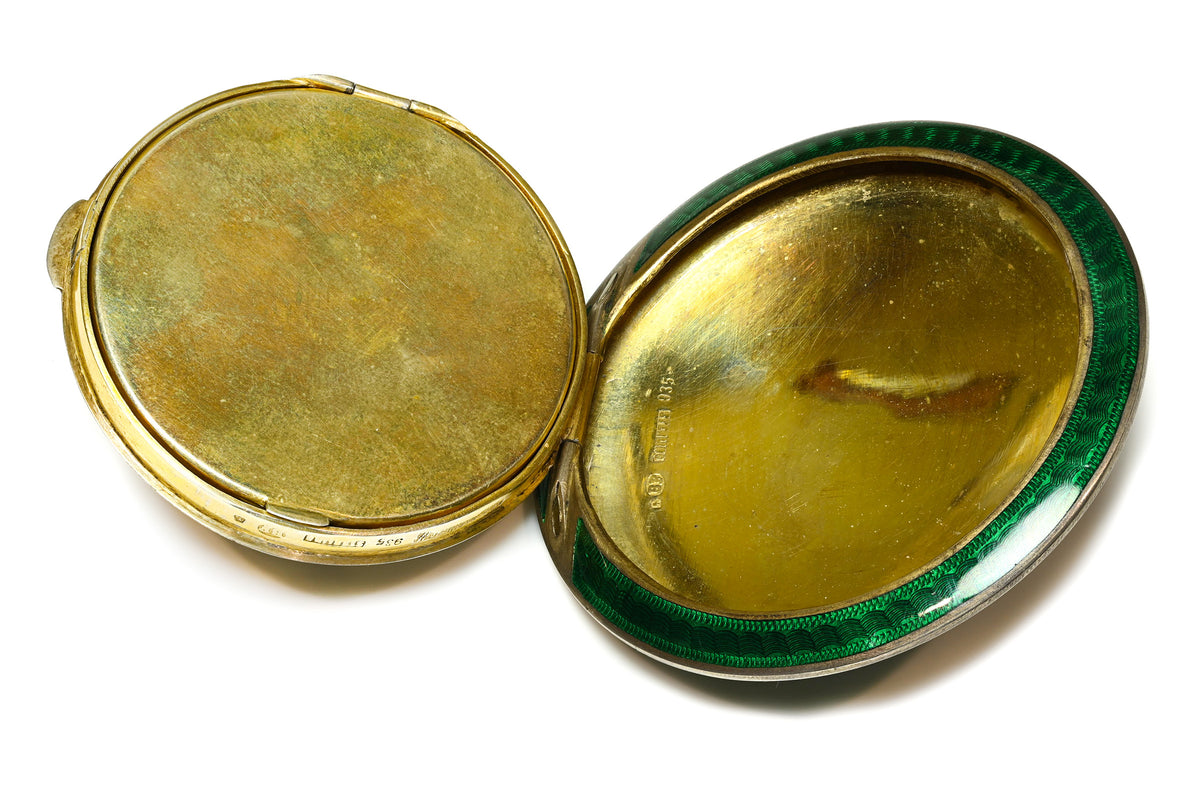
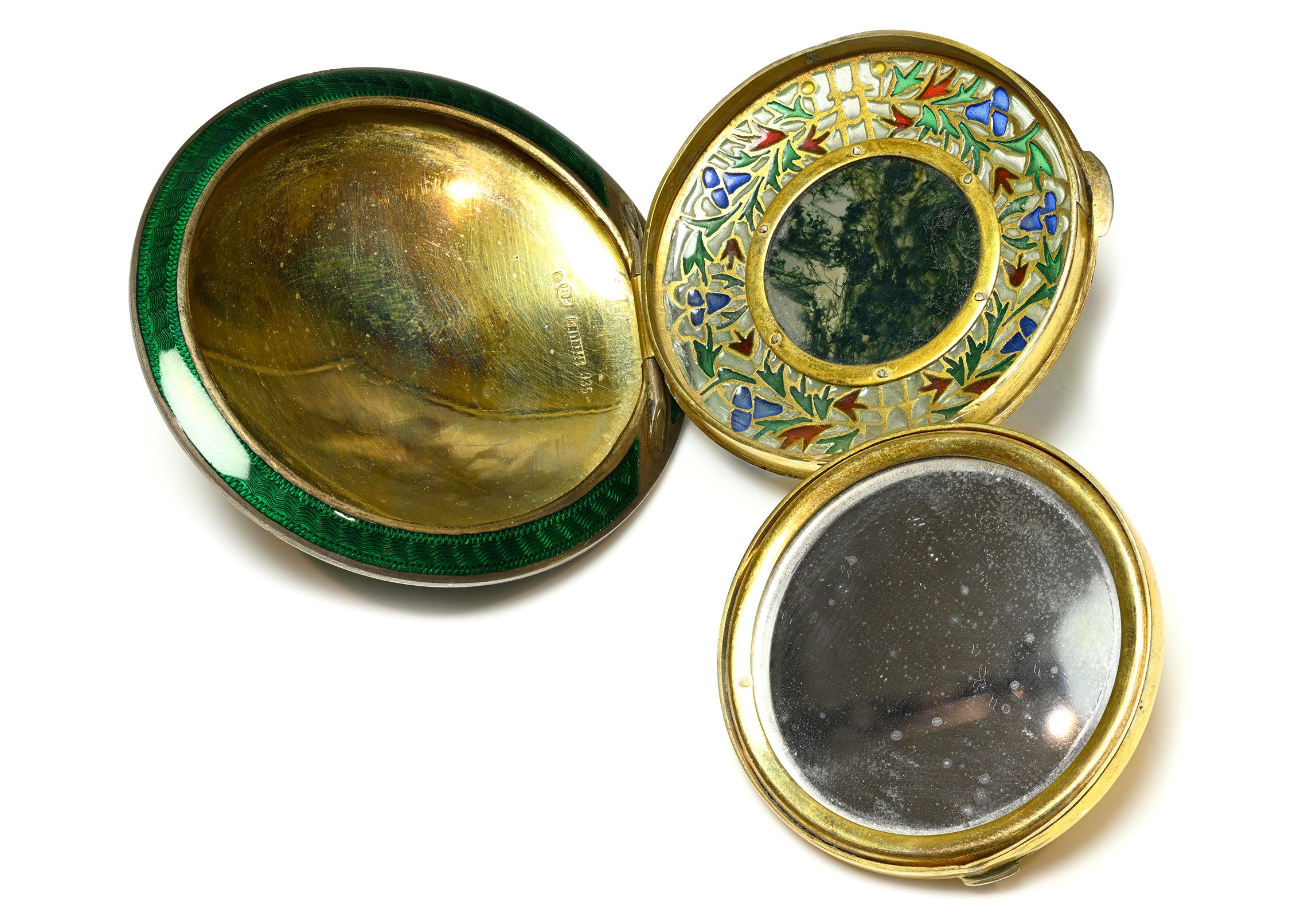
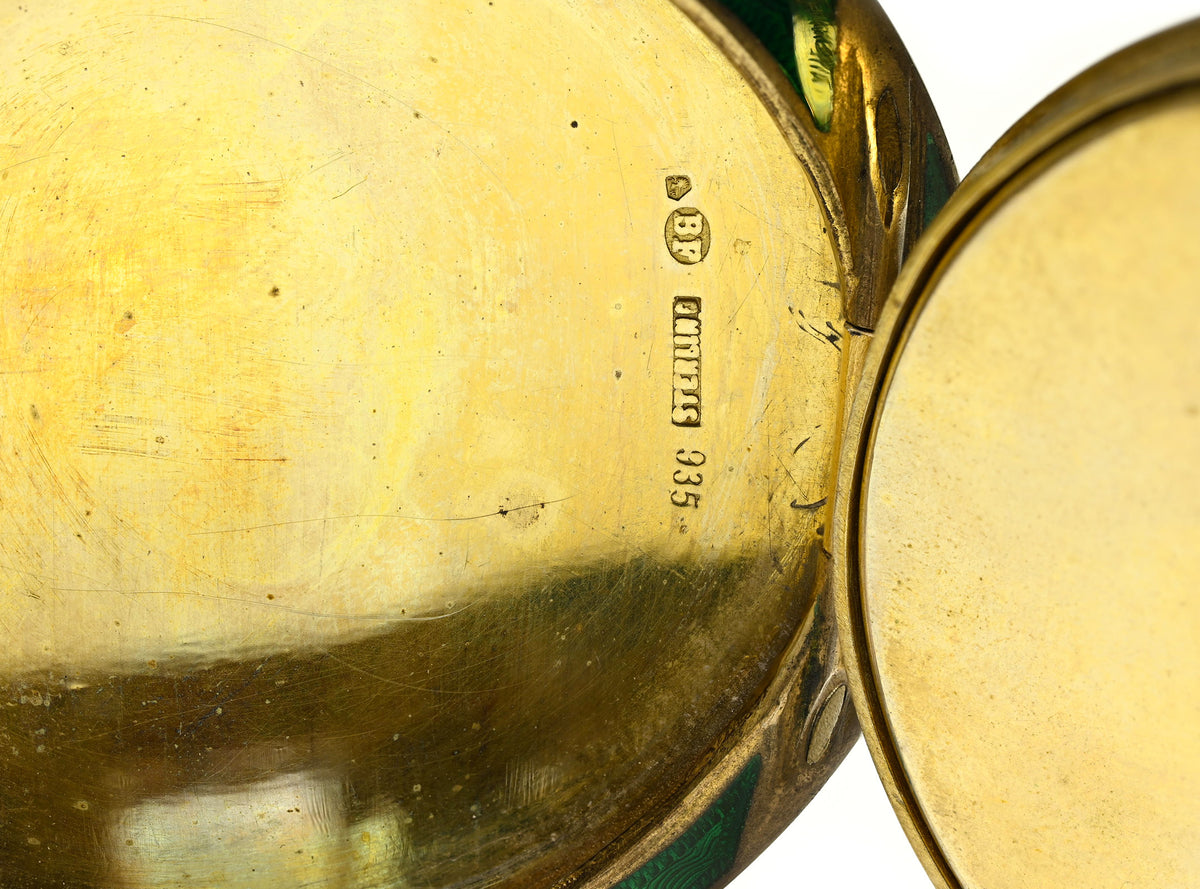
Opening the compact reveals a warmly gilded 935 silver interior, fitted with a mirror and a separate hinged powder compartment. The golden surface adds richness and contrast while demonstrating the high level of finish given to every part of the object, including those areas not visible when the compact is closed.
The compact bears the oval BF maker’s mark for Brüder Frank together with AUSTRIA, STERLING, 935 and an Austrian assay mark. These markings confirm its Austrian manufacture and high silver standard.
More than a functional vanity accessory, this is an exceptionally accomplished example of early 20th-century Viennese decorative art. The union of luminous plique-à-jour, emerald guilloché enamel, natural agate and gilded silver elevates it into the category of a true objet de vertu. Although related Brüder Frank compact designs are known, examples displaying this distinctive green palette and dendritic agate configuration appear to be exceptionally scarce.
Key Features
- Maker: Brüder Frank, also known as Gebrüder Frank
- Origin: Vienna, Austria
- Period: Art Deco, circa 1920s–1930s
- Metal: 935 silver
- Finish: Richly gilded interior with gilt accents
- Enamel Techniques: Plique-à-jour and guilloché enamel
- Central Panel: Natural agate with moss-like dendritic inclusions
- Colors: Emerald green, cobalt blue, red, amber and opalescent tones
- Interior: Fitted mirror and separate hinged powder compartment
- Shape: Circular
- Diameter: Approximately 2.5 inches or 6.35 centimeters
- Marks: BF, AUSTRIA, STERLING, 935 and Austrian assay mark
- Condition: Excellent antique condition with age-appropriate surface wear
Collector’s Note
Founded in Vienna in 1887, Brüder Frank became known for finely constructed silver cases, boxes, compacts and luxury accessories created for an international clientele. The workshop employed numerous decorative techniques, but objects combining extensive plique-à-jour enamel with guilloché surfaces and natural hardstone are particularly uncommon.
Documented Brüder Frank objects were occasionally retailed by prestigious international firms, including Alfred Dunhill. Such pieces bear direct retailer inscriptions or supporting provenance. This compact is not marked Dunhill and is presented solely as a rare and exceptional work by Brüder Frank of Vienna.
Email us or give us a call: (929) 316-2746. For our shipping and refund policy please see our terms & conditions.

The DSF Promise
Buy with confidence. Every piece is backed by:
• Authenticity — examined and verified before listing
• Condition — carefully inspected and honestly described
• Insured shipping — fully insured, signature required
• 32-day returns — available on eligible, unaltered items
• Private appointments — available in New York
• Experience — over 50 years of fine jewelry expertise
How do I know a piece is authentic, and can I trust DSF?
Buying fine jewelry online takes trust, especially at this level. DSF Antique Jewelry is a New York–based dealer with over 50 years of fine jewelry expertise. Every piece is examined for authenticity and condition before it is listed — we assess hallmarks, maker's marks, metal content, gemstones, and construction consistent with the stated period or designer. For signed pieces such as Cartier, Buccellati, or Van Cleef & Arpels, we verify maker's marks and signatures. We're glad to send additional photographs of any hallmark, or speak with you directly, before you decide.
Why does antique gold look different, and is surface wear normal?
Antique pieces were often made in gold standards less common today, such as 15ct (used in Britain only between 1854 and 1932), 9ct, or higher-karat continental gold, which give a warmer tone than typical modern 14k. Light surface wear, softened edges, and a gentle patina are normal and expected on antique jewelry — they reflect the age and authenticity of the piece, not flaws. We describe the true condition of every item honestly in its listing.
What do the hallmarks and maker's marks mean?
Hallmarks are small stamped marks that identify the metal standard, and often the maker, assay office, and date. They are one of the best tools for authenticating antique jewelry. We identify and explain the marks we find on each piece in its description, and we're happy to send close-up photographs of any hallmark on request so you can see exactly what you're buying.
Can pieces be resized or adjusted?
It depends on the piece. Many antique rings can be resized, but bands with all-around engraving, thin shanks, or gemstones near the base may be limited in how far they can safely go, and some pieces are best left as-is to preserve their integrity. We list each item's measurements as they currently are. If you're unsure whether something can be safely adjusted, contact us before buying and we'll give you an honest assessment for that specific piece.
How should I care for and store fine jewelry?
Clean gently with a soft cloth, avoid harsh chemicals, ultrasonic cleaners, and chlorine, and store pieces separately so they don't scratch one another. Remove rings and bracelets for heavy manual tasks. Antique gold is softer than modern alloys, so period pieces are best enjoyed with normal care. Treated well, fine antique jewelry lasts for generations — many of our pieces are already a century or more old and still beautiful.
Choose options
Proud Member of Respected Jewelry Industry Organizations
These memberships reflect DSF Antique Jewelry’s commitment to integrity, education, and responsible practices within the jewelry trade.


Please wait...
Make An Offer
Thank you for your interest. Please submit your offer, and we’ll get back to you.
