Art Deco Jewelry Guide: History, Design and Value
Art Deco jewelry remains one of the most admired and collectible categories in the world of fine jewelry. Recognized for its bold geometry, precise craftsmanship, architectural lines, and luxurious materials, Art Deco design continues to appeal to collectors, stylists, historians, and modern jewelry lovers. Whether expressed through a diamond engagement ring, a platinum bracelet, an onyx and emerald brooch, or a signed jewel by Cartier, Van Cleef & Arpels, Boucheron, or Tiffany & Co., Art Deco jewelry captures a unique moment when modernity, elegance, and craftsmanship came together with extraordinary force.
For DSF Antique Jewelry, Art Deco is especially important because it sits beautifully between antique jewelry and vintage jewelry. While the Art Deco period is historically distinct, many pieces from the 1920s and 1930s are now considered antique or vintage depending on their exact date, while later Art Deco-inspired jewels belong to the broader world of estate and collectible fine jewelry. This makes Art Deco one of the most versatile and desirable categories for today’s collectors.

What Is Art Deco Jewelry?
Art Deco jewelry refers to jewelry created during the Art Deco movement, especially from the 1920s through the 1930s. The style developed after World War I and reached international recognition at the 1925 Exposition Internationale des Arts Décoratifs et Industriels Modernes in Paris, the event from which the name “Art Deco” was later derived.
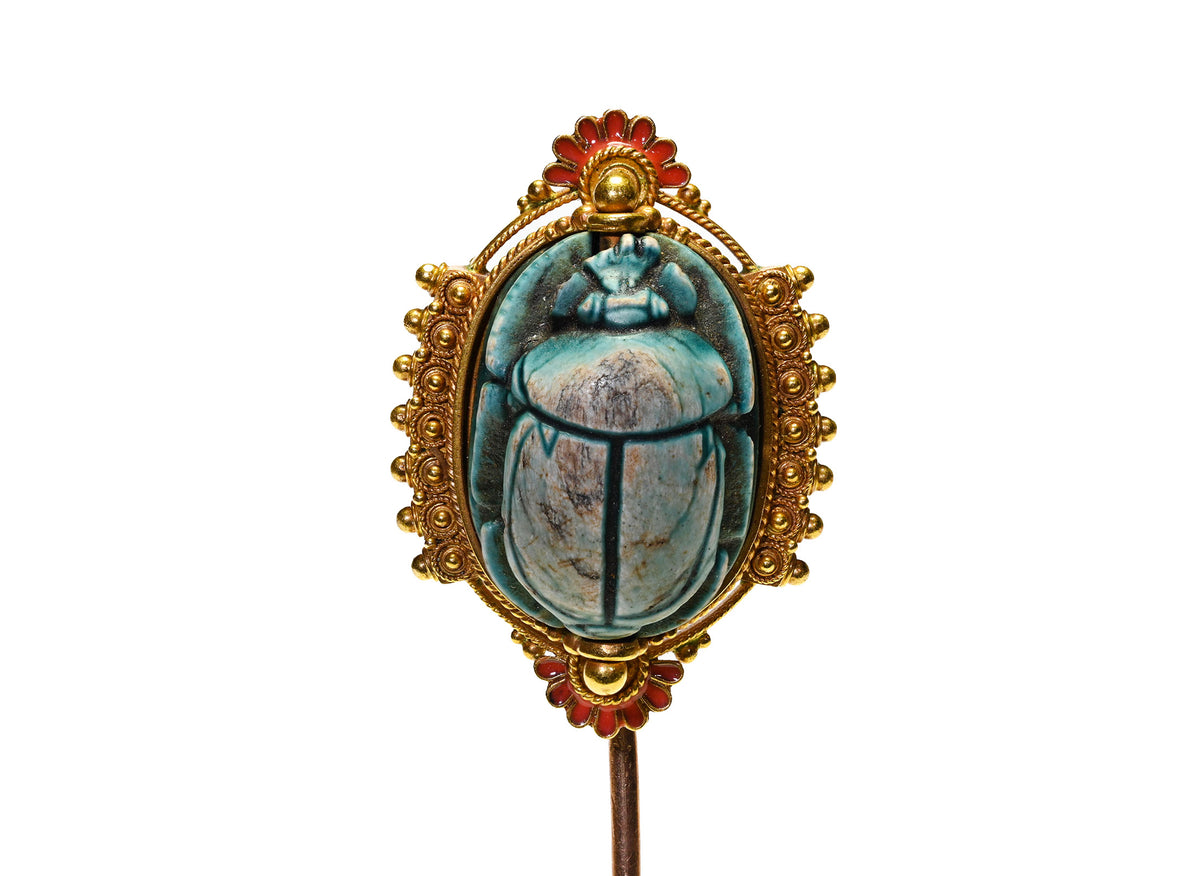
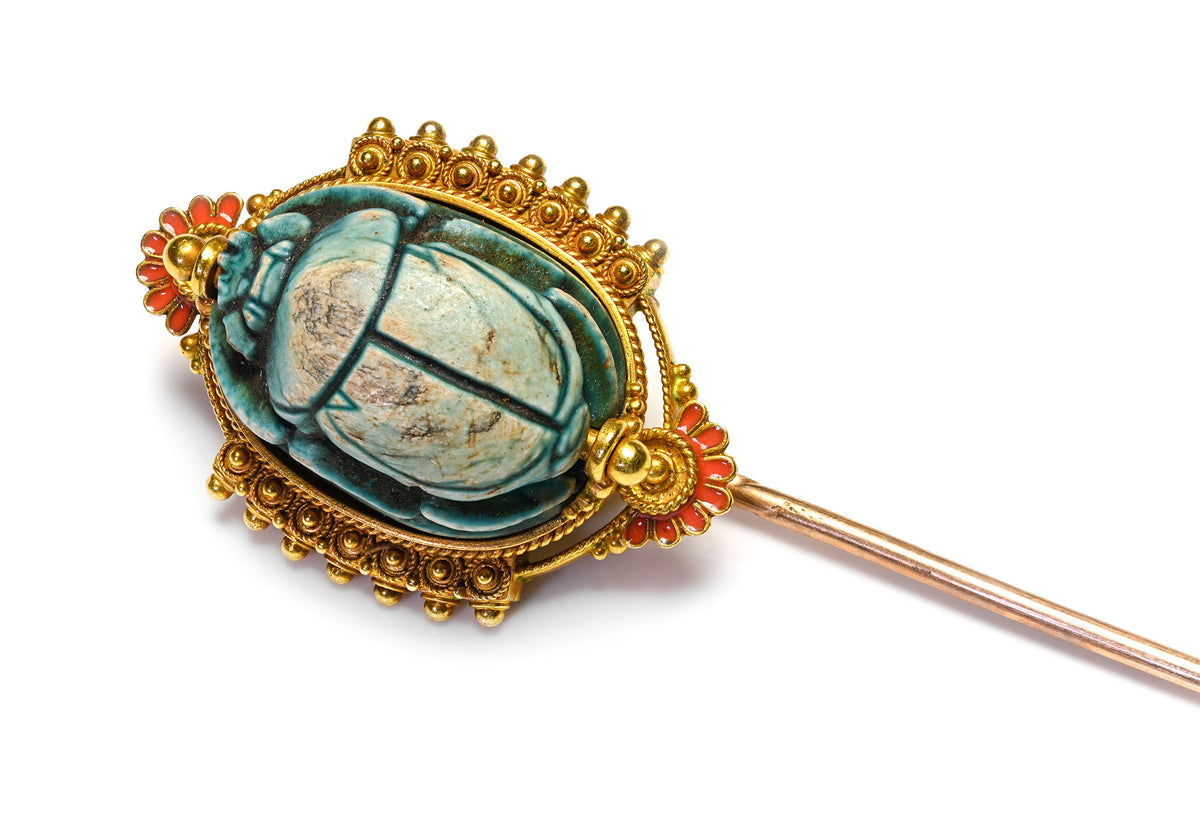
Unlike the flowing, nature-inspired forms of Art Nouveau jewelry, Art Deco embraced structure, symmetry, contrast, and modernity. It reflected the energy of the Jazz Age, the rise of skyscrapers, the influence of Cubism, the fascination with ancient Egypt after the discovery of Tutankhamun’s tomb in 1922, and the growing desire for jewelry that looked sleek, sophisticated, and modern.
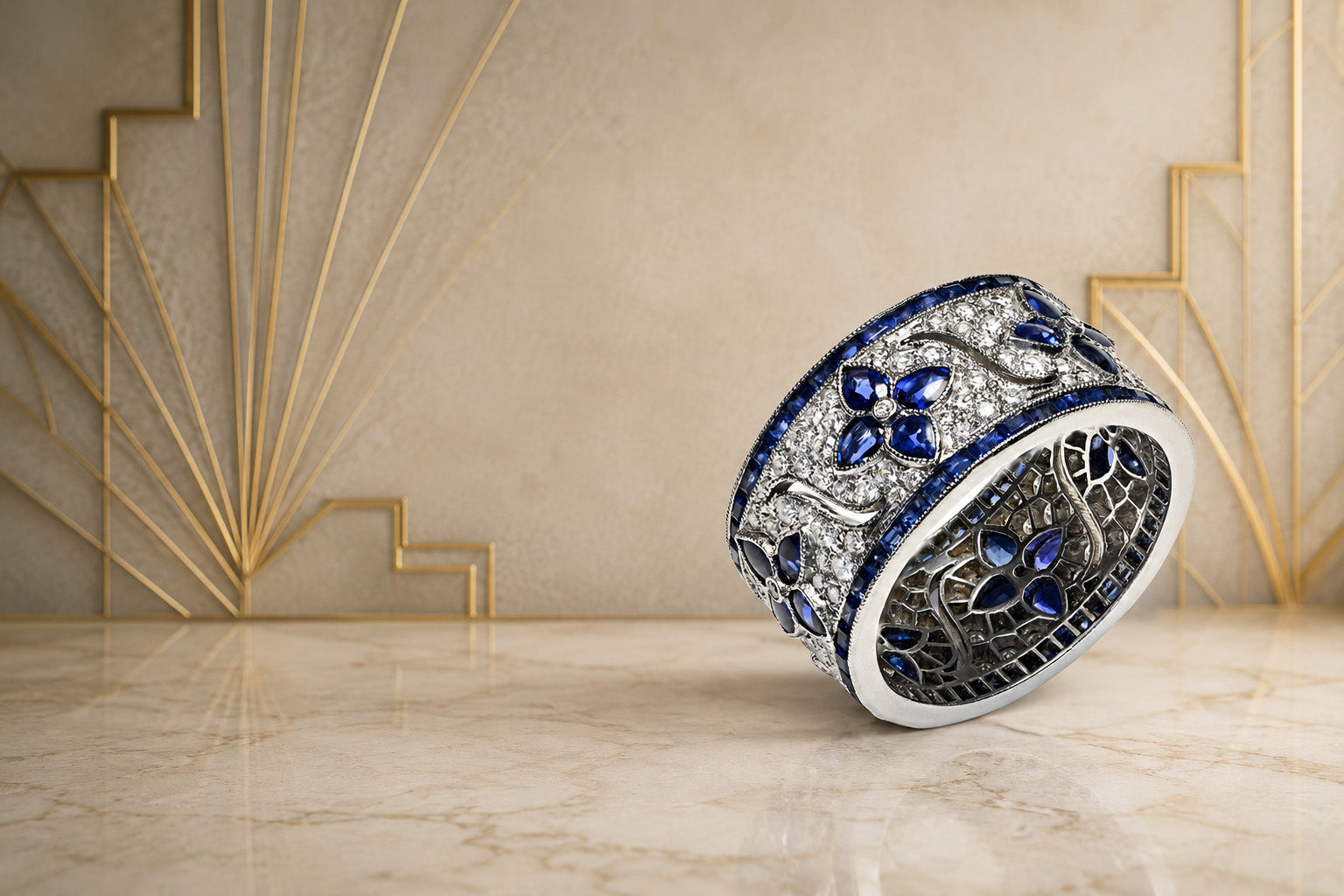
Art Deco jewelry often features clean lines, geometric patterns, stepped forms, stylized flowers, sharp color contrasts, and bold combinations of gemstones. Diamonds, platinum, onyx, emeralds, rubies, sapphires, jade, coral, rock crystal, and black enamel were frequently used to create striking visual effects.
When Was the Art Deco Jewelry Period?
The Art Deco jewelry period is generally associated with the years between the early 1920s and the late 1930s. However, its influence continued beyond that period, especially in jewelry made during the 1940s and later revivals.
The 1920s brought a dramatic change in fashion and lifestyle. Women’s clothing became more streamlined, hair was often worn short, and evening wear created the perfect setting for long necklaces, geometric bracelets, cocktail rings, and dramatic brooches. Jewelry became a statement of modern taste.
By the 1930s, Art Deco jewelry often became more sculptural and sometimes more architectural, with bolder volumes and greater emphasis on strong forms. Platinum remained important, but white gold also became more common. The style evolved, yet its essential character remained clear: order, precision, luxury, and modern beauty.

Key Design Features of Art Deco Jewelry
The beauty of Art Deco jewelry lies in its distinctive visual language. Several features help collectors recognize the style.
Geometric Design
Geometry is one of the defining elements of Art Deco jewelry. Circles, triangles, rectangles, squares, chevrons, zigzags, arches, and stepped patterns appear frequently. These forms create a sense of rhythm and structure, giving Art Deco jewelry its unmistakable architectural quality.
Symmetry and Balance
Art Deco jewels are often highly symmetrical. Earrings, bracelets, brooches, and rings were designed with careful balance, creating a polished and refined appearance. Even when a piece uses bold color or dramatic contrast, the design usually feels controlled and harmonious.
Strong Color Contrast
Art Deco jewelry often uses contrast to create visual drama. Diamonds set in platinum might be accented with black onyx, vivid emeralds, deep blue sapphires, or rich red rubies. Black and white combinations were especially popular, creating a sophisticated and modern look.
Platinum and White Metals
Platinum was one of the most important metals of the Art Deco period. Its strength allowed jewelers to create delicate yet secure settings, making it ideal for intricate diamond work. White gold also became more common, especially as the period progressed.
Old European-Cut and Transitional-Cut Diamonds
Many original Art Deco jewels feature old European-cut diamonds, single-cut diamonds, baguette-cut diamonds, and transitional-cut diamonds. These stones give period jewelry a special character that differs from modern brilliant-cut diamonds. Their softer sparkle and hand-cut individuality are part of their charm.
Calibré-Cut Gemstones
Calibré-cut stones are small gemstones cut precisely to fit into a design. They were often used to create borders, lines, and color accents in Art Deco jewelry. Sapphires, rubies, emeralds, and onyx were commonly used in this way.

Popular Gemstones and Materials in Art Deco Jewelry
Art Deco jewelry is known for its luxurious and sometimes unexpected combinations of materials. Diamonds were central to the style, but colored gemstones and ornamental materials played an equally important role.
Diamonds were used extensively in rings, bracelets, brooches, necklaces, and earrings. Their brilliance worked perfectly with platinum and geometric design. Sapphires, rubies, and emeralds added vivid color, often appearing as accents or central stones. Onyx was used for contrast, especially in black-and-white designs. Jade, coral, lapis lazuli, turquoise, rock crystal, and enamel also appeared in Art Deco jewels, reflecting the period’s taste for exoticism and bold decorative effects.
The combination of precious stones with ornamental materials gave Art Deco jewelry a distinctive identity. It was luxurious, but not always traditional. It was refined, yet daring. This balance is one reason the style remains so powerful today.
Famous Jewelry Houses of the Art Deco Era
Some of the greatest jewelry houses in history helped define Art Deco jewelry. Cartier, Van Cleef & Arpels, Boucheron, Mauboussin, Tiffany & Co., Bulgari, and many other firms created pieces that expressed the elegance and innovation of the period.
Cartier was especially influential in popularizing geometric design, Egyptian Revival motifs, and bold combinations of gemstones. Van Cleef & Arpels became known for technical refinement and graceful compositions. Boucheron, Mauboussin, and Lacloche Frères also contributed significantly to the Art Deco aesthetic, producing jewels that reflected the glamour and sophistication of interwar Paris.
Signed Art Deco jewelry by major houses is especially collectible today. These pieces combine period design, historical importance, craftsmanship, and brand prestige. However, unsigned Art Deco jewelry can also be highly valuable when the quality, materials, condition, and design are exceptional.
Art Deco Jewelry and Fashion
Art Deco jewelry was closely connected to fashion. The 1920s introduced new silhouettes, including sleeveless dresses, lower waistlines, shorter hairstyles, and evening gowns that encouraged more visible jewelry. Long sautoir necklaces, flexible diamond bracelets, dress clips, geometric earrings, and cocktail rings became fashionable accessories for modern women.
Jewelry was not only decoration. It expressed independence, sophistication, and participation in a new cultural moment. The Art Deco woman was often imagined as elegant, cosmopolitan, and modern. Jewelry reflected this image through clean design, luxurious materials, and confident style.
How to Identify Art Deco Jewelry
Identifying authentic Art Deco jewelry requires attention to design, materials, craftsmanship, and construction.
A genuine Art Deco piece often shows strong geometry, symmetry, and fine workmanship. Platinum or white gold settings, old European-cut or single-cut diamonds, calibré-cut gemstone accents, and hand-finished details are common indicators. The back of a jewel can also reveal important clues, including the quality of the setting, the type of clasp, the way stones are mounted, and whether the piece has been altered.
Hallmarks, maker’s marks, and assay marks can provide useful information, but not all Art Deco jewelry is clearly marked. Some pieces have been resized, repaired, or modified over time, and marks may be worn or lost. This is why expert examination is important when evaluating older jewelry.
Collectors should also be aware that Art Deco-inspired jewelry has been made in later decades. These pieces may still be beautiful and collectible, but they should be described accurately as Art Deco style, Art Deco revival, vintage, estate, or early modern depending on their date and characteristics.
Antique, Vintage, Estate, and Art Deco: What Is the Difference?
The terms antique, vintage, estate, and Art Deco are often used together, but they do not mean the same thing.
Antique jewelry is generally understood to be at least 100 years old. Vintage jewelry usually refers to jewelry that is older but not necessarily 100 years old, often from the 20th century. Estate jewelry simply means pre-owned jewelry, regardless of age. Art Deco jewelry refers to a specific design period and style, most closely associated with the 1920s and 1930s.
This distinction is important for collectors. An Art Deco ring from the 1920s may now be antique. A 1930s Art Deco bracelet may be vintage or antique depending on the exact year. A later jewel inspired by Art Deco design may be vintage, estate, or early modern, but not necessarily original Art Deco.
At DSF Antique Jewelry, this broader perspective matters. While antique jewelry is an important part of the collection, DSF also offers vintage jewelry, Art Deco pieces, estate jewelry, and early modern designs. This allows collectors to explore a wider range of historically inspired and collectible fine jewelry.
Why Art Deco Jewelry Is Still Collectible
Art Deco jewelry remains collectible because it combines beauty, history, craftsmanship, and wearability. Its designs feel historic yet surprisingly modern. A geometric diamond ring from the 1920s can look just as elegant today as it did a century ago. A platinum bracelet with calibré-cut sapphires can still feel sophisticated and contemporary.
Another reason for its desirability is quality. Many Art Deco jewels were made with excellent materials and careful hand craftsmanship. The use of platinum, fine diamonds, precise gemstone cutting, and elegant proportions gives these pieces enduring value.
Rarity also plays an important role. Original Art Deco jewels in excellent condition are becoming harder to find. Pieces that retain their original design, stones, and setting are especially attractive to collectors. Signed examples by important jewelry houses can command significant premiums.

Art Deco Jewelry as an Investment
Collectors often view Art Deco jewelry as both a wearable object and a tangible asset. While no jewelry purchase should be seen as guaranteed financial performance, certain qualities can support long-term desirability: rarity, condition, provenance, design quality, maker, gemstone quality, and historical importance.
Signed Art Deco pieces by major houses are particularly sought after. However, unsigned jewels with exceptional craftsmanship can also hold strong appeal. A well-made Art Deco diamond ring, sapphire bracelet, or onyx and diamond brooch may attract collectors because of its period style, materials, and scarcity.
The investment appeal of Art Deco jewelry is also supported by its broad audience. It appeals to antique jewelry collectors, vintage jewelry lovers, design historians, fashion enthusiasts, and buyers seeking distinctive engagement rings or statement pieces. This wide demand helps keep the category relevant.
How to Collect Art Deco Jewelry
When collecting Art Deco jewelry, it is important to focus on quality and authenticity. Look for pieces with strong design, good proportions, fine materials, and honest condition. Originality matters, but restoration is not always negative if it has been done properly and disclosed clearly.
Buyers should ask questions about the metal, gemstones, period, condition, and any known history. For diamond jewelry, details such as cut, clarity, color, and setting style are important. For signed jewelry, marks and documentation can add value. For unsigned pieces, craftsmanship and design become even more important.
Collectors should also consider wearability. One of the great strengths of Art Deco jewelry is that it can be worn today with both formal and modern clothing. A geometric diamond ring, a pair of vintage earrings, or an Art Deco bracelet can add character to a contemporary wardrobe without feeling outdated.
Art Deco Jewelry at DSF Antique Jewelry
DSF Antique Jewelry curates fine jewelry with historical, artistic, and collectible value, including antique jewelry, vintage jewelry, Art Deco jewelry, estate pieces, signed jewels, and early modern designs. Art Deco is one of the most important categories because it represents the perfect balance between history and modern style.
For collectors, Art Deco jewelry offers more than beauty. It offers a connection to one of the most influential design movements of the 20th century. Its geometry, craftsmanship, and luxurious materials continue to speak to people who appreciate jewelry with character, history, and lasting appeal.
Whether you are searching for an Art Deco diamond ring, a vintage bracelet, a signed jewel, or a distinctive estate piece, Art Deco jewelry remains one of the most rewarding areas to explore.
Conclusion
Art Deco jewelry continues to fascinate because it is elegant, structured, luxurious, and deeply connected to the modern spirit of the early 20th century. Its bold geometry, fine materials, and exceptional craftsmanship make it one of the most collectible categories in fine jewelry.
For DSF Antique Jewelry, Art Deco also provides an ideal bridge between antique, vintage, estate, and early modern jewelry. It reflects the richness of the past while remaining highly wearable today. That combination of history, design, and collecting value is exactly why Art Deco jewelry continues to endure.