Rococo Jewelry: When French Fashion Ruled Europe
The opulent Rococo period gave rise to Rococo jewelry, which perfectly captured luxury and artistry through its swirls, flowers, and gemstones.
From around 1700 until the fall of the French monarchy during the French Revolution in 1789, the Rococo Era was marked by extravagant frivolity and the unquestioned dominance of French fashion across Europe.
Jewelry was widely regarded as a symbol of wealth during this period, and the middle class was limited. Buttons, brooches, hair ornaments, sword hilts, pocket watches, necklaces, earrings, and rings were all in style.

18th century portuguese "devant de corsage" or stomacher made of chrysoberyls and amethysts, National Museum of Ancient Art, Lisbon. Source: Wikimedia Commons, Author Manederequesens
A revived interest in the symbolic properties of diamonds was sparked by nostalgia for the Italian/French Renaissance and the Middle Ages. In order to create the words "Regard" or "Dearest," rings were sometimes constructed in acronym form by arranging the first letter of the stone in the proper order.
Rococo Jewelry
Generally speaking, the Rococo style originated in France when King Louis XIV declared his wish for more vibrant, whimsical artwork to replace the formal, religious patterns that were popular at the period. By the 1730s, Germany, Austria, and Italy had adopted this new artistic idea.
During that time period, diamonds were the rage in French fashion.
The colors most frequently employed in art and architecture were closely aligned with the most popular jewels used in Georgian and French Rococo jewelry. The traditionally prized precious stones—sapphire, emerald, and ruby—were also in vogue, as were pastel gemstones like orange topaz and yellow chrysoberyl.
While skirts stretched until two women could barely walk through a door together and hairstyles reached absurd heights, the plunging neckline and the jewels that accentuated it remained a staple of fashion.
Because diamonds, despite their high value, are recut and reset to suit succeeding fads, very few authentic pieces of Rococo diamond jewelry have survived intact, said Katherine Nell Macfarlane in her book The Jeweler's Art.
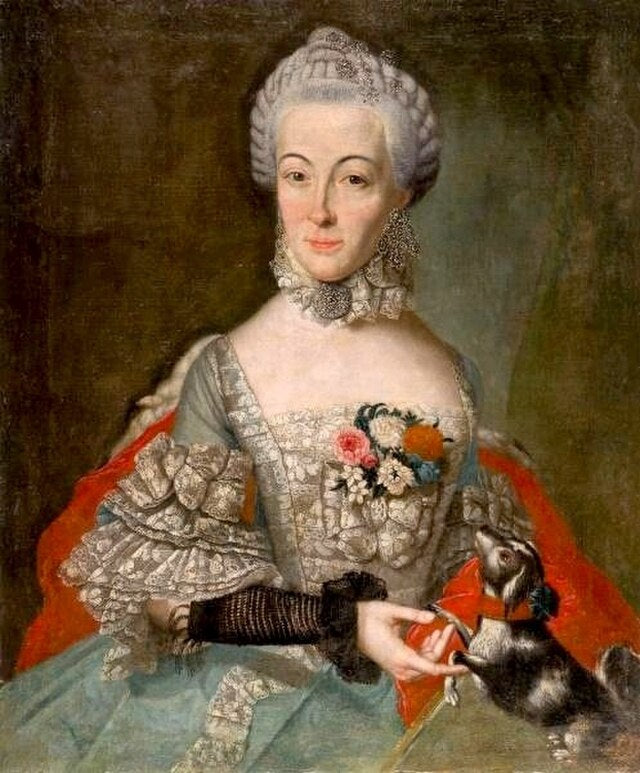
Thankfully, enough aristocratic women from the eighteenth century sat for portraits in their diamond parures that the appearance of Rococo diamond jewelry can be seen.

Portrait of Princess Charlotte Amalie Wilhelmine of Schleswig-Holstein-Sonderburg-Plön (1744-1770), Source Wikimedia Commons, http://www.museen-sh.de/Objekt/DE-MUS-121117/lido/dc00001412
By the 1700s, the majority of metal settings used to hold diamonds and other stones were no longer visible. Diamonds were set in silver to prevent the setting from contrasting with the stones’ color, and the silver was often covered with gold plating or fabric to prevent black tarnish from discoloring the wearer’s skin or clothing.
The immense appeal of diamonds during this period was due to two factors. First, diamond cutters began creating the contemporary round brilliant cut in the early 1700s.
In addition to having a more rounded shape than the earlier Mazarin and Peruzzi cuts, Macfarlane notes that the early version of this cut, known as the old European, continued to be used into the 1800s. This cut enhanced the optical qualities of diamonds, allowing them to sparkle and reflect light more brilliantly.
Second, the discovery of substantial diamond reserves in Brazil, at a time when India’s diamond fields were running low, further increased the diamonds’ appeal by making them more accessible to those with the means to purchase them.
Motifs and Styles
Rococo jewelry typically featured elements from the preceding century, such as ribbon bows, stylized leaves and flowers, feathers, and geometric shapes.
The color schemes were flat, mostly diamonds with no more than one or two other hues, even though colored stones made a comeback around 1760. According to Macfarlane's book, a lady's parure of matching items typically carried the color scheme.
The necklace, worn high about the throat to highlight the wearer's neck's elegance and slenderness, was the main component of a lady's attire. The riviere and the band necklace were two particularly well-liked designs. The former included a range of jewels set within an articulated open-work band with different widths.
The addition of a central pendant in the shape of a cross or a ribbon bow, in Macfarlane's opinion, could enhance this simple design. It could also hold a pendant that is formed like a pear drop or a complex ribbon bow and drop combination.
The esclavage was the most ornate kind of this type of necklace, and it was made up of an open-work band with one or more central festoons (looped swags) that were frequently adorned with pendants. With the use of a hook-and-eye mechanism, all of these other components could be separated from the fundamental band, making this kind of neck jewelry especially adaptable.
The riviere, often known as a "river" of jewels, was a single row of big gemstones that typically supported a massive diamond drop and were graduated in size from the middle. The gemstones may be colored jewels or diamonds, and they are frequently encircled by smaller diamonds.
The necklace was accompanied by matching earrings with faceted drops or a girandole design, which had three pendants fastened to an elaborate base or a single enormous diamond. The lady also wore matching brooches, rings, bracelets, and jeweled hair accessories if she wanted and could afford them.

18th century portuguese earrings (from a set), National Museum of Ancient Art, Lisbon, Source: Wikimedia Commons, Author: Manederequesens
All of these diamond adornments were obviously quite expensive. Whether they could afford it or not, noble women bestowed them with enormous sums of money.
According to Macfarlane's book, such ostentatious and frivolous displays did not sit well with the general public, who watched as their children went hungry while nobles attended balls that glittered and sparkled with jewels.
Why Rococo Jewelry is Unique
-
Curving lines and asymmetry
Rococo jewelry incorporates the allure of asymmetry. Unlike other jewels, these do not curve in a straight line.
Imagine a brooch that has some pearls hanging at the tip and one end that rises and falls in whirling motions. This type of mismatch creates design flow and uniqueness that make each creation appealing.
The uniformity that had previously been so popular was in opposition to this new strategy. It turned out to be a creative and inventive solution. For those who appreciate unusual forms of beauty, this is the best choice.
-
Exquisite Detailing
Detailed ornamentation is what defines Rococo jewelry. Every piece is carved with intricate patterns composed of slender lines or curved, twisting forms.
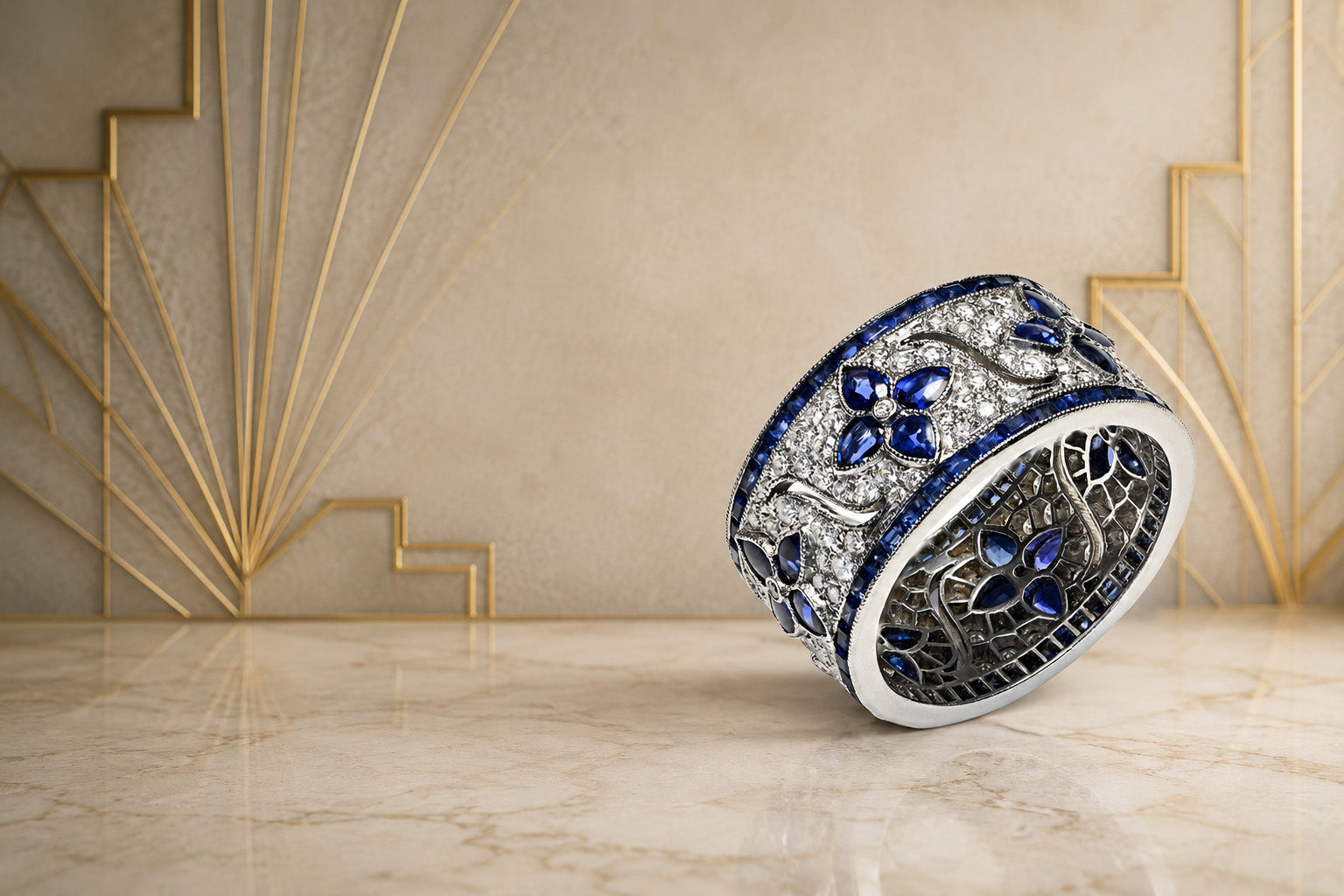
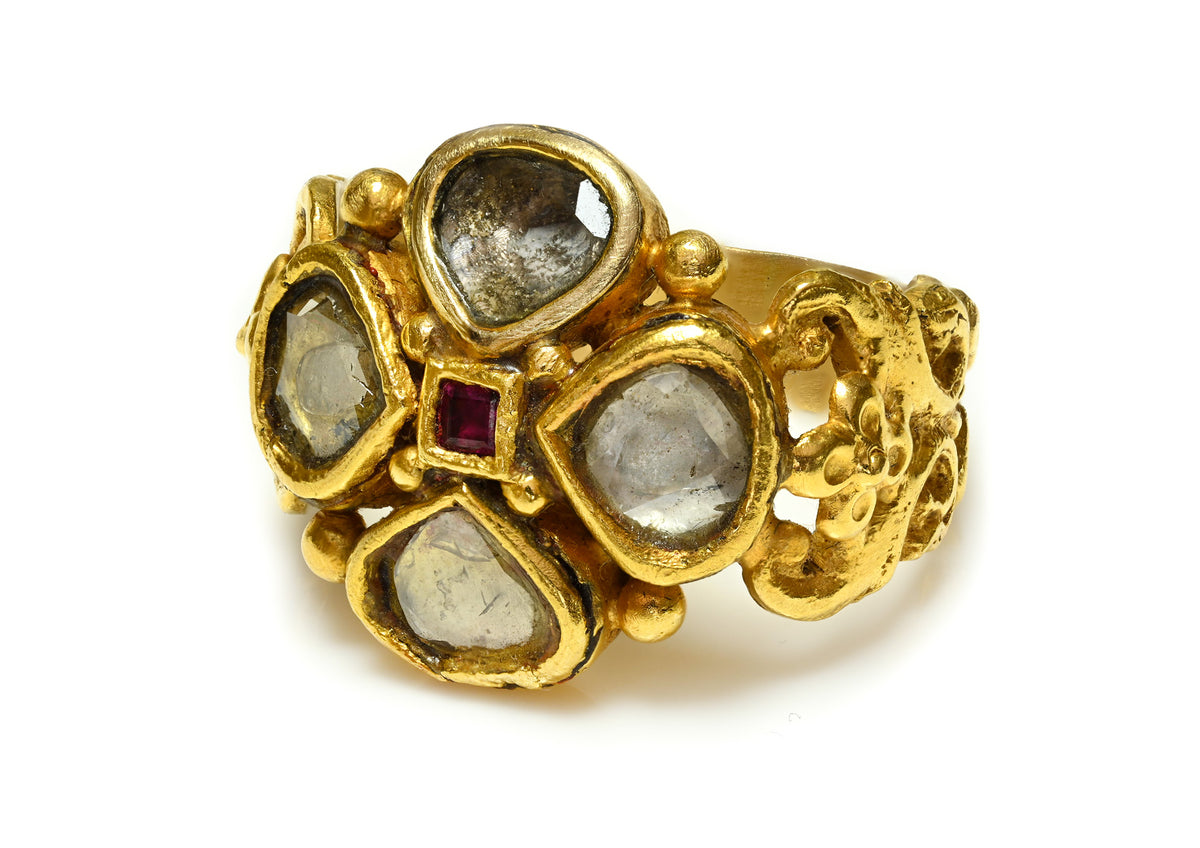
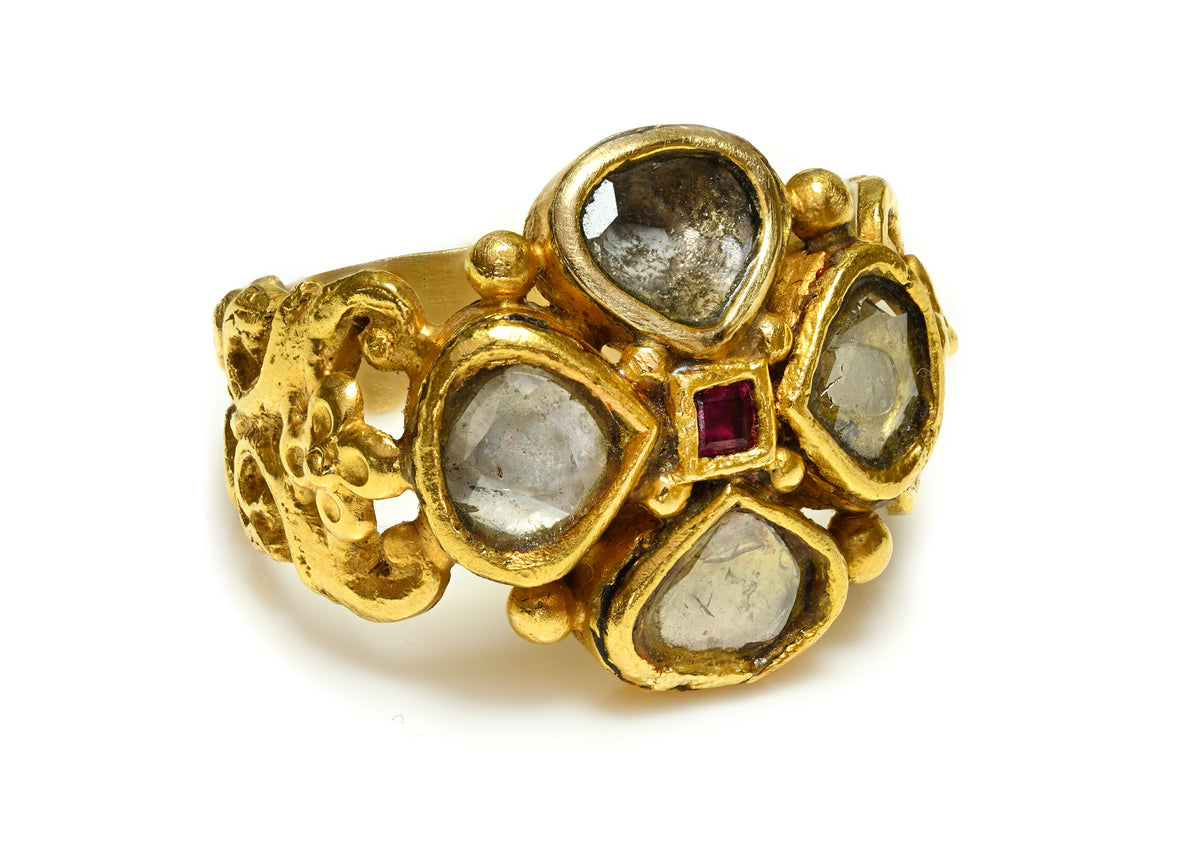
The Rococo ring is one such type. In order to create a rich and intricate look, very little filigree threads itself between priceless stones in this instance. Every component's craftsmanship gives the impression that one is dressing for a king or queen.
These designs' intricacy demonstrated the artists' competence at the time. Modern renditions continue to preserve such a complex piece of art that endures.
-
Utilizing Gemstones and Pearls
The Rococo jewelry sparkled because of the pearls and vibrant valuable stones. Pearls conveyed messages of grace and purity. However, some color and richness were added by jewels like garnet, topaz, and aquamarine.
In the case of some Rococo necklaces, pearls that dangle down are combined with diamonds of light hues. Soft colors were combined to produce a beautiful piece of jewelry that was perfect for special occasions.
It is about symbols as much as it is about beauty. They still appear elegant now.
-
Lightness and Filigree
Despite their appearance, Rococo objects were light. Filigree work made it feasible to use the thin metallic threads technique to create intricate designs without adding a lot of weight. Most jewelry still has filigree in it now. This demonstrates how forward-thinking the Rococo movement's concern for lightness was.

1940's Filigree Purple Crystal Brooch
Types of Rococo Jewelry
Rococo jewelry comes in various varieties. These all reflect the time period's lavish and stylish style. Every invention, whether it's a tiny pin or an intricate clock, has something really appealing about it.
-
Lockets & Necklaces
Necklaces from the Rococo era were elaborately adorned and composed of pricey materials. Pearls, valuable stones, or gold were used in their creation to create a magnificent and grandiloquent outline around the neck.
In particular, lockets were fashionable. Many of them are embellished with gems or have flower designs carved on the surface. Additionally, some had hair inside to preserve them for sentimental purposes, while others had small photographs.
These were more than just decorations. They were priceless items displayed as representations of wealth and style. These necklaces, which fall under the Rococo category, look just as good on contemporary dresses.

Portrait of Marie Sophie Friedericke von Holzhausen, Source: Wikimedia Commons, https://sammlung.staedelmuseum.de/de/werk/bildnis-der-marie-sophie-friedericke-von-holzhausen
-
Earrings
Earrings from the Rococo period were designed to be incredibly beautiful. At that time, wearing long earrings was fashionable. With pearls or brilliant stones descending one after the other, these earrings had the longest hanging styles.
Because they helped to perfectly frame the face, these earrings were the kind that complemented those tall haircuts. People still adore them because of their connection to formality and old-fashioned style.
-
Pendants and Brooches
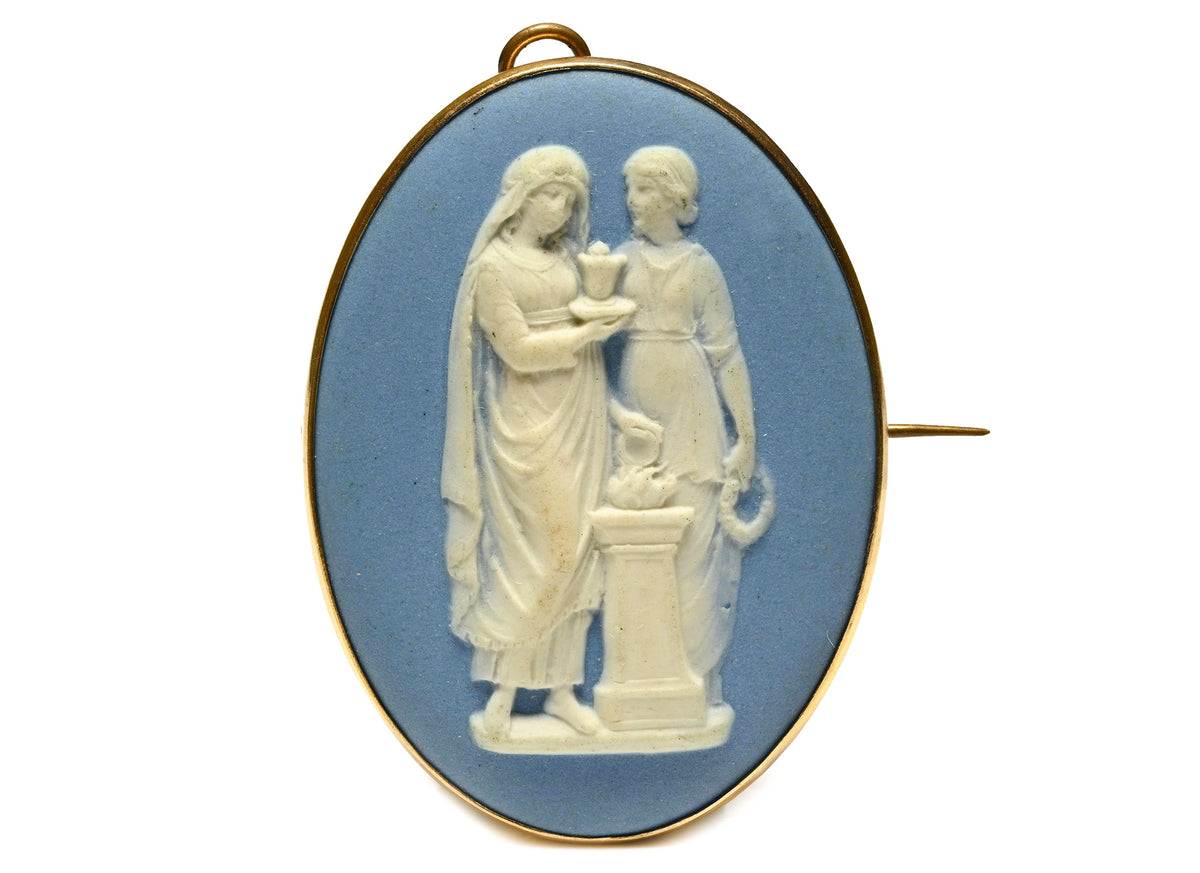
Fashionistas of the Rococo era were unable to live without pendants and brooches. These jewels featured virtual representations of floral and natural scenes, as well as ornamentation adorned with pearls and precious stones. They could have various leaves or blooms.
The floral brooch is the best illustration. Light precious stones embellish the petal tips, while gold filigree is used to create the flowers. Typically, the pendants were necklaces or earrings with tiny images on them.
-
Watches
Watches were worn as jewelry and used to tell the time throughout the Rococo era. Filigree, jewels, and enamel paints were frequently used in their elaborate decoration.
For example, a common style had gold casings with dials encircled by tiny pearls and floral carvings. In addition to serving as timepieces, these watches were intended to be worn as status symbols.
People are still searching for watches with Rococo designs today. They are regarded as priceless antiques with superb craftsmanship. A watch like this can always be a great addition to a jewelry box.
-
Hair Jewelry
Hair jewelry was an iconic aspect of Rococo fashion. One of its traits was that it complemented the exceedingly fashionable hairstyles of the time. The most costly materials, such as gold and silver, were used to create intricate patterns on these hairpieces.
Tiaras were often embellished with flowers and jewels. This demonstrates the progress made in several practices. Classic hair jewelry can now be worn in contemporary ways for formal events like weddings.
The Queen's Necklace
In 1785, a scandal caused by Marie Antoinette's love of diamonds rocked the French monarchy to its core and set the stage for the Revolution that would topple it.

"The Queen's necklace", reconstruction, Château de Breteuil, France, Source: https://commons.wikimedia.org/w/index.php?curid=11383484
King Louis XV, Marie Antoinette's grandfather-in-law, commissioned a necklace of the more extreme esclavage ("slave") type for his mistress, Madame du Barry, which Macfarlane claimed was the root of all the trouble.
The necklace has four pendants made completely of diamonds and a collar made up of seventeen enormous diamonds from which three festoons were suspended. Another double rivière with four diamond-studded tassels completed it.
In order to avoid going bankrupt, the designers presented the necklace to Marie Antoinette's husband, King Louis XVI, who claimed he could not afford it when Louis XV passed away before it was completed and paid for.
Later, a dubious figure posing as the Comtesse de la Motte convinced the Cardinal de Rohan—who was desperate to win the queen's favor—to purchase the necklace for Marie Antoinette without Louis's knowledge.
The queen promised to reimburse the cardinal for the necklace. After the comtesse received the necklace from the trusting cardinal, she sent it to England to be broken apart and sold.
All hopes of royal favor were dashed when the cardinal was exiled to his abbey due to the controversy that followed. According to Macfarlane, the comtesse went on to more nefarious escapades following a brief period of incarceration.
Marie Antoinette was not involved in the transaction, according to the majority of historians. But because of the queen's infamous extravagance at the time, the public thought she was trying to get the jewelry out of selfishness even though France couldn't afford it. The controversy fueled revolutionary complaints to topple the monarchy.

Marie-Antoinette with the Rose, Wikimedia Commons, Photographer: Versailles
Legacy
Many people in society have remained enamored with Rococo jewelry because of its beauty and extravagance. Its details are as fascinating now as they were in the past.
It might be characterized as a predilection for stylish yet old goods. The flower designs and swirling patterns are to blame for this. They are composed of light materials or valuable stones that are available in a variety of non-dark hues, such as pale blue or pink.
Consider earrings with aquamarine drops that have a Rococo style, or bangles that are solely embellished with images of natural elements. All clothing is made unique by these additions.
These kinds of accessories would look good at weddings, birthday parties, and other ceremonies. Additionally, they could be worn separately for evening attire.
Not only is Rococo jewelry exquisite. It's historic, too. Both modern and vintage brooches serve as reminders that style never goes out of style.