A Journey to the Edwardian Era: History, Style, and Culture (Part 1)
The early 20th century, which included King Edward VII’s reign from 1901 to 1910, was known as the Edwardian era in the United Kingdom. This period is often extended to include the early years of King George V’s reign, ending in 1914 with the outbreak of World War I.
The Victorian era came to an end with Queen Victoria’s death in January 1901. Her successor, King Edward VII, brought a different perspective to the throne, distinguished by his love of socializing and luxury.
One of the most important aspects of this era is represented by the multitude, complexity, and uniqueness of the jewelry created during those years.

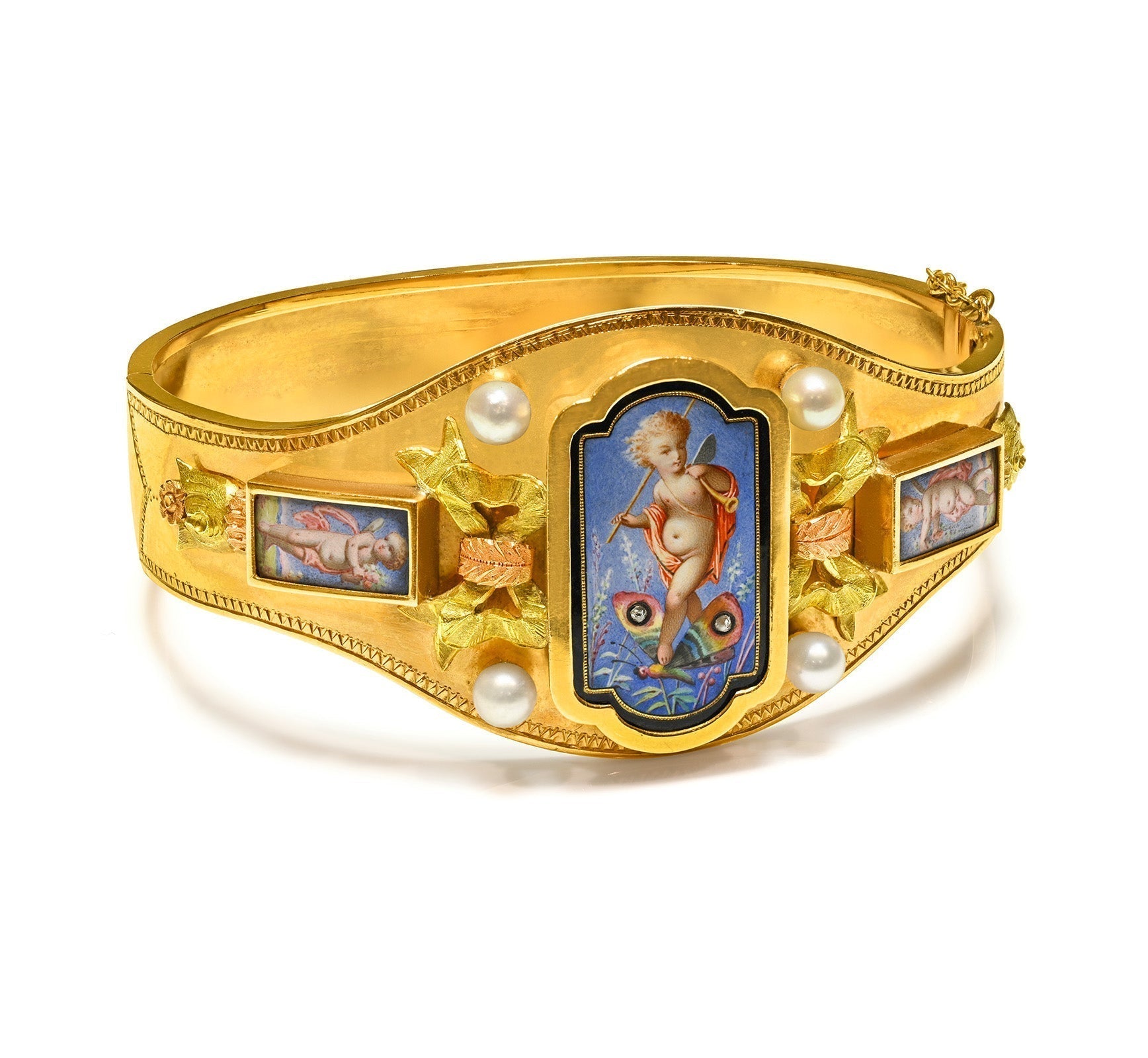
Antique Victorian Gold Portrait Bracelet Pearls Enamel Diamond, Source - DSF Antique Jewelry
Edwardian Jewelry
Edwardian jewelry is renowned for its beautiful craftsmanship and airy grace. These pieces adopted lighter, more elaborate designs that radiated refinement, marking a break from the heavier Victorian traditions.
Edwardian jewelry also frequently featured airy, lacy patterns made possible by revolutionary developments in platinum manufacturing, showcasing a rich yet delicate aesthetic.
These designs, which included recognizable elements such as bows, garlands, and ornate flowers, were influenced by both Art Nouveau and classical antiquity.
Edwardian jewelry is a testament to expert craftsmanship, using durable and precious materials such as platinum, diamonds, and pearls to create pieces that embodied sophistication and beauty. In sharp contrast to the machine-made jewelry of earlier times, the designs were delicate, intricate, and ethereal.
Edwardian jewelers revived classic embellishments such as lace, ribbons, garlands, and bows, drawing inspiration from the 18th century. Edwardian fashionistas were fascinated by these elaborate designs and preferred accessories that complemented the flowing silhouettes and feminine colors of the era.

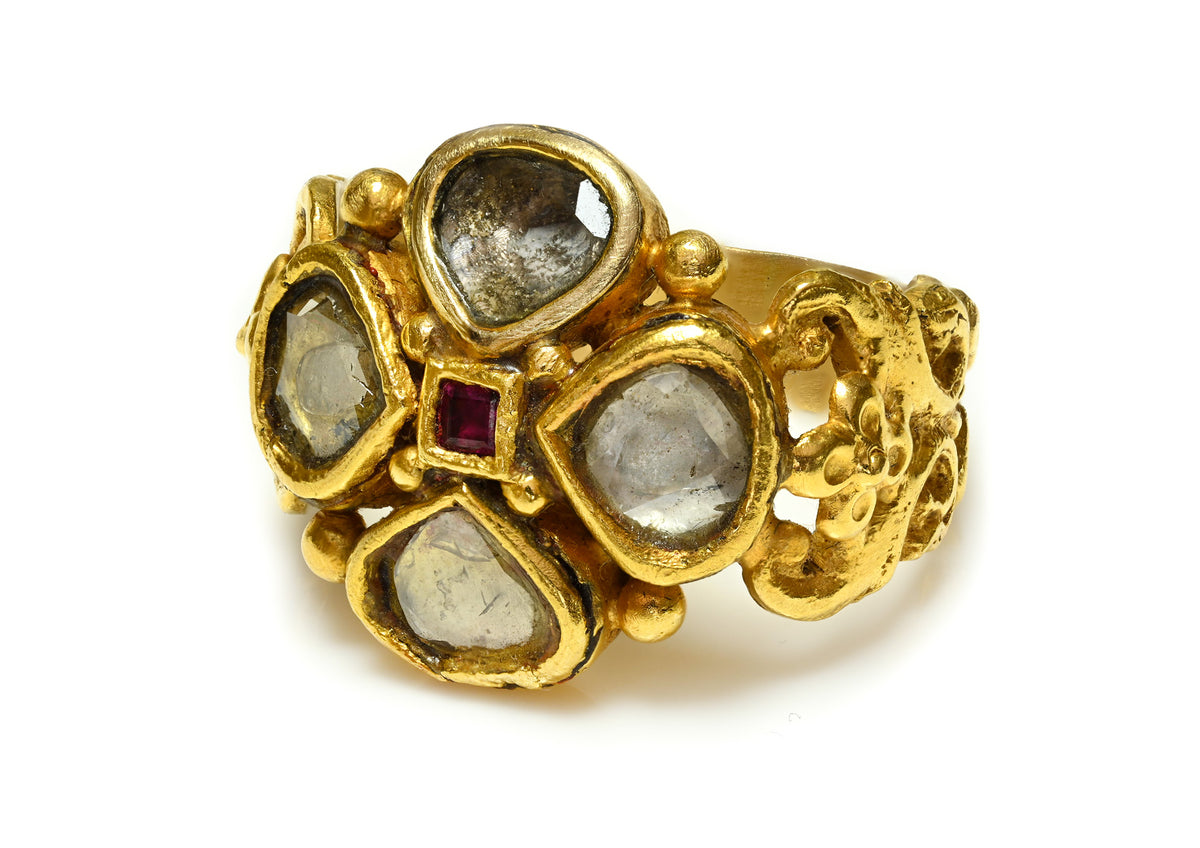
Edwardian Opal Diamond Ring, Source DSF Antiques Jewelry
Toward the Edwardian Era
Although analyzing and presenting the jewelry created during that period is the main interest of art lovers and collectors, we must also discuss the processes and transformations that took place during those years and pushed society toward the Edwardian era.
The social revolution gained momentum beginning in 1870 thanks to scientific advancements and the increasing pace of daily life.
Although Davy’s invention of the arc light in 1880 made electric light viable, it was not until Edison and Swan refined the incandescent carbon-filament lamp in 1883 that electric lighting became feasible for every home, author Nancy Armstrong wrote in her 1976 book Victorian Jewelry.
Cycling became popular around 1885, and several cycling clubs were established. London’s traffic was completely transformed in 1890 when the Prince of Wales opened the city’s first electric underground railway.

Advertisinig Poster of Rudge-Whitworth Ltd. Cycle Manufacturers. Coventry, Birmingham & London, Source Bibliotheque National de France, via Wikimedia commons
Then, in 1896, the automobile emerged as a formidable force (before that, cars were prohibited in England unless they were driven by a man carrying a red flag). In 1891, telecommunications were established between Paris and London. Movie theaters opened their doors in 1896.
Motorcycles first appeared in 1902, and the first aircraft capable of flying for an extended period of time was created in 1908.

Edwardian Engraved Emerald Diamond Swivel Stick Pin, Source DSF Antique Jewelry
In America, Senator Chauncey Depew summarized the general enthusiasm in an oddly worded way:
“There is not a man here who does not feel 400 percent bigger in 1900 than he did in 1896—bigger intellectually, bigger hopefully, bigger patriotically, bigger in the breast for the fact that he is a citizen of a country that has become a world power for peace, for civilization, and for the expansion of its industries and the products of its labor.”
Sensual Rustling
However, only a small portion of these developments was reflected in women’s everyday attire during the final ten years of the century. Large amounts of fabric were still worn, but there was a movement away from the restrictions of Victorian dress, especially because of the influence of sportswear.
v
Victorian Dresses, Source Wikimedia Commons, Author AlinaGusewa
Armstrong also claimed that women’s clothing meant sensual rustling; regardless of the type of garments they wore, their undergarments were deliberately designed to rustle and swish.
You would most likely choose stiff taffeta for the petticoat, along with an underskirt made of the same material and lined with tiny frills that would softly whisper against the fabric, even if you were wearing an ostensibly simple wool gown.
With pleats, flounces, lace, needlework, and beads, among many other embellishments, fashion became opulent.
According to reports, a silk gown from 1895 had gold tinsel and imitation pearls worked all over it; another had gold Venetian lace inserts and was embroidered with elder branches set with crystal beads; and a third had ostrich feathers trimming the hem.

Dinner dress dated 1895, Artist Alice M. Dunstan, Purchase, Irene Lewisohn Bequest, Source https://www.metmuseum.org/art/collection/search/92337, via Wikimedia Commons
By the end of the century, some dresses had accordion pleats all over them, others were covered with every type of lace, and some made their debut in 1899 completely covered in spangles. It was all incredibly expensive and, of course, available only to the privileged.
Insight Into the Hearts of Women
The same was true in America, where some women continued to travel to Paris or London in search of the finest textiles and clothing. Nevertheless, it was entirely possible to achieve stylish effects at a reasonable price, and many of them were promoted in major newspapers and magazines.
Examining portraits by Millais, Boldini, or Sargent, which provide an excellent impression of the entire era, is one of the best ways to understand the clothing of the time.
Armstrong noted in her book that these stylish and captivating artists appeared to have a deep understanding of their subjects and gained remarkable insight into the hearts of these women, many of whose names came to be associated with glamour.
With their long necks, generous bosoms, tiny waists, and hourglass figures, they embodied every aspect of the Edwardian feminine ideal while still possessing strikingly captivating personalities.

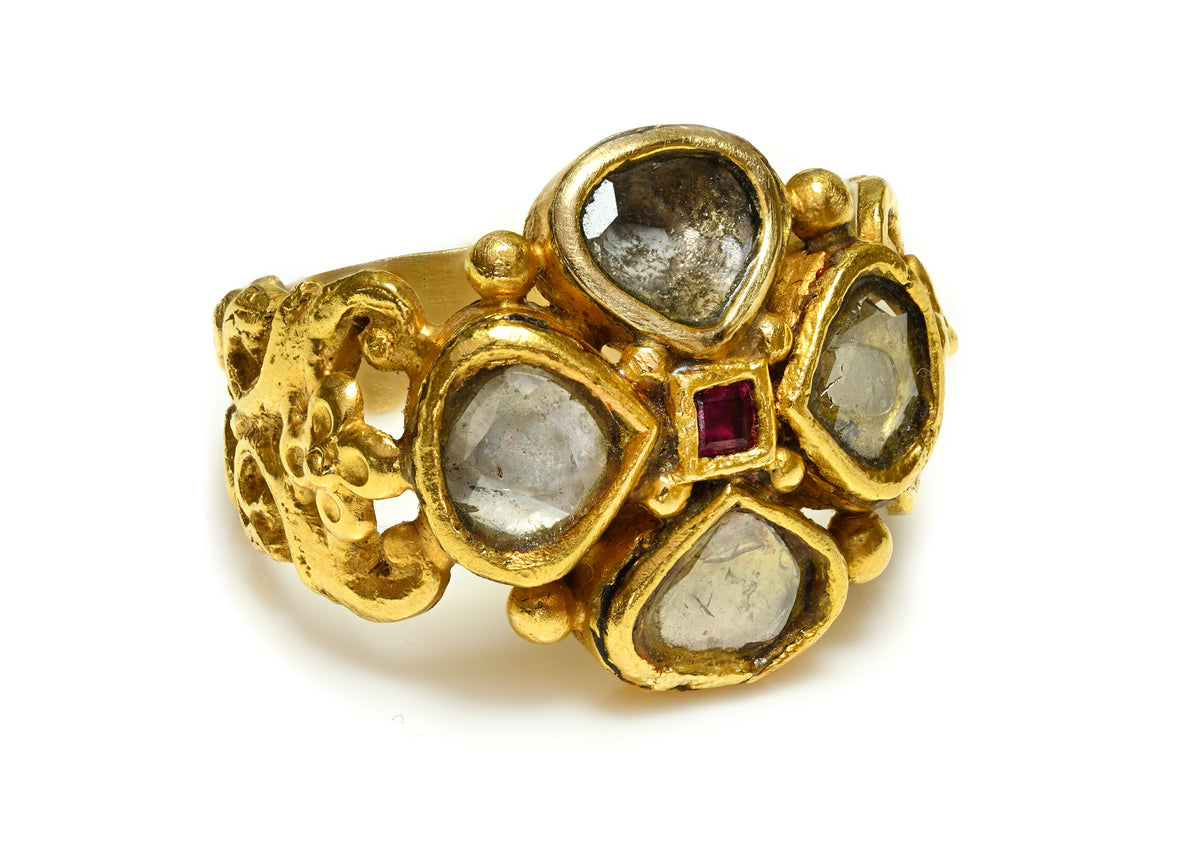
Edwardian Ring, Source DSF Antique Jewelry
Princess Marthe Bibesco and Countess Greffulhe, with their wit and humor in their salons; Consuelo Vanderbilt, the young American who became the Duchess of Marlborough; the Viscountess d’Abernon; and the many beautiful Gibson Girls who astonished people with their beauty and sheer energy.
The sight of striking women such as Madame Gautreau, Miss Camille Clifford, Lina Cavalieri, or Gaby Deslys, with their chinchilla furs, wealth, ostentatious cars, exquisite clothing, “king’s ransom” jewelry, and little griffon lap dogs, was never forgotten.
Platinum
What jewelry did these stunning women wear, then, with skirts made of rustling silks and laces in the palest sweet pea hues and delicate chiffon scarves billowing from their nearly bare shoulders? They wore pearls and jewels, Armstrong wrote.
If they wore gemstones, they were set in nearly undetectable mountings that resembled the cobweb-like texture of lace and were brilliantly faceted to glitter all night long. After all, diamonds were not new.
In addition to being widely available, they were expertly cut, affordable, and did not require constant resetting as fashions changed. They could simply be stored in the bank and replaced with new settings made from the latest metal—platinum—and in the newest styles.

Edwardian Platinum Sapphire Diamond Ring, Source DSF Antique Jewelry
Platinum was relatively new compared to gold and silver, which had been used to set jewels since ancient times, Armstrong wrote in her book. Because of its extraordinary strength, resistance to tarnish, and remarkable malleability and ductility, it was used mostly for rings, as it was considered too heavy for other types of jewelry.
Given that platinum had been known since its discovery in Colombia in 1735, one might wonder why it had not previously been used as a precious metal. The answer lies primarily in platinum’s extremely high melting point (3,223°F / 1,773°C).
Throughout the history of metalworking, a metal’s melting point has been essential to its development. People believed platinum could not be worked because it simply did not behave like silver, for example, which it resembled.
We invite you to read part 2 of this article.