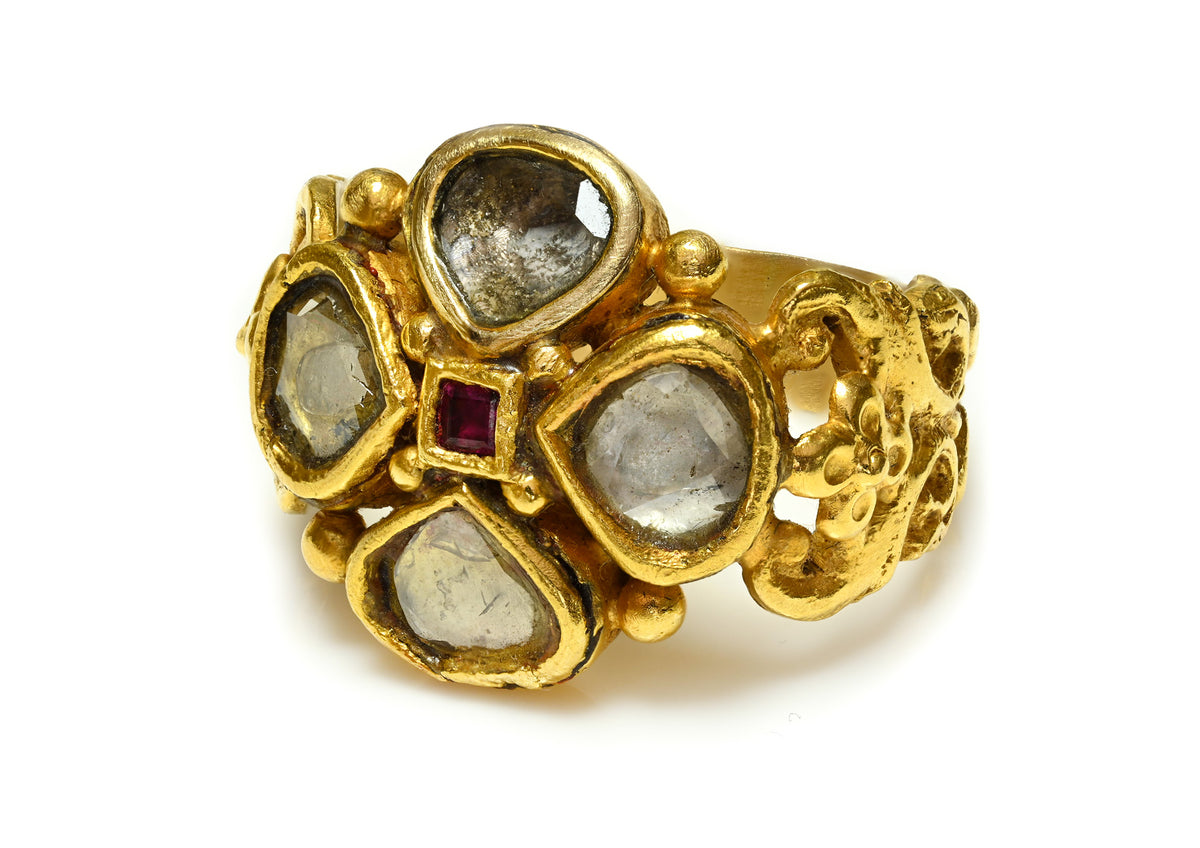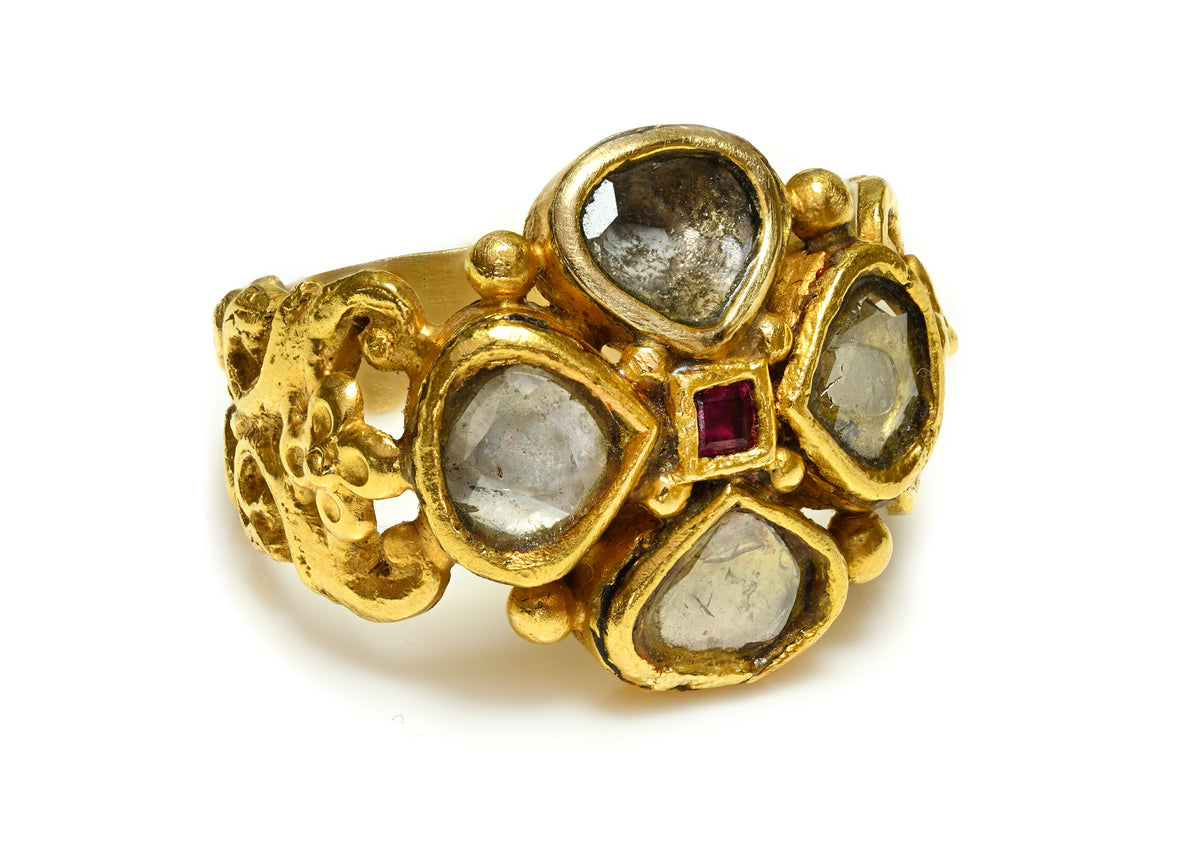

High Jewelry vs Fine Jewelry: What’s the Difference?
In the fascinating world of jewelry, every gemstone holds a story, and every setting is a statement of taste, time, and emotion.
From classic engagement rings to masterpieces displayed in museums, jewelry has always been a language of beauty and power.
But at the very top of this hierarchy of refinement lies a special category—High Jewelry (or Haute Joaillerie)—where the jeweler's art meets perfection.
To understand the difference between Fine Jewelry and High Jewelry, we must look beyond the brilliance of the stones and into the essence of creation, the story of passion, and the artistry of human craftsmanship.
Fine Jewelry – the refinement of true jewelry
Fine jewelry represents luxury in its classic form. It embodies wearable elegance, everyday sophistication, and lasting value.
Each piece is crafted from genuine precious metals—14K or 18K gold, platinum, and sometimes sterling silver—and adorned with natural gemstones, including diamonds, sapphires, rubies, emeralds, and pearls.
Unlike fashion jewelry, fine jewelry has intrinsic value and is designed to last a lifetime.
These are the pieces passed down from one generation to the next, worn every day or reserved for special occasions, embodying the idea of timeless luxury.
A piece of fine jewelry is a love story between tradition and modernity—a small yet essential detail that transforms elegance into identity.

Tiffany Diamond Statement Ring, Source DSF Antique Jewelry
The great jewelry houses—Tiffany & Co., Cartier, Bvlgari, Chopard, and Van Cleef & Arpels—have elevated fine jewelry to the level of art while preserving its essential purpose: to remain wearable, durable, and authentic.
High Jewelry – the jeweler's ultimate masterpiece
If fine jewelry is the equivalent of prêt-à-porter in fashion, then High Jewelry is its haute couture.
It is the exclusive realm of wearable art, where every piece is one of a kind and every gemstone has a destiny.
Haute Joaillerie represents refinement taken to its absolute limit—a combination of artistic vision, master craftsmanship, and extraordinary materials.
Each creation is the result of hundreds, sometimes thousands, of hours of meticulous work in an atelier, where artisans work with a level of precision that defies time.
Defining characteristics of High Jewelry:
- Absolute rarity: Every piece is unique or part of an extremely limited collection.
- Exceptional gemstones: Fancy-colored diamonds, Burmese rubies, Colombian emeralds, and Kashmir sapphires.
- Entirely handcrafted: Sculpted settings, microscope-assisted engraving, and custom gemstone cuts.
- Artistic vision: Every collection tells a story—of the cosmos, nature, history, or human emotion.
- Complete exclusivity: Pieces unveiled only during Paris Haute Couture Week or at private collector events.
A piece of Haute Joaillerie is not meant merely to be worn. It is meant to be experienced, admired, and passed down through generations. It is poetry sculpted in light.
Fine Jewelry vs. High Jewelry – two worlds, one ideal: perfection
|
Criterion |
Fine Jewelry |
High Jewelry |
|---|---|---|
|
Materials |
Precious metals and natural stones |
The rarest gemstones and metals in the world |
|
Execution |
Partly mechanized, finished by hand |
Exclusively handmade by master artisans |
|
Design |
Elegant, classic, wearable |
Sculptural, symbolic, conceptual |
|
Quantity |
Small series, multiple editions |
One-of-a-kind or extremely limited series |
|
Target audience |
Luxury clients, lovers of refinement |
Collectors, elites, museums, royal houses |
|
Value |
Investment in lasting beauty |
Work of art, cultural heritage |
|
Purpose |
Jewelry to wear |
Jewelry to collect |
|
Presentation |
Commercial, in luxury boutiques |
Exclusive, at private events |

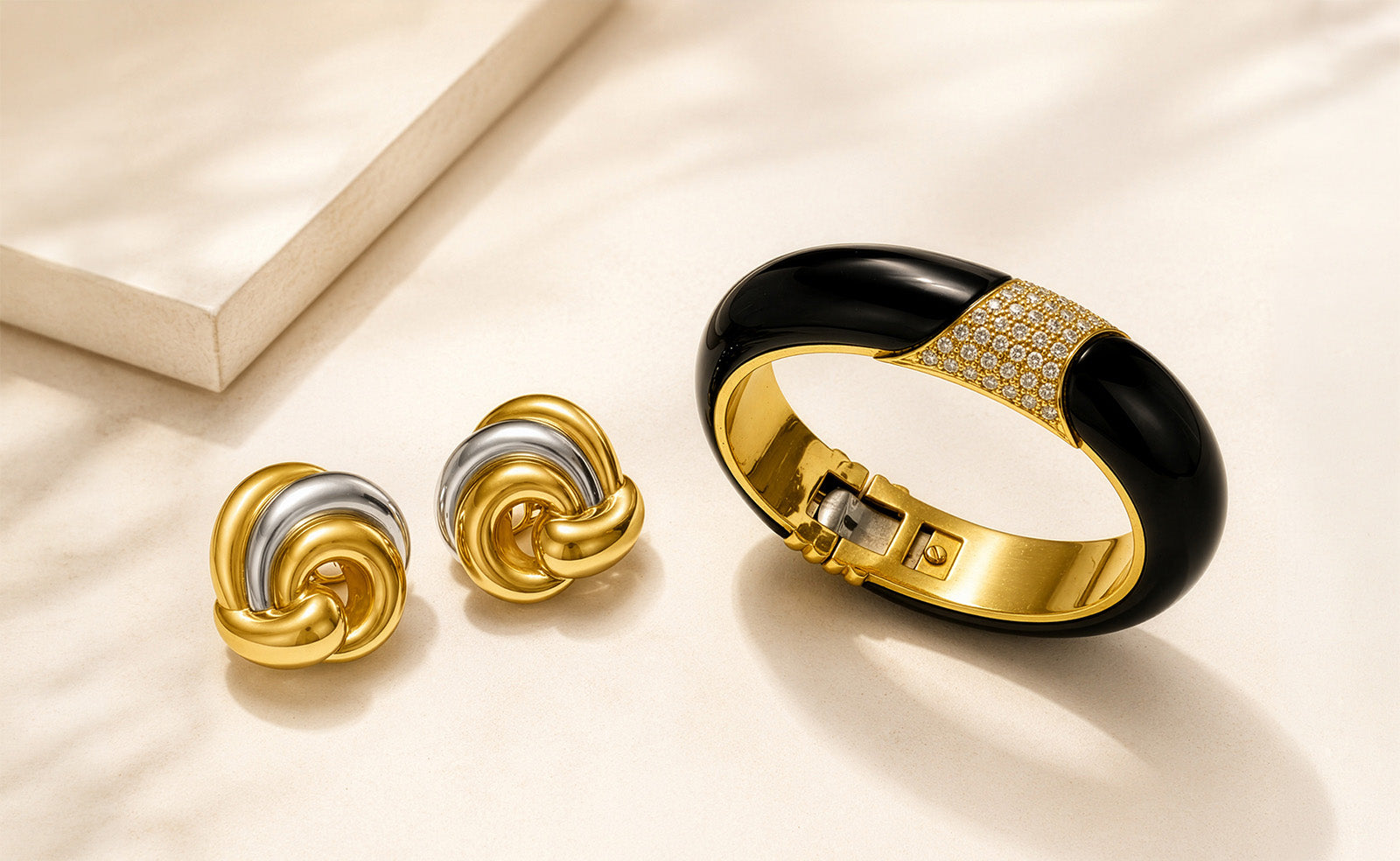
Bulgari jewelry, Source DSF Antique Jewelry
A few legendary examples of High Jewelry
-
Cartier – "Panthère de Cartier"
The emblem of powerful femininity and untamed elegance. Every detail of the panther is hand-sculpted, while the diamond settings capture the feline's graceful movement. -
Van Cleef & Arpels – "Poetic Complications"
Watches and necklaces that transform mechanical craftsmanship into art, inspired by the sky, butterflies, and storytelling. A rare blend of technical mastery and poetry. -
Bvlgari – "Magnifica"
An explosion of color and architectural design. Monumental necklaces that unite extraordinary gemstones in creations inspired by ancient Rome. -
Chanel – "Sous le Signe du Lion"
The lion, Coco Chanel's zodiac sign, becomes a symbol of strength and courage. Sculpted in gold, diamonds, and onyx, each piece radiates regal elegance. -
Graff – "The Peacock Brooch"
A one-of-a-kind masterpiece valued at more than $100 million, centered around a 20-carat fancy blue diamond. A jewel that pushes the boundaries of beauty.

Van Cleef & Arpels La Collection Moon Phase 18K Gold Watch, Source DSF Antique Jewelry
The art in service of light – the philosophy of High Jewelry
In Haute Joaillerie, every detail is a tribute to perfection. Nothing is left to chance: the color, clarity, cut, and proportions of every gemstone are studied with the precision of a painter selecting a palette.
The jeweler becomes a sculptor, an architect, and a poet all at once. They do not merely shape metal—they shape the very essence of light.
Pieces are not created around a design but around a gemstone, which dictates the story, the form, and the balance.
"In Haute Joaillerie, the gemstone guides the artist's hand—not the other way around. Every reflection is a word in the language of perfection."
Jewelry as an investment and a legacy
If fine jewelry is an investment in elegance, High Jewelry is an investment in art.
The value of a piece of Haute Joaillerie comes not only from the weight of its precious metal or the number of carats it contains, but also from its uniqueness, provenance, and the prestige of the maison behind it.
These extraordinary jewels are sold at Sotheby's and Christie's auctions for record-breaking prices.
They are not merely precious objects but heirloom masterpieces, passed down from one generation to the next—like a Monet painting or a Proust novel.
The origins of Haute Joaillerie – Paris in the 19th century
In the heart of 19th-century Paris, two concepts were born that would forever transform the culture of luxury: Haute Couture and Haute Joaillerie.
Both were founded on the same philosophy: exceptional craftsmanship, artistic excellence, and absolute exclusivity.
Cartier, Boucheron, and Chaumet – the founders of modern elegance
- Cartier (founded in 1847) introduced the idea that jewelry tells a story—a fusion of architecture and emotion.
- Boucheron (founded in 1858) pioneered technical innovation, becoming the first jewelry house to establish itself on Place Vendôme and developing groundbreaking setting techniques.
- Chaumet (founded in 1780), the official jeweler to Empress Joséphine, transformed jewelry into a symbol of imperial power.
Together, these legendary maisons helped establish Paris as the world's capital of fine jewelry and Haute Joaillerie.
From the Belle Époque to modernity
The Belle Époque ushered in an era of fluid elegance inspired by nature, romance, and poetry.
The 1920s and the rise of Art Deco transformed jewelry design with geometric lines, bold contrasts, and vibrant colors.
Jewelry became a form of miniature architecture.

Art Deco Diamond Earrings, Source DSF Antique Jewelry
After World War II, Haute Joaillerie experienced a remarkable renaissance, and the great maisons began collaborating with artists and designers—from Salvador Dalí and Jean Schlumberger to today's leading architects and creative visionaries.
Today, Cartier, Van Cleef & Arpels, Dior, Piaget, Graff, Chopard, and Chanel continue to carry forward this legacy of excellence and artistic perfection.
Place Vendôme – the epicenter of luxury
The heart of Haute Joaillerie beats in Place Vendôme, Paris. This is where extraordinary masterpieces are born.
Behind the doors of its legendary ateliers, artisans work in silence, sometimes for months, to create a single piece.
Here, time is not measured in hours, but in millimeters of perfection.

The secrets of craftsmanship – how a piece of Haute Joaillerie is created, from sketch to setting
Haute Joaillerie—or High Jewelry—is the highest expression of luxury jewelry, where artistic vision, technical mastery, and exceptional materials come together to create one-of-a-kind masterpieces.
These creations are not merely accessories but works of art that embody symbolism, emotion, and extraordinary value.
The process of creating a piece of Haute Joaillerie is intricate, meticulous, and fascinating. It can take months—or even years—to complete. Let's step behind the scenes of this exclusive world to explore the key stages, from the initial sketch to the final setting, and discover the craftsmanship that brings these masterpieces to life.
1. Inspiration – the beginning of the story
Everything begins with an idea, a creative vision, or an artistic concept.
Inspiration may come from nature, architecture, fine art, history, or mythology.
The great jewelry houses—Cartier, Van Cleef & Arpels, Boucheron, and Bvlgari—often build their collections around central themes such as secret gardens, fantastical wildlife, Art Deco, or the mystique of the East.
Creative directors and designers translate these concepts into mood boards, assembling images, color palettes, and materials that define the collection's artistic direction.
This stage is essential because it establishes the DNA of the piece, determining not only its final form but also the emotion it is intended to evoke.
2. The sketch – the first visual expression
The next step is the creation of the sketch, or gouache—a detailed watercolor rendering of the future jewel, typically produced at full scale (1:1).
These illustrations are works of art in their own right and are carefully preserved in the archives of the world's great jewelry maisons.
They faithfully capture the textures of precious metals, the brilliance of gemstones, and the way light interacts with every surface—details that are essential for both the client and the artisans who will bring the piece to life.
In many ateliers, the gouache is complemented by computer-generated 3D models (CAD—Computer-Aided Design), particularly during the engineering phase, allowing designers to anticipate technical challenges related to construction, balance, and wearability.
3. Selecting the gemstones – the heart of the jewel
Gemstones are the soul of every piece of Haute Joaillerie.
Their selection is an extraordinarily meticulous process carried out by expert gemologists who search for the world's finest stones—whether D Flawless diamonds, Kashmir sapphires, Colombian emeralds, or Burmese rubies.
Many jewelry maisons keep exceptionally rare gemstones in their vaults for decades, waiting for the perfect design worthy of showcasing them.
In many cases, a creation is designed around an extraordinary gemstone rather than the gemstone being selected to fit an existing design.
Each gemstone is evaluated according to:
- Color, clarity, cut, and carat weight (the famous "Four Cs" of diamond grading).
- Color harmony and compatibility with the surrounding gemstones.
- Setting possibilities and light performance.
4. The wax model – the first sculpture
Once the design has been approved and the gemstones selected, the next stage is creating a wax model, either hand-carved or produced using 3D printing technology.
This prototype allows the artisans to evaluate the proportions, volume, comfort, and the way the piece will naturally rest on the wearer's body.
5. Metal casting – bringing the design to life
The wax model is used to create a mold into which the precious metal—18K gold, platinum, or sometimes palladium—is poured.
This process, known as cire perdue (lost-wax casting), is one of the oldest and most respected techniques in jewelry making.
After casting, the jeweler receives a raw metal form that is meticulously filed, polished, and refined by hand with microscopic precision.
At this stage, every component is individually adjusted, including hinges, clasps, hidden settings, and movable elements, all of which are seamlessly integrated into the final design.
6. Setting the gemstones – the dance of light
Gemstone setting is perhaps the most delicate and spectacular stage of the entire process.
Each gemstone is placed individually and secured using specialized precision tools in a painstaking process that can take days—or even weeks—for a single creation.
Several setting techniques are commonly used:
- Prong setting – maximizing light and brilliance.
- Bezel setting – offering superior protection for more delicate gemstones.
- Pavé setting – hundreds of small gemstones set closely together, creating a surface that resembles lace made of light.
- Serti Mystérieux (Mystery Set) – the legendary technique developed by Van Cleef & Arpels, in which gemstones are mounted without visible prongs, creating the illusion that they are floating.
Even an error measuring a fraction of a millimeter can crack an exceptionally rare gemstone.
For that reason, this stage is entrusted only to master setters whose skills have been perfected through decades of experience.

Pave diamond Jewelry, Source DSF Antique Jewelry
7. Polishing and final inspection
Once the gemstones have been set, the piece enters the finishing stage, where every surface is polished, brushed, or textured according to the designer's vision.
Decorative techniques such as engraving or enameling—including champlevé, plique-à-jour, and guilloché—may also be applied to create distinctive artistic effects.
The final inspection is carried out by a multidisciplinary team of jewelers, gemologists, and quality-control specialists. They carefully evaluate:
- The security of every gemstone setting.
- Overall symmetry and aesthetic balance.
- Mechanical integrity and durability.
- Surface finish, brilliance, and flawless execution.
8. Presentation – the culmination of creation
The completed piece is then presented to its client in an exclusive setting, often during a private appointment or bespoke presentation.
Its accompanying documentation typically includes the original design sketches, gemstone certificates, a certificate of authenticity, and, in many cases, a custom-crafted presentation case created specifically for that jewel.
Jewerly – between art and eternity
Creating a piece of Haute Joaillerie is both a technical achievement and an artistic triumph.
It is a process that brings together designers, gemologists, jewelers, polishers, and master stone setters in a true orchestra of craftsmanship.
These extraordinary creations do more than enhance elegance—they embody history, passion, and identity, becoming heirlooms that preserve beauty across generations.
A single piece of Haute Joaillerie may require up to 800 hours of hand craftsmanship and the expertise of more than 15 specialists.
In exceptional cases, such as Van Cleef & Arpels' iconic Zip Necklace—which functions as a fully operational zipper—the development process took more than 10 years.
Beauty that defies time
Fine jewelry represents wearable refinement—the kind of jewelry that accompanies life's most meaningful moments.
High Jewelry, however, is something entirely different. It is a form of artistic immortality.
It is where jewelry becomes emotion made tangible, where gemstones tell stories, and where light is transformed into something timeless.
Where craftsmanship reaches the level of genius, the highest expression of human artistry is born—Haute Joaillerie, beauty that never goes out of style.
"Jewelry is not only about luxury. It is about light, memory, and emotion. It is the way humanity has learned to capture eternity in the palm of its hand."