How to Identify Cartier Jewelry: Signatures, Hallmarks, Serial Numbers and Key Details
Cartier jewelry is recognized around the world for its distinctive design, refined proportions and exceptional craftsmanship. Yet identifying a Cartier jewel correctly requires much more than finding the Cartier name engraved somewhere on the piece.
Signatures can be copied. Serial numbers can be reproduced. Familiar Cartier designs have also inspired countless imitations over the decades. For this reason, no single engraving, hallmark or design element should ever be considered conclusive on its own.
When examining a Cartier jewel, the most reliable approach is to consider the piece as a whole. The signature, hallmarks, serial or reference numbers, metal quality, construction, proportions, gemstone setting and overall workmanship should all be consistent with one another and appropriate for the period in which the jewel was made.
This is particularly important with vintage and antique Cartier jewelry. Earlier pieces may carry different signatures, French assay marks, workshop marks or numbering systems from those encountered on contemporary Cartier jewelry. A marking that appears unusual on a modern piece may therefore be entirely appropriate on an older example.
Understanding these differences can help collectors recognize the characteristics associated with genuine Cartier craftsmanship and identify details that deserve closer examination.
In this guide, we will look at the principal elements used when evaluating Cartier jewelry, including Cartier signatures, hallmarks, serial numbers, maker’s marks, construction techniques, design details and period-specific characteristics. We will also examine why provenance, documentation and comparison with known examples can be especially important when evaluating rare or historically significant Cartier pieces.
Table of Contents
- Start With the Cartier Signature
- Examine the Hallmarks and Metal Purity Marks
- Check Serial Numbers, Reference Numbers and Engravings
- Examine the Craftsmanship and Construction
- Look Closely at Gemstones and Setting Techniques
- Study the Design, Proportions and Cartier Aesthetic
- Identify Vintage and Antique Cartier Jewelry by Period
- Boxes, Certificates, Receipts and Provenance
- Common Red Flags to Watch For
- How Cartier Jewelry Should Be Evaluated
- Frequently Asked Questions

1. Start With the Cartier Signature
The signature is often the first detail examined when trying to identify Cartier jewelry, but it should never be viewed in isolation. Cartier signatures have changed over time, and the exact wording, lettering and placement can vary depending on the period, the type of jewel and the branch responsible for its production or sale.
Earlier Cartier pieces may be signed Cartier Paris, Cartier London or Cartier New York, reflecting the historic development of the Maison through its principal international branches. Other jewels may simply bear the Cartier name, sometimes accompanied by additional numbers, metal marks or workshop stamps.
For collectors, the important question is not simply whether the word Cartier appears on the jewel, but whether the signature is appropriate for the piece itself.
Examine the Lettering Carefully
A Cartier signature should appear deliberate, precise and consistent with the quality of the jewel. Uneven engraving, irregular spacing, poorly formed letters or a signature that appears crudely added can all justify closer examination.
At the same time, collectors should be cautious about relying on modern examples when evaluating vintage Cartier jewelry. The lettering used on a jewel from the early or mid-20th century may not look identical to the signature found on a contemporary Cartier bracelet or ring.
Hand-applied or period engraving can also show subtle differences that are entirely consistent with age and traditional manufacturing methods.
For this reason, there is no single Cartier font that can authenticate every Cartier jewel.
Cartier Paris, London and New York Signatures
Historic Cartier jewelry may reflect one of the Maison’s three major centers: Paris, London and New York.
These signatures can be particularly useful when evaluating older pieces because they may help place a jewel within a specific period or branch of Cartier’s history. However, the presence of a city name alone does not establish authenticity.
A piece signed Cartier Paris, for example, should also display construction, materials, hallmarks and design characteristics consistent with Cartier jewelry produced or retailed through the Paris branch during the relevant period.
The same principle applies to Cartier London and Cartier New York pieces.
Collectors should therefore avoid treating the city designation as a simple authenticity stamp. Instead, it should be considered one part of a larger historical and physical evaluation.
Location of the Signature Matters
The position of the Cartier signature can also provide useful information.
Depending on the jewel, signatures may appear:
- inside the shank of a ring
- on the reverse of a brooch
- near the clasp of a necklace or bracelet
- on the back or interior of an earring
- along the inner surface of a bracelet
- on a discreet structural element of the jewel
The placement should make sense for the design and should not appear to have been added simply because an empty surface was available.
On particularly intricate or early pieces, signatures and identifying marks may be extremely small and positioned in areas that are difficult to see without magnification.
A Signature Is Only the Beginning
One of the most common mistakes when evaluating signed jewelry is assuming that a convincing signature proves authenticity.
It does not.
Cartier is one of the most copied names in jewelry, and signatures can be engraved onto pieces that were never produced by the Maison. Even an apparently convincing Cartier inscription should therefore be evaluated alongside the jewel’s hallmarks, maker’s marks, serial numbers, construction, materials, proportions and overall quality.
A genuine Cartier jewel should tell a consistent story. The signature is simply the first chapter.

2. Examine the Hallmarks and Metal Purity Marks
After the signature, the next important area to examine is the jewel’s hallmarks and metal purity marks. These markings can provide valuable information about where a piece was made, the precious metal used and, in some cases, the workshop responsible for its manufacture.
However, just like a signature, a hallmark should never be considered definitive proof of authenticity on its own.
Cartier jewelry has been produced over many decades and in different countries, so the marks encountered on an antique Cartier jewel can look very different from those found on a contemporary piece.
French Cartier Jewelry and French Hallmarks
Many important Cartier jewels were produced in France, where precious-metal objects have traditionally been subject to a highly developed system of assay and guarantee marks.
Depending on the period and metal, a French Cartier jewel may carry official marks indicating gold, platinum or silver.
For example, collectors frequently encounter the French eagle’s head hallmark on 18K gold jewelry. Platinum pieces may carry different French assay marks appropriate to the period.
These marks are often extremely small and may require magnification to identify correctly.
The presence of a French assay mark can support the attribution of a jewel, but it must correspond with the metal, age and construction of the piece being examined.
A hallmark that is inconsistent with the apparent age or material of the jewel should immediately encourage further investigation.
Look for the Maker’s Mark
One of the most interesting features of French jewelry is the maker’s mark, sometimes referred to as a workshop or responsibility mark.
Cartier did not physically manufacture every component of every jewel within a single workshop. Like many major Parisian jewelry houses, the Maison worked with highly skilled specialist workshops and manufacturers.
As a result, some vintage Cartier pieces may carry both the Cartier signature and a separate maker’s mark identifying the workshop involved in production.
French maker’s marks were traditionally struck in a distinctive lozenge-shaped cartouche and generally incorporated identifying initials or symbols.
For knowledgeable collectors, these marks can be extremely valuable because certain workshops are documented as having produced jewelry for Cartier during particular periods.
However, identifying a maker’s mark correctly requires specialist reference material. A tiny symbol or pair of initials should not be assigned to a particular workshop simply because it resembles a known mark.
Metal Fineness Marks
Cartier jewelry may also carry numerical or textual indications of metal purity.
Depending on the country, date and type of piece, examples may include markings corresponding to:
- 18K gold
- 14K gold on certain pieces associated with particular markets or periods
- platinum
- sterling silver
- combinations of precious metals
Modern jewelry may use numerical fineness marks such as 750 for 18K gold or 950 for platinum, while older examples may rely more heavily on national assay marks.
The exact combination of marks should be appropriate for the period and origin of the piece.
Collectors should be particularly cautious when a supposedly early Cartier jewel carries a group of markings that look distinctly modern.
Hallmarks Can Wear Over Time
Antique and vintage jewelry has often been worn, resized, repaired, polished or restored during its lifetime.
As a result, original hallmarks may be faint, partially erased or difficult to interpret.
A worn hallmark is not automatically a warning sign. In fact, wear can sometimes be entirely consistent with the age and history of a jewel.
Conversely, unusually sharp markings on a heavily worn piece may deserve closer examination.
This does not mean that crisp marks indicate a problem, only that the condition of the hallmarks should make sense in relation to the condition of the jewelry itself.
Repairs and Resizing Can Affect the Marks
Rings are particularly important in this respect.
A Cartier ring that has been resized may have lost part of its original signature, serial number or assay marks if the alteration was performed in the same area where the markings were originally placed.
Bracelets and necklaces may also show later repairs or replacement components that carry different marks from the original jewel.
For this reason, the absence of one expected hallmark does not automatically mean that a piece is not Cartier. The entire construction and repair history must be considered.
Why Hallmarks Must Be Read Together
An authentic vintage Cartier jewel may display several different marks positioned close together:
- the Cartier signature
- a precious-metal assay mark
- a maker’s or workshop mark
- a serial or inventory number
- a reference number
- additional import or export marks
Individually, these marks provide clues. Together, they can help establish a coherent history for the jewel.
The key is consistency.
The metal, hallmark, workshop mark, signature and apparent date of manufacture should all support the same conclusion. When one element contradicts the others, the piece deserves a more detailed examination before any attribution is made.

3. Check the Serial Numbers, Reference Numbers and Other Engravings
Serial and reference numbers can be important clues when identifying Cartier jewelry, but they are also among the most misunderstood details.
Many collectors assume that every Cartier jewel has a serial number that can simply be entered into a database to confirm authenticity or determine the exact year of manufacture. In practice, Cartier numbering systems have changed over time, and vintage pieces do not always follow the same conventions as modern jewelry.
For that reason, a number should be treated as supporting evidence rather than proof on its own.
Cartier Serial Numbers
Many Cartier jewels carry an individually engraved number, particularly more recent pieces and important signed examples.
Depending on the period and type of jewelry, a serial number may consist of:
- numbers only
- a combination of letters and numbers
- a sequence engraved alongside the Cartier signature
- numbers accompanied by metal fineness or reference marks
The engraving should generally be clean, deliberate and appropriate to the quality of the piece.
However, collectors should remember that counterfeit jewelry can also carry convincing-looking serial numbers. A number that appears correctly formatted does not automatically establish that the jewel is genuine.
The number must be considered together with the signature, hallmarks, materials, construction and design.
Do All Cartier Pieces Have Serial Numbers?
No.
This is particularly important when evaluating antique and vintage Cartier jewelry.
Some older Cartier pieces may carry inventory numbers, workshop numbers or other identifying marks rather than the type of serial number collectors expect to see on contemporary jewelry. Others may have markings that have been partially lost through wear, polishing, repair or alteration.
An antique Cartier brooch, for example, should not automatically be rejected simply because it lacks the type of serial-number format found on a modern Love bracelet.
The age and category of the jewel must always be taken into account.
Reference Numbers and Model Numbers
Certain Cartier jewelry may also carry reference or model numbers associated with a particular design.
These numbers can help connect a jewel to a known Cartier model or production reference, especially when examining more recent collections.
When documentation is available, the reference engraved on the jewel should correspond with the model described on the accompanying paperwork.
A mismatch between the jewelry and its documents is an obvious reason for further investigation.
For vintage jewelry, however, numbering systems can be less straightforward. Numbers may relate to internal inventories, workshops or production records that are not publicly accessible.
This is one reason why collectors should be cautious about websites that claim to provide a universal Cartier serial-number decoder.
Can a Cartier Serial Number Reveal the Date?
Sometimes a number may help specialists place a jewel within a certain production context, particularly when compared with documented Cartier pieces from the same period.
But there is no simple universal formula that allows every Cartier serial number to be converted into an exact manufacturing date.
This is especially true for older jewelry.
Dating a vintage Cartier piece generally requires several forms of evidence to be considered together:
- the style of the Cartier signature
- national hallmarks
- maker’s marks
- construction techniques
- gemstone cutting styles
- design characteristics
- numbering
- documented comparable pieces
- provenance or original paperwork
The number is therefore one element of the dating process rather than a complete answer.
Pay Attention to the Quality of the Engraving
The way a number is applied can sometimes be as informative as the number itself.
On a high-quality Cartier jewel, identifying engravings should normally appear purposeful and carefully executed. Collectors should look closely at:
- depth of engraving
- alignment
- spacing
- consistency between letters and numbers
- whether the engraving fits naturally within the available space
- whether all marks appear to belong to the same period
A serial number that appears significantly newer than the surrounding signature or hallmarks may deserve closer examination.
Likewise, numbers that are unusually large, uneven or awkwardly positioned should not be ignored.
Still, engraving methods have evolved, and older hand-applied markings should not be expected to look identical to modern machine-applied inscriptions.
Compare Numbers With Any Original Documentation
When a Cartier jewel retains its original paperwork, the documents can provide another useful layer of evidence.
Depending on the age and type of piece, documentation may include:
- Cartier certificates
- sales receipts
- service documents
- original invoices
- archival information
- auction records
- previous collection records
Where identifying numbers are recorded, they should correspond with those found on the jewel.
Original documentation can significantly strengthen provenance, particularly when it accompanies a rare vintage or historically important piece.
At the same time, paperwork should also be examined carefully. Documents, boxes and certificates can become separated from the jewelry they originally accompanied, and reproductions exist.
As with the jewel itself, consistency between all the available evidence is what matters most.
Never Authenticate Cartier Jewelry by Serial Number Alone
A common mistake is to find a serial number online, see another Cartier piece carrying a similar sequence and conclude that the jewel must therefore be authentic.
This approach is unreliable.
Numbers can be copied from genuine jewelry, and counterfeit pieces sometimes reproduce not only Cartier signatures but also hallmarks, model references and serial numbers.
A convincing Cartier identification should therefore never depend on a single engraved sequence.
Instead, ask whether the entire piece makes sense:
Does the number correspond with the apparent period? Does the signature look appropriate? Are the hallmarks consistent with the metal and country of manufacture? Does the construction meet the standard expected of Cartier? Do the proportions and design correspond with documented examples?
When all of these elements agree, the attribution becomes considerably more persuasive.

4. Examine the Craftsmanship and Construction
One of the strongest indicators when evaluating Cartier jewelry is the quality of the object itself.
Long before a collector examines a serial number or attempts to identify a tiny hallmark, the jewel’s construction, finish, balance and precision can reveal a great deal about the standard at which it was made.
Cartier built its reputation not simply through recognizable designs, but through exceptional execution. Whether examining an early platinum diamond brooch, an Art Deco bracelet, a mid-century gold jewel or a contemporary Cartier creation, the workmanship should feel deliberate from every angle.
This does not mean that every Cartier piece must be elaborate. Some of the Maison’s most recognizable designs are remarkably simple. What matters is the precision with which that simplicity has been achieved.
Examine the Jewel From Every Angle
Fine jewelry should not be evaluated only from the front.
Turn the piece over. Examine the reverse, the interior surfaces, the hinges, clasp mechanisms, links and areas that were never intended to be immediately visible when the jewel was worn.
On well-made Cartier jewelry, these less visible areas are often finished with the same attention given to the front of the piece.
Look for:
-
clean and carefully finished surfaces
-
well-defined edges
-
secure and precisely fitted components
-
carefully constructed hinges and clasps
-
symmetry where symmetry is intended
-
smooth articulation in flexible jewelry
-
neatly finished stone settings
-
thoughtful construction on the reverse of the jewel
A beautifully designed front combined with crude or careless construction on the back should encourage further examination.
Precision Is Particularly Important
Cartier jewelry is frequently distinguished by an extraordinary sense of proportion.
Elements that appear simple at first glance may have been engineered with considerable precision. Links should relate naturally to one another. Repeating motifs should be carefully spaced. Stones should sit correctly within their settings, and mechanical elements should operate smoothly.
On a bracelet, for example, the links should move naturally without appearing loose or poorly connected.
On a brooch, the pin mechanism should be appropriate to the scale and weight of the jewel.
On earrings, the construction should allow the pieces to sit as intended when worn.
These are details that can easily be overlooked when attention is focused only on the Cartier signature.
Weight and Substance
Another characteristic often associated with fine Cartier jewelry is a sense of substance.
This should not be interpreted as a rule that genuine Cartier jewelry must always be heavy. Delicate pieces were intentionally designed to be light, particularly certain early platinum jewels.
Instead, the weight should make sense for the design, materials and construction.
A substantial gold bracelet should generally feel substantial. A sculptural ring should not feel unexpectedly hollow unless its construction was intentionally designed that way. A jewel should feel balanced rather than awkwardly weighted.
Weight can therefore be useful as a comparative tool, particularly when examining a known Cartier model alongside documented examples.
However, weight alone should never be used to authenticate jewelry.
Clasps, Hinges and Mechanical Details
The mechanical components of a jewel can be particularly revealing.
Cartier has created highly sophisticated bracelets, necklaces, brooches and convertible jewels in which clasps and hinges are integrated carefully into the overall design.
When examining vintage Cartier jewelry, pay close attention to how these elements function.
A clasp should close securely and usually with a sense of precision. Hinges should operate smoothly. Safety mechanisms, where present, should appear thoughtfully incorporated rather than added as an afterthought.
On an older piece, some wear is completely normal. A century-old clasp should not necessarily operate exactly like a newly manufactured one.
The important question is whether the mechanism itself appears consistent with the quality and period of the jewel.
The Reverse Can Be as Important as the Front
Collectors often learn a great deal by studying the back of a piece of jewelry.
The reverse may reveal:
-
how the stones were set
-
how individual sections were assembled
-
whether the jewel was hand-finished
-
evidence of later repairs
-
replaced components
-
workshop or assay marks
-
construction methods associated with a particular period
This is especially useful with antique and vintage Cartier brooches, clips and elaborate necklaces.
A sophisticated jewel frequently has an equally sophisticated reverse. The construction may be visually complex, but it should still appear logical and carefully executed.
Look for Evidence of Later Alterations
Even authentic Cartier jewelry may have been changed during its lifetime.
Older pieces may have been:
-
resized
-
shortened
-
lengthened
-
converted from clips into brooches
-
transformed from brooches into pendants
-
fitted with replacement earring backs
-
repaired at hinges or clasps
-
reset with replacement gemstones
Such alterations do not necessarily remove the historical or collectible importance of a Cartier jewel, but they should be recognized.
A later modification can also explain why certain marks are missing or why one component looks different from the rest of the piece.
The critical distinction is between an authentic Cartier jewel that has been altered and a non-Cartier jewel that has later been given a Cartier signature.
Understanding construction can help distinguish between these very different situations.
Craftsmanship Should Support the Attribution
There is no single construction detail that proves a jewel was made by Cartier.
Instead, craftsmanship becomes another layer of evidence.
The signature may appear correct. The hallmarks may correspond with the metal. The serial number may seem appropriate. But if the jewel itself is poorly constructed, roughly finished or mechanically unsophisticated, those markings deserve greater scrutiny.
Conversely, an exceptionally made vintage jewel with appropriate period construction, compatible hallmarks and a convincing Cartier signature presents a much more coherent picture.
When identifying Cartier jewelry, the quality of the jewel should support the name engraved upon it.

5. Look Closely at the Gemstones and Setting Techniques
Gemstones can provide another important layer of information when evaluating Cartier jewelry.
Cartier has worked with exceptional diamonds, colored gemstones and ornamental materials throughout its history, but the significance of the stones goes beyond their individual value. The way gemstones are selected, proportioned, cut and incorporated into a design is often as important as the stones themselves.
A Cartier jewel should generally feel composed rather than simply decorated. Stones are selected to work within the architecture of the piece, and their settings should support the overall design rather than overwhelm it.
Examine How the Stones Work Together
When looking at a jewel with multiple gemstones, consider the relationship between them.
In a carefully constructed piece, stones of similar function will usually show thoughtful attention to:
-
color
-
proportions
-
shape
-
brilliance
-
symmetry
-
spacing
-
overall visual balance
This does not mean that every gemstone must be perfectly identical.
Antique and vintage jewelry frequently contains hand-cut stones with natural differences in shape and proportion. In fact, expecting the mathematical uniformity of modern cutting in an early Cartier jewel can sometimes lead to the wrong conclusion.
What matters is whether the stones appear to have been intentionally selected and arranged for the design.
Diamond Cuts Can Help Indicate Period
The style of diamond cutting can also provide clues about the approximate age of a jewel.
Earlier Cartier jewelry may incorporate diamond cuts associated with the late 19th and early 20th centuries, while later pieces reflect developments in modern cutting.
Depending on the period, a jewel may contain:
-
old mine-cut diamonds
-
old European-cut diamonds
-
rose-cut diamonds
-
single-cut diamonds
-
transitional-cut diamonds
-
modern brilliant-cut diamonds
-
baguette, emerald, marquise or other shaped diamonds
The presence of an older diamond cut does not by itself date the jewel, because gemstones were sometimes reused from earlier jewelry.
Nevertheless, the cutting style should make sense when considered alongside the mounting, hallmarks, signature and overall design.
A supposedly early Art Deco jewel containing stones and setting techniques that belong clearly to a much later period should invite further investigation unless there is evidence that the stones were replaced.
Cartier and Calibré-Cut Gemstones
One technique particularly associated with sophisticated early 20th-century jewelry is the use of calibré-cut colored gemstones.
Small sapphires, rubies, emeralds or other stones could be individually shaped to fit precisely into curved borders, geometric patterns and intricate decorative elements.
This type of work requires considerable precision because the stones must conform to the architecture of the jewel rather than the mounting simply being built around standardized stones.
Calibré-cut gemstones can be encountered in important Art Deco jewelry and in designs where strong contrasts of color form part of the composition.
When examining such a piece, look at how precisely the stones follow the shape of the design. Gaps, irregular fitting or careless alignment may be inconsistent with the level of execution expected from an important Cartier jewel.
Cabochons and Carved Gemstones
Not all important Cartier jewelry relies on faceted gemstones.
The Maison has frequently used cabochon-cut stones, carved gemstones and ornamental materials to create color, volume and texture.
Depending on the period and design, collectors may encounter materials such as:
-
sapphire
-
ruby
-
emerald
-
turquoise
-
coral
-
lapis lazuli
-
onyx
-
rock crystal
-
jade
-
mother-of-pearl
These materials can be particularly important in Cartier’s more sculptural and colorful jewelry.
Their presence should always be evaluated within the historical context of the design. A combination of materials that was characteristic of one period may be much less appropriate for another.
The Setting Should Be Precise
One of the most revealing areas to inspect is the actual setting of the gemstones.
Under magnification, examine how the stones are secured.
Prongs should generally appear deliberate and carefully shaped. Bead-set diamonds should form a coherent surface. Channels should be cleanly constructed. Borders should follow the stones accurately.
Fine setting work can appear extremely delicate, but it should not look careless.
On older jewelry, wear may soften the appearance of individual beads or prongs, and repairs may alter certain areas. These changes are normal considerations when examining a jewel that may be many decades old.
The important question is whether the original setting technique and construction demonstrate the level of control expected from fine jewelry.
Millegrain and Fine Platinum Work
Some antique and early 20th-century Cartier jewelry may feature delicate millegrain detailing, particularly around diamonds or other gemstones.
Millegrain consists of extremely fine beaded edges created along the metal surrounding a stone or decorative element. When executed well, it can give platinum jewelry an exceptionally refined and almost lace-like appearance.
This technique became especially effective with platinum, which allowed jewelers to construct strong yet visually delicate settings.
When examining vintage Cartier jewelry with millegrain work, look for refinement and consistency rather than simply the presence of a beaded edge.
Millegrain has been widely used by many jewelers and can easily be reproduced. It is therefore a characteristic of workmanship, not an authentication mark.
Platinum Changed the Appearance of Cartier Jewelry
Platinum played an important role in the development of Cartier’s early diamond jewelry.
Its strength allowed jewelers to create relatively fine structures capable of securely holding diamonds while reducing the amount of visible metal.
The result could be jewelry that appeared extraordinarily light despite complex construction.
This is particularly relevant when examining Belle Époque and Art Deco Cartier jewelry, where diamonds may seem almost suspended within highly refined platinum frameworks.
A heavy, crude setting attempting to reproduce the appearance of this type of jewel may therefore lack one of the most important qualities of the original design: visual lightness achieved through sophisticated engineering.
Check for Replaced or Reset Stones
An authentic Cartier jewel may no longer contain every gemstone with which it originally left the workshop.
Over decades of wear, stones can be lost, damaged or replaced.
Possible indications of replacement include:
-
a gemstone whose color differs noticeably from neighboring stones
-
a different cutting style within an otherwise consistent group
-
altered prongs around a particular stone
-
signs that a setting has been opened and closed
-
a gemstone that sits at a different height from the surrounding stones
-
differences in wear between one stone and the rest of the jewel
A replacement stone does not automatically make a Cartier jewel inauthentic. It does, however, affect how the piece should be described and evaluated.
For historically important jewelry, determining whether the gemstones are original can have a significant effect on collectability and value.
Gemstone Quality Alone Does Not Prove Cartier Authorship
A common misconception is that exceptionally valuable gemstones automatically support a Cartier attribution.
They do not.
A magnificent diamond, sapphire or emerald can be mounted in jewelry made by any number of workshops, just as an authentic Cartier jewel may derive much of its importance from design rather than from a single extraordinary gemstone.
The reverse is also true: a poorly made jewel does not become Cartier simply because it contains expensive stones.
When identifying Cartier jewelry, the gemstones should form part of the same coherent picture as everything else.
The stones, their cuts, the setting techniques, the mounting and the period of the jewel should all make sense together.
The more naturally these elements support one another, the stronger the overall attribution becomes.

6. Study the Design, Proportions and Cartier Aesthetic
Cartier jewelry is often recognizable not because of one isolated feature, but because of the way the entire design is resolved.
The Maison has worked across dramatically different styles—from delicate Belle Époque diamond jewelry to geometric Art Deco creations, bold mid-century gold designs and modern icons such as Love, Panthère, Trinity and Juste un Clou. Despite these differences, strong Cartier jewelry generally shares a sense of proportion, balance, clarity and control.
When identifying Cartier jewelry, design should therefore be examined as carefully as signatures and hallmarks.
Proportion Is One of Cartier’s Strongest Signatures
A well-designed jewel often looks effortless, but that apparent simplicity usually depends on precise proportion.
Cartier pieces frequently demonstrate a carefully considered relationship between:
-
the size of the central motif
-
the width of a bracelet or ring
-
the spacing between gemstones
-
the scale of decorative elements
-
the relationship between positive and negative space
-
the visual weight of one section compared with another
This balance is especially important when evaluating copies of well-known Cartier designs.
A reproduction may imitate the overall concept successfully while getting the proportions subtly wrong.
The bracelet may be slightly too thick. A motif may be too large. A screw, nail head, panther element or gemstone setting may sit too high or too low. Individual differences can seem minor, but together they can alter the character of the entire jewel.
Cartier Design Is Often Controlled Rather Than Excessive
Even some of Cartier’s most dramatic jewels are carefully disciplined.
Color, gemstones and decorative motifs may be bold, but the composition generally remains coherent.
This is particularly apparent in Art Deco jewelry, where strong geometric lines, contrasting materials and vivid gemstones may be combined within a highly structured design.
The same principle can be seen in more sculptural later jewelry. A panther, animal motif or substantial gold creation may be highly expressive while still maintaining precise proportions and carefully controlled detailing.
For collectors, this distinction matters.
A piece that attempts to imitate Cartier by simply adding more ornament, more gemstones or more dramatic detail can lose the restraint that makes many original Cartier designs so effective.
Symmetry—and Deliberate Asymmetry
Symmetry is an important feature in many Cartier jewels, particularly geometric designs.
When a piece is intended to be symmetrical, its elements should relate precisely to one another.
Look carefully at:
-
paired gemstones
-
repeating links
-
mirrored motifs
-
matching earrings
-
borders
-
geometric patterns
-
spacing around a central stone
Small variations may naturally occur in handmade antique jewelry, but the overall visual balance should remain intentional.
At the same time, Cartier has also used asymmetry creatively.
A naturalistic brooch, animal jewel or abstract composition may deliberately depart from perfect symmetry. In those cases, the asymmetry should still feel controlled rather than accidental.
The distinction is subtle but important: intentional imbalance can create movement; poor construction simply looks uneven.
Famous Cartier Motifs Should Be Examined Carefully
Certain designs have become so closely associated with Cartier that collectors may recognize them instantly.
Examples include:
-
the panther
-
the Trinity interlocking rings
-
Love bracelet screws
-
Juste un Clou nail forms
-
Cactus de Cartier motifs
-
Tutti Frutti carved gemstones
-
animal and floral designs
-
geometric Art Deco patterns
Recognition, however, is only the beginning.
Because these designs are widely known, they are also widely imitated.
A jewel that resembles a famous Cartier model must still be examined for construction, proportions, markings, materials and period accuracy.
The Panthère Is More Than a Panther Shape
Cartier’s panther motif is one of the most recognizable symbols in jewelry history, but identifying a genuine Panthère piece requires more than recognizing the animal.
Look at how the body is modeled.
A convincing Cartier panther often has a sense of movement and anatomy rather than appearing like a static decorative figure. The position of the head, legs, shoulders and tail should create an intentional silhouette.
Gemstone placement is also significant.
Depending on the design, spots may be represented by onyx or other contrasting materials, while emeralds or other gemstones may be used for the eyes.
The exact materials and execution vary by model and period, but the overall design should feel integrated.
A panther motif with crude anatomy, awkward gemstone placement or poorly finished surfaces should be examined very carefully, regardless of the signature.
Tutti Frutti Jewelry Has Its Own Design Language
Cartier’s carved gemstone jewelry, often associated with the style later known as Tutti Frutti, is another area where design knowledge is particularly valuable.
These jewels may combine carved emeralds, rubies and sapphires with diamonds in elaborate floral and foliate compositions.
Because the style has been widely copied, simply finding carved colored stones arranged with diamonds does not establish Cartier authorship.
Look instead at the sophistication of the composition.
The gemstones should interact with one another in a way that feels organic yet carefully organized. The design should have rhythm, movement and depth without becoming visually chaotic.
Again, the hallmark of fine execution is not merely richness—it is control.
Art Deco Cartier: Geometry With Sophistication
Cartier played an important role in the development of Art Deco jewelry, and many collectors strongly associate the Maison with this period.
Common visual characteristics may include:
-
strong geometric forms
-
black-and-white contrasts
-
platinum and diamonds
-
onyx
-
rock crystal
-
emeralds, sapphires and rubies used as color accents
-
architectural patterns
-
stylized Eastern or Asian influences
Yet not every geometric platinum-and-diamond jewel from the 1920s or 1930s is Cartier.
Many excellent jewelry houses worked in similar styles.
Identification therefore depends on the quality of the design and construction as well as the marks and provenance.
A genuine Cartier Art Deco jewel should be considered within the broader context of what Cartier was producing during that period.
Animal Jewelry Should Feel Alive
Cartier’s history includes numerous jewels inspired by animals, birds and natural forms.
One quality often found in the strongest examples is a sense of movement.
A bird may appear ready to take flight. A panther may curl naturally around a finger or wrist. A snake may follow the contours of the body rather than simply sitting on top of it.
This ability to translate anatomy into wearable form is a sophisticated design skill.
It also means that collectors should look beyond surface decoration and examine how the jewel interacts with the body.
Consider How the Jewel Was Intended to Be Worn
Cartier jewelry is designed not only as an object, but as something intended to function on the body.
A necklace should fall correctly.
A bracelet should follow the wrist.
A ring should balance comfortably on the finger.
A brooch should sit securely when pinned to fabric.
Earrings should hang or position themselves as intended.
This relationship between design and wearability can reveal sophisticated engineering that is not immediately visible in photographs.
A jewel may look impressive when lying flat but feel awkward when worn. That discrepancy can sometimes indicate that the proportions or construction differ from the original design.
Compare With Documented Cartier Examples
When evaluating an unfamiliar Cartier jewel, comparison is one of the most useful tools available.
Collectors can study:
-
Cartier exhibition catalogs
-
auction archives
-
museum collections
-
historic advertisements
-
Cartier books and monographs
-
photographs of documented jewels
-
period fashion photography
-
original Cartier drawings or archival material when available
The purpose is not simply to find an identical jewel.
Instead, comparison helps develop an understanding of Cartier’s design vocabulary during a particular period.
How were similar clasps constructed? What proportions were typical? How were gemstones arranged? How was an animal’s body modeled? What type of signature appeared on comparable pieces?
The more documented examples a collector studies, the easier it becomes to recognize when something feels historically and aesthetically consistent.
Familiarity With Cartier Design Develops Over Time
There is no substitute for looking at many genuine examples.
Signatures and hallmarks can be studied from reference books, but understanding design requires repeated visual comparison.
Over time, experienced collectors begin to recognize subtleties in:
-
proportion
-
line
-
scale
-
setting
-
construction
-
color combinations
-
movement
-
finishing
This visual familiarity should never replace technical examination, but it can help identify which pieces deserve closer attention.
Ultimately, Cartier jewelry should feel coherent.
The design, materials, proportions, craftsmanship, hallmarks and period characteristics should all support one another.
When they do, the jewel begins to present the kind of consistent evidence that a serious identification requires.

7. How to Identify Vintage and Antique Cartier Jewelry by Period
One of the most useful ways to evaluate Cartier jewelry is to ask whether every aspect of the piece makes sense for the period in which it was supposedly created.
Cartier has been producing jewelry for more than a century, and its designs changed considerably as fashion, technology, gemstones and manufacturing techniques evolved. A jewel made in Paris in the early 1900s should not necessarily display the same construction, signatures or stylistic language as a Cartier piece from the 1970s or a contemporary bracelet.
For collectors, period consistency is essential.
A convincing Cartier attribution should bring together the design, materials, gemstone cuts, metalwork, hallmarks, signature and construction in a way that is historically plausible.
Belle Époque Cartier Jewelry
Cartier’s early 20th-century jewelry is strongly associated with the elegance of the Belle Époque.
Pieces from this period may display:
-
platinum and diamond construction
-
delicate garlands and floral motifs
-
bows and ribbons
-
lace-like openwork
-
millegrain detailing
-
exceptionally fine stone settings
-
a sense of visual lightness despite complex construction
Platinum was particularly important because its strength allowed jewelers to create refined structures with relatively little visible metal.
The result could be jewelry that appears almost weightless, with diamonds seeming to float within intricate frameworks.
When examining a jewel attributed to this period, heavy or crude construction should therefore raise questions unless the design itself clearly calls for greater substance.
Diamond cuts should also be appropriate to the era. Older cutting styles may be present, although stones could have been replaced or reused during the jewel’s history.
Cartier Art Deco Jewelry
The Art Deco period produced some of Cartier’s most recognizable and highly collected jewelry.
Design became increasingly geometric, architectural and graphic.
Typical elements may include:
-
platinum and diamonds
-
strong geometric forms
-
onyx and diamond combinations
-
rock crystal
-
emeralds, rubies and sapphires
-
calibré-cut colored stones
-
bold black-and-white contrasts
-
stylized floral and foliate motifs
-
influences from India, China, Egypt and other cultures
Cartier’s interest in global decorative traditions contributed to some of the Maison’s most imaginative designs.
However, Art Deco jewelry was produced by many distinguished houses, and the presence of platinum, diamonds and geometric design does not by itself indicate Cartier.
A piece attributed to Cartier should still be supported by appropriate marks, construction, proportions and documented stylistic comparisons.
Tutti Frutti and Indian-Inspired Cartier Jewelry
Among Cartier’s most celebrated historical styles are jewels incorporating carved colored gemstones in floral and foliate arrangements.
Emeralds, rubies and sapphires carved into leaves, flowers and berries could be combined with diamonds to produce rich, highly dimensional compositions.
Today, this style is widely associated with the term Tutti Frutti.
Because these jewels are so recognizable, they have also inspired many later examples and reproductions.
Collectors should therefore pay close attention to:
-
the quality of the gemstone carving
-
the relationship between the stones
-
the sophistication of the mounting
-
diamond setting
-
flexibility where appropriate
-
the overall rhythm of the design
-
signatures and period marks
Simply combining carved emeralds, rubies, sapphires and diamonds does not make a jewel Cartier.
Cartier Jewelry of the 1940s
Jewelry design changed noticeably during and after the Second World War.
Platinum became less readily available in certain markets, while yellow and rose gold became increasingly prominent.
Cartier jewelry from the 1940s may therefore display greater volume, stronger gold construction and more sculptural forms than the delicate platinum jewelry associated with earlier decades.
Design elements can include:
-
substantial yellow or rose gold
-
scrolls and curves
-
dimensional forms
-
floral motifs
-
bold bracelets and brooches
-
combinations of polished and textured surfaces
The visual language of the period can feel more powerful and architectural.
Again, the piece must be considered as a complete object. A 1940s attribution should be compatible with the gemstones, construction methods, markings and overall design.
Cartier in the 1950s and 1960s
Post-war jewelry increasingly embraced polished elegance, wearable glamour and strong sculptural forms.
Cartier pieces from the 1950s and 1960s can range from refined diamond jewelry to substantial gold designs, colorful gemstone creations and whimsical figurative pieces.
Animal jewelry became particularly important within Cartier’s design vocabulary.
Brooches depicting birds and animals, as well as increasingly sophisticated interpretations of the panther, illustrate the Maison’s ability to combine precious materials with personality and movement.
When examining jewelry from this period, collectors should look for a combination of:
-
strong construction
-
sophisticated modeling
-
carefully selected gemstones
-
wearable proportions
-
finely finished reverse surfaces
-
appropriate signatures and numbering
The piece should feel luxurious without appearing mechanically or stylistically inconsistent with mid-century jewelry.
Cartier Jewelry of the 1970s and 1980s
During the later 20th century, Cartier increasingly developed designs that would become enduring signatures of the Maison.
Gold played an especially prominent role, and jewelry could become cleaner, bolder and more graphic.
Iconic collections and motifs associated with this broader era helped establish a design language that remains central to Cartier today.
Collectors examining pieces from the 1970s and 1980s may encounter:
-
substantial gold construction
-
strong geometric forms
-
interlocking elements
-
polished surfaces
-
streamlined designs
-
increasingly standardized signatures and identifying marks
-
serial or reference numbers on certain pieces
This period can sometimes be easier to compare with documented models because more surviving catalogs, advertisements and auction examples are available.
Nevertheless, popular designs from these decades have also been extensively copied.
Modern Cartier Jewelry
Contemporary Cartier jewelry often follows more standardized production and marking systems than earlier handmade pieces.
Depending on the model, a modern jewel may include:
-
Cartier signature
-
metal fineness mark
-
serial number
-
model or reference information
-
size indication
-
additional production markings
The exact combination varies by piece.
Because contemporary models such as Love, Juste un Clou, Trinity and Panthère are internationally recognizable, counterfeit versions can reproduce many of these surface details convincingly.
This makes precise comparison increasingly important.
Collectors should examine:
-
dimensions
-
weight
-
screw placement
-
clasp construction
-
typography
-
engraving depth
-
component alignment
-
finishing
-
gemstone setting
-
reference details
Even a small difference in proportion or construction can be significant when comparing two examples of a highly standardized modern design.
Do Not Judge an Older Cartier Piece by Modern Standards
One of the most important principles when identifying vintage Cartier jewelry is to avoid applying contemporary expectations to older pieces.
A collector familiar primarily with modern Cartier may expect every jewel to have:
-
the same signature style
-
a clearly readable serial number
-
modern numerical fineness marks
-
perfectly standardized engraving
An authentic early Cartier jewel may not conform to these expectations.
Older pieces can carry different city signatures, national assay marks, workshop marks and numbering systems. Hand-applied marks may also show subtle irregularities that would seem unusual on contemporary production.
This is why period knowledge is so important.
Alterations Become More Common With Age
The older the jewel, the greater the possibility that it has undergone some form of modification.
An antique Cartier piece may have been:
-
resized
-
repaired
-
converted
-
shortened
-
lengthened
-
fitted with a replacement clasp
-
changed from a brooch into a pendant
-
converted from dress clips into earrings
-
fitted with replacement gemstones
Some historically important jewelry has even been transformed several times.
These alterations should be identified whenever possible because they can affect originality, rarity and value.
However, later modification does not necessarily mean the original Cartier jewel itself is inauthentic.
Dating Cartier Jewelry Requires Several Clues
There is rarely one single characteristic that provides an exact date for a vintage Cartier jewel.
Instead, specialists bring together multiple forms of evidence.
Consider:
-
the Cartier signature
-
city designation
-
hallmarks
-
maker’s mark
-
serial or inventory numbers
-
metal
-
gemstone cuts
-
setting techniques
-
construction
-
design style
-
documented comparable jewels
-
historical photographs
-
provenance
Each clue narrows the possibilities.
When several independent characteristics point toward the same period, the proposed date becomes considerably more convincing.
Historical Consistency Is One of the Strongest Tests
When evaluating antique or vintage Cartier jewelry, ask a simple question:
Could all of these details reasonably have existed together at the time this jewel was supposedly made?
If the answer is yes, the piece deserves further serious consideration.
If a supposedly 1920s jewel combines a modern engraving style, inappropriate metal marks, later construction and contemporary gemstone setting techniques, the contradiction is significant.
Authentic historical jewelry generally carries the evidence of its period throughout the object.
That evidence can appear in the smallest details—from the cut of a diamond to the shape of a clasp.
Learning to recognize those details is one of the most valuable skills a Cartier collector can develop.

8. Boxes, Certificates, Receipts and Provenance
Original packaging and documentation can add an important layer of confidence when evaluating Cartier jewelry, particularly for vintage and historically significant pieces.
However, boxes, certificates and receipts should always be treated as supporting evidence rather than proof on their own.
Over time, jewelry can become separated from its original packaging. Boxes can be replaced, paperwork can be lost, and documents can sometimes accompany a different piece from the one with which they were originally issued.
For this reason, provenance should be evaluated with the same care as the jewel itself.
Original Cartier Boxes
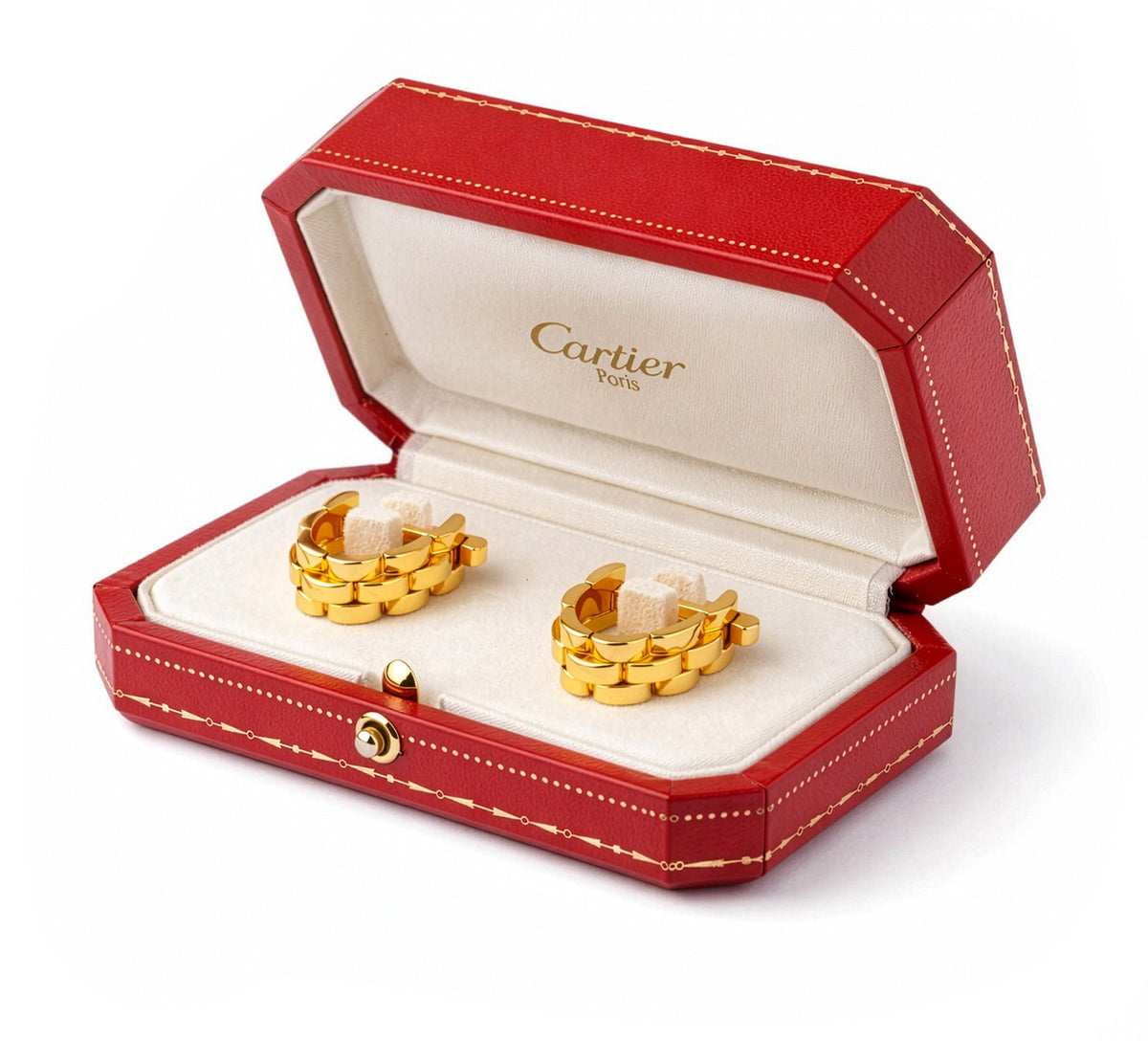
An original Cartier box can significantly enhance the presentation and collectability of a piece, especially when the box is appropriate to the jewel’s period.
Cartier packaging has changed over time, and an antique or vintage jewel should not automatically be expected to come with the same style of box used today.
Collectors should consider:
-
the age and style of the box
-
interior materials
-
typography and logo
-
dimensions
-
whether the fitted interior corresponds naturally to the jewel
-
wear consistent with the age of the jewelry
A fitted box can be particularly interesting because it may have been made specifically for the piece.
However, even a convincing period Cartier box does not authenticate the jewelry inside it.
Boxes can be exchanged, collected separately or paired with jewelry later.
Certificates and Cartier Documentation
More recent Cartier jewelry may be accompanied by certificates, guarantee documents, service records or other paperwork.
When such documents include identifying information, collectors should compare it carefully with the jewelry itself.
Look for consistency between:
-
serial numbers
-
reference numbers
-
model description
-
metal
-
gemstone information
-
size
-
purchase date
-
store or boutique information
A discrepancy does not necessarily mean that the jewel is not authentic, but it should be explained.
For example, a ring may have been resized after purchase, or a service document may refer only to a later repair.
Still, paperwork that describes a completely different model or carries an unrelated serial number should be treated with caution.
Original Receipts and Invoices
An original Cartier sales receipt or invoice can be especially useful because it may help establish:
-
approximate date of purchase
-
place of purchase
-
model or description
-
original owner
-
price at the time
-
serial or reference information
For historically important pieces, old invoices can sometimes provide valuable evidence linking a jewel to a particular owner or collection.
Receipts should nevertheless be examined critically.
The existence of an old Cartier invoice proves that Cartier sold something to someone at a particular time. The challenge is establishing that the surviving jewel is the same object described in the document.
The strongest documentation is therefore specific enough to connect directly to the piece being examined.
Service Records Can Be Valuable
Cartier service documents can also provide useful information.
A jewel that has returned to Cartier for repair, resizing, cleaning or other service may have paperwork that records identifying details.
These documents can help establish a chain of ownership and may document that the jewel was presented to or serviced by Cartier, depending on what the record itself states.
However, the exact meaning of a service record should not be overstated.
A repair document may confirm that Cartier handled the jewel, but collectors should still examine what work was performed and whether any components were replaced.
For older jewelry in particular, restoration can affect originality.
Provenance Can Add Historical Importance
Provenance refers to the documented history of ownership and can significantly influence the interest and value of an important Cartier jewel.
Strong provenance may include association with:
-
a known private collection
-
a prominent family
-
a historical figure
-
a documented estate
-
a museum exhibition
-
a major auction
-
a published Cartier reference
-
archival photographs
A jewel with an uninterrupted history from its original owner can be particularly compelling.
For rare pieces, provenance may also help confirm that a jewel existed at a particular point in time, especially when the piece appears in photographs, inventories or published records.
Auction History Can Provide Useful Evidence
Major auction houses have handled important Cartier jewelry for decades.
An earlier auction record can help establish provenance and may provide:
-
measurements
-
gemstone descriptions
-
signatures
-
hallmarks
-
photographs
-
previous ownership
-
publication history
However, an auction attribution should still be understood within context.
Research standards evolve, new information can emerge, and descriptions from older catalogs may not always reflect current scholarship.
Auction records are valuable evidence, but they should ideally be considered alongside the physical jewel and other documentation.
Published Cartier Jewelry
A piece that appears in a Cartier book, exhibition catalog, museum publication or archival photograph can carry particularly strong documentary value.
When comparing a jewel with a published example, look carefully at details rather than relying only on the overall resemblance.
Compare:
-
gemstone placement
-
proportions
-
clasp construction
-
engraving
-
dimensions
-
surface details
-
wear or repairs
-
unique identifying features
If the jewel has distinctive characteristics visible in an old photograph, those details may help establish that it is the same object.
Be Cautious With “Original Papers”
The phrase “with original papers” can sound reassuring, but collectors should ask exactly what those papers are.
There is a substantial difference between:
-
an original Cartier invoice identifying the jewel
-
a modern appraisal
-
an auction receipt
-
a service document
-
a previous dealer’s description
-
an unsigned handwritten note
Only some of these represent primary documentation from Cartier.
Others may still be useful for provenance, but they should not be described as Cartier documentation unless they were actually issued by Cartier.
Boxes and Papers Can Be Reproduced
Just as Cartier jewelry itself is copied, packaging and documentation can also be reproduced.
Counterfeit boxes, certificates and receipts exist, particularly for widely copied modern collections.
For this reason, a complete-looking presentation should never cause a collector to stop examining the jewel itself.
A counterfeit piece accompanied by convincing packaging is still counterfeit.
The same fundamental rule applies: the physical evidence of the jewel should support the attribution through its construction, materials, markings, proportions and craftsmanship.
Documentation should strengthen that evidence, not replace it.
The Absence of a Box Does Not Make a Vintage Piece Less Authentic
Many genuine antique and vintage Cartier jewels no longer retain their original boxes or papers.
Jewelry survives because it was worn, inherited, sold, repaired and passed between generations. Packaging was often discarded long before collectors began to place significant value on it.
For this reason, the absence of original documentation should not automatically count against an older Cartier piece.
It may affect collectability or value, particularly if two otherwise comparable jewels are being considered, but it does not determine authenticity.
Build the History of the Jewel
When evaluating an important Cartier piece, try to reconstruct as much of its history as possible.
Ask:
-
Where did the jewel come from?
-
How long was it in the previous collection?
-
Is there an earlier invoice or auction record?
-
Has it appeared in publications?
-
Are there old photographs showing the piece?
-
Has Cartier serviced it?
-
Are there records of repairs or alterations?
-
Does the documentation correspond with the physical jewel?
Individually, each answer may offer only a small clue.
Together, they can create a compelling chain of evidence.
For rare vintage Cartier jewelry, provenance can transform a beautiful signed jewel into a historically documented object with a much richer story.

9. Common Red Flags and Signs That Require Further Investigation
No single irregularity automatically proves that a Cartier jewel is not authentic. Antique and vintage jewelry can be worn, repaired, resized, polished or altered, and these changes can affect signatures, hallmarks and construction.
However, certain inconsistencies should encourage a much closer examination.
The most important principle is simple: the entire jewel should make sense as one object.
If the signature suggests one period, the hallmarks another, the construction a third and the gemstones a fourth, the attribution becomes increasingly difficult to support.
A Signature That Looks Too Convenient
Because Cartier is one of the most copied names in jewelry, the presence of a signature should never create false confidence.
Be cautious when the Cartier name appears:
-
unusually large
-
awkwardly positioned
-
poorly aligned
-
significantly sharper than surrounding marks
-
engraved over visible wear
-
inconsistent with the apparent period
-
in a location that does not make sense for the design
An older jewel may have a worn or irregular signature, particularly if it was hand-applied. That can be entirely appropriate.
What deserves attention is a signature that appears disconnected from the rest of the piece.
Marks From Different Periods
One of the clearest reasons for further investigation is a combination of markings that do not belong together historically.
For example, a jewel presented as an early 20th-century Cartier piece may raise questions if it carries engraving conventions or fineness marks associated with much later production.
Likewise, a supposedly French piece should be examined carefully if the national hallmarks, maker’s marks or metal indications do not correspond with the claimed origin.
The marks do not all need to be perfectly preserved, but they should be historically compatible.
Poor Construction Behind an Impressive Front
Copies often concentrate attention on the most visible part of a jewel.
The front may appear convincing, while the reverse reveals:
-
rough soldering
-
unfinished surfaces
-
crude hinges
-
poorly fitted clasps
-
irregular stone settings
-
weak articulation
-
careless assembly
This is why examining the back and interior of a jewel is so important.
Cartier’s reputation was built on more than visual impact. The engineering and finishing should generally support the sophistication of the design.
Inconsistent Gemstones or Setting Work
A gemstone that differs from the surrounding group does not automatically indicate a problem. Stones can be replaced during the lifetime of a jewel.
However, unexplained inconsistencies should be investigated.
Look for:
-
noticeably different diamond cuts
-
one colored stone with a significantly different tone
-
mismatched heights within a symmetrical setting
-
unusually crude prongs around one section
-
evidence that several stones were recently reset
-
setting techniques inconsistent with the proposed date
The key question is whether the difference can reasonably be explained by repair or later restoration.
A Serial Number That Appears to Prove Too Much
A serial number can look convincing because it gives the impression of precision.
But counterfeiters can copy numbers from genuine Cartier pieces.
Be cautious of claims such as:
-
“the serial number proves it is authentic”
-
“this number dates the jewel exactly”
-
“the number appears online, therefore the piece is genuine”
A serial number should support the rest of the evidence, not replace it.
If the number appears correct but the craftsmanship, proportions or hallmarks are wrong, the number should not override those concerns.
The Design Is Almost Right
Copies of famous Cartier models often succeed at reproducing the general idea while missing the finer proportions.
This can be especially relevant with highly recognizable modern designs.
Look for differences in:
-
width
-
thickness
-
spacing
-
screw placement
-
motif size
-
clasp design
-
curvature
-
component alignment
-
relationship between the jewel and the body
A piece may look “Cartier-like” from a distance while feeling noticeably different when compared directly with a documented example.
Unexpectedly Low Quality Materials
The materials should make sense for the design and period.
A jewel represented as an important Cartier piece deserves further investigation if it contains obviously poor-quality components that appear original to the construction.
This does not mean every Cartier jewel must contain exceptional gemstones.
Cartier has created important designs where artistic conception matters more than gemstone value.
The issue is not price—it is coherence.
Materials, design and workmanship should feel appropriate to the object.
Excessive Polishing
Repeated polishing can soften or erase important evidence.
On older jewelry, excessive polishing may:
-
weaken hallmarks
-
blur signatures
-
soften engraved details
-
reduce texture
-
alter edges
-
remove evidence of original finishing
A heavily polished genuine Cartier jewel can still be authentic, but the loss of information makes evaluation more difficult.
Collectors should therefore distinguish between normal wear and aggressive restoration.
Replacement Components
Later replacement components are common in antique jewelry.
Possible replacements include:
-
clasps
-
earring backs
-
pin stems
-
safety catches
-
chain sections
-
screws
-
gemstones
A replacement does not necessarily invalidate the jewel.
The important question is whether the replacement is being represented honestly and whether the core object remains original.
A vintage Cartier brooch with a later pin fitting is fundamentally different from a non-Cartier brooch to which a signed Cartier component has been attached.
A Box That Is Better Than the Jewel
A beautiful Cartier box can create a powerful psychological effect.
Collectors should resist it.
If the packaging looks convincing but the jewel itself raises questions, the box should not influence the conclusion.
Boxes can be purchased separately, exchanged between pieces or reproduced.
The same applies to certificates and receipts.
Documentation is valuable only when it corresponds convincingly with the jewel.
A Story Without Supporting Evidence
Provenance can be extremely important, but undocumented stories should be treated cautiously.
Statements such as:
-
“it belonged to a famous family”
-
“it came directly from Cartier”
-
“it was purchased in Paris in the 1920s”
-
“it belonged to a celebrity”
may be true, but they require evidence if they are being used to support authenticity or value.
Useful evidence can include invoices, old photographs, auction records, estate documentation, correspondence or published references.
A compelling story is not the same as documented provenance.
Beware of Absolute Claims Based on One Feature
Claims such as the following should always be approached carefully:
“The signature is correct, so it is authentic.”
“It has an eagle’s head hallmark, so it must be Cartier.”
“The serial number checks out.”
“It came in a Cartier box.”
“The design appears in a Cartier catalog.”
Each of these details can be useful.
None of them, alone, is enough.
Condition Should Match the Claimed Age
A jewel can be beautifully preserved, but its condition should still be plausible.
A supposedly century-old piece that shows significant wear everywhere except around a perfectly sharp modern-looking signature deserves attention.
Conversely, a very early jewel can survive in exceptional condition if it was rarely worn and carefully stored.
Condition should therefore be assessed logically, not through rigid rules.
Be Careful With “Attributed to Cartier”
In the jewelry market, terms such as “Cartier,” “signed Cartier,” “attributed to Cartier,” “in the style of Cartier” and “Cartier-style” have very different meanings.
A piece described as “in the style of Cartier” is not being represented as Cartier.
“Attributed to Cartier” generally indicates that authorship is believed possible but has not been firmly established.
Collectors should pay close attention to this language, particularly in auction catalogs, dealer descriptions and historical records.
When Several Red Flags Appear Together
One inconsistency may have a reasonable explanation.
Several unrelated inconsistencies are more concerning.
For example:
-
a signature inconsistent with the period
-
hallmarks that do not correspond with the claimed origin
-
weak construction
-
modern-looking stones in an allegedly untouched antique jewel
-
undocumented provenance
-
a serial number presented as the only proof of authenticity
Taken together, these issues should significantly reduce confidence in the attribution. The strongest Cartier pieces usually present the opposite experience. The more closely they are examined, the more the details begin to support one another. That consistency is one of the most important signs a collector can look for.

10. Putting Everything Together: How Cartier Jewelry Should Be Evaluated
Identifying Cartier jewelry is rarely about finding one decisive mark. The strongest assessment comes from determining whether the design, craftsmanship, signatures, hallmarks, numbers, materials and history of the jewel all support the same conclusion.
A Cartier signature may appear convincing, but it should never outweigh contradictions elsewhere in the piece. Likewise, an appropriate hallmark, serial number or original box becomes meaningful only when it fits naturally within the larger physical and historical evidence.
Start With the Jewel Itself
Before concentrating on engravings, examine the object as a whole.
Consider its proportions, balance, construction, finishing, gemstone setting and mechanical elements. Clasps, hinges, links and reverse surfaces can be especially revealing because they often show how carefully the jewel was engineered.
The quality should make sense for Cartier and for the particular type and period of jewelry being examined.
This does not mean that every Cartier jewel must be heavy, elaborate or technically complex. Some of the Maison’s most successful designs rely on apparent simplicity. What matters is whether that simplicity has been executed with precision.
Read the Marks in Context
Once the construction has been considered, examine the Cartier signature together with the hallmarks, maker’s marks and any serial, inventory or reference numbers.
Ask whether they belong naturally together.
A signature should be appropriate to the period and type of jewel. Precious-metal marks should correspond with the material and country of manufacture. Numbers should appear consistent with the category and age of the piece.
With antique and vintage Cartier jewelry, modern expectations can be misleading. Older jewels may carry city signatures, workshop marks or numbering conventions that differ considerably from contemporary Cartier production.
This is why no individual marking should be interpreted without historical context.
Establish Whether the Period Makes Sense
Period consistency is one of the most useful tests when evaluating vintage Cartier jewelry.
Consider the relationship between:
- the signature
- hallmarks and maker’s marks
- metal
- gemstone cuts
- setting techniques
- clasp and hinge construction
- proportions
- decorative style
- numbering
Do these elements plausibly belong together?
A jewel attributed to the 1920s, for example, should not contain unexplained features that clearly belong to much later manufacturing practices.
At the same time, restorations and replacements must be considered. An older jewel may contain a later gemstone, replacement clasp or repaired fitting without changing the authorship of the original object.
The objective is to distinguish later intervention from fundamental historical inconsistency.
Compare With Documented Cartier Jewelry
Comparison with known examples can provide valuable context.
Useful sources may include museum collections, major auction archives, exhibition catalogs, historical advertisements, scholarly publications and documented Cartier jewelry from the same period.
The goal is not necessarily to locate an identical piece.
Instead, compare the details:
- proportions
- construction
- gemstone arrangements
- clasps and mechanisms
- signatures
- finishing
- design vocabulary
A jewel that belongs convincingly within Cartier’s known work should generally become more understandable—not less—the more closely it is compared with documented examples.
Let Documentation Support the Jewel
Original invoices, certificates, service records, period boxes and established provenance can strengthen an attribution, particularly for important vintage jewelry.
But documentation should support what the physical object already suggests.
Check whether identifying numbers correspond, whether the description matches the jewel and whether the age of the packaging or paperwork is appropriate.
A Cartier box by itself proves very little about the jewelry placed inside it. Similarly, an old receipt is most valuable when it can be connected specifically to the surviving jewel.
For significant historical pieces, a documented chain of ownership, publication history or earlier auction record can add another important layer of evidence.
Account for Repairs and Alterations
Antique and vintage Cartier jewelry may have undergone decades of wear and intervention.
Possible changes include:
- resizing
- replacement gemstones
- altered earring fittings
- later clasps
- repaired hinges
- restored enamel
- shortened or extended sections
- polishing that has weakened original marks
These changes should be identified whenever possible because they may affect originality and value.
However, an altered authentic Cartier jewel is not the same as a non-Cartier jewel that has later been given a Cartier signature or signed component.
That distinction can be critical.
When Specialist Examination Is Appropriate
For rare, historically important or particularly valuable Cartier jewelry, additional specialist examination may be appropriate.
Depending on the piece, this can include consultation with an experienced signed-jewelry specialist, gemologist, specialist auction department, gemstone laboratory or archival researcher.
Different specialists answer different questions. A laboratory may identify the origin or treatment of a gemstone, for example, but that does not establish who manufactured the mounting.
Likewise, a convincing Cartier signature does not determine the identity or history of the gemstones.
The strongest assessment therefore comes from combining the relevant areas of expertise.
Consistency Is the Final Test
Ultimately, the most convincing Cartier jewelry presents a coherent picture.
The signature supports the period.
The hallmarks support the metal and origin.
The craftsmanship supports the attribution.
The gemstone cuts and settings support the date.
The proportions support the design.
The documentation, when present, supports the object.
No single feature needs to carry the entire argument.
When these independent details reinforce one another, the attribution becomes considerably stronger. For collectors, learning to recognize that consistency is one of the most useful skills in evaluating Cartier jewelry.
Final Thoughts: Authentic Cartier Is Identified Through Consistency, Not a Single Mark
The enduring appeal of Cartier jewelry comes from far more than a famous signature. Across generations, the Maison has combined design, technical innovation, exceptional craftsmanship and a distinctive understanding of proportion to create jewels that remain recognizable long after the periods in which they were made.
For collectors, learning how to identify Cartier jewelry means learning to look beyond the name engraved on the piece.
A signature can be copied. A serial number can be reproduced. A Cartier box can be paired with an unrelated jewel. Even an iconic design can be imitated with surprising accuracy.
What is far more difficult to reproduce is the complete consistency of a genuine jewel.
The signature should make sense with the period. The hallmarks should correspond with the metal and origin. The construction should reflect the expected quality. Gemstones and setting techniques should be appropriate to the design. Proportions, mechanisms and finishing should work together, while provenance and documentation—when available—should reinforce rather than contradict the physical evidence.
This approach is particularly important with antique and vintage Cartier jewelry, where markings and manufacturing methods may differ considerably from those encountered on modern pieces.
For rare or valuable examples, careful research, comparison with documented Cartier jewelry and appropriate specialist expertise remain essential.
Ultimately, identifying Cartier is not about finding one perfect mark. It is about understanding the jewel as a complete object—its craftsmanship, history, materials, design and the evidence it has carried with it through time.
This guide is intended for educational purposes and should not be considered a substitute for professional examination of an individual jewel.
Frequently Asked Questions About Identifying Cartier Jewelry
How can you tell if Cartier jewelry is authentic?
Authentic Cartier jewelry should be evaluated through several characteristics rather than a single mark. Examine the Cartier signature, precious-metal hallmarks, serial or reference numbers, construction, gemstone setting, proportions, finishing and any available provenance or documentation. These elements should be consistent with one another and appropriate for the period of the jewel.
Does all Cartier jewelry have a serial number?
No. Not every Cartier jewel, particularly antique and vintage examples, should be expected to carry the type of serial number seen on contemporary Cartier jewelry. Older pieces may instead have inventory numbers, workshop marks, national assay marks or other identifying numbers. Marks may also have been affected by resizing, polishing or repair.
Can you authenticate Cartier jewelry by its serial number?
A serial number alone is not sufficient to authenticate Cartier jewelry. Numbers can be copied from genuine pieces and reproduced on counterfeits. The serial number should be considered together with the signature, hallmarks, construction, design, materials and period characteristics of the jewel.
What hallmarks are found on Cartier jewelry?
Cartier jewelry can carry different hallmarks depending on its age, precious metal and country of manufacture. French pieces may carry official French assay marks as well as maker’s or workshop marks. Modern jewelry may also display numerical fineness marks such as 750 for 18K gold or 950 for platinum. The exact combination varies by piece and period.
What does Cartier Paris mean on jewelry?
A Cartier Paris signature can be found on certain historical pieces associated with the Maison’s Paris operations. Vintage Cartier jewelry may also be associated with the historic London or New York branches. A city signature can help provide historical context, but it should never be considered proof of authenticity by itself.
Can vintage Cartier signatures look different from modern Cartier signatures?
Yes. Cartier signatures and marking practices evolved over time. An antique or vintage Cartier jewel should not necessarily be expected to have the same typography, numbering or arrangement of marks found on contemporary jewelry. Period knowledge is therefore particularly important when evaluating older pieces.
Does Cartier jewelry always come with a certificate or original box?
No. Many genuine vintage and antique Cartier pieces have lost their original boxes, invoices and documentation over decades of ownership. Original packaging and paperwork can strengthen provenance and collectability, but their absence does not mean that a jewel is not authentic.
Likewise, the presence of a Cartier box or certificate does not authenticate a jewel by itself.
Can an authentic Cartier jewel have replacement stones or later repairs?
Yes. Antique and vintage Cartier jewelry may have been repaired, resized, restored or fitted with replacement gemstones during its lifetime. These changes do not automatically make the original jewel inauthentic, although they may affect originality, condition and value.
How can you date vintage Cartier jewelry?
Dating vintage Cartier jewelry generally requires several clues to be considered together. These can include the signature, city designation, hallmarks, maker’s marks, numbers, metal, gemstone cuts, setting techniques, construction, design style and comparison with documented Cartier examples.
There is no single universal serial-number formula that accurately dates every Cartier jewel.
What is the safest way to evaluate an important Cartier jewel?
For a rare or valuable Cartier piece, combine careful physical examination with research into documented examples and, when appropriate, specialist expertise. Depending on the jewel, this may involve a signed-jewelry specialist, gemologist, gemstone laboratory, auction specialist or historical and archival research. No single feature should replace examination of the jewel as a whole.