The History of Hallmarks in Europe – Part I
In the realm of antique silver, are historical fingerprints that go beyond ornamental impressions.
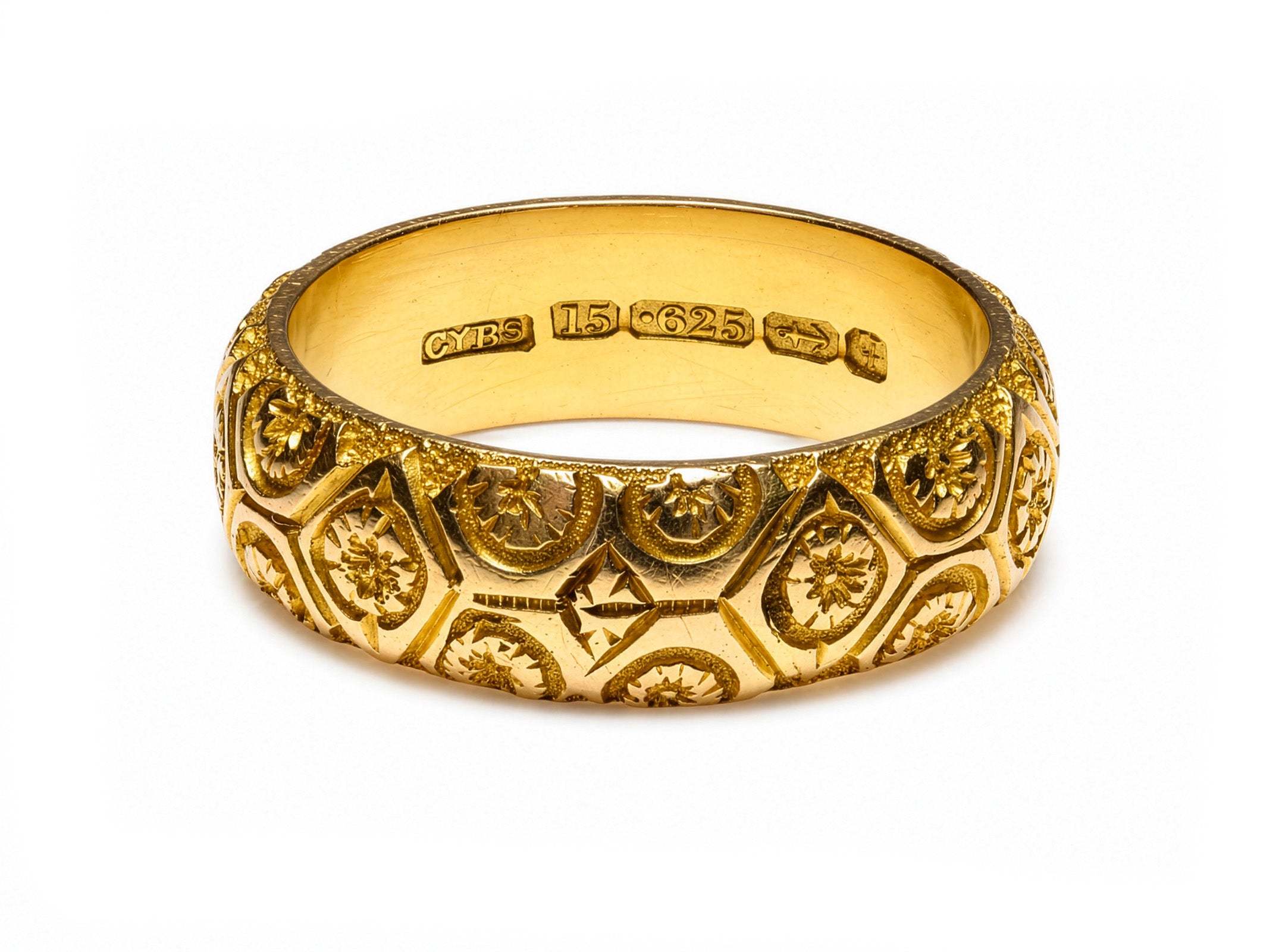
The purpose of hallmarks on silver goods is to safeguard the purchaser. They ensure that each piece's precious metal content satisfies all applicable legal standards.
However, recognizing early European silver can be a difficult undertaking for jewelry enthusiasts, scholars, and collectors alike.

Silver monteith bowl, 1780, Augsburg, Source Wikimedia Commons, author Silar
Today, the most crucial and essential information for identifying the location and date of production comes from the hallmarks on antique silver items, which are also invaluable tools.
In his book Silver Marks of the World, Jan Divis compiled a brief history of hallmarks that begins with the observer's perception of how the marks are arranged based on the subjects they depict, allowing the reader to navigate the book quickly and easily.
The text accompanying the individual mark drawings informs the reader about the town and country where the hallmark was used, the date it was used, and, whenever possible, the purity guaranteed by the mark.

The arrangement of the marks follows this pattern: alphabetical letters (1–669), numerals (670–695), human figures (696–887), mammals (888–1140), birds (1141–1302), other animals (1303–1359), plants (1360–1482), heavy bodies (1483–1517), architecture (1518–1591), objects (1592–1816), and emblems (1817–1994).
Whether these were state entities, guilds, or towns, the most trustworthy source of information about the goods’ age and place of origin is the markings imprinted by regulatory bodies.
Different nations and states around the world had different origins and histories of marking. According to Divis, this is clarified in the following concise summary of marking and hallmark laws provided by the nations and governments whose trademarks are featured in this book and whose silver goods deserve recognition.
A goldsmith was anyone who worked with precious metals, and in most nations, not even official decrees made a distinction between a goldsmith and a silversmith. This is important to keep in mind if a goldsmith's name appears in the book.
The primary focus of Divis’s book is on historical hallmarks because it is intended to be especially useful to those who appreciate antique silver. Because of this, the 1930s — the period between the two World Wars — represents the most recent date included in the selection of marks.

Hallmark for gold, Source: Chatsam via Wikimedia Commons
Let’s hit the road and explore how the history of European hallmarks was written. Therefore, we will review a series of events that took place in European countries and paved the way for the use of hallmarks.
Austria
Legislation pertaining to the assaying of precious metals was passed in 1366 by the Austrian princes Albrecht and Leopold. Two guild masters were appointed to test purity under the watchful eye of the mint master.
In 1659, work in 14-lot silver was permitted by Emperor Leopold I's patent.
Purity levels of 13 and 14 lots (known as the Augsburger and Wiener Probe) were permitted by Emperor Joseph I's patent in 1708.
Emperor Charles VI's patent in 1737 established a purity threshold of 15 lots.
1774: An Empress Maria Theresa patent first displayed the trademarks that had to be used.
1784: In this year, the Austrian government began regulating purity, but only in Vienna.
In Galicia, purity was regulated by the state in 1786.
In 1806, the Austro-Hungarian Empire adopted a single state marking system, excluding Hungary, Slovakia (which was under Hungarian sovereignty), and Transylvania.
1866: On August 1, new purity indications and hallmarks for silver, measured in thousandths instead of the previous lot system, entered into force. Today, Hungary also uses these standards. Purity values of 950, 900, 800, and 750/1000 were all acceptable.
1872: By modifying the marks currently in use, the letter indicating the location of the assay office was integrated into the purity mark. These marks remained in use until 1921, 1922, 1919, and 1937 in the Austrian Republic, Czechoslovakia, Yugoslavia, Hungary, and part of Poland.
1921: The hallmarks of the new Austrian Republic were established by the law of October 21.

Belgium
According to Divis, the use of date letters was clearly influenced by a decree issued by Maximilian in 1484 for his holdings in Flanders.
In his capacity as governor of the Netherlands, Archduke Philip the Handsome established rules for goldsmiths in Holland, Zeeland, and Friesland in 1501; on February 2, 1502, he published regulations for Antwerp and most likely for other places as well.
Emperor Charles V issued goldsmiths' regulations for the Netherlands in Brussels in 1551. These regulations covered the Grand Duchy of Luxembourg, the Kingdom of the Netherlands, and a portion of northern France (Artois).
The Netherlands joined the Spanish line of the Habsburgs in 1556. The existing hallmarking system remained in use.
In 1612, Governor Albrecht issued an order mandating the addition of a new hallmark to the town mark already in use.

Silver hallmarks on a piece struck between 1750 and 1763 in Mons, Belgium, Source Wikimedia Commons, Author Tournachon
France took control of the Austrian Netherlands in 1797. The French rulings of 1797 (19th Brumaire, Year VI) then became enforceable.
Although Belgium was part of the Kingdom of the Netherlands from 1815 to 1830, its territory was marked differently from the Netherlands.
1831: After the Kingdom of Belgium was established, a new hallmarking regulation based on the French model was issued. Hallmarking became mandatory.
The law of June 5, 1868, entered into force in 1869, allowing any level of purity and eliminating mandatory state regulation. Items with a purity of 800 and 900/1000, however, could still be tagged and submitted for assaying, as Divis mentioned in his book.
Both the assayers' personal marks and state purity symbols were introduced. The maker's mark was not required. These marks remained in use until January 1, 1942.
Bulgaria
Regarding the hallmarking of precious metal objects in Bulgaria in the past, nothing is known. The Turkish occupation, which lasted from 1393 to 1878 (and until 1881 in the southern part of the country), is clearly to blame for this.
According to Divis, the Turkish occupation, which lasted from 1393 to 1878 (and until 1881 in the southern part of the country), is clearly responsible for this lack of information.
Most likely, the Turkish system was used for hallmarking.
The law of March 1, 1907, entered into force in 1910, and items were stamped with the maker's mark and an official purity mark.
The permitted fineness standards were 500/1000, 950, 900, 850, and 750.