A Magician's Skill: Techniques Used By Carl Fabergé
A Russian jeweler and goldsmith, Peter Carl Gustavovich Fabergé was one of the sons of Gustav Fabergé, the founder of the illustrious House of Fabergé.
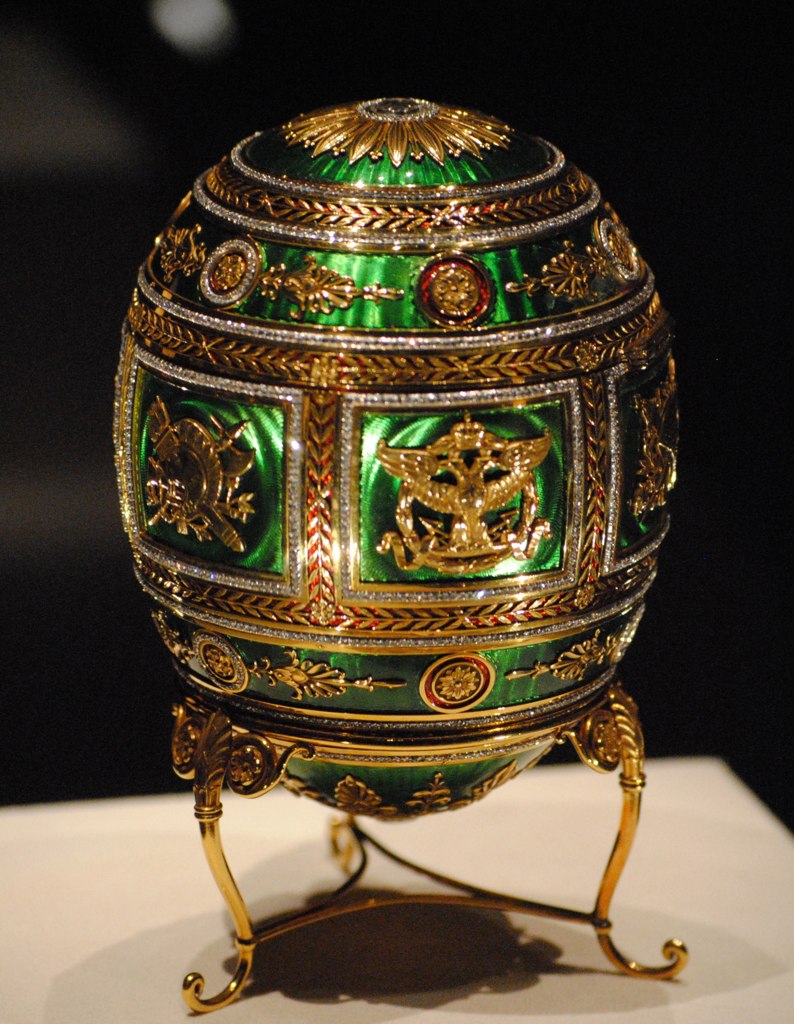
Fabergé is most known for his Fabergé eggs, which are designed to resemble real Easter eggs but are made of precious metals and gemstones instead of more commonplace materials.
The life of Carl Fabergé, born in 1846 and deceased in 1920, was complex, and the path he chose to become a highly regarded and world-renowned jeweler was not an easy one.

Pierre-Karl Fabergé, Source, http://en.wikipedia.org/wiki/File:Karl_Gustavovich_Faberge.jpg via Wikimedia Commons, User, Jack1956
Fabergé, who was renowned for his inventive designs, elaborate detailing, and use of color, was not only a craftsman but also an artist who contributed a distinct perspective to jewelry making.
He and his studio produced works of extraordinary quality and artistry using a variety of methods, such as enameling, gem setting, and metalwork.
Fabergé's reputation extended beyond Russia, garnering praise and support from affluent individuals, royalty, and aristocracy all over the world.
Fabergé's Techniques
An important chapter in Carl Fabergé's journey is the techniques he used to create some of the most famous and complex jewelry the world has ever seen.
As Carl Fabergé studied the Hermitage's treasures, he became acquainted with many of the ornamental personal items that had been popular in the previous century: elaborate handles for umbrellas, parasols, or walking sticks; small boxes or bottles to hold the pulverized tobacco known as snuff; boxes to store and serve candy or bonbons; and small, portable notebooks known as agendas.

Fabergé Egg
These items were created by Fabergé artisans using methods that had been employed for a very long time. They were made of gold and gilded silver, covered in enamels of exquisite colors, and set with cabochons, which are rounded colored precious stones, or rose-cut diamonds, which are tiny diamonds cut to a point, writes Geza von Habsburg in his book First Impressions: Carl Fabergé.
In the seventeenth century, the craft of translucent enameling was highly valued. It involved covering a metal surface with multiple layers of a liquid, glass-like material, and then "firing," or baking, the item in a kiln after each enamel coat.
 An antique gold and diamond enamel powder box available at DSF Antique Jewelry
In order to prevent the previous coat from melting, each subsequent firing was carefully controlled to occur at a lower temperature.
Similar to the multiple layers of paint on high-end cars, up to six enamel coatings were added, each of which enhanced the piece's sheen and color depth. Only a few hues were used in the eighteenth century, mostly dark or royal blue, pink, crimson red, orange, and green.
White, black, pale blue, purple, and yellow were less common. Through his color experiments, Fabergé created and progressively introduced more than 140 distinct shades. The most uncommon and prized of these was oyster, a white enamel with pink overtones that shimmers and resembles a mother-of-pearl shell.

Fabergé Egg
The light caused the oyster enamels to shift hue. To give the enamels their distinctive glossy quality, Fabergé's items were polished and buffed using a wooden wheel and the smooth-grained leather of chamois goatskin after enameling, according to von Habsburg.
Fabergé's enamels were of legendary quality, and his principal enameler, N. A. Petrov, was renowned for his work. Foreign artisans frequently came to St. Petersburg in an attempt to learn the craft's secrets. However, since no rival could replicate it, it must have been a well-kept secret.

Tea Service, Exhibit in the Cleveland Museum of Art, Cleveland, Ohio, USA, Source Wikimedia Commons, Author Daderot
Gold
Using methods taken from the eighteenth century, Fabergé also experimented with gold of various hues.
White (with nickel or palladium), green (with silver), and crimson (produced by adding copper to molten gold) were previously attained, in addition to natural yellow gold. In the eighteenth century, these four fundamental gold hues were referred to as ors à quatre couleurs.

The Catherine the Great Egg made by Fabergé, Source, P1040263, Uploaded by franco_aq, via Wikimedia Commons
Fabergé further created means of producing subtle tones of orange, gray, and blue gold. Reinventing traditional processes for the use of gold in creating Fabergé boxes in particular meant that the workshop had to purchase new machines.
Von Habsburg wrote that these included the cour à guillocher, a machine that could carve any chosen background design—for example, waves, lozenges, or pellets—on a sheet of metal. Samorodok was another method of surface treatment that mimicked the appearance of gold nuggets. It was accomplished by submerging red-hot metal in water.
Invisible soldering techniques were also refined by Fabergé’s masters, enabling the juxtaposition of areas of different colored silver or gold without any obvious seams.
Fabergé’s gold boxes were all made so that the hinges were not visible, allowing the overall design to conceal each box’s practical purpose.

Fabergé Gold Cigarette Box, The India Early Minshall Collection, https://clevelandart.org/art/1966.470, via Wikimedia Commons,
Fabergé distinguished himself from all of his rivals with this precision and inventiveness.
The Craftsmen
As his business expanded, he hired an increasing number of craftsmen, many of whom were from Scandinavia, especially Finland, as mentioned by von Habsburg.
It is reasonable to conclude that Finland must have known that hardworking children with dexterity were guaranteed jobs in St. Petersburg. Workshops were set up one after another.
Fabergé’s headquarters and sales room at numbers 16/18 were just a few houses away from the head workmaster, who oversaw all of the workshops at 11 Bolshaya Morskaya. August Holmström was in charge of the primary jewelry workshop.
There were goldwork and enameling workshops all across the city, as well as smaller workshops making smaller pieces of jewelry and trinkets. In 1880, Victor Aame, a native of Tampere, Finland, joined the company and became an expert in bell handles and picture frames.
Anders Nevalainen, a native of Pielisjärvi, Finland, created enameled items and silver-mounted wood or stone artifacts.
Additional small workshops were run by Wilhelm Reimer of Pärnu, Latvia, who created small items in gold and enamel; Alfred Thielemann, a German-born craftsman who specialized in small jewels and trinkets; Fedor Afanassiev, who created miniature Easter eggs, frames, and small objects; and Vladimir Soloviev, who focused on enamels. Fabergé’s main source for large silver items was Julius Rappoport of Berlin, whose silver workshop was located at 65 Ekaterinski Canal.
According to von Habsburg, semiprecious stone items were originally purchased from other artisans, such as the German Carl Woerffel’s stone-carving business. These stone artifacts were meant to be mounted in gold or silver, but their quality was far from satisfactory, and many of them required costly recarving.
In order to oversee the stone carving himself, Fabergé later purchased Woerffel’s factory. Fabergé’s stone carvers Peter Kremlyev and Peter Derbyshev were well-known throughout Russia, much like the company’s enameler Petrov.
Some of the delicate animals and colorful stone figures that we will read more about later were carved by them.

Statue of elephants, lapis lazuli with silver, gold, enamel, ivory and diamonds, c. 1908-1917, Carl Fabergé workshop, American Museum of Natural History, Source: Wikimedia Commons, Author: Hiart
The majority of Fabergé’s managers worked exclusively under contract with him, purchasing their workshops, tools, and raw materials from him at no cost and most likely receiving payment from his profits rather than a salary.
Other craftsmen in St. Petersburg worked part-time for Fabergé, providing him with cigarette cases, which were among the most sought-after items.
Brothers and Sons
Also, as mentioned by von Habsburg in his book, over time Carl, his brother Agathon, and eventually Carl’s four sons focused on designing and sketching, leaving the head workmaster and his artisans to handle all aspects of manufacturing. Regretfully, Agathon Fabergé passed away in 1895 at the young age of thirty-three.
If Carl’s oldest son, Eugene, who was born in 1872, had not joined the company as a designer, his disappearance might have been disastrous. Eugene attended St. Peter’s School in St. Petersburg, as did his brothers Agathon (1876), Alexander (1877), and Nicholas (1884).
All four of the brothers were exceptionally talented designers who eventually worked for their father after finishing school.
Agathon was to become the firm’s chief gemologist (specialist in precious stones); Alexander, trained at the renowned Baron Stieglitz School of Applied Arts in St. Petersburg, was a master painter and modeler; the youngest, Nicholas, who later oversaw the firm’s London branch, was also a talented painter; and Eugene, who learned his craft at the art school in Hanau, Germany, became his father’s indispensable right hand.
Another genius who contributed to this unusual team of designers was the Swiss Franz Birbaum, who was a continuous source of inspiration, particularly while the four Fabergé sons were still young.
The group of designers was responsible for all creative concepts and innovations. Initially, preliminary drawings were created and discussed. These were often based on the requests of the client. The meticulously prepared watercolor drawings were then created and sent for approval following a meeting with the head workmaster.
After being approved, the head workmaster delivered these sketches, which were created at the scale of the final piece, to one of the contracted workshops. Some items required multiple workshops to work together.
Thus, the gold workers would pass an Imperial cigarette case to the stone setters, who would then pass it on to the polishers, who would finally pass it on to the miniature painters. The head workmaster would personally oversee the production of a particularly significant commission, wrote von Habsburg.
Insistence on Excellence
As an indication of his approval, his initials or symbol, known as a hallmark, would be engraved on a piece. Carl Fabergé was a strict perfectionist who insisted on maintaining quality control over every finished product that was sold in his stores.
Every completed project had to be presented to this exacting grandfather, whose keen eyes could not overlook even the smallest imperfection. Fabergé, who is typically characterized as a kind and mild-mannered gentleman, turned into a harsh judge if he was not satisfied.
As he sat in his office, watching over the company’s fortunes, he would look at a piece and, if he did not like it, slam a hammer down on it, breaking it to bits. The firm’s reputation was built on Fabergé’s insistence on excellence.

Twelve Monogram Egg,Hillwood Estate, Museum & Gardens Collection, Source P1040260 via Wikimedia Commons, uploded by Fringio, Author ctj71081
Two of Fabergé’s head workmasters, who were assigned to oversee the company’s manufacturing, have previously been briefly introduced. Erik Kollin, an ingenious goldsmith who replicated ancient artifacts, was the first.
The second was the creative and exceptionally talented Michael Perchin, a commanding presence with an opulent black beard. The finest items in the company’s history were overseen and created by Perchin, who had acquired his craft from rural artisans.
Also, as von Habsburg noted, between 1885 and 1903, he worked alongside Carl and Agathon Fabergé to develop all of the most recent technological innovations. He also introduced novelties that had never been seen in Russia before, such as enameled items, floral arrangements and animal carvings made from semiprecious stones, and many of the well-known Imperial Easter eggs.
Originality and Innovation
Henrik Wigström, a Finn from Tammisaari and Perchin’s pupil, was Fabergé’s final chief workmaster. He entered the company as a journeyman at the age of twenty-two in 1884 and managed all the workshops from 1903 until 1917, when Perchin passed away.
The company grew at its fastest rate during this time. Fabergé’s reputation was built on the foundations of originality and innovation, as well as his focus on superior craftsmanship.
Fabergé asserted in a brochure he distributed to his Russian customers that fresh concepts and products were created annually. Everything that was left over from the previous year’s production was melted down, since it was deemed outdated.
Even if this assertion was somewhat overstated, Fabergé was making a significant point. He considered his company to be a trailblazer, with the responsibility of continuous improvement. For instance, his enamel colors—140 of which were developed over time—had a noticeable influence on fashion.
Before selecting their next ball gown, the women of St. Petersburg society could be seen eagerly anticipating the release of a new Fabergé color: raspberry pink one year, rich plum purple the next, and then delicate primrose yellow, according to von Habsburg.
A Magician’s Skill
Another key tenet of the company’s operations was that the value of an item from Fabergé was determined not only by its materials—gold and precious stones—but also by its artistic merit.
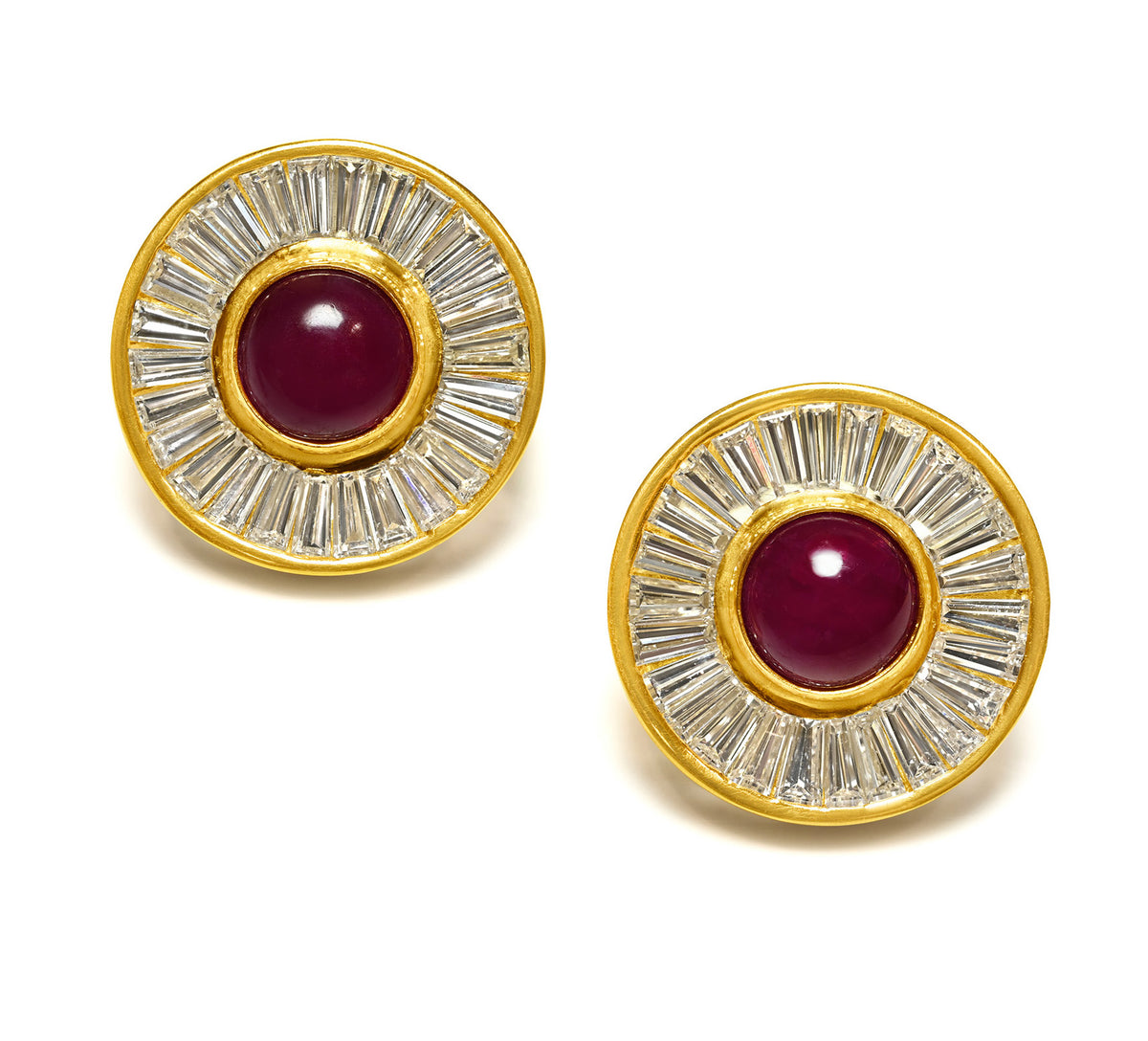
Fabergé rarely used expensive precious stones in his designs. Additionally, when a client required diamonds or colored stones, he preferred small diamond chips or small cabochon (rounded, not faceted) rubies and sapphires, which were of lower material value but chosen for their decorative effect.

The Caucasus Egg, Source: https://www.flickr.com/photos/14730981@N08/49570902218/ via Wikimedia Commons, Author James Petts
Fabergé enjoyed using everyday materials such as brick or stone, copper, steel, glass, ceramics, and wood. The way these basic elements were incorporated into an artistic design was what gave them their value. This does not mean that Fabergé’s creations were inexpensive. Not at all.
This magician’s skill was his ability to transform any commonplace object into a work of art, as if by the wave of a wand. He would adorn these items and turn them into objects of extraordinary beauty, such as a cigarette box, paper knife, or simple ashtray.
“This is the key to excellent style and design,” wrote von Habsburg. The selection at Fabergé’s was almost too extensive: gentlemen could purchase cane handles, lighters, cigarette or cigar boxes, and cigarette holders.
Fans, snuff bottles, perfume flasks, atomizers, powder boxes, opera glasses, parasol handles, hair combs, and knitting needles were among the items available to women. For his workplace, a businessman might choose letter openers, glue pots, stamp dispensers, stamp moisteners, blotting pads, and pen holders.
Electric bells, ashtrays, candlesticks, coffee and tea sets, and even full-sized furniture were available for the home. Additionally, a buyer could always discover playful trinkets and intriguing objects, such as clockwork items, animal carvings, and flowers created from precious stones, according to von Habsburg.
In summary, those looking for a unique gift were always inspired by Fabergé’s stores. At the beginning of the twentieth century, Fabergé’s reputation had become so well known in Russia that the name of his company became associated with anything of value.
Carl Fabergé left behind a legacy that is difficult to match in terms of the quality of jewelry he created, and it continues to fascinate collectors and enthusiasts to this day.