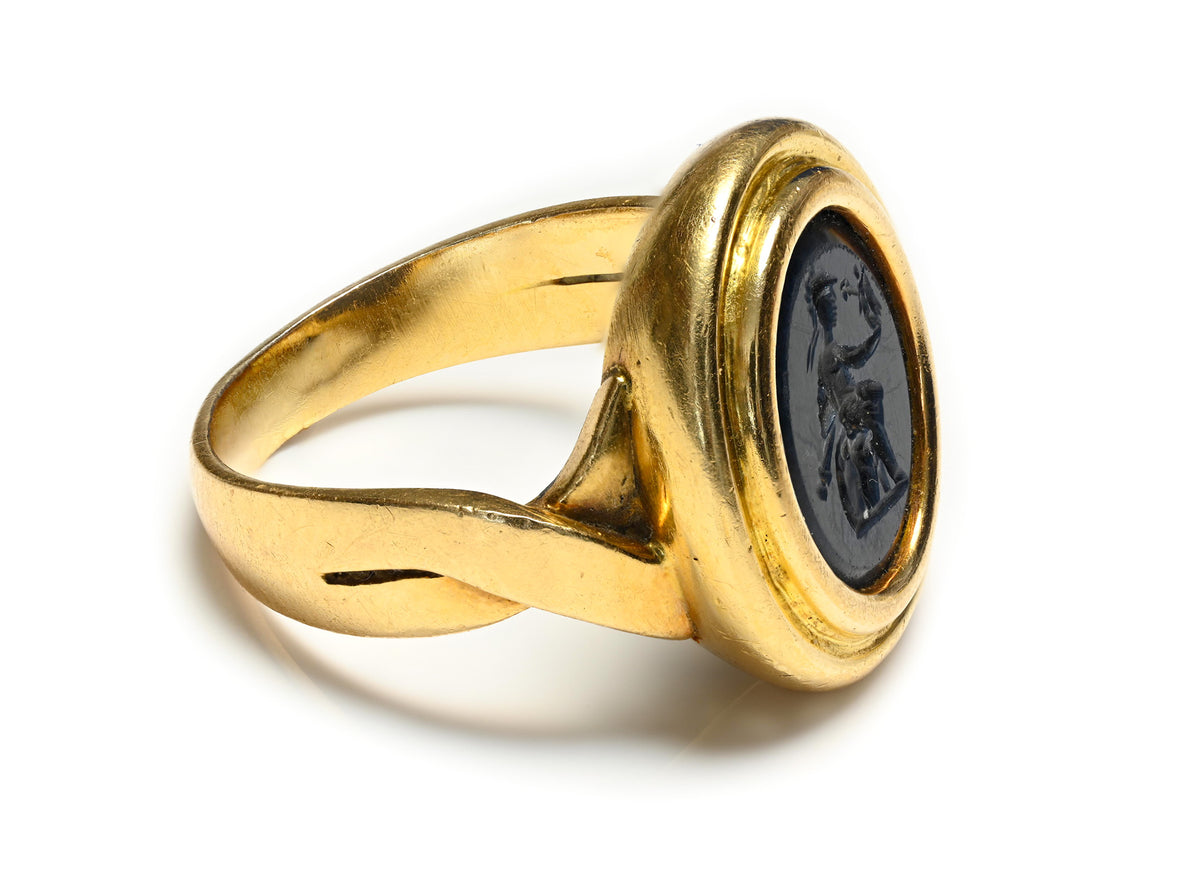
In the Middle Ages, when religion distanced those who had placed all their happiness in faith from worldly pleasures, goldsmithing offered noble and important opportunities to be used for the benefit of the church.
The fall of Rome and the rise of Byzantium marked a profound break in the conception of art and beauty. The Byzantine Empire transformed goldsmithing into an instrument of religious expression, as well as an affirmation of imperial splendor. As a modern historian rightly observed, at the beginning of the 6th century, goldsmithing was "the first industry of Constantinople." And rightly so.
The period stretching from the fall of the Roman Empire to the Renaissance is among the least interesting for those studying the history of jewelry.
Mind you, we are not referring to goldsmithing, which, already encouraged by Emperor Constantine, became one of the most important branches of the Byzantine artistic industry. A modern historian rightly observed that at the beginning of the 6th century, goldsmithing "was the leading industry in Constantinople."
Byzantine Ring, Source, Walters Art Museum, via Wikimedia Commons
Constantinople, or Byzantium, had a strong influence on the West, especially Italy. Those familiar with the history of Venice, Ravenna, and Sicily know that these were the most strongly influenced. Thus, while the East offered wonderful examples of splendor in goldsmithing, the West was not far behind.
Christian rings: discretion, symbolism, and excess
Historical sources on jewelry in the Middle Ages are very few and mostly refer to the rings that early Christians used to wear on their fingers, as all ancient peoples had done since the time of the apostles. These were rings made of ivory, bronze, gold, and silver, with or without precious stones. A considerable number of such rings have been found in Christian cemeteries.
Wedding ring, Byzantium, 7th c. AD, Louvre Museum,Former De Clercq Collection; gift of H. de Boisgelin, 1968, Wikimedia Commons, User: Jastrow
It is believed, moreover, that there were special rings for funerary use. However, this is not as certain as the fact that, among the early Christians, the use of rings degenerated so much into abuse that the Church Fathers had to intervene to condemn this waste. Probably all these rings were the work of Christian goldsmiths and jewellers. Goldsmithing and jewelry were among the professions that could be practiced by "believers."
The rings most commonly used by early Christians were simple ivory circles; the richest ones had symbols: the dove, the fish, the ship, the monogram. Unfortunately, information about Western jewelry in the early days of Christianity is very scarce; there is more information about Eastern jewelry.
Byzantine jewelry made abundant use of precious stones, especially pearls. A 6th-century saint in the catacombs of Rome has his head completely adorned with stones whose arrangement is very reminiscent of the hairstyle of Empress Theodora in a mosaic in San Vitale in Ravenna from the same period (6th century), as well as that of Emperor Justinian.

Marriage Ring with Scenes from the Life of Christ, Source, Walters Art Museum, via Wikimedia Commons
The Splendor of Byzantine Jewelry
The Byzantine jeweler, from what we can gather in particular from the study of mosaics and ancient manuscripts, was mainly involved in the manufacture of diadems, necklaces, and large and small brooches made of lead, tin, iron, copper, and gold, often enriched with pearls and rich transparent enamels—enamels for which Byzantium became famous and which it passed on to the West, where they were immediately preferred to opaque enamels. Like the Egyptian jeweler, the Byzantine craftsman did little work on earrings and probably produced many reliquaries used as talismans.
The Influence of Byzantium on the West
A very notable example of earrings from that time in the West is found in the mosaic in Santa Prassede in Rome, from the 9th century, where the patron saint of the church is depicted with two large circles on her ears, each adorned with three large pendants that were probably meant to represent large pear-shaped pearls.
Mosaic in Santa Prassede, Source https://www.flickr.com/photos/37979777@N08/54189213491 via Wikimedia Commons, Author bradhostetler
Moreover, in the aforementioned mosaic in San Vitale in Ravenna, there is not a single lady in Empress Theodora’s retinue who is not wearing earrings. It can thus be seen that in those times (the 6th century), it was common for high-ranking ladies to wear large pearls in their ears, as is still customary today.
The same can be said of the famous ivory diptych from Monza, where Galla Placidia has her neck and ears adorned with large pearls. And we are still in the 6th century.
Medallion of Galla Placidia, Bibliothèque nationale de France, Source Wikimedia Commons, Photographer Clio20
However, in another mosaic in Ravenna, the one in Sant’Apollinare Nuovo (6th century), in the procession of the Saints (a very well-known mosaic), the women do not wear earrings, although they are all adorned with pearls on their heads, necks, waists, and along the edges of their sumptuous garments.
Few names of Byzantine jewelers are known. The Middle Ages have preserved few names of jewelers. The reason is that those ancient craftsmen did not have the habit of signing their works.
In 1147, the women of Genoa were able to offer their jewelry to their country to support the war against the Moors in the Balearic Islands (something they repeated in 1301, moved by the eloquence of Brother Filippo of Savona); and in the 13th and 14th centuries, the revival of jewelry went hand in hand with the growth of luxury everywhere.
Giovanni Villani, a distinguished Florentine historian, reproached them in his famous Histories for “indulging in crowns and garlands of gold and silver and pearls and precious stones and other costly head ornaments.” At that time, the Byzantine custom of wearing stones and pearls continued to be fashionable everywhere.
Louandre refers to the widespread use in 13th-century France of pouches worn at the waist by both men and women. Women’s pouches (escarcelles, aumônières, bourses sarrazinoises) were more elegant than those of men, being made of velvet or silk, with gold and fine stone decorations.
The trend that Louandre notes in 13th- and 14th-century France can also be observed in Italy. Venice, one of the most sumptuous cities in medieval Italy, if not the most sumptuous, made great use of handbags decorated with pearls and other stones. Some argue that Venice began the wonderful art of glassmaking in the 13th century thanks to the manufacture of pearls. Although this has not been proven, it is true that in the 13th century Venice produced remarkable pearls and daisies, which formed an extensive and very profitable trade for the republic.
Bartolomeo Cecchetti (1823–1905), an Italian scholar and historian known for his studies on the history of Venice, especially during the Middle Ages and the Renaissance, reported that, perhaps in the 13th century, Domenico Miotti and Cristoforo Briani began working on “pearls imitating agates and other precious stones of the time, motivated by the profits they hoped to make from the barbarians, Marco Polo.”
“Whatever the era of these attempts, it is certain that the art of pearl-making and pearl-setting initially aimed to reproduce precious stones and natural pearls; hence the name ‘false pearls,’” he adds.
Since then, Venetian glassworkers have been either pearl makers and pearl cutters—and therefore also makers of glass stones—or makers of glass and crystal vessels and containers. And from that time (around the middle of the 13th century), the glassmakers of Murano became highly regarded, as Martino da Canale shows in his description of the artistic guilds that paraded on the occasion of Lorenzo Tiepolo’s accession to the ducal throne in July 1268.
Venice in the 13th century also distinguished itself in the art of jewelry setting and, as early as the 14th century, had specialists in certain luxury crafts. We find workers specializing in embroidered and pearl-adorned handbags; I can also add that in the 14th century, in Venice, jewelers seem to have been engaged almost exclusively in the manufacture of rings, just as today, in Milan, there are jewelers who only make chains.
Filigree and Coral Art in Medieval Italy
Genoa had been using coral for jewelry since ancient times and worked coral with the utmost care, distinguishing itself in this field. The abundance of coral in the Ligurian Sea is well known.
Genoa began to gain fame for filigree in the 13th century, which must have been imported from the East, as it was at the same time by the Venetians, who most likely passed it on to France and Germany, where around the 13th century it was known as opus veneticum. The art of making very thin threads of silver and gold was known to the peoples of the East, then to the Greeks and Latins, and experienced a revival in Byzantium, with Italy benefiting from the effects of this revival.
During the Renaissance, art had to change, but it did so gradually. The Italian courts of the 15th and 16th centuries made such extensive use of jewelry that it is believed that, for some courts of those centuries, jewelry constituted almost a reserve patrimony in case of need.

16th century silver gilt dress pin, Source https://finds.org.uk/database/ajax/download/id/13166 via Wikimedia Commons Photographer: Salisbury and South Wiltshire Museum, Katie Hinds
There are famous cases such as Ludovico il Moro, who suddenly pledged about 150,000 ducats in precious stones, for which he was offered half their value, and Innocent VIII, who gave the Medici a splendid tiara for 20,000 ducats. These facts alone could explain the extraordinary sums that Renaissance princes often spent on the purchase of admirable jewels. Florence was among the cities that gave the greatest impetus to the art of working with precious metals during this period.
Many of the greatest Tuscan architects, sculptors, and painters of the Renaissance began their careers in this art: Donatello, who decorated the Florentine Baptistery with bronze doors considered by Buonarroti to be worthy of Paradise; Brunelleschi; Luca della Robbia; Masolino da Panicale; Michelozzo Michelozzi; Domenico del Ghirlandaio; Sandro Botticelli; Lorenzo di Credi; Andrea del Sarto; Andrea del Verrocchio; Desiderio da Settignano; Baccio Bandinelli; Cecchino Salviati; Leone Leoni; and Giorgio Vasari. Goldsmithing was the starting point for all the great artists of Tuscany who, in their maturity, distinguished themselves in architecture, sculpture, or painting.
We say “Tuscany,” but the custom of training in metalworking before devoting oneself to the so-called major arts spread beyond Tuscany. The facts show, for example, that Vittore Camelio, Alessandro Leopardi, and Andrea Spinelli, Venetians, were goldsmiths and may have worked on jewelry before creating those grandiose sculptural works from which they drew their main fame.
In those days, it seemed almost a necessity for anyone who wished to devote himself to architecture, sculpture, or painting to begin by training in metalworking and stone setting. And the goldsmith and jeweler of the 15th and 16th centuries, considered the finest master for those who wanted to practice an art, was a true master of his profession.
However, even in that era, there were those who, having been trained in goldsmithing or jewelry, continued to work as goldsmiths or jewelers in their maturity. And how valuable they were! One of these was Maso Finiguerra, who distinguished himself exceptionally in the art of niello. I will also mention Amerigo degli Amerighi, whose enamel works are still extremely famous, and Piero di Nino, renowned for his filigree work. Michelangelo di Viviano da Gaiole was very talented in stone setting, although, as a universal artist, he also excelled in niello, enamel, and engraving. And Ghirlandaio—the father of the famous painter Domenico Ghirlandaio—was so named because of his skill in making wedding garlands or pearl diadems, which in 15th-century Florence were an almost obligatory gift from the groom to the bride.

Crucifixion with Two Thieves by Crucifixion with Two Thieves by Maso Finiguerra, National Gallery of Art, Washington DC,Samuel H. Kress Collection, via Wikimedia Commons, Photographer https://purl.org/nga/collection/artobject/46277
All these artists enjoyed, and continue to enjoy, solemn fame in Italy and abroad. Their other contemporary artists, even if they did not enjoy the same fame, should not be forgotten here, where I would like to mention the names of all the precious metalworkers who, during the Renaissance, contributed to raising jewelry to a supreme level of perfection in both taste and execution.
Thus, among these goldsmiths and jewelers of the Renaissance, we remember Bastiano di Bernardetto Cennini, who invented dies and molds for movable type; Piero, Giovanni, and Romolo di Goro del Tavolaccio, who in 1518 had no equals in stone setting; Antonio di Salvi, Salvatore Pilli, and Salvatore Guasconi, who excelled in niello and enamel.
During these years, Italy’s honor in the art of working with precious metals was upheld, in addition to Florence, by Milan, Venice, Genoa, and Rome. And although we say “Rome,” the most important works of goldsmithing and jewelry belong to two artists who were not Roman: Benvenuto Cellini and Cristofano Poppa, known as Caradosso. The latter was not only an eminent sculptor but also a jeweler at the papal court. His fame rests essentially on the judgments expressed about him by some ancient writers. Cellini always spoke with veneration of Poppa and praised him for his medallions and enamels, while Bernardo Bellincione solemnly mentioned him as a stone setter.
The Tradition of Milanese Goldsmithing
Caradosso had a large number of disciples in Milan. There, goldworking was so highly developed that even Florentines sometimes turned to Milanese craftsmen for commissions, although the art was also excellently represented in Florence. This is the case of Pigello Portinari, for example.
Morigia and Caffi have identified the names of entire Lombard families renowned for their goldwork, but almost all of them seem to have practiced goldsmithing in particular—such as the Goriboldi, Pozzi, Croce, Sovichi (or Suighi), Alberti, and Ghioldo families. Caffi mentions only one family, the Clivati (or Civati), whom he describes as “very distinguished in jewelry making,” as well as Lorenzo Ghioldo, a “renowned jeweler.”
The logical assumption is that many of these goldsmiths also made jewelry. Who knows whether Nibilio Gagini, a member of the famous Gagini family from Bissone, on the shores of Lake Lugano, who later settled in Sicily, also worked as a jeweler during the Renaissance, when his family enjoyed great artistic prestige?
Nibilio was a remarkable goldsmith, and some of his works are famous in Sicily. The goldsmithing works of the Renaissance that have survived to this day—more numerous than those of jewelry—help us to understand, at least in part, the characteristics of jewelry, which is so rare today.
Benvenuto Cellini — Between Jeweler and Goldsmith
Without his tumultuous autobiography, Benvenuto Cellini would probably be less well known today. Not that he was not a first-rate artist, but his eccentricities, impudence, vanity, and superstitions created an aura of celebrity around him which, although not directly related to his art, nevertheless contributed to maintaining interest in his name.
As a goldsmith, he left behind numerous splendid works, about which entire volumes could be written. As a jeweler, however, his known works are not numerous enough to warrant extensive study. It is known that Cellini worked as a jeweler from the early years of his career and continued to make jewelry until late in life, but only a few pieces are known today.

Cellini Salt Cellar, Kunsthistorisches Museum, Source Wikimedia Commons, Photographer O.Mustafin
He recounts that, especially in his youth, he was very interested in the art of jewelry. For example, when he returned to Florence in 1528, he made many pieces of jewelry: “That is how I started working in the Mercato Nuovo,” Cellini writes, “and I made a great deal of jewelry and earned well.” And around 1522, while still in Florence, he wrote: “There I made many beautiful works and earned a lot.” Later, in Rome—although there he was more involved in large goldsmithing works and the engraving of medals and coins—Cellini never completely gave up jewelry. He speaks of his workshop full of precious stones and jewelry belonging to Roman patricians. Everything he says is confirmed by the inventory made at the time of his arrest.
Unfortunately, much of Cellini’s jewelry has been lost. This is regrettable, as Cellini quickly rose to prominence in the field of jewelry. This is all the more remarkable given that he achieved this position at a young age, when the niello work of Maso Finiguerra, the jewelry settings of Michelangelo di Viviano, the filigree of Pietro di Nino, and the enamels of Amerigo degli Amerighi were still highly regarded.
In an extensive study of Cellini’s life and art, Plon provided valuable information not only about the jewelry mentioned by the artist in his writings, but also about others attributed to him, rightly or wrongly. Plon identified several pieces of jewelry, the most important of which is the brooch for Pope Clement VII’s mantle, destroyed in the early 20th century. Next is the ring of Paul III, with a diamond valued at 12,000 scudi. This ring, which must have been a true work of art, has been lost, as has another famous ring given by Duchess Eleonora to Philip II.
Cellini’s jewels suffered the same fate as all precious objects: they are victims of fashion, which is constantly changing, and as tastes change, they are disfigured. At best, traces of the original precious stones remain. And jewelry is among the first items to be sold or transformed when financial necessity becomes pressing. Let us not forget thieves! In addition, gold and silver can be melted down. Cellini recounts in his Life that, on the orders of Clement VII, in 1527, he removed a large quantity of jewelry from the papal treasury to save it from looting.
Conclusion
What remains after this long and brilliant journey through the history of Byzantine and medieval jewelry is the feeling that jewelry has never been a mere accessory. It has always been a bearer of symbols, a mirror of its time, an expression of faith or vanity. From Theodora’s earrings to Venetian filigree and Murano’s imitation pearls, jewelry has been, is, and will remain a living art.
In the jewelry of the past, we can read stories of empires, beliefs, loves, and struggles. And jewelers—whether anonymous or famous—are the artisans who, working in silence, have built a priceless legacy.
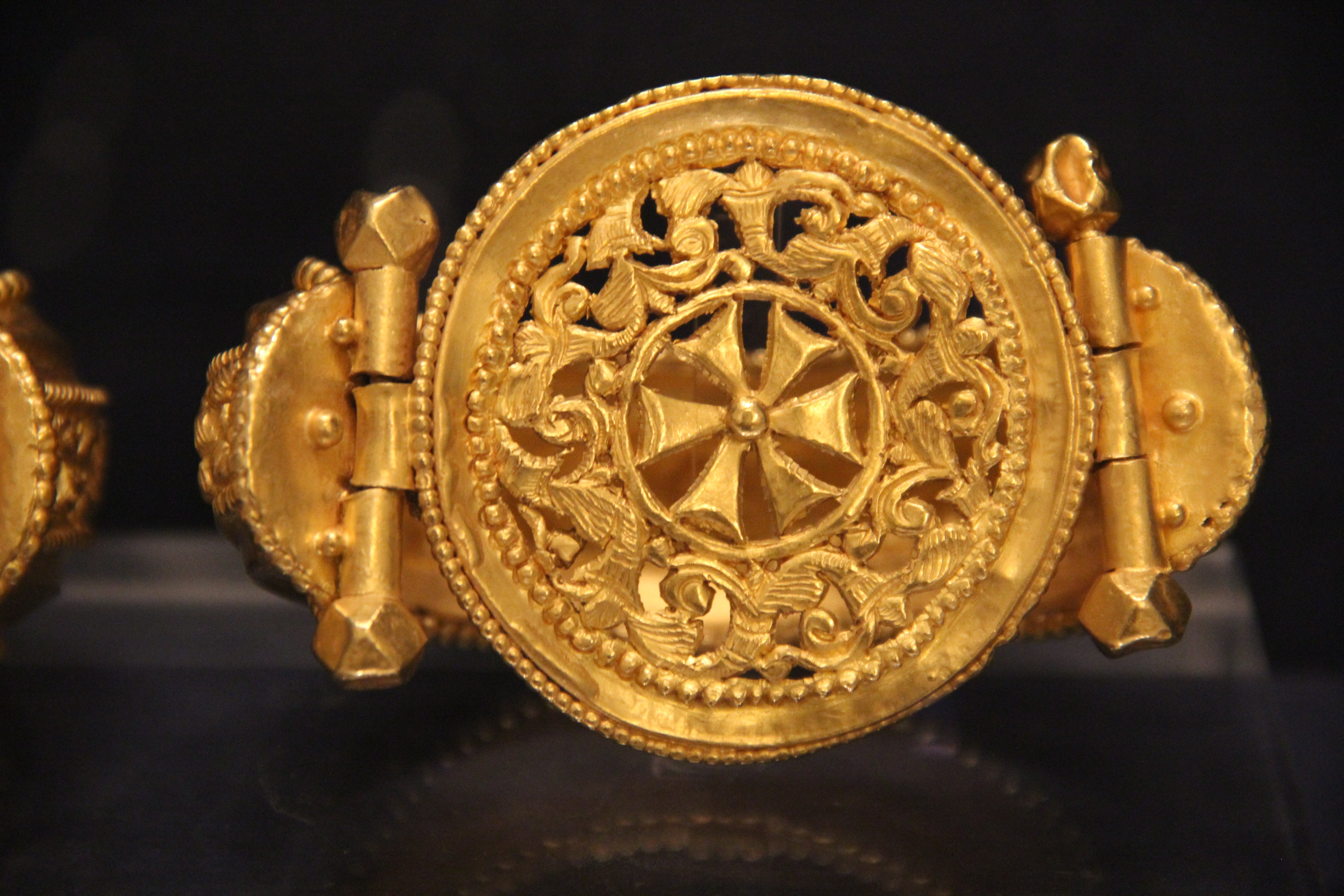
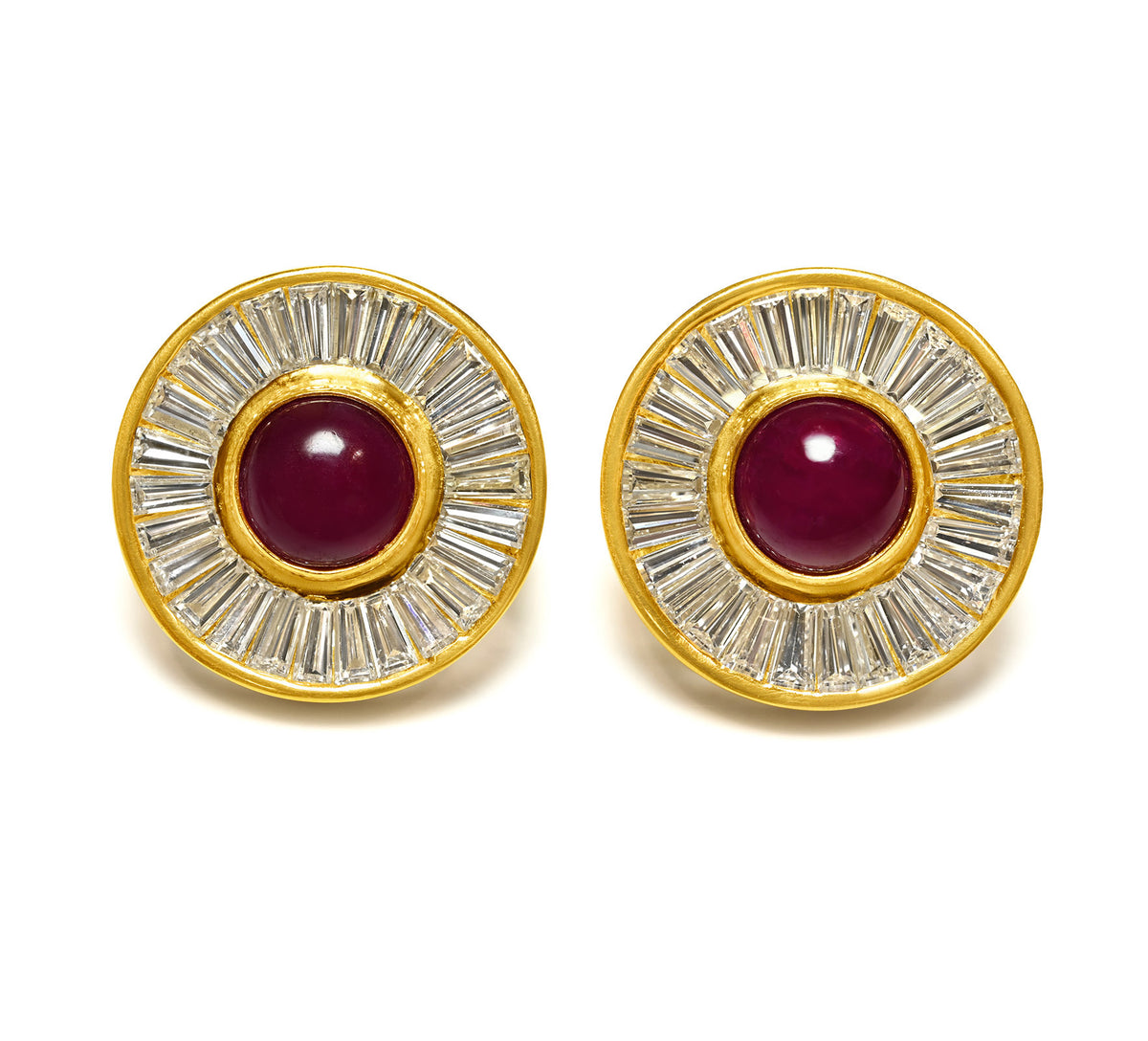
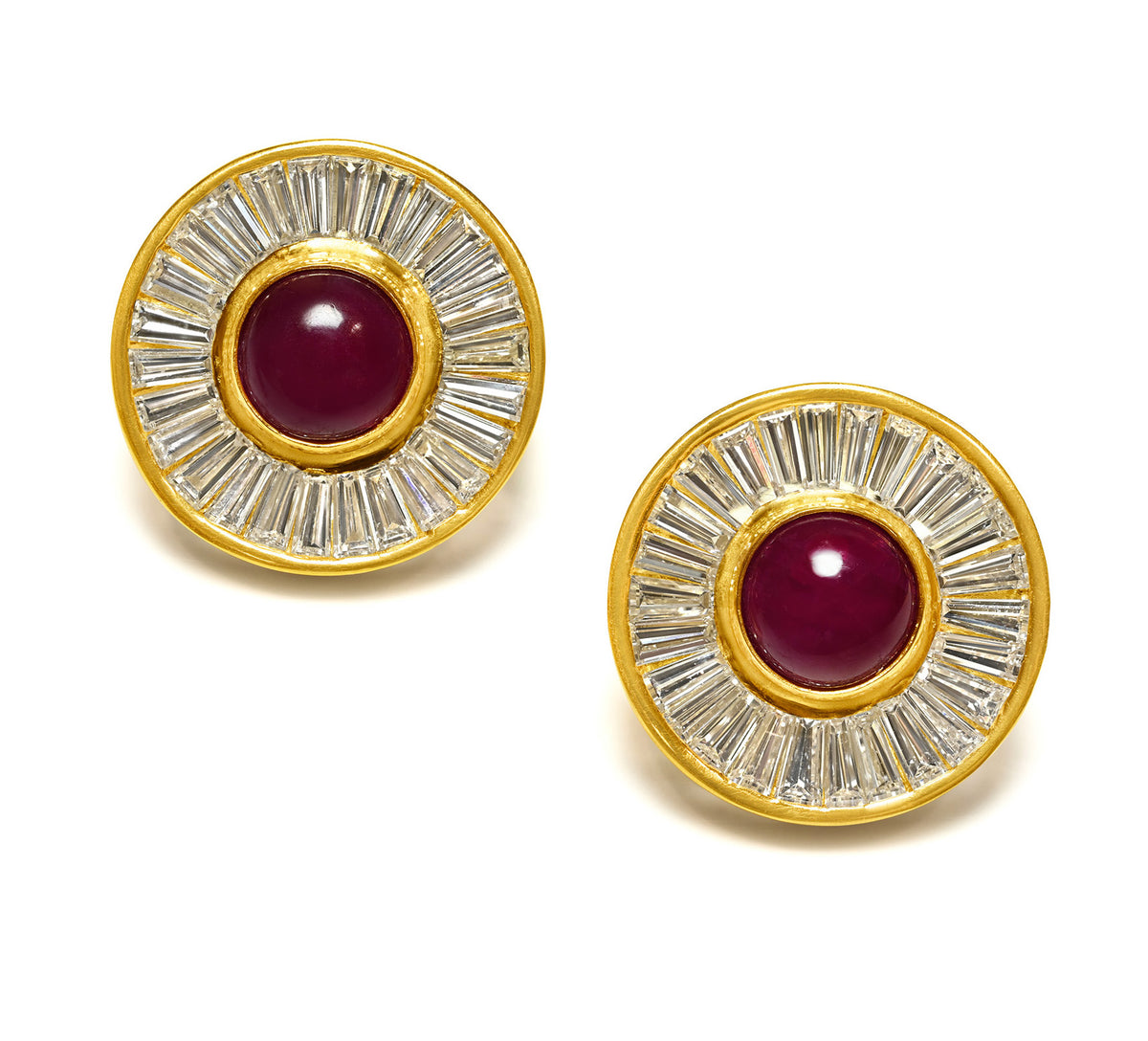
Cover Photo: Byzantine Greece Gold Jewelry, Benaki Museum, Athens, Greece, Source Wikimedia Commons, Author Gary Todd from Xinzheng, China