The Moon of Mountains: The Price of Unrestrained Desire
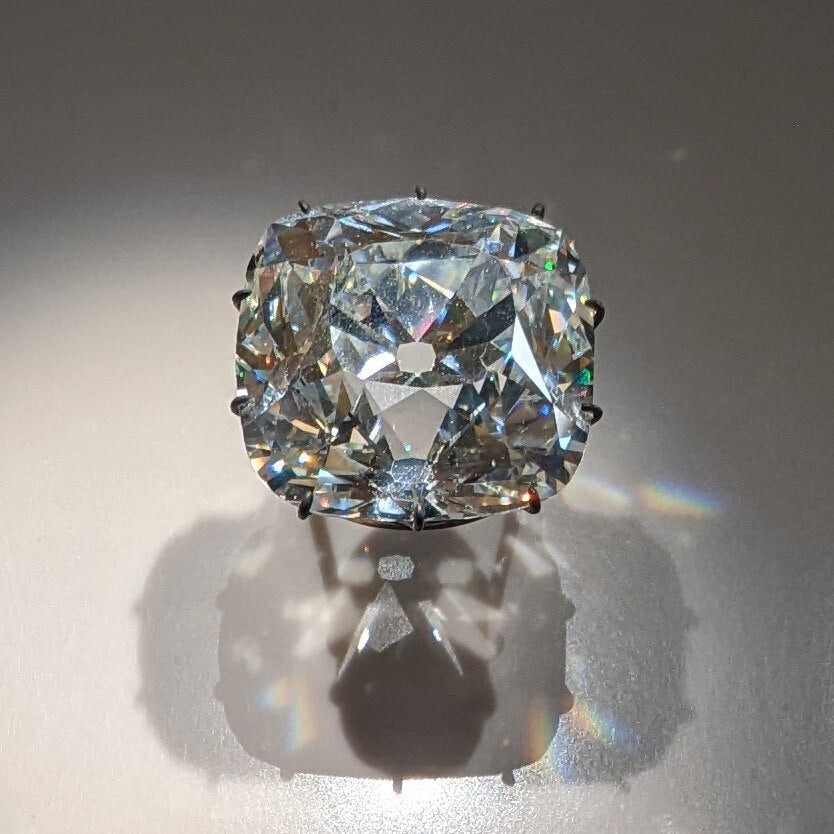
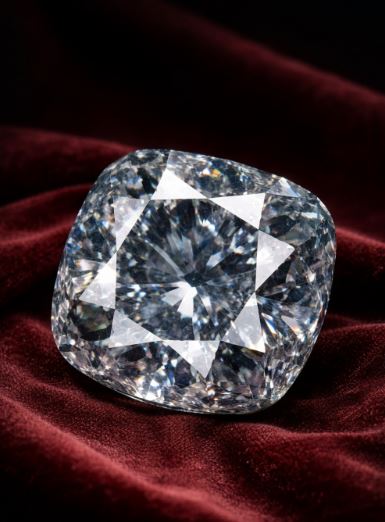
Among the legendary diamonds that have passed through the hands of conquerors, merchants, assassins, and monarchs, few possess a history as intricate and compelling as the gem known as the Moon of Mountains.
Its story is not merely that of a precious stone changing ownership, but of human ambition at its most extreme—of greed rewarded and punished, of blood spilled in secrecy, and of power exerted through both violence and law. Unlike gems whose histories glitter with romance alone, the Moon of Mountains is burdened with tragedy at every stage of its journey. The story of this gem is, in fact, a lesson about the cost of unrestrained desire.
Its story, preserved and examined in The Great Diamonds of the World: Their History and Romance by Edwin William Streeter and Joseph Hatton, reads less like the biography of a jewel and more like a dark epic of human desire. The Moon of Mountains did not merely pass from hand to hand; it consumed those who touched it. Soldiers, merchants, brothers, and statesmen were drawn into its orbit, and many paid with their lives.
As you follow its remarkable journey, the Moon of Mountains invites an almost uncanny comparison—metaphorically speaking—to the One Ring at the heart of The Lord of the Rings. Both reveal a deeper truth to which history and literature return time and again: certain objects become mirrors of human desire. Tolkien gave this idea mythic form; the Moon of Mountains demonstrates it in reality. Where the One Ring leaves a trail of fallen kings and broken friendships, the diamond leaves drowned bodies in the Tigris, poisoned cups, and a family line extinguished by internal vengeance. Fiction heightens the pattern; history confirms it.
The Diamond of the Moguls
The Mogul Legacy: A Diamond of Imperial India
The Moon of Mountains is believed to have originated in India, the ancient cradle of the world's greatest diamonds. Long before European traders understood the value of these stones, Indian rulers recognized their symbolic power. Diamonds were not simply a form of wealth; they were embodiments of divine favor and cosmic order.
Within the treasury of the Great Mogul emperors, the Moon of Mountains held a position of singular distinction. Alongside its equally renowned counterpart—the Sun of the Sea—it was said to have adorned the imperial throne itself. These two stones were not merely decorations but declarations: visible proof that the emperor ruled not only by force of arms but by the mandate of heaven.
Such jewels were inseparable from the fate of the empire that possessed them. When Mogul power weakened, the diamonds did not remain untouched. They awaited the arrival of a conqueror ruthless enough to seize them.
Nadir Shah: The Conqueror and the Catastrophe
That conqueror was Nadir Shah, the Persian warlord whose rise from obscurity to absolute power was as swift as it was violent. His invasion of India in the eighteenth century was marked by unparalleled brutality. Cities were sacked, populations were massacred, and treasuries were emptied with merciless efficiency.

Portrait of Nadir Shah, Source https://imagesonline.bl.uk/asset/143693, via Wimikedia Commons
Delhi fell before him, and with it the immense wealth accumulated over centuries of Mogul rule. Among the spoils carried away were the Moon of Mountains and its companion, the Sun of the Sea. For a time, the Moon of Mountains rested among the treasures of a man who seemed invincible.
Yet Nadir Shah's reign was built on terror, and terror breeds treachery. In 1747, he was assassinated by his own troops. His death was sudden, violent, and final. With it came chaos. Discipline collapsed, loyalty vanished, and the army dissolved into a mob of plunderers.
The vast treasure of the Persian conqueror was broken apart, divided, stolen, and scattered across Asia. In that moment, the Moon of Mountains vanished from the records of kings and entered the far more dangerous world of desperate men.
The Afghan Soldier: Fortune Beyond Measure
Among those who benefited from the disintegration of Nadir Shah's army was an Afghan soldier, a man of no rank or distinction who suddenly found himself in possession of a fortune beyond imagination. Exactly how the Moon of Mountains came into his hands remains unknown, but it is certain that he emerged from the chaos carrying not one jewel but several of extraordinary value.
Alongside the Moon of Mountains, he possessed a magnificent emerald, a ruby of notable size, and a sapphire later revered as the "Eye of Allah." To a man accustomed to the uncertainties of military life, this wealth must have seemed both miraculous and terrifying.
He traveled south to Bassorah, a thriving port on the Shatt al-Arab, where Eastern trade flowed toward the Persian Gulf. There, among merchants and caravans, he sought to convert his stolen fortune into security.
But great diamonds are dangerous companions, especially for those who do not understand the predators they attract.
Shafrass of Bassorah: The Merchant Who Saw Too Much
In Bassorah lived Shafrass, an Armenian merchant of experience, intelligence, and ambition. Along with his two brothers, he had established a respectable trading house and was well acquainted with precious stones. Yet even he was astonished when the Afghan soldier revealed his collection.
At a glance, Shafrass understood the magnitude of what lay before him. The Moon of Mountains alone was worth more than entire fortunes. Yet he also recognized the danger of moving too quickly. Pretending to be cautious, he claimed that he needed time to raise sufficient funds.
The soldier, however, was no fool. He interpreted the hesitation not as prudence but as a threat. Fearing betrayal—perhaps arrest, perhaps murder—he disappeared from Bassorah as abruptly as he had arrived.
Shafrass was left with a vision that would not leave him.
Baghdad: Greed Finds Its Opportunity
The Afghan soldier made his way to Baghdad, where he encountered a Jewish merchant willing to purchase the jewels. The transaction was completed quickly: 65,000 piastres -roughly equivalent to several million U.S. dollars in today's purchasing power- and two fine Arabian horses exchanged hands. Though the price was modest compared to the true worth of the Moon of Mountains, it was enough to secure a comfortable life.
But instead of returning home, the soldier remained in Baghdad. He indulged in excess - wine, revelry, and spectacle -making himself conspicuous and vulnerable.
Shafrass followed.
When the Armenian merchant encountered the Afghan once again, fate aligned with obsession. Learning that the jewels had already been sold, Shafrass wasted no time in locating the buyer. He offered double the purchase price for the diamond alone. The offer was refused.
At that moment, commerce ended and crime began.
The First Bloodshed
Shafrass summoned his brothers. Together, they weighed their options. The Moon of Mountains was beyond price, and refusal was intolerable. The brothers resolved to seize what could not be bought.
The Jewish merchant was murdered in cold blood. His death was swift, deliberate, and final. Yet the crime was incomplete. The Afghan soldier remained alive—a witness who could unravel everything.
Using wine and hospitality as weapons, the brothers invited him to a feast. Poison was slipped into his cup. By morning, he too was dead.
The bodies were bound together, placed in a sack, and thrown into the Tigris under cover of night. The river carried away the evidence, but not the guilt.
Fratricide: When Greed Turns Inward
With the diamond secured, the brothers faced a new dilemma. Who would possess the Moon of Mountains? Each demanded it. The stone could not be divided, and compromise was impossible.
Shafrass resolved the conflict as he had before.
His brothers were murdered.
Their bodies joined those of the earlier victims in the river. Shafrass stood alone, master of a fortune earned through bloodshed so complete that no living witness remained.
Yet isolation brought not peace, but fear.
Flight Across Empires
Knowing that discovery was inevitable, Shafrass fled Baghdad. He traveled first to Constantinople, then crossed Europe through Hungary and Silesia, eventually reaching Amsterdam, the diamond capital of the West.
There, he reinvented himself once again—this time as a dealer in extraordinary stones. Monarchs, ministers, and jewelers listened as he described a diamond of unmatched brilliance. The Moon of Mountains began to exert its pull once again.
Russia's Interest and the Trap of the Law
The diamond caught the attention of Catherine II of Russia, whose ambition matched that of any Eastern ruler. Shafrass was summoned to St. Petersburg, where negotiations began.

Portrait of Catherine II of Russia, Source Kunsthistorisches Museum, Via Wikimedia Commons
They did not go as he had expected.
Shafrass demanded immense sums and noble titles. Russian officials delayed, deflected, and entangled him in a web of promises. Encouraged to live extravagantly, he soon fell into debt. When his money was gone, the law intervened: he was forbidden to leave Russia until his creditors were paid.
The diamond remained in his possession—but at the cost of his freedom.
Astrakhan: The End of the Journey
After years of maneuvering, Shafrass escaped from St. Petersburg and settled in Astrakhan. There, negotiations resumed under different terms. At last, the Moon of Mountains was sold to the Russian Crown for a vast sum of silver and a grant of nobility.
The diamond had reached its final destination.
The Curse Completed
Shafrass married and had seven daughters. Outwardly, he lived in comfort. Yet justice had not forgotten him.
In a grim reflection of his own crimes, he was poisoned by one of his sons-in-law. The Moon of Mountains had claimed its final victim.
The Cost of Unrestrained Desire
As recorded in The Great Diamonds of the World: Their History and Romance by Edwin William Streeter and Joseph Hatton, the Moon of Mountains stands as a monument not to beauty alone, but to the cost of unrestrained desire.
In this respect, the Moon of Mountains invites an almost uncanny comparison to the One Ring at the heart of The Lord of the Rings. Tolkien's Ring is not evil merely because it is powerful, but because it magnifies what already exists within its bearer: ambition becomes domination, caution becomes paranoia, and desire hardens into obsession. The Ring promises mastery, yet steadily hollows out the will and morality of those who cling to it until possession itself becomes a form of enslavement.
The Moon of Mountains functions in history much as the One Ring does in fiction. It does not act, speak, or command—but it exerts a gravitational pull on human weakness. Each person who comes into contact with it believes they are its master, yet in truth becomes its servant. The Afghan soldier, suddenly elevated from obscurity to unimaginable wealth, abandons prudence and safety, lingering in Baghdad until his excesses expose him to betrayal. Shafrass, initially a calculating merchant, is gradually transformed into a murderer, then a fratricide, and finally a hunted man, forever maneuvering to preserve a treasure that has already cost him his soul. Even powerful states, such as Imperial Russia, are drawn into prolonged intrigue and manipulation for the sake of securing the stone.
As with Tolkien's One Ring, the Moon of Mountains isolates its bearer. Trust erodes. Companions become rivals. Brothers become expendable. The stone cannot be shared, just as the One Ring cannot truly be borne in fellowship for long. Every attempt to divide its value—whether through partnership, negotiation, or delay—ends in violence or betrayal. In both cases, the object's greatest power lies not in what it grants, but in what it destroys: loyalty, restraint, and ultimately, life itself.
Whether viewed as history or metaphor, the Moon of Mountains may be said to possess a curse not of superstition, but of psychology. Like the One Ring, it does not force people to commit evil—it simply invites them, patiently, until they step forward of their own accord.