Regent: The Long Moral History of a Diamond
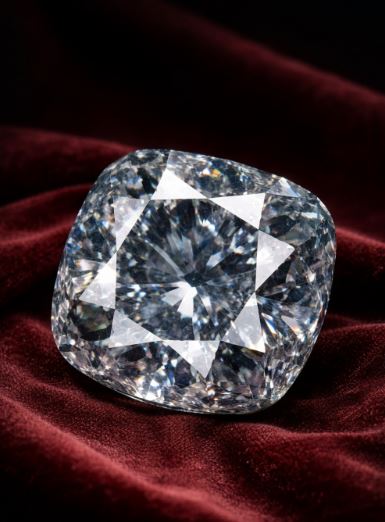
Among the celebrated diamonds of the world, few possess a history so dense with human drama, moral ambiguity, and political consequence as the stone first known as the Pitt, and later revered as the Regent.
Its brilliance is inseparable from the darkness of its origins, and its splendor was shaped not merely by the hand of the cutter, but by slavery, betrayal, fear, negotiation, revolution, and empire.
As recorded in The Great Diamonds of the World: Their History and Romance by Edwin William Streeter and Joseph Hatton, the history of this diamond is told not simply through events, but through voices—letters, sworn statements, rumors, and confessions—each leaving its trace upon the gem’s long passage through the world.
The earliest chapter of the Pitt diamond’s story is set, as the authors remark, amid circumstances familiar in the history of great stones, where “cupidity, murder, remorse, are factors in the opening chapter.”
The diamond was discovered in the Parteal mines, on the banks of the Kistna, in 1701. The finder was a slave, a man whose life was already forfeit to labor, and whose discovery placed him in mortal danger. The stone, in its rough state, weighed 410 carats, a size so extraordinary that concealment itself became a problem.
Concealment, Flight, and the Illusion of Freedom
Two versions of the method by which the slave hid the gem were recorded. One states that he “cut a hole in the calf of his leg, and concealed it in the wound itself”; another states that it was hidden among the bandages. Given the stone’s immense size, the authors conclude that the latter account must be the correct one. What matters more than the detail, however, is the image: a man carrying a fortune in his own flesh, knowing that exposure meant death, while escape offered only the faintest hope of freedom.
The slave reached the coast and there encountered an English skipper, to whom he entrusted both his secret and his life. The bargain was stark and final. The slave offered the diamond in return for liberty, asking only to be carried to a free country. The skipper appeared to accept the proposal. Yet once the jewel was secured, humanity failed entirely. The English mariner, “having obtained possession of the jewel, flung the slave into the sea.” With this act, the diamond’s history entered irrevocably into the realm of crime.
Crime, Guilt, and the Silent Passage into Commerce
According to the earliest version of the narrative, the skipper sold the diamond for £1,000 (£1,000 in 1701- roughly equivalent to several hundred thousand dollars today - was a substantial fortune), wasted the money in dissipation, and ultimately, “in a fit of delirium tremens and remorse, hanged himself.” Whether this end was fact or moral interpretation, it remained attached to the story, reinforcing the idea that the diamond exacted its own retribution. Yet the stone itself passed on, silent and unmarked, entering the commercial circuits of the East.
The diamond came into the possession of Jamchund, described by Streeter and Hatton as “at that time the largest diamond merchant in the East.” Of the circumstances by which Jamchund acquired the stone, little is known, and this silence is significant. The text observes that if a dealer were offered such a gem by a sea captain on the coast for a comparatively small sum, he would “naturally abstain from asking any indiscreet questions, whatever his suspicions might be.” Thus, the stone’s violent origin was neither examined nor recorded, but simply absorbed into trade.
Jamchund and Thomas Pitt: Negotiation, Hesitation, and Risk
It was Jamchund who brought the diamond to Thomas Pitt, Governor of Fort St. George at Madras. Pitt was a man of wealth and ambition, but also of calculation and restraint. The authors are careful to emphasize that Pitt’s acquisition of the diamond was not sudden or reckless, but the result of prolonged negotiation, hesitation, and refusal.
Pitt himself later recounted that about two or three years after his arrival at Madras in 1698, he heard reports of large diamonds being offered for sale and encouraged the sellers to bring them to him. Jamchund arrived in December 1701, bringing with him several stones, including one of exceptional size. Pitt and others purchased the smaller gems, but he declined the great stone.
Jamchund’s demands were enormous. Pitt stated plainly that the merchant was “asking a very extravagant price for the great one.” He refused to engage, and Jamchund repeatedly left the stone with him for inspection, took it away again, and returned with renewed insistence. Each time, the price remained at no less than 200,000 pagodas.
Doubt, Calculation, and the Fear of Loss
Pitt’s reluctance was not feigned. He later explained his reasoning with unusual candor:
“I considered there were many and great risks to be run, not only in cutting it, but whether it would prove foul or clean, or the water good.”
Beyond the uncertainty of the stone’s quality lay the danger of transport. To send such value home in a single vessel was, in Pitt’s view, an imprudent gamble. Jamchund eventually departed, resolved to return to his own country.
Yet the matter did not end there. In February, Jamchund returned once more, accompanied by Vincaty Chittee, pressing Pitt for a final decision. The price began to descend. They agreed to meet again to conclude the affair “one way or other.” The decisive meeting took place in the consultation room, and Pitt described it in detail.
The Final Bargain: Price, Pride, and Resolution
After prolonged discussion, Pitt brought Jamchund down to 55,000 pagodas, and then offered 45,000, declaring himself resolved to give no more. Jamchund refused to lower the price, reclaimed the stone, and departed. Pitt believed the negotiation concluded.
But within half an hour, Jamchund returned. He praised the stone at length and declared that he would rather Pitt bought it than any other person. As a sign of this preference, he offered it for 50,000 pagodas. Pitt proposed to split the difference of 5,000 pagodas between them. Jamchund refused, left the room, and then returned again.
This time he offered it for 49,000. Pitt again refused. Jamchund departed once more, only to return a final time, offering it for 48,000 pagodas, and “made a solemn vow he would not part with it for a pagoda under.” Pitt consulted Mr. Benyon, then concluded the purchase.
Possession Without Peace: Rumor, Envy, and Accusation
The transaction, though hard-fought, was complete. Pitt later stated unequivocally:
“I paid him honourably, as by my books doth appear.”
Yet possession of the diamond brought not satisfaction, but anxiety. When Pitt returned to Europe in 1710, rumors circulated that he had obtained the stone by unfair or dishonest means. These suspicions were amplified by political rivalry and public envy. Among those believed to allude to the scandal was Alexander Pope, whose lines in The Man of Ross were widely interpreted as a veiled accusation:
“Asleep and naked as an Indian lay,
An honest factor stole a gem away;
He pledged it to the Knight, the Knight had wit,
So kept the diamond, and the rogue was bit.”
Pitt’s Declaration: Defense Before God and Posterity
Such insinuations reached Pitt while he was residing in Bergen, Norway, and deeply troubled him. He feared not merely personal disgrace, but the lasting damage that unresolved suspicion might inflict upon his family. In response, he composed a detailed declaration setting out, as he wrote, “the true relation how I purchased it in all respects.”
This document, addressed to the editor of the European Magazine in October 1710, was later republished in the Daily Post in 1743, seventeen years after Pitt’s death. Its tone is solemn, defensive, and unmistakably intended for posterity. Pitt explained that he wished his children and friends to be able to “put to silence and confound those and all other villains, in their base attempts” against his reputation.
He denied, in the strongest terms, any use of force or intimidation:
“I never used the least threatening word at any of our meetings to induce him to sell it to me; and God Himself knows it was never so much as in my thoughts so to do.”
He further argued that his continued commercial dealings with Jamchund were proof of fairness:
“Would I have trusted him afterwards, as I did preferable to all other diamond merchants?”
The declaration concluded with a profession of religious sincerity and was signed and dated:
“Written and signed by me in Bergen, July 29, 1710. - THO. PITT.”
On the back of the document, Pitt added instructions that it should be delivered to his son in the event of his death.
Cutting the Stone: Transformation and Risk in London
The diamond itself was sent to England with deliberate caution. In the original bill of lading, it was valued at only 6,500 pagodas, likely, as the authors suggest, “to avoid attracting attention to the stone, and thereby exposing it to the risk of being stolen.” In London, it was entrusted to skilled cutters and, for two years, underwent the hazardous process of cutting and polishing.
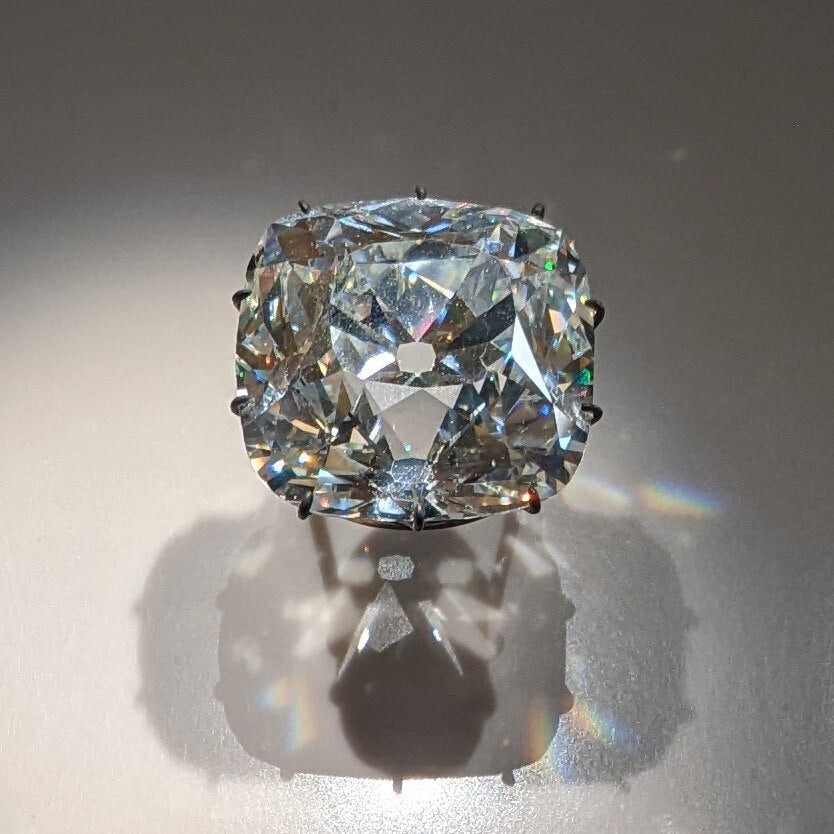
The transformation was dramatic. From 410 carats, the stone was reduced to 136½ carats. The cost of cutting and polishing was stated at £5,000, and later experts observed that while a slight error had been made in the operation, there remained “only one small speck, and that placed in such a position as not to be detected in the setting.” The diamond emerged as one of the most brilliant stones ever produced.
From Pitt to Regent: Crown, Revolution, and Empire
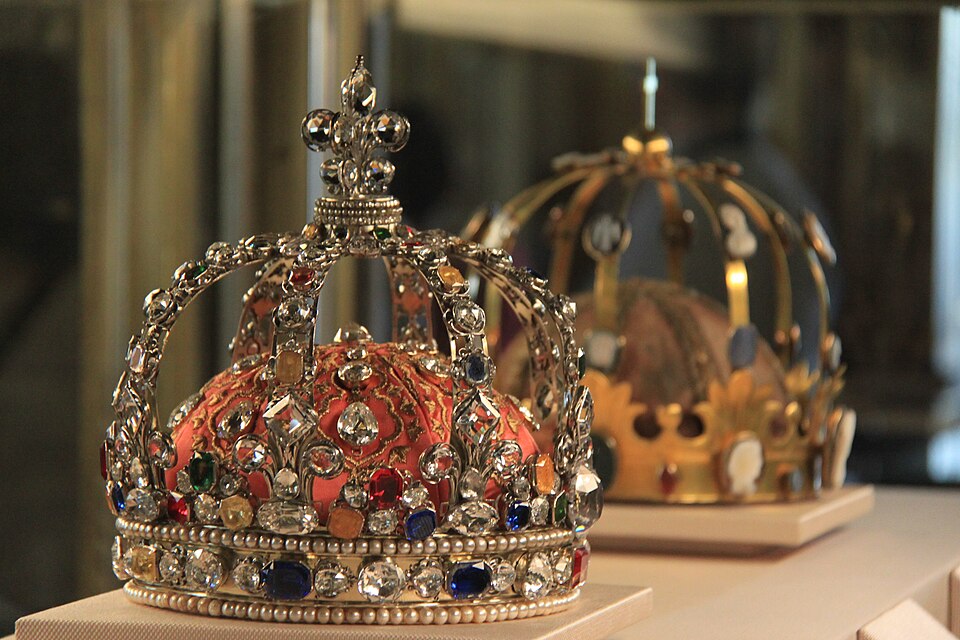
In 1717, during the minority of Louis XV, the diamond was purchased by Philippe, Duke of Orleans, Regent of France, for £135,000 - roughly equivalent to $44 million to $45 million today. With this sale, the Pitt became the Regent, passing from private hands into the French Crown Jewels. Pitt’s profit was immense. Including the value of cleavage and dust, estimated at between £7,000 and £8,000 - roughly $2.3 million to $2.7 million today - he “must have netted at least £100,000,” or roughly $33 million today. With this fortune, he restored the standing of his family, which would later produce one of Britain’s greatest statesmen.
The Regent remained among the French Crown Jewels until the French Revolution, when, in 1792, it was stolen from the Garde-Meuble during the great robbery that accompanied the collapse of royal authority. The diamond disappeared along with other treasures, hidden by thieves amid the chaos of Paris.
Its recovery was as dramatic as its theft. Confessions revealed the hiding places, and one of the robbers, Baba, openly admitted his role:
“I was one of the robbers of the Garde-Meuble.”
The diamond was recovered, though many of those involved were condemned to the galleys or died in prison.
Empire in a Single Stone: Napoleon and the Aftermath
Under Napoleon Bonaparte, the Regent assumed a new symbolic role. Napoleon wore it in the pommel of his sword, transforming a royal jewel into an emblem of imperial power. After Waterloo, it was taken to Berlin, later restored to France, and eventually exhibited publicly.
By the nineteenth century, the Regent was valued at £480,000, described as “by far the richest in the world.” Reduced from 410 to 136½ carats, flawless in water and nearly perfect in form, it remained unmatched not only in beauty, but in historical depth.
A Moral History Preserved in Crystal
The history of the Pitt, afterward the Regent, is thus not merely the history of a diamond. It is a record of human conduct preserved in crystal: of slavery and betrayal, of caution and negotiation, of accusation and defense, of revolution and empire. As Streeter and Hatton present it, the story survives through words as much as through facets—through letters written in fear, bargains struck in closed rooms, oaths sworn before God, and confessions extracted in times of terror.
The diamond endures because it absorbed them all.