


Pocket Watches and the Art of Timekeeping
Long before the wristwatch became a universal accessory, the pocket watch occupied a central place in the life and appearance of the gentleman. Throughout the nineteenth and early twentieth centuries, it was both a practical instrument and a symbol of discipline, reliability, and social respectability.
In an increasingly industrial society, punctuality became a defining virtue. Railways, factories, and commercial offices depended on precise schedules, and the ability to measure time accurately was essential for professional life. Carrying a watch therefore signaled more than convenience—it reflected participation in a modern world governed by order and precision.
Pocket watches were typically carried in the waistcoat pocket of a three-piece suit, attached to a chain that extended across the vest. These chains, often referred to as Albert chains—named after Prince Albert, the husband of Queen Victoria who helped popularize the style—quickly became recognizable elements of masculine fashion.
The watch chain served both functional and decorative purposes. It secured the timepiece while also adding a subtle visual accent to the waistcoat. Crafted in gold or silver, chains could vary from simple link designs to more elaborate constructions incorporating engraved plaques, decorative links, or small pendants.
Many chains also featured watch fobs—small ornaments attached to the chain that introduced a further layer of individuality. These fobs could take the form of engraved seals, gemstone-set medallions, miniature sculptures, or symbolic charms. In earlier periods they were often used to stamp wax seals on correspondence, reinforcing their connection to personal identity and authority.
The pocket watch itself represented a remarkable fusion of engineering and craftsmanship. Watchmakers devoted extraordinary attention to the internal mechanics of their creations, while jewelers designed cases that reflected contemporary artistic styles. Gold watch cases might be engraved with intricate patterns, decorated with enamel, or polished to emphasize the beauty of the metal.
By the late nineteenth century, the pocket watch had become a near-universal accessory among gentlemen of the professional and middle classes. Lawyers, bankers, doctors, and merchants all relied on these instruments in their daily routines. Possessing a well-made watch suggested not only financial stability but also personal discipline.
Within the visual language of early twentieth-century menswear, the pocket watch and its chain formed a central axis around which other accessories were arranged. A waistcoat might hold the watch, while cufflinks secured the shirt cuffs and a stick pin adorned the cravat or tie. Together these elements created a balanced composition in which each object contributed to the overall appearance without overwhelming it.
The world depicted in Peaky Blinders frequently reflects this tradition. Characters are often shown wearing waistcoats with watch chains visible across the vest, reinforcing the sense of composure and authority associated with the period. Even when the series focuses on darker themes, the clothing worn by its protagonists remains rooted in the structured elegance typical of early twentieth-century menswear.
Over time, however, the role of the pocket watch gradually diminished. During the First World War, soldiers began wearing wristwatches because they allowed quicker access to timekeeping while keeping both hands free. After the war, this practical innovation spread rapidly into civilian life. By the 1920s and 1930s, wristwatches had largely replaced pocket watches for everyday use.
Despite this shift, the pocket watch never entirely disappeared from cultural memory. Antique examples remain highly valued by collectors who appreciate both their mechanical ingenuity and their historical significance. When worn today—particularly with traditional tailoring—they evoke a sense of continuity with a period when timekeeping itself formed part of the ritual of elegant dress.
In this way, the pocket watch stands alongside other gentleman’s accessories—such as signet rings, cufflinks, and stick pins—as a reminder that the smallest details once played an important role in shaping the visual language of masculine refinement.

Signet Rings and the Language of Identity
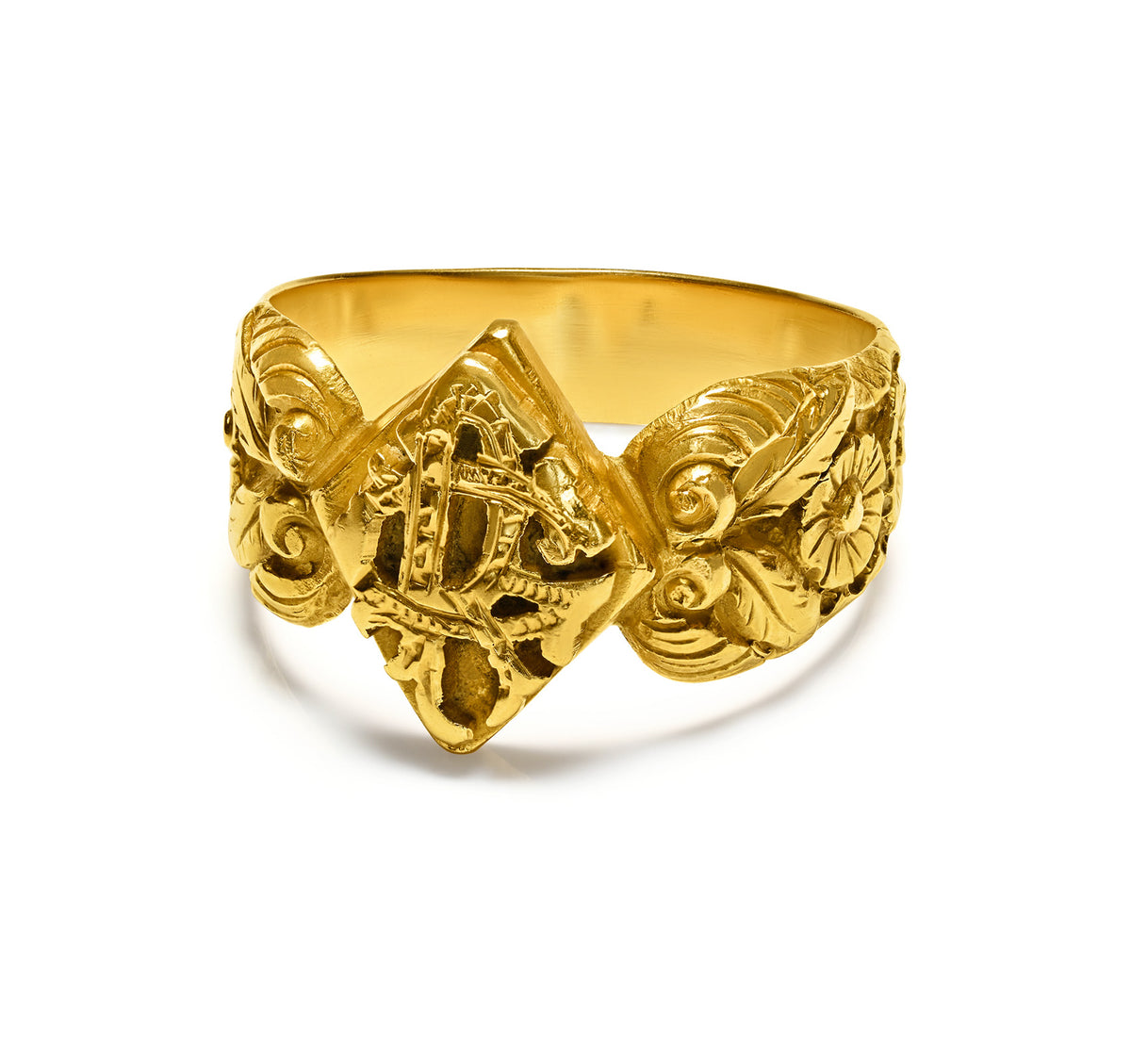
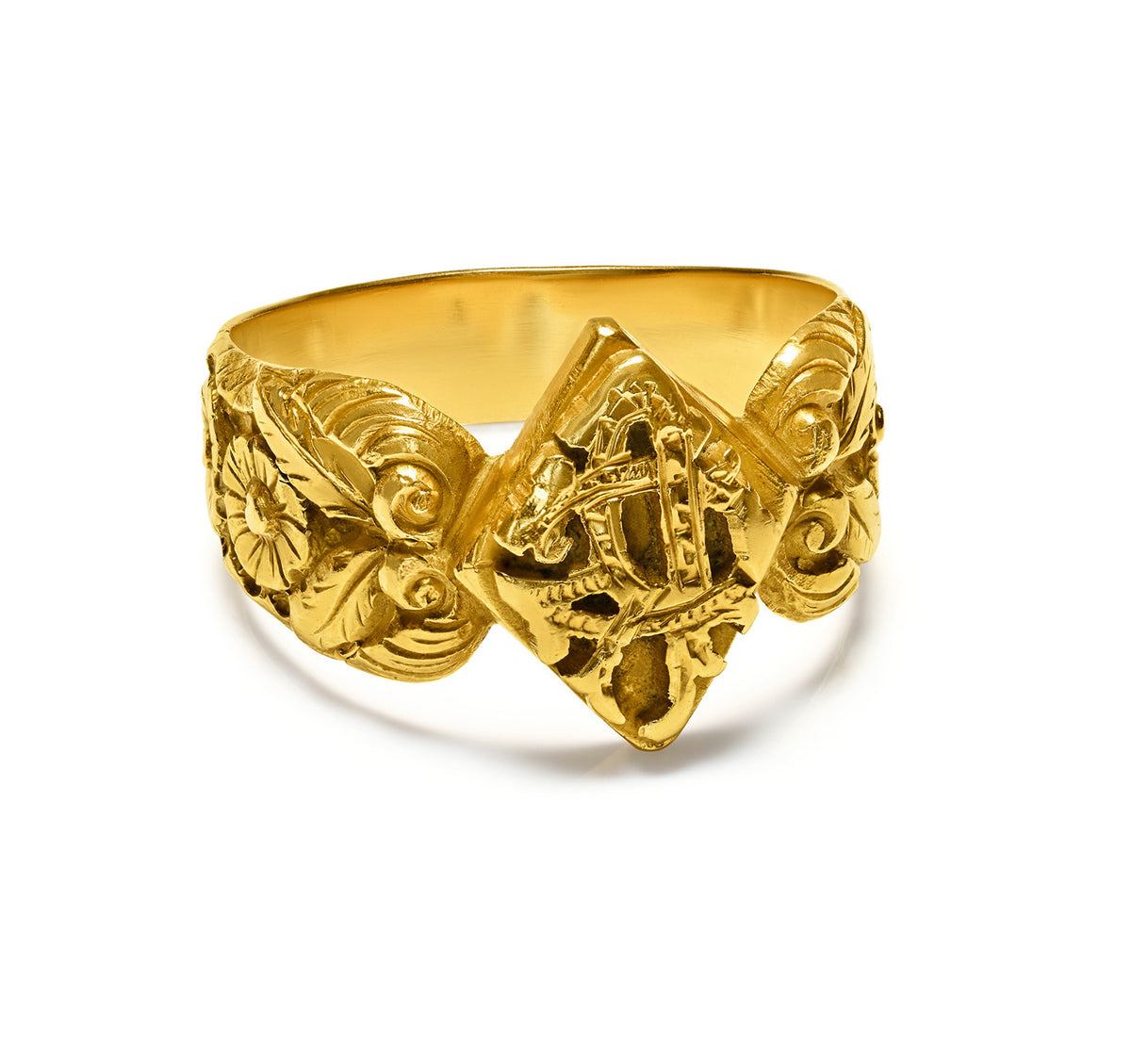
Among the various jewels worn by gentlemen during the nineteenth and early twentieth centuries, the signet ring carried a meaning that extended far beyond decoration. More than a simple accessory, it functioned as a personal emblem—an object that conveyed identity, heritage, and authority.
The origins of the signet ring reach deep into antiquity. In ancient civilizations such as Egypt, Greece, and Rome, engraved rings were used to stamp seals into wax or clay, authenticating documents and containers with a personal mark. The impression left by the ring served as a form of signature, confirming both the sender’s identity and the integrity of the message.
Throughout medieval and early modern Europe, this tradition continued. Noble families, institutions, and members of the aristocracy relied on signet rings engraved with coats of arms or heraldic devices. When pressed into sealing wax, these rings produced a unique imprint that signified legitimacy and authority. Over generations, the rings themselves often became family heirlooms, passed down as symbols of continuity and lineage.
By the nineteenth century, the practical function of sealing documents had begun to decline, yet the cultural significance of the signet ring remained strong. Gentlemen across Britain and continental Europe continued to wear engraved rings bearing family crests, monograms, or heraldic motifs. Even when the ring was no longer used as a seal, it still represented personal identity and tradition.
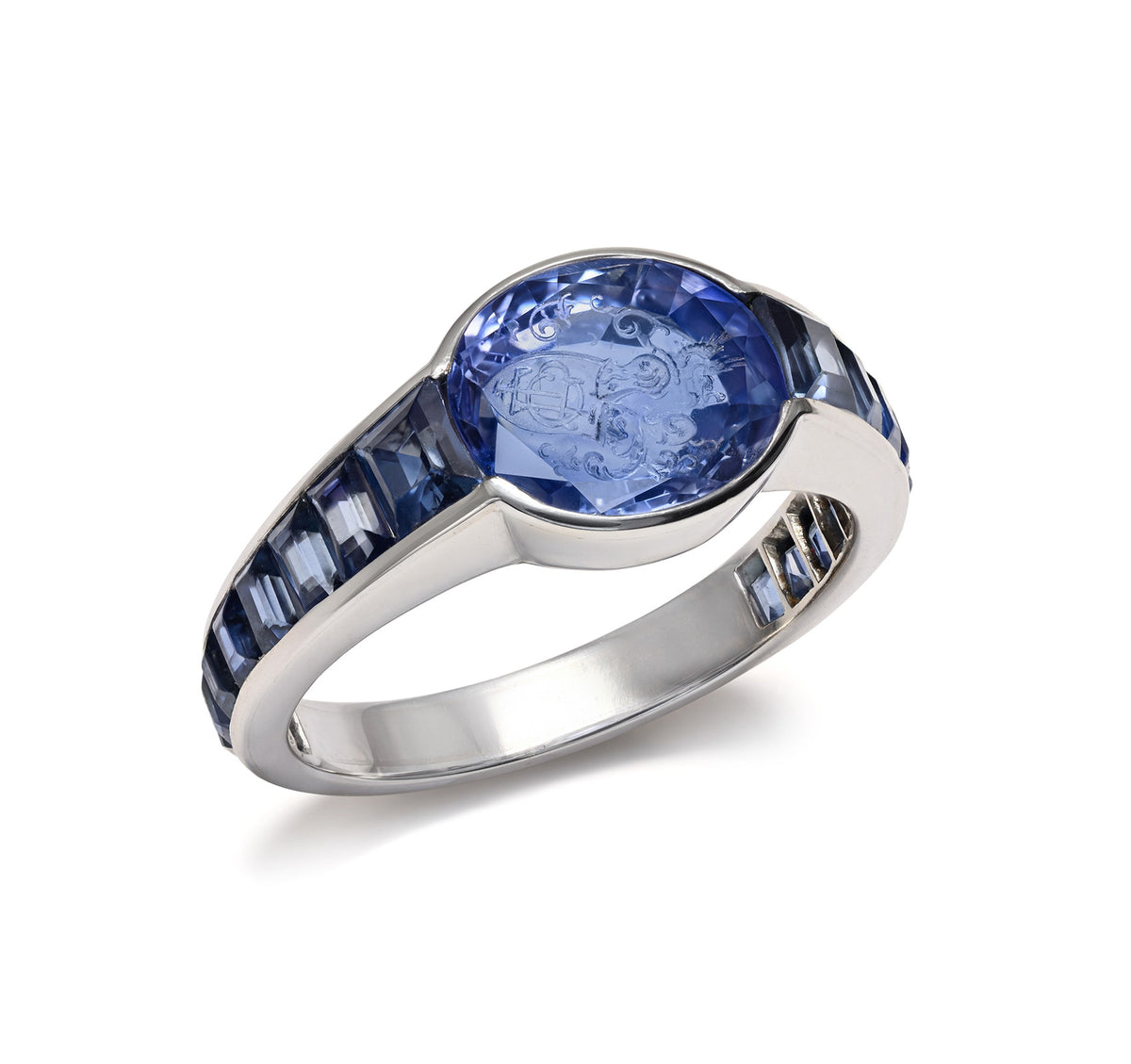
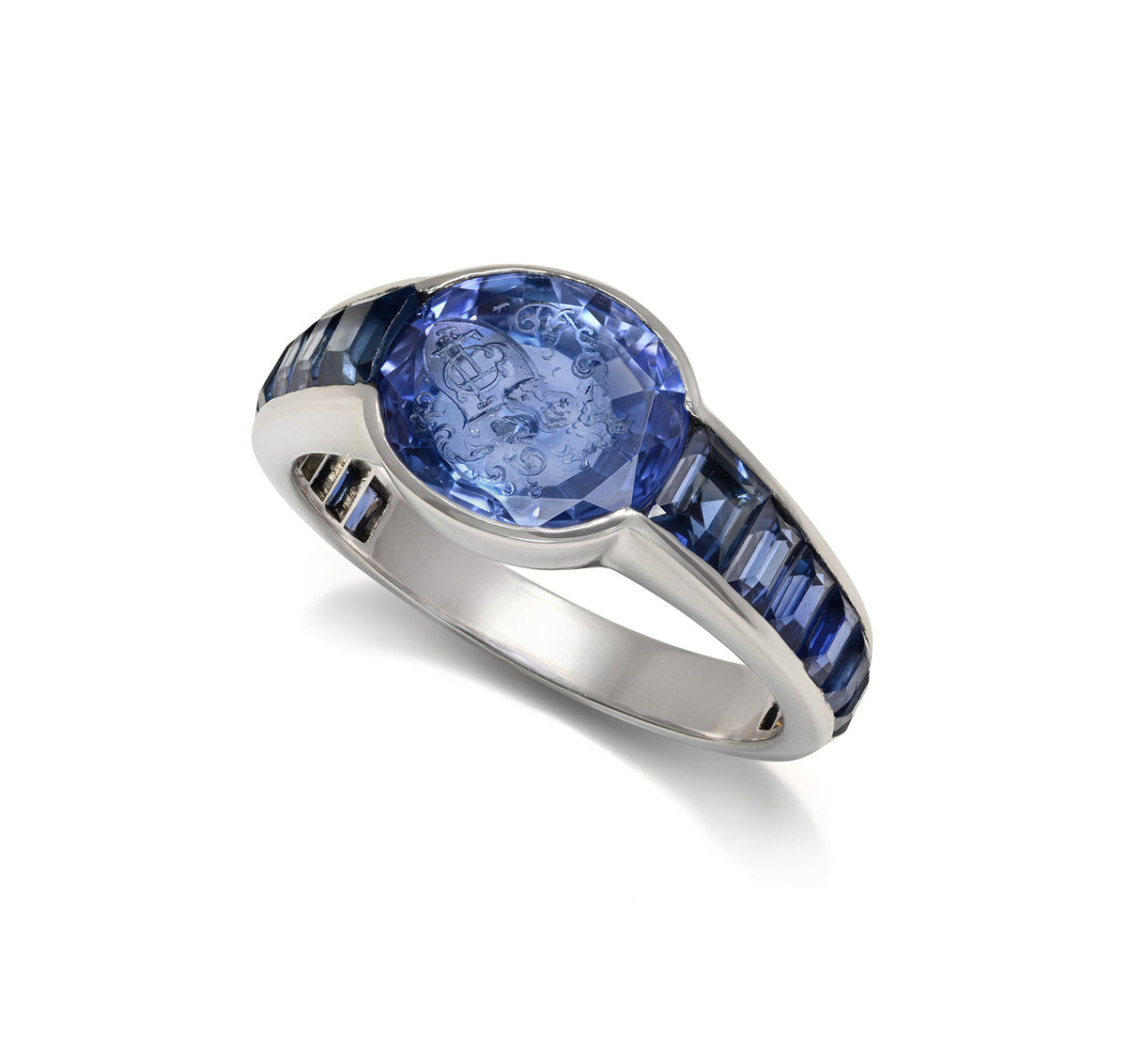
The materials used in signet rings reflected both durability and elegance. Gold was the preferred metal, valued for its strength and its ability to hold finely engraved details. The engraved surface itself was often formed from hardstones such as carnelian, agate, bloodstone, or sardonyx—materials that allowed jewelers to carve designs with precision and clarity.
These stones were typically set flush within the ring, creating a smooth surface that could be engraved in reverse so that the design would appear correctly when pressed into wax. The resulting rings balanced practicality with aesthetic refinement, combining functional craftsmanship with symbolic meaning.
Traditionally, signet rings were worn on the little finger of the left hand, a placement that gradually became customary in British and European etiquette. Positioned there, the ring remained visible but discreet, consistent with the broader philosophy of masculine elegance that characterized the Victorian and Edwardian periods.
Unlike many other forms of jewelry, signet rings changed very little with shifting fashions. Their design language remained anchored in tradition, emphasizing clarity of engraving and balanced proportions rather than decorative excess. Even during periods when jewelry became more ornate, signet rings retained their restrained character.
Beyond their association with family heritage, signet rings also came to express professional identity. Lawyers, military officers, and members of various institutions sometimes wore rings engraved with initials or symbolic devices connected to their roles. In this way, the signet ring bridged the worlds of personal lineage and public life.
Within the broader composition of gentleman’s dress, the signet ring complemented other accessories such as pocket watches, cufflinks, and stick pins. Each object contributed to a visual language in which elegance was expressed through carefully selected details rather than overt display.
Today, antique signet rings remain among the most sought-after forms of men’s jewelry. Collectors value them not only for their craftsmanship but also for the stories they carry—stories of families, professions, and identities preserved in engraved stone and gold.
In this sense, the signet ring stands as one of the most enduring symbols of masculine jewelry. Its quiet authority reflects a tradition in which elegance was defined not by extravagance, but by meaning, heritage, and the lasting power of personal symbols.

Cufflinks and the Refinement of Formal Dress
While pocket watches and signet rings often carried symbolic meaning, cufflinks represented another essential element of the gentleman’s wardrobe—one that combined practicality with quiet elegance. Though small in scale, cufflinks played an important role in the refinement of formal dress during the nineteenth and early twentieth centuries.
Their development is closely tied to the evolution of the modern shirt. In earlier centuries, shirts typically featured loose cuffs that were secured with ribbons or simple ties. By the early nineteenth century, however, shirtmakers began introducing detachable cuffs. This innovation allowed the most visible parts of the shirt to be replaced or laundered separately, a practical solution in an era when laundering garments was far more labor-intensive than it is today.
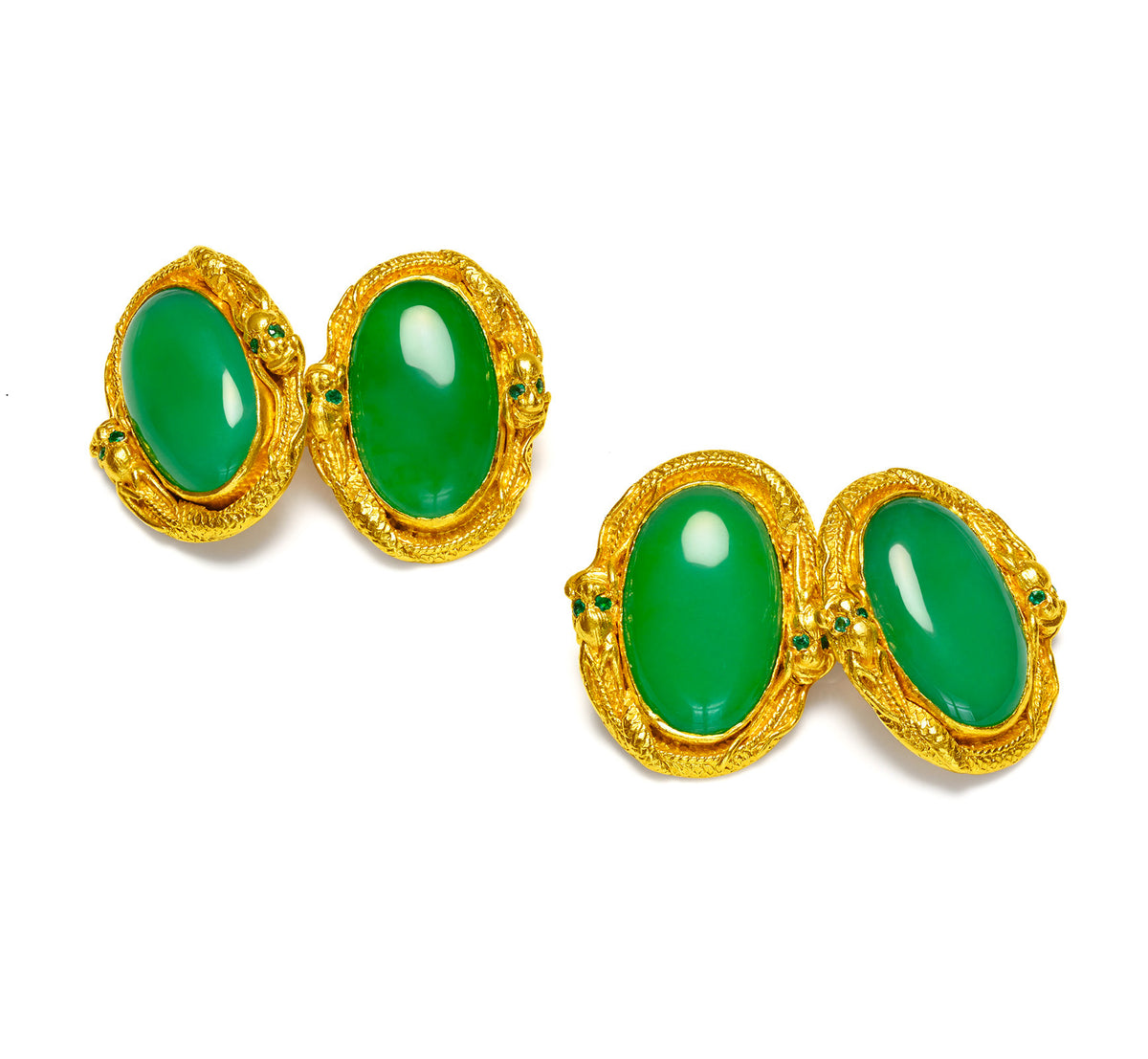
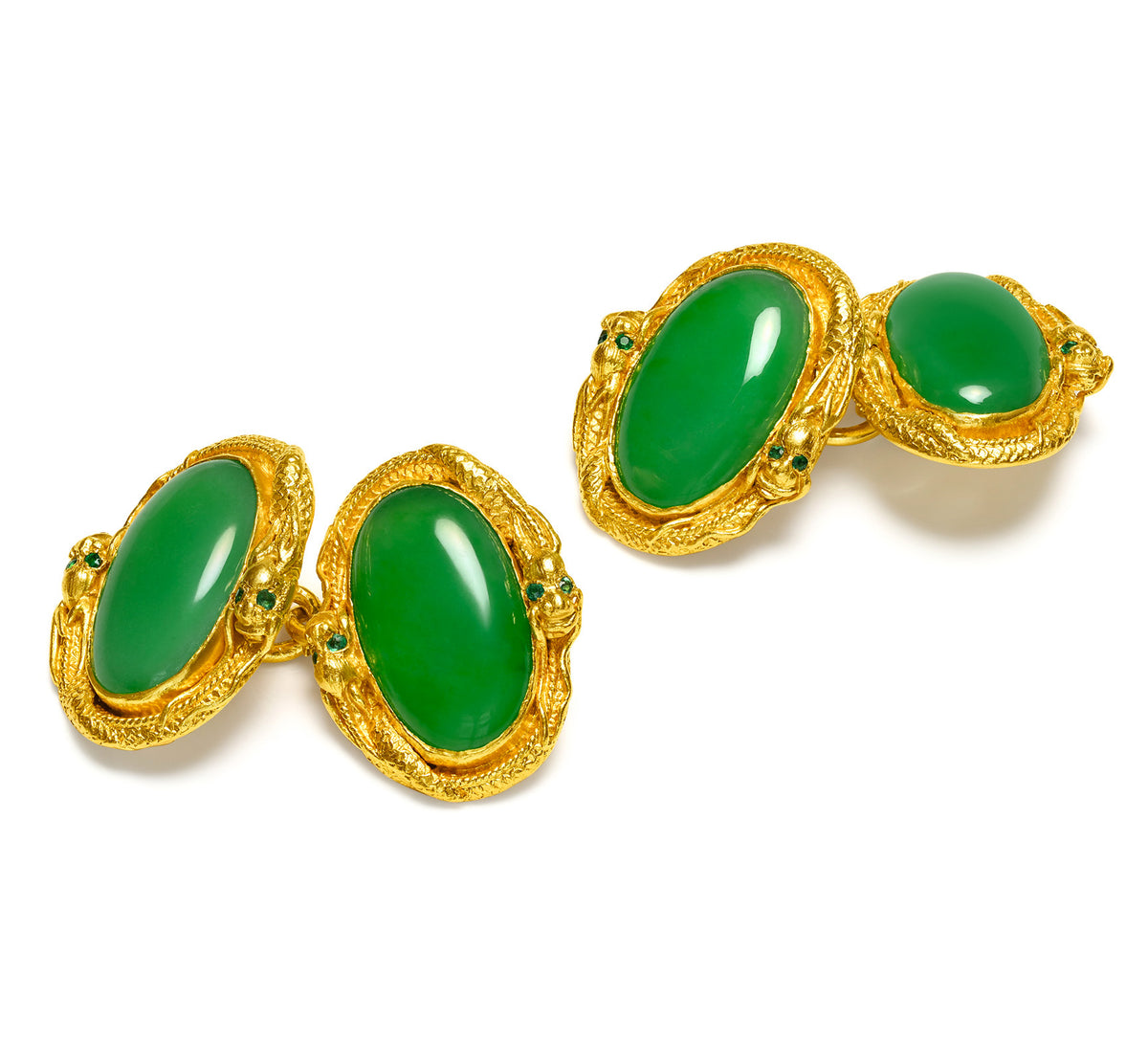
These detachable cuffs required a secure fastening system, and jewelers responded by creating small paired links designed to hold the cuffs together. Early cufflinks were often simple in design—two small decorative faces connected by a short chain—but they quickly evolved into refined accessories that reflected both craftsmanship and personal style.
By the Victorian era, cufflinks had become standard components of formal and professional dress. They were worn by businessmen, lawyers, politicians, and members of the upper classes, particularly when dressed in tailored suits or evening attire. Although modest in size, cufflinks allowed men to introduce subtle individuality into otherwise restrained clothing.
Materials varied widely. Many examples were crafted in gold or silver, sometimes engraved with geometric patterns or monograms. Others incorporated gemstones such as onyx, mother-of-pearl, or small diamonds, arranged in designs that balanced elegance with discretion. Enamel work also appeared frequently, allowing jewelers to introduce delicate color accents without overwhelming the composition.
Design trends in cufflinks often mirrored the broader artistic movements of their time. Late Victorian examples frequently featured engraved or naturalistic motifs, while Edwardian designs tended toward lighter forms and delicate metalwork. By the early twentieth century, geometric compositions and contrasting materials—such as black onyx set in gold—became increasingly popular, anticipating the stylistic language that would later define the Art Deco era.
Because cufflinks appeared in pairs, they offered jewelers a unique opportunity to explore symmetry and proportion. Each link needed to complement its counterpart while also functioning smoothly when fastened through the cuff. This balance between mechanical practicality and visual harmony made cufflinks particularly interesting from a design perspective.
Within the broader composition of gentleman’s attire, cufflinks contributed to the layered elegance that characterized the period. A tailored suit might incorporate several accessories at once: a watch chain across the waistcoat, a stick pin securing the tie, a signet ring on the hand, and cufflinks visible at the edge of the sleeves. Each element was modest in scale, yet together they created a cohesive and refined appearance.
The world portrayed in Peaky Blinders reflects this tradition of carefully composed attire. While the series often focuses on dramatic narratives and stark environments, the clothing worn by its characters frequently retains the structural elegance typical of early twentieth-century menswear. Accessories such as cufflinks reinforce this sense of composure and authority.
Today, antique cufflinks remain highly collectible, particularly those created during the late nineteenth and early twentieth centuries. Collectors value them for their craftsmanship, the variety of materials used, and the glimpse they provide into historical dress traditions.
Like stick pins and signet rings, cufflinks demonstrate how even the smallest objects can carry a rich design heritage. They remind us that elegance in men’s fashion has often been defined not by extravagance, but by thoughtful details—objects that perform a practical function while quietly revealing the artistry of their makers.

The Aesthetic of Discreet Luxury in Men’s Jewelry
To modern audiences accustomed to bold displays of gemstones and statement jewelry, the accessories worn by gentlemen in the late nineteenth and early twentieth centuries may appear remarkably restrained. Yet this restraint was precisely the point. Men’s jewelry of the period followed a distinct aesthetic philosophy—one that valued discretion, craftsmanship, and harmony with the overall attire rather than conspicuous display.
In Victorian and Edwardian society, elegance for men was expected to express control and refinement. Clothing and accessories functioned as extensions of personal discipline. A well-dressed gentleman demonstrated taste not through extravagance, but through the careful selection of objects that reflected quality and proportion.
Gold played a central role in this aesthetic. Watch chains, cufflinks, signet rings, and stick pins were frequently crafted in yellow or rose gold, prized not only for its intrinsic value but also for its warm tone and durability. Yet the metal was rarely used in ways that appeared excessive. Surfaces were often polished or lightly engraved rather than heavily ornamented, allowing the material itself to convey quiet luxury.
Gemstones were incorporated with similar restraint. Diamonds, pearls, and hardstones such as onyx, agate, and bloodstone appeared frequently in men’s jewelry, but they were typically set in ways that emphasized balance and contrast rather than brilliance. A single diamond placed within a carefully designed composition could provide a subtle point of light without overwhelming the piece.
Hardstones in particular became important in the visual language of masculine jewelry. Their smooth, opaque surfaces offered strong graphic contrasts when paired with gold or diamonds. Black onyx, deep red carnelian, and dark green bloodstone were especially favored, as their rich colors conveyed seriousness and dignity while remaining visually striking.
This approach reflected broader cultural expectations surrounding masculinity and social conduct. A gentleman was expected to present himself with composure and restraint. Jewelry therefore functioned not as a display of wealth, but as a discreet marker of taste and refinement.
Jewelers responded to these expectations with designs that balanced artistic creativity and understatement. Stick pins, for instance, often incorporated delicate arrangements of gemstones or symbolic motifs, yet their overall scale remained modest. Signet rings carried deep personal significance, but their surfaces were typically smooth and uncluttered, emphasizing the engraved emblem rather than decorative flourish.
The result was a distinctive form of luxury—one that might be described as discreet rather than spectacular. Materials were precious, craftsmanship was exceptional, yet the final effect remained harmonious within the broader composition of a gentleman’s attire.
This philosophy helps explain why antique men’s jewelry continues to resonate with modern audiences. Objects created more than a century ago often embody a design sensibility that feels timeless precisely because it avoids excess. Their beauty lies not only in the materials used, but also in the restraint with which those materials are handled.
Within the aesthetic universe associated with Peaky Blinders, this balance between authority and subtlety becomes particularly striking. The characters’ clothing conveys strength and individuality, yet the elegance of their appearance emerges through carefully controlled details—well-tailored suits, visible watch chains, engraved rings, and discreet accessories.
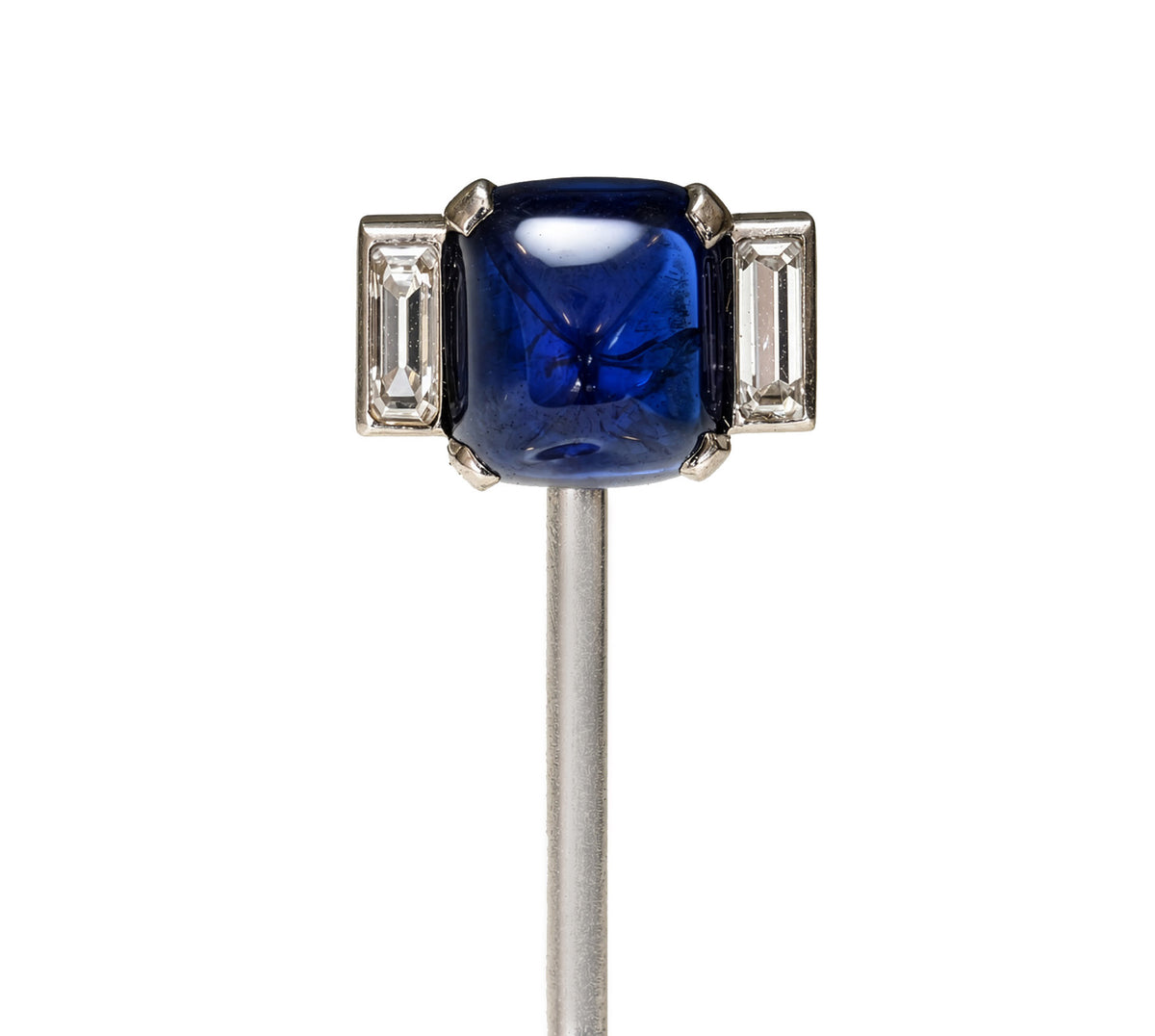
The antique stick pin worn by Cillian Murphy at the New York premiere of Peaky Blinders: The Immortal Man illustrates this principle perfectly. Crafted in gold and set with onyx and rose-cut diamonds, the piece achieves visual impact through contrast and proportion rather than size or brilliance.
In this way, it reflects the enduring philosophy of gentlemanly elegance: true luxury does not demand attention. It reveals itself quietly, through objects whose craftsmanship and balance reward a closer look.
Why Antique Gentleman’s Jewelry Is Returning Today
In recent years, a renewed interest in classic menswear has brought attention back to the refined accessories that once defined the wardrobe of the well-dressed gentleman. Objects that had gradually disappeared from everyday use—stick pins, pocket watches, signet rings, and antique cufflinks—are once again being appreciated for their craftsmanship, historical character, and understated elegance.
Part of this renewed fascination can be attributed to a broader cultural movement toward heritage and authenticity. In an age dominated by fast fashion and mass-produced accessories, antique objects offer something fundamentally different: individuality. Each piece carries traces of the era in which it was made, reflecting the materials, techniques, and aesthetic values of its time.
Television and cinema have also played an important role in shaping contemporary interest in historical style. Productions such as Peaky Blinders have introduced millions of viewers to the distinctive visual language of early twentieth-century menswear. Tailored suits, waistcoats, overcoats, and traditional accessories together create a powerful aesthetic that feels both historical and unexpectedly modern.
Within this revival of classic tailoring, jewelry occupies a particularly intriguing place. Unlike clothing, which must often be adapted to modern proportions and materials, antique accessories can frequently be worn exactly as they were originally intended. A pocket watch can still rest in a waistcoat pocket, a signet ring can continue to serve as a personal emblem, and a stick pin can still secure a tie or appear as a decorative accent on a lapel.
Collectors are drawn to these objects not only for their beauty but also for the stories they embody. Many antique pieces were crafted by skilled artisans working in small workshops rather than industrial factories. Subtle differences in engraving, gemstone cutting, or metal finishing give each jewel its own character—qualities rarely found in modern mass production.
Historic gemstone cuts also contribute to the distinctive charm of antique jewelry. Diamonds cut in older styles, such as rose cuts or old mine cuts, reflect light in softer and more atmospheric ways than modern brilliant cuts. Rather than producing sharp flashes of brilliance, they offer a gentle glow that complements the restrained aesthetic of nineteenth-century design.
Sustainability has also become an important factor in the growing appreciation for antique jewelry. Because these objects already exist, collecting them represents a form of reuse that aligns naturally with contemporary concerns about responsible consumption. Antique pieces demonstrate that beauty, durability, and craftsmanship can endure far beyond the era in which they were created.
Another reason for this renewed interest lies in the changing perception of men’s jewelry itself. For much of the late twentieth century, masculine accessories were often limited to watches and wedding bands. Today, however, many men are rediscovering the historical tradition of subtle adornment that once formed an accepted part of gentlemanly dress.
Accessories such as signet rings, tie pins, and cufflinks provide a way to introduce individuality into otherwise classic clothing. They allow the wearer to express personal taste without departing from the principles of refined tailoring.
Moments such as the appearance of Cillian Murphy wearing an antique stick pin at the New York premiere of Peaky Blinders: The Immortal Man illustrate how historical jewelry can naturally re-enter contemporary culture. When placed within a modern setting, these objects do not appear outdated. Instead, they reveal the timeless appeal of well-crafted design.
The renewed attention surrounding such accessories suggests that the language of gentlemanly elegance has never truly disappeared. It simply waited for a new generation to rediscover its quiet sophistication.
Collecting Stick Pins and Antique Men’s Accessories Today
For collectors of antique jewelry, men’s accessories offer a particularly fascinating field of study. Objects such as stick pins, signet rings, pocket watches, watch chains, and cufflinks reveal how craftsmanship, symbolism, and elegance intersected within the traditions of gentlemanly dress.
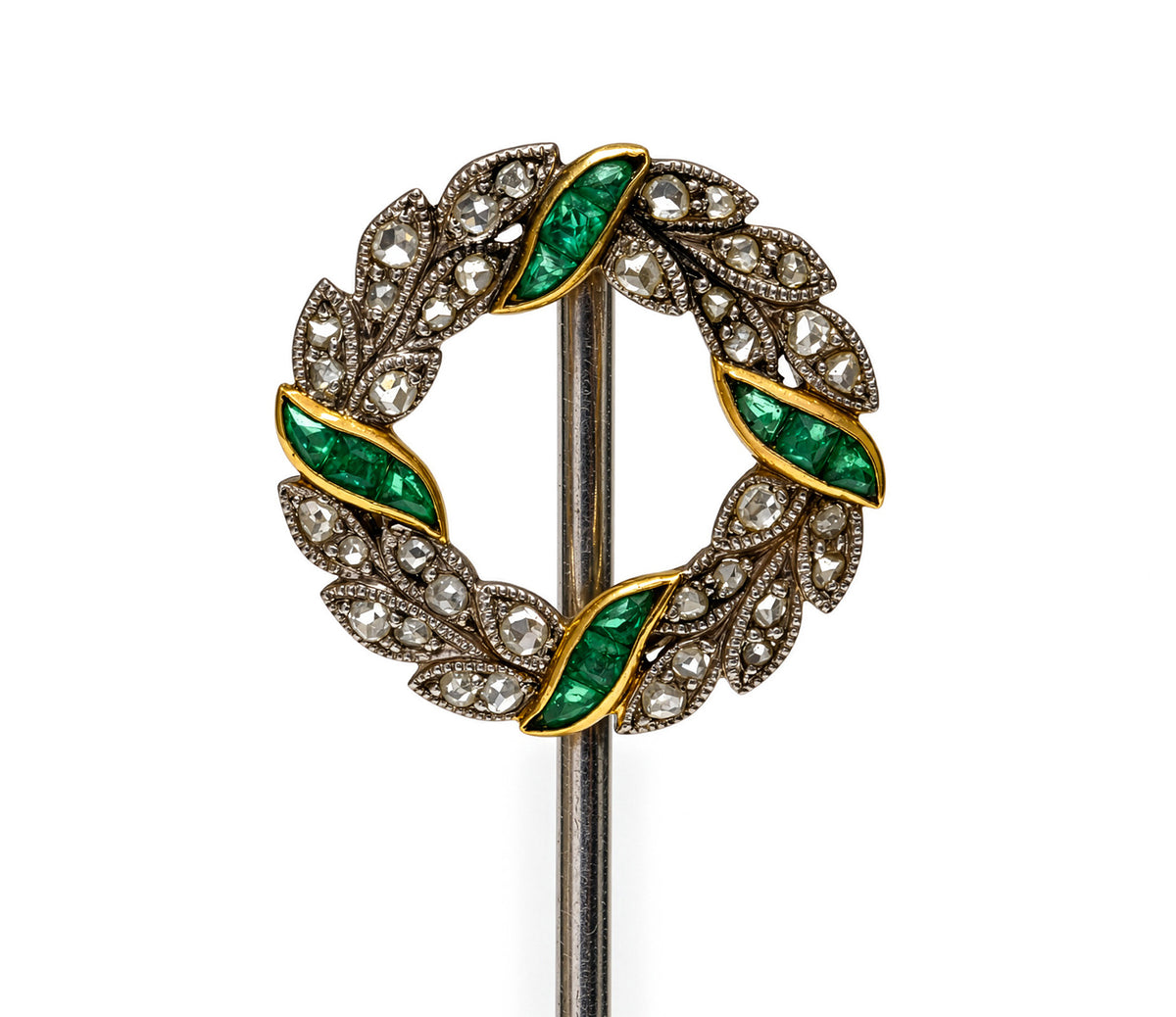
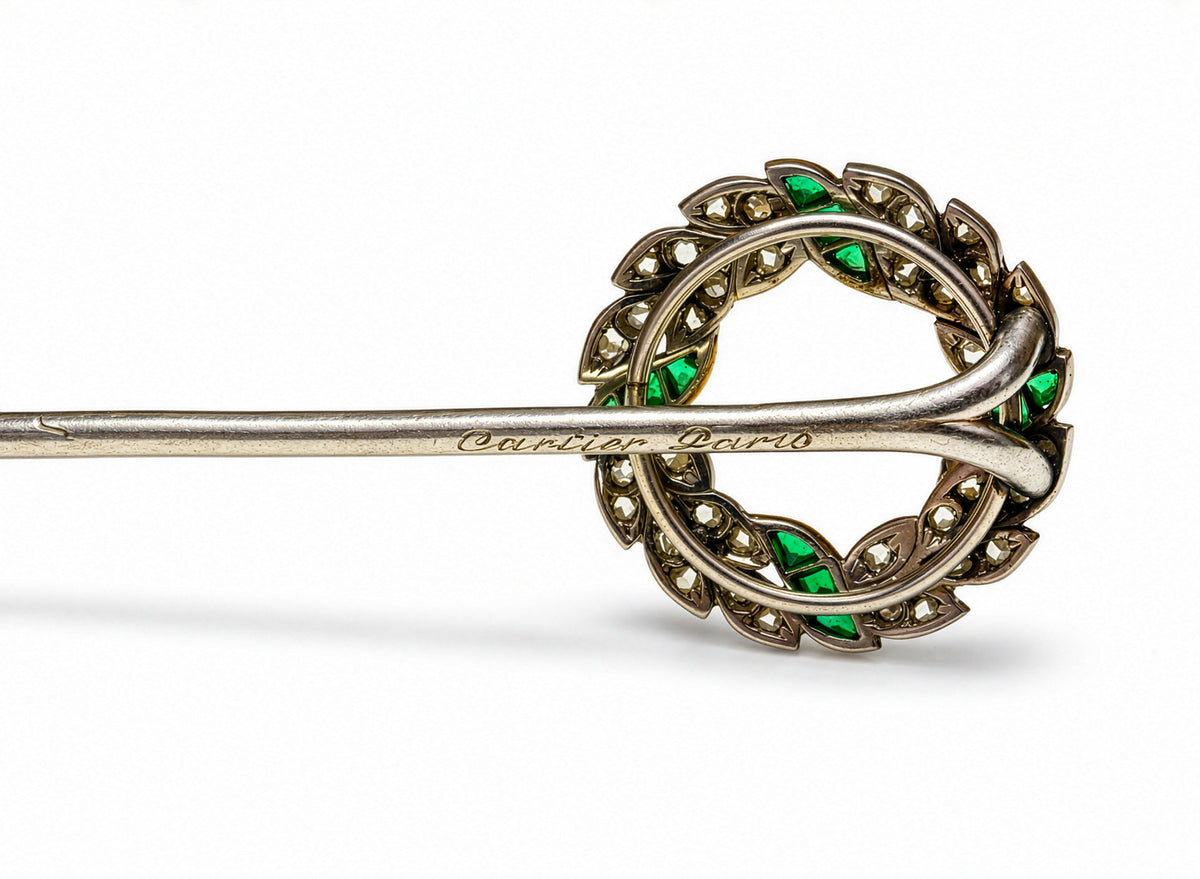
Stick pins are especially appealing to collectors because of their extraordinary variety. Throughout the nineteenth and early twentieth centuries, jewelers across Europe and America produced thousands of designs, each reflecting the artistic preferences of its period. Even within a relatively small object, designers explored a wide range of motifs, materials, and techniques.
Some stick pins are deliberately simple, featuring a single pearl or gemstone mounted in gold. Others display intricate compositions that incorporate diamonds, enamel, carved hardstones, or finely engraved metalwork. Victorian examples frequently feature symbolic imagery—stars, horseshoes, insects, or crescent moons—while later designs sometimes anticipate the geometric clarity associated with early twentieth-century modernism.
Materials also contribute significantly to the appeal of these pieces. Gold was the metal most commonly used for stick pins, valued for both its durability and its elegant appearance. Gemstones encountered in antique examples include pearls, garnets, turquoise, diamonds, and a variety of hardstones.
Black onyx became particularly fashionable during the late nineteenth century, often paired with diamonds to create striking contrasts between dark and light surfaces. This interplay of materials allowed jewelers to produce visually compelling designs even within the limited scale of a stick pin.
Historic diamond cuts further enhance the character of these jewels. Rose-cut diamonds, widely used in nineteenth-century jewelry, possess a flat base and a gently faceted dome. Rather than the intense sparkle associated with modern cuts, they emit a softer light that harmonizes beautifully with the restrained elegance of antique designs.
For collectors today, stick pins provide an accessible entry point into the broader world of antique jewelry. Because they were produced in such variety, examples exist across many stylistic periods and price ranges. This diversity allows enthusiasts to explore different historical influences while building collections that reflect personal taste.
The antique French stick pin worn by Cillian Murphy at the New York premiere of Peaky Blinders: The Immortal Man offers a compelling example of this enduring appeal. Crafted in 18K gold and set with onyx and rose-cut diamonds, the piece embodies the refined aesthetic associated with late nineteenth-century gentleman’s jewelry.
Lent for the premiere by DSF Antique Jewelry, the jewel demonstrates how these historic accessories can still complement contemporary tailoring. Though created more than a century ago, its design remains visually balanced and sophisticated.
Collecting such objects is not merely an exercise in acquiring beautiful artifacts. It is also a way of engaging with the cultural history of elegance. Each antique accessory reflects a moment in time when even the smallest details of dress were considered worthy of careful design and craftsmanship.
Through these objects, the traditions of gentlemanly style continue to survive, reminding us that elegance has often been expressed not through excess, but through the quiet power of thoughtfully chosen details.
A Final Reflection on Gentleman’s Elegance
The enduring appeal of Peaky Blinders lies not only in its dramatic storytelling, but also in the visual precision with which it recreates a vanished world of masculine style. Tailored suits, waistcoats, watch chains, signet rings, cufflinks, and stick pins all belonged to a culture in which elegance was expressed through discipline, proportion, and carefully considered detail.
The antique French stick pin worn by Cillian Murphy at the New York premiere of Peaky Blinders: The Immortal Man offers a striking reminder of that tradition. Lent for the premiere by DSF Antique Jewelry, the jewel connected a contemporary cultural moment with the refined accessories that once played an essential role in the wardrobe of the gentleman.
More than a century after many of these objects were first created, they continue to resonate because they embody something that remains deeply compelling today: craftsmanship, individuality, and restraint. In that sense, antique gentleman’s jewelry does more than illustrate the past—it preserves a language of elegance that continues to speak quietly, but powerfully, in the present.
Frequently Asked Questions About Stick Pins and Gentleman’s Jewelry
What is a stick pin in jewelry?
A stick pin is a slender decorative pin traditionally worn in a cravat, ascot, or necktie. Popular during the nineteenth and early twentieth centuries, stick pins served both a practical and ornamental function. They helped secure neckwear while also adding a refined decorative detail to a gentleman’s attire. Jewelers frequently set them with pearls, diamonds, enamel, or colored gemstones, transforming a simple fastening device into a miniature jewel.
When were stick pins most popular?
Stick pins reached their greatest popularity during the Victorian and Edwardian periods, roughly between the mid-1800s and the early decades of the twentieth century. During this era, men commonly wore cravats and neckties that required a pin to secure them properly. As neckwear styles evolved and tie bars became more common in the twentieth century, the everyday use of stick pins gradually declined.
What gemstones are commonly found in antique stick pins?
Antique stick pins often feature gemstones that reflect the aesthetic preferences of nineteenth-century jewelry. Pearls, diamonds, garnets, turquoise, and hardstones such as onyx or agate are frequently encountered. Diamonds were often cut in historic styles such as rose cuts or old mine cuts, which produce a softer, more atmospheric light than modern brilliant-cut diamonds.
What is the difference between a stick pin and a tie pin?
Although the terms are sometimes used interchangeably today, there is a historical distinction. A stick pin consists of a long, slender pin with a decorative head that passes directly through the fabric of a cravat or tie. A tie pin or tie tack, which became more common in the twentieth century, typically uses a short post with a clasp or backing rather than a long pin.
Can antique stick pins still be worn today?
Yes. While originally designed for cravats and ascots, antique stick pins can still be worn with traditional neckwear, lapels, scarves, or even hats. Many collectors and enthusiasts incorporate them into modern tailoring as subtle accents that add historical character to contemporary clothing.
Why are antique stick pins collectible today?
Collectors appreciate antique stick pins for several reasons. They often display fine craftsmanship, historic gemstone cuts, and distinctive design motifs that reflect the artistic movements of their time. Because they were produced in such a wide range of styles—from simple pearl pins to intricate diamond-set compositions—they offer a fascinating glimpse into the evolution of jewelry design on a miniature scale.
Did Cillian Murphy wear an antique stick pin at the Peaky Blinders premiere?
Yes. At the New York premiere of Peaky Blinders: The Immortal Man, actor Cillian Murphy wore an antique French stick pin crafted in 18K gold and set with onyx and rose-cut diamonds. The jewel was lent for the premiere by DSF Antique Jewelry and reflects the refined accessories historically associated with gentlemen’s fashion of the late nineteenth and early twentieth centuries.
Why are historic men’s accessories becoming popular again?
There is growing interest in classic menswear, heritage craftsmanship, and historically inspired tailoring. Cultural influences such as films and television series—including Peaky Blinders—have also revived curiosity about the accessories once worn by gentlemen. Antique objects such as stick pins, signet rings, pocket watches, and cufflinks allow modern wearers and collectors to reconnect with this tradition of understated elegance.