Charles Lewis Tiffany – The Story Of A Legend
American jeweler and businessman Charles Lewis Tiffany founded Tiffany & Co. in New York City in 1837, a company well known for its high-end products, especially its diamond and sterling silver jewelry.
Known for his expertise in jewelry, Tiffany (February 15, 1812–February 18, 1902) introduced the English standard of sterling silver for imported jewelry in 1851 and produced the nation’s first retail catalog.
Under the artistic leadership of his son, Louis Comfort Tiffany, Tiffany & Co. rose to prominence in the early 20th century.
As of 2023, Tiffany had more than 300 locations worldwide, including in the US, Canada, Japan, Europe, Latin America, and the Asia-Pacific region as a whole. The company is now looking at potential opportunities in Africa.

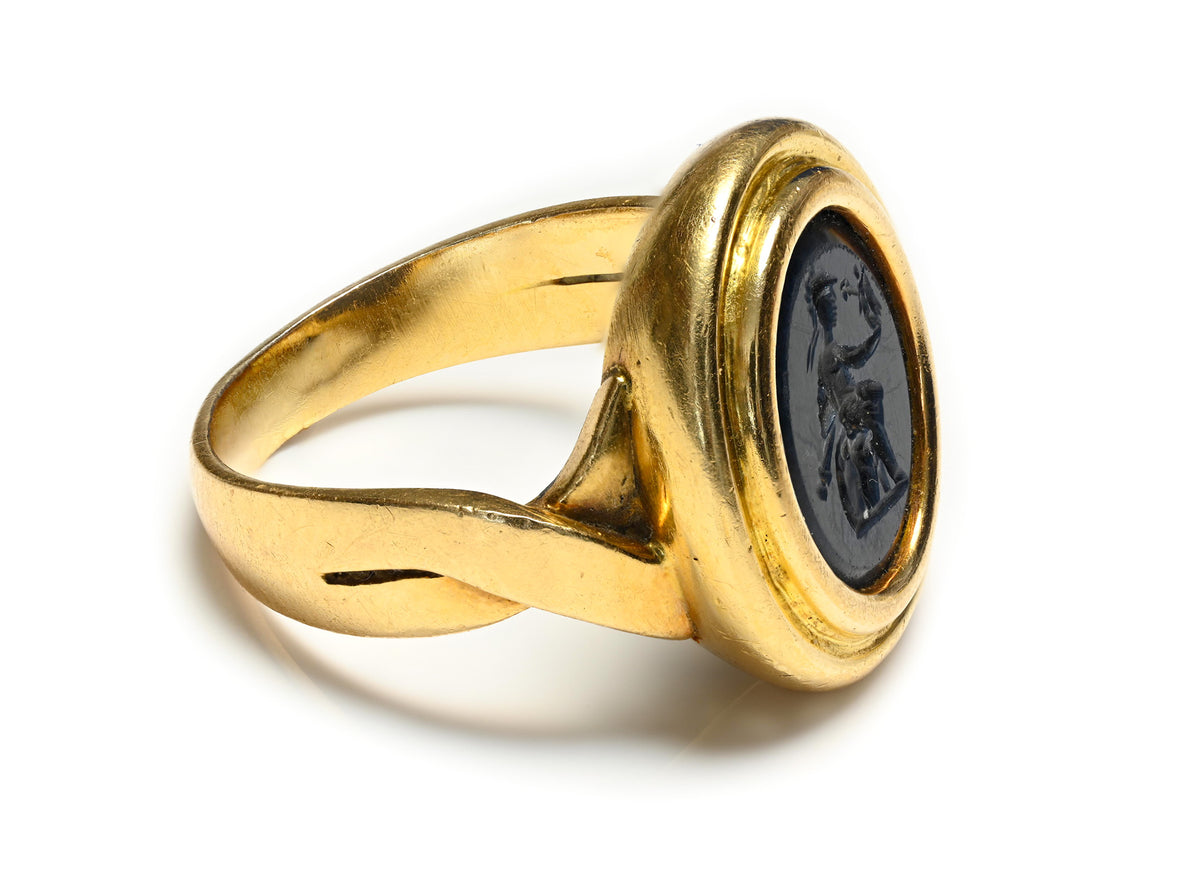
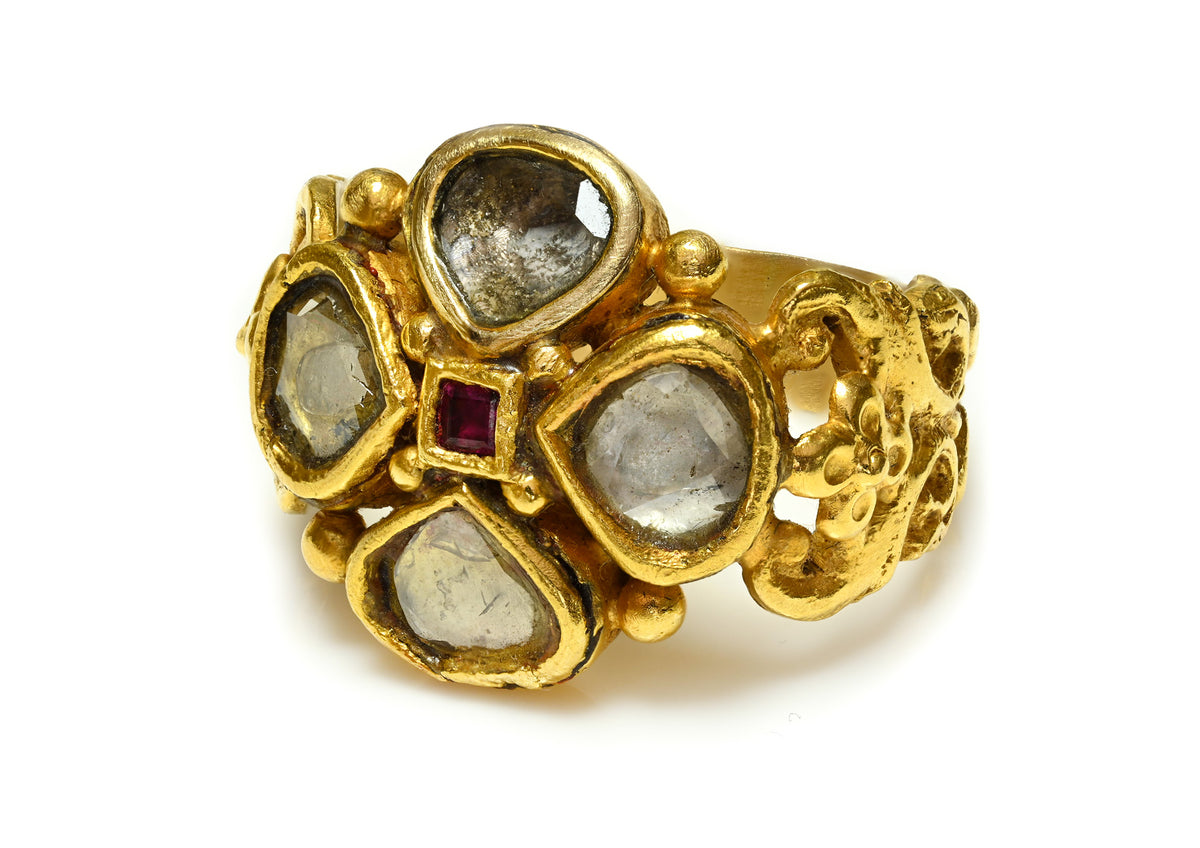
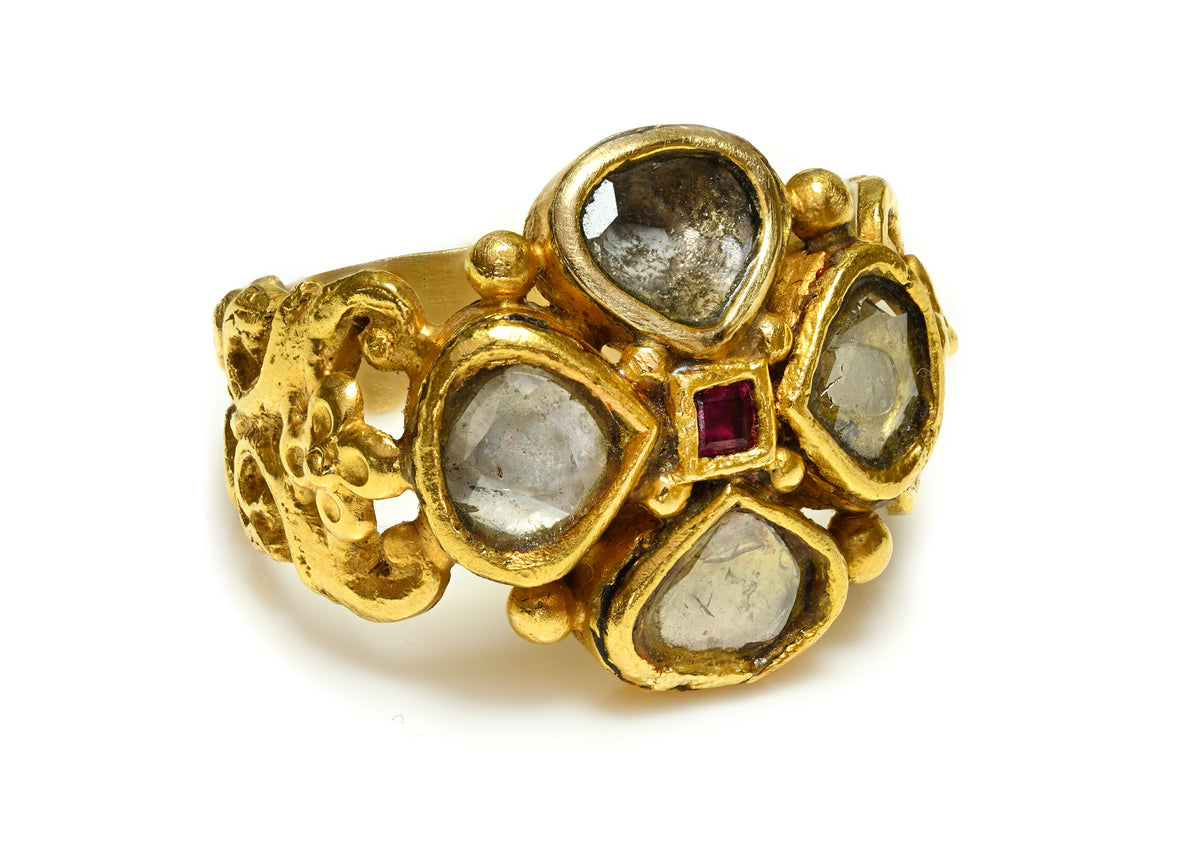
Louis Comfort Tiffany Fire Opal Filigree Gold Ring, Source: DSF Antique Jewelry
Fine jewelry, sterling silver, watches, porcelain, crystal, stationery, haute couture fragrances, personal accessories, and leather goods are all part of the company’s product portfolio.
For US$15.8 billion, the French company LVMH Moët Hennessy Louis Vuitton acquired the majority of Tiffany & Co. on January 7, 2021, and delisted Tiffany’s stock from the New York Stock Exchange.
The Context
By the 1860s, American tastes and trends were on par with those of Europe due to the country’s increasing prosperity.
A pinnacle of the Gothic architectural revival was New York’s St. Patrick’s Cathedral, designed by James Renwick and built to last “as long as any human work can last” (its cornerstone was laid in 1858), author Nancy Armstrong wrote in her 1976 book Victorian Jewelry.
The Gothic revival became a component of the new Romantic era, which included Moorish temples, Italian villas, and Swiss chalets, after decades of Greek forms dominating American architecture.
American jewelry designs mirrored European historical or archaeological styles and became equally fantastical.
Armstrong claimed that in America and much of Europe, art was “out” while business was “in.” Slavery and free-soil disputes that had divided the country for decades were coming to an end with the Civil War.
By 1875, the North was rich, the South was recovering, and business was booming. Large numbers of people were migrating into the unsettled areas of the West, and railroads were expanding into new territories.
The nation celebrated its first century of existence with the Centennial Exhibition in Philadelphia in May 1876 as a result of people’s legitimate pride in their country. It took ten years to organize and was the largest event of its kind in American history.
This was not a theme park. Among the gathered marvels of science, invention, and the arts, visitors were happy to stroll leisurely. The Exhibition was primarily intended to show the world that the United States had emerged as one of the major industrialized nations, even though at least fifty foreign nations were invited to participate.

The stranger's pocket-guide to Philadelphia and the Centennial exhibition (1876), Philadelphia, The Central news co, Source Wikimedia Commons
Farm machinery, pocket watches, machine-loomed textiles, printing presses, mass-produced furniture, and extraordinarily elaborate soda fountain dispensers were all on display, representing both the large and small products of the emerging machine age.
Charles Lewis Tiffany
Armstrong argued that the story of Charles Tiffany, the founder of the New York jewelry business, exemplifies the spirit of enterprise in the United States. His response to the laying of the first Atlantic telegraph cable in 1858 is the best example of his financial savvy, which would make the store famous.
After years of failure, Cyrus Field was finally able to lay the wire uninterrupted and discovered that he had an additional twenty miles of it. Charles Tiffany, who had been selling diamonds to Empress Eugénie, was in Europe at the time and cleverly chose to purchase the lot in order to profit from the excitement.
He sold the cable with “a copyrighted facsimile certificate of Cyrus W. Field Esq., guaranteeing that the piece was indeed cut from the original cable” after cutting it into four-inch (10.2 cm) sections and securing each one with a brass ferrule.
Paperweights, cane and umbrella handles, seals, watch charms, and “coils for ornamenting parlors and offices” were made from other pieces.
Police were called to control the throng during one of the most successful promotions ever. Yankee Puritan Charles Tiffany had reached yet another significant milestone on his widely reported path to lasting success.

Charles Lewis Tiffany, Source: Tiffany & Co., Public domain via Wikimedia Commons
Armstrong claims that the history of jewelry in America today is essentially the story of this man and the creative way in which he built his business. The finest jewelry came from Tiffany’s, but very little was actually made in America.
Born on February 15, 1812, Charles Lewis Tiffany eventually relocated to New York from his family home and business in Connecticut. Anticipating the mid-nineteenth-century desire for gadgets and curiosities, he and a friend, John P. Young, decided to “go it alone” and launch a fancy goods business.
A Strong Sense of Quality
According to Armstrong, their store, which opened on Broadway in 1837, carried a wide range of unusual items, including umbrellas and lacquerware, but stationery was their mainstay. In those early years, the two young men toiled like Trojans to keep their small shop going, and nearly all of the merchandise was imported.
Although Tiffany had a strong sense of quality and a fondness for the Orient, their business was not yet as well known for silver and jewelry as it is today. When they purchased some imported German stock of paste costume jewelry in 1839, which sold like wildfire, it was the first time either of them considered selling jewelry.
In America at the time, real gems were quite uncommon. If you could wear a cameo set in gold, garnet, or small turquoise stones, you were thought to be fairly well-to-do. To those who had never seen real diamonds, these somewhat gritty pastes resembled the genuine stones.
As the business grew, J. L. Ellis joined as a partner, and the three men made the groundbreaking decision to send John Young to Europe to investigate the market for upscale goods.
With their captivating publicity stunts, Tiffany’s small business began to become well known as “the only store in New York with a representative abroad.”
Charles Lewis Tiffany decided that the company should deal only in high-quality goods going forward after John Young, enthralled by the sophisticated designs available in Paris, brought back well-designed paste jewelry, among many other things, which once again sold as soon as it was displayed in the store, Armstrong wrote.

Louis Comfort Tiffany Gold Peridot Opal Brooch, Source: DSF Antique Jewelry
The French Revolution
After 1845, they stopped selling pastes and exclusively offered jewelry crafted by Parisian, London, and Roman goldsmiths.
Additionally, they had to relocate to larger premises and focused on watches, clocks, bronzes, and silverware while logically continuing with all the lucrative fancy-goods lines, from tongue scrapers to Swiss osier work.
The French Revolution of 1848 gave rise to their desire to focus on jewels. On the first day, when the price of diamonds fell by 50 percent in just twenty-four hours, John Young and his assistant were in Paris.
Young “acquired” Marie Antoinette’s girdle (referred to as a “zone” in Victorian times), had some hair-raising adventures, bought every diamond he could find, and returned to New York in a flurry of well-planned publicity

Portrait of Marie Antoinette (1755-1793), Source Wikimedia Commons
The King of Diamonds
There, Charles Lewis, who had never done anything but maintain cordial relations with the press, skillfully turned the tables on Young and earned the nickname “The King of Diamonds.” Due in large part to the California Gold Rush, money was beginning to flow in all directions in America while it was scarce in France.
Armstrong claims that Charles Lewis Tiffany developed into a skilled public relations strategist and frequently collaborated with the well-known P. T. Barnum for advertising purposes.
For example, Tiffany created a silver horse and carriage for the wedding of General Tom Thumb and Lavinia Warren, two of Barnum’s little people, which he naturally displayed in his storefront for weeks afterward.
For a number of years, Charles Tiffany had been selling imported English silverware and enormous athletic trophies to the newly affluent. However, in 1844, a new tariff of 30 percent was imposed on imported goods, which caused Tiffany to reconsider.
He decided to hire John C. Moore, a reputable silversmith with a well-run company, to work exclusively for him.
He demonstrated innovation by insisting that the silver be of the same sterling purity (925 out of 1,000 pure) used in England—a significantly higher standard than most American silver.
Tiffany and Co.
The firm of Tiffany, Young, and Ellis was now prepared for the big leagues after this had been adequately publicized. Young and Ellis, the two older men, coincidentally decided to retire, which they did in the most cordial way in 1853, leaving the business under one motivated leader and with its ultimate name, “Tiffany and Co.,” according to Armstrong.
The Astors, Belmonts, and Vanderbilts were frequent customers who purchased silver, jewelry, diamonds, and pearls; all of a sudden, the money in the till was in the thousands rather than the hundreds.
At the time, it was fashionable to wear three ropes of pearls at once, and ropes of Oriental pearls were selling for $300,000 each (approximately $11.1 million today; about RON 51 million). The glittering Mrs. George Gould had Tiffany create a necklace for her that cost more than $1 million (approximately $37 million today; about RON 170 million).

Tiffany & Co. Antique Gold Snake Diamond Brooch, Source: DSF Antique Jewelry
While extravagant diamond sales were temporarily suspended due to the Civil War, Tiffany was busy supplying soldiers with swords, gold braid, and badges. At the conclusion of the war, he supplied commemorative swords that were presented to popular soldiers by their hometowns.
In fact, Armstrong went on, Charles Lewis was so successful in every area of his business that the company went public in 1868, with Charles serving as president and a major shareholder. In November 1870, a brand-new store opened to astonish the world.
The crystal chandeliers, gaslights, décor, the unprecedented luxury of a ladies’ room, the elevator (not quite the first, but still nearly unknown), the jewels for sale valued at over $2 million (approximately $44 million in 1870 dollars adjusted for inflation), the silver valued at $1.5 million (approximately $33 million today), and the floor-to-floor displays of bronzes, clocks, and jeweled fantasies were all featured in the newspapers every day.
The Arizona Diamond Swindle
After being badly deceived in “the Great Arizona Diamond Swindle” in 1872, in which genuine uncut diamonds were brought from South Africa and planted in an unidentified location, Charles Lewis Tiffany decided to hire an impeccable professional gemologist to ensure that it would not happen again.
George Frederick Kunz, a keen mineralogist since childhood, joined the company in 1877 at the age of twenty-one, according to Armstrong.
Naturally, while working for Tiffany’s, he had to deal with some of the world’s finest traditional stones—diamonds, rubies, sapphires, and emeralds—but he was most delighted by new colors, uncommon specimens, and “semi-precious” stones that had not yet gained popularity. Kunz was an extraordinary man.
Because of his passion, lesser-known stones gained nearly as much popularity as diamonds, and he was able to locate them all across the United States.
He seemed to hear every hint of a discovery as he traveled relentlessly, tracking down every new species: Maine’s tourmalines, North Carolina’s emeralds, Montana’s sapphires, Arkansas’s and Wisconsin’s freshwater pearls, Utah’s topazes and garnets, and an unidentified spodumene in California with a particularly beautiful lilac hue that now bears his name—kunzite.
The favorite pieces of Empress Eugénie were once again on display when the French Crown Jewels were auctioned off in Paris in 1887.

Portrait of Empress Eugénie, Source https://www.miramare.beniculturali.it/project/copia-da-f-x-winterhalter-1805-1873-ritratto-dellimperatrice-eugenia-di-francia-olio-su-tela-ante-1868/, via Wikimedia Commons
However, all of these events had vanished into dreams, becoming dry-as-dust history rather than romantic reality. Tiffany’s was present at the sale. The article claims that Tiffany spent about $500,000 (approximately $17 million today) on twenty-four of the sixty-nine lots.
French Crown Jewels
Following the sale, Tiffany secretly purchased a belt and buckle, two diamond-and-ruby bracelets, a sapphire-and-diamond comb, a massive diamond briolette, and four of the renowned seven Mazarin diamonds.
According to George Kunz, 1887 was a memorable year for the company. They had acquired the French Crown Jewels, which included several jewels from Henry Philip Hope’s extensive collection (assembled in 1850), later dispersed around the world by his heir, as well as four of the largest diamonds to emerge from Africa that year.

Crown Jewels of France, on display at the Louvre with the diadem and Crown of Empress Eugenie to the left, the set of Queen Marie Amélie in the centre and the crown of Louis XV to the right with the diadem of the Duchess of Angoulème, Author Michael Reeve, Source Wikimedia Commons
By the end of the year, Tiffany’s vaults still held forty million dollars’ worth of precious stones (approximately $1.35 billion today; about RON 6.2 billion), despite the quantity of gems they had sold. However, nothing was novel; everything was created in traditional designs, with a strong emphasis on obtaining “the biggest diamond, the most beautiful pearl, or the most costly parure.”
According to Armstrong, business expanded at Tiffany’s, with all the usual lines of exquisite decorative arts now paired with silver and jewelry, some of which were imported but most of which were created in New York by their own artisans.
For men, there were watches, chains, rings, fobs, and seals; for women, there were the same kinds of gems that were fashionable in Europe.
The settings—which included brooches, stomachers, earrings, bangles, bracelets, lockets, and now charm bracelets as well—were heavy, opulent, and primarily made of gold. They were studded with diamonds and set with as many vibrant stones as possible.

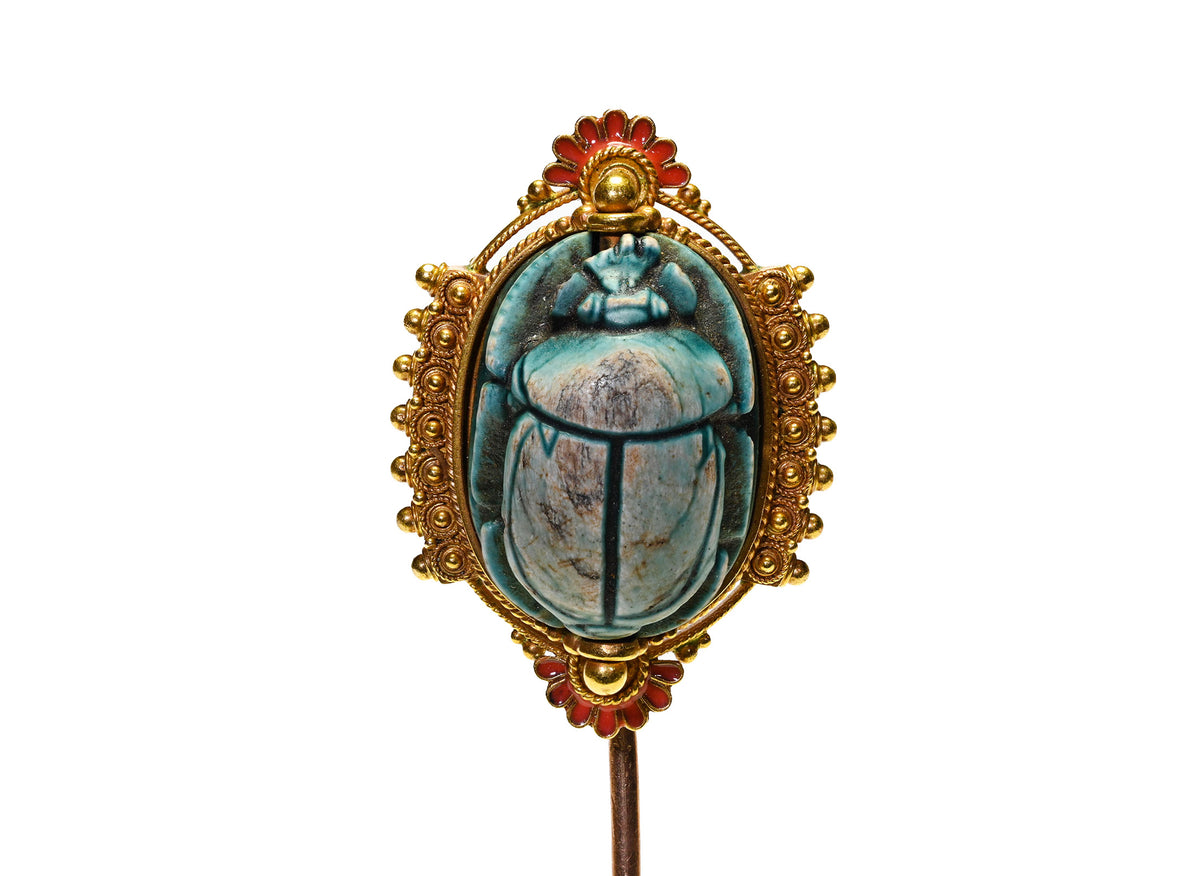
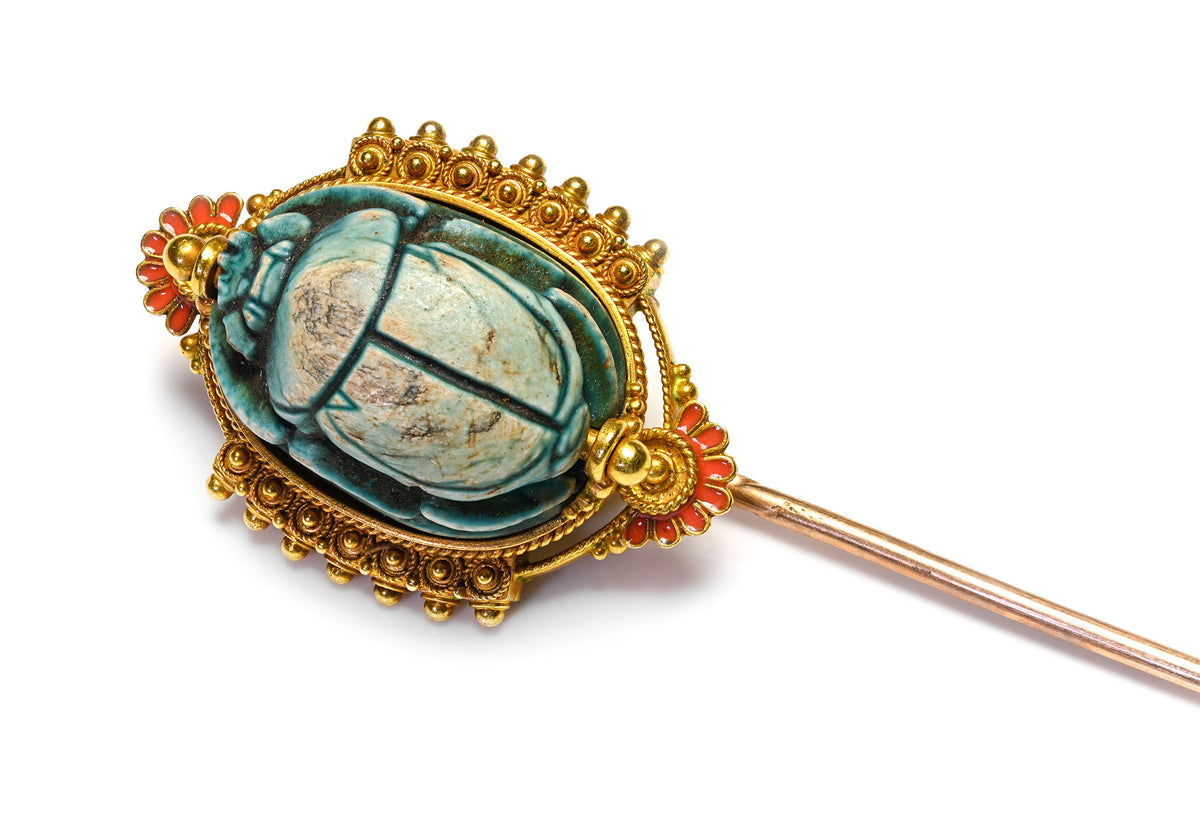
Tiffany & Co. 18K Gold Favrile Glass Scarab Cufflinks by Louis Comfort Tiffany, Source: DSF Antique Jewelry
Armstrong claimed that carbuncles (cabochon garnets) and diamonds were being used to create a magnificent pendant brooch that was wickedly rich and dark.
Exotic turquoise stones, surrounded by diamonds or pavé-set to create a spray of convolvulus flowers, were frequently used (the Victoria and Albert Museum has an example), and enameled jewelry in gold, dark blue, emerald green, or rich ruby red was common.
However, after 1860, diamonds were generally the most desired and most frequently acquired stones.
Charles Lewis Tiffany left behind a legacy that is difficult to match, opening the door to innovation and inspiring numerous jewelry designers