Edo Period Japanese Metalwork and Collector Appeal: What Is Shakudo Jewelry?
Shakudo jewelry is one of the most distinctive forms of Japanese metalwork, admired for its deep dark patina, subtle richness, and extraordinary surface detail. The word Shakudo refers to a traditional Japanese alloy, primarily composed of copper with a small amount of gold. Through a specialized patination process, the metal develops a dark blue-black or blackened surface, creating a dramatic background for gold, silver, and other mixed-metal decorative details.

For collectors, Shakudo is not only valued for its appearance, but also for its connection to Japanese craftsmanship, sword fittings, and the decorative arts of the Edo period. The finest examples often show remarkable attention to detail, with miniature scenes from nature, folklore, daily life, or warrior culture worked into the surface of the metal.
Shakudo and Edo Period Japanese Sword Fittings
During the Edo period, 1603–1868, Japanese metalworkers produced highly refined sword and knife fittings, including components known as fuchi-kashira. These were functional parts of a sword or knife handle, but they were also artistic objects. The fuchi was the collar near the guard, while the kashira formed the pommel or end cap of the handle.
Although these fittings were small, they often carried extraordinary decorative work. Artisans used techniques such as inlay, engraving, and relief decoration to create detailed scenes in gold, silver, Shakudo, shibuichi, and other metals. This is one reason antique Japanese sword fittings are so appealing to collectors today: they combine craftsmanship, symbolism, history, and beauty in a compact form.
Why Nature Motifs Are Especially Appealing
Many antique Shakudo and Japanese sword fitting elements depict warriors, armor, weapons, or martial scenes. These subjects are historically important and closely connected to samurai culture. However, nature scenes can have a different kind of collector appeal.
Insects, leaves, flowers, birds, and botanical motifs often show a more poetic side of Japanese metalwork. A grasshopper among leaves, wasps, crickets, and foliage can feel lively, humorous, and highly refined. These small natural details reveal the artisan’s ability to capture movement and personality in metal.
For collectors of antique jewelry and Japanese works of art, nature-themed Shakudo pieces can be especially desirable because they feel decorative, wearable, and visually engaging while still carrying deep historical character.

From Historic Metalwork to Wearable Jewelry
In the 19th century and beyond, European and international jewelry designers often incorporated antique Asian elements into fine jewelry. These conversions were part of a broader appreciation for Japanese, Chinese, and other Asian decorative arts. The appeal was easy to understand: the workmanship, patina, and detail of these antique elements gave jewelry a level of history and individuality that could not be recreated easily.
When handled with care, converting antique Shakudo elements into earrings, pendants, brooches, or bracelets can preserve the historic metalwork while making it wearable. The strongest examples are those where the later mounting respects the original object and allows the antique element to remain the focus.

Natural Pearls, Diamonds, and Shakudo
Shakudo has a unique visual strength because of its dark patinated surface. When paired with natural pearls, gold, and diamonds, the contrast can be especially beautiful. A white pearl and a gray pearl can echo the mixed-metal palette of Shakudo, while diamonds add light and definition without overwhelming the antique Japanese work.
Natural saltwater pearls are also highly collectible in their own right. When accompanied by a gemological report confirming natural origin and no indication of treatment, they add another layer of importance to a jewel. This is particularly relevant for collectors who value documentation, rarity, and material authenticity.
A DSF Example: Edo Period Shakudo Earrings with Natural Pearls
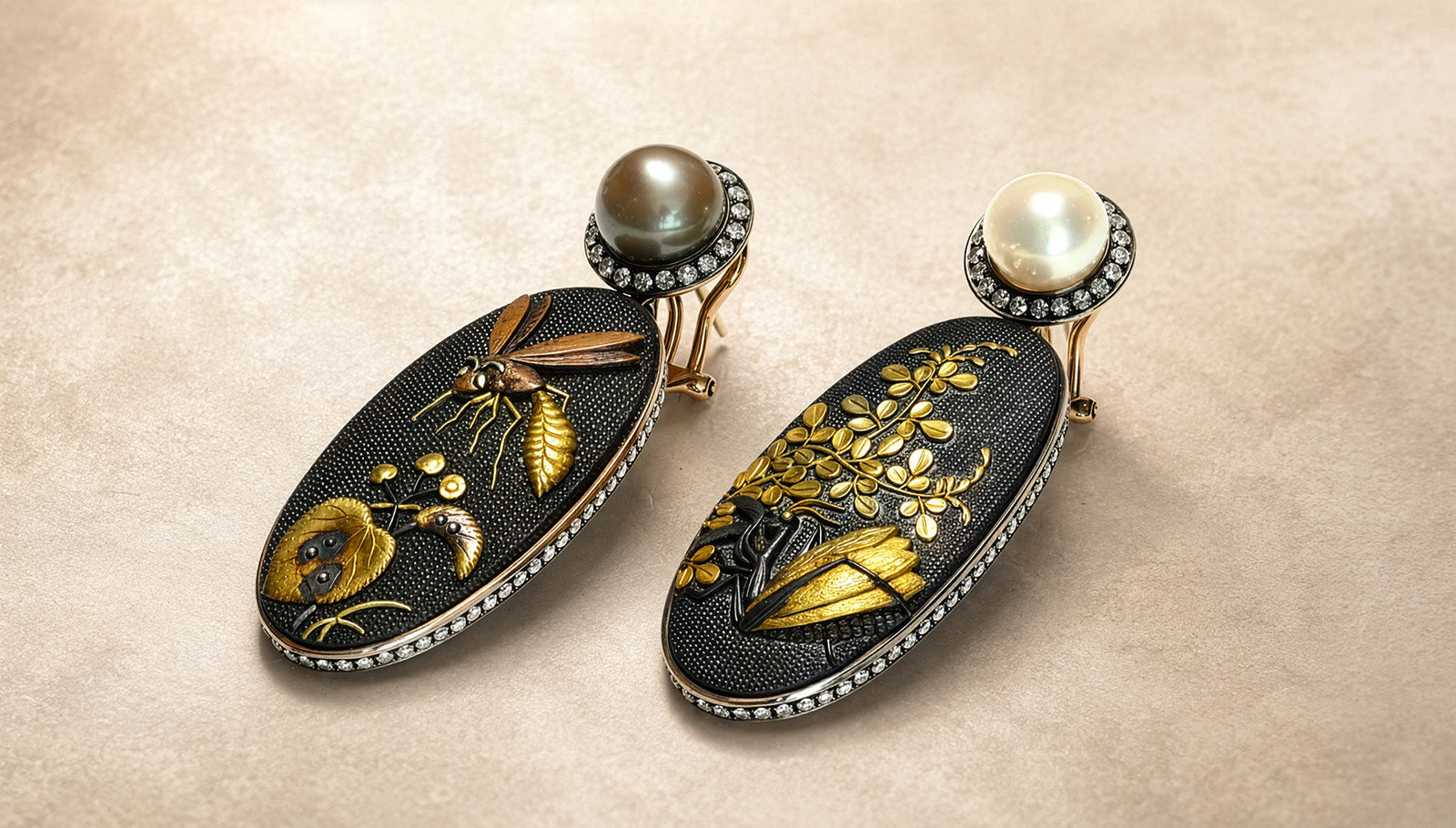
A rare example in the DSF Antique Jewelry collection is a pair of Edo period Japanese Shakudo fuchi-kashira earrings, later mounted in handmade 18K rose gold with natural saltwater pearls and diamond accents.
The antique Shakudo elements depict insects and foliage, including a grasshopper among leaves, two wasps and a cricket, and an additional wasp above leaves. The original elements date to the Edo period, 1603–1868, and were later transformed into one-of-a-kind earrings. The pair is set with two natural button pearls of opposite colors, one white and one gray, accompanied by a GIA report stating that the pearls are natural saltwater pearls, Pinctada species, with no indications of treatment.
You can view the earrings here:
[Antique Shakudo Natural Pearl and Diamond Drop Earrings](PASTE PRODUCT LINK HERE)
Why Collectors Value Shakudo Jewelry
Collectors are often drawn to Shakudo jewelry because it brings together several worlds at once. It is connected to Japanese sword fittings and Edo period metalwork, but it can also exist as fine jewelry when thoughtfully mounted. A single piece may appeal to collectors of antique jewelry, Japanese art, natural pearls, mixed-metal craftsmanship, and one-of-a-kind wearable objects.
The best Shakudo jewelry has a sense of depth that goes beyond decoration. The patina, motifs, historical origin, and handwork all contribute to its character. Unlike modern mass-produced jewelry, each antique Shakudo element carries evidence of its earlier life and the hand of the artisan who created it.
Final Thoughts
Shakudo jewelry is rare, distinctive, and deeply connected to Japanese decorative art. Whether preserved as sword fittings or transformed into wearable jewels, these pieces offer collectors a tangible link to Edo period craftsmanship and the refined metalworking traditions of Japan.
For collectors seeking jewelry with history, artistry, and individuality, Shakudo remains one of the most fascinating categories to explore.
FAQ Section
What is Shakudo?
Shakudo is a traditional Japanese alloy, primarily composed of copper with a small amount of gold. It is prized for its dark patinated surface and was often used in Japanese sword fittings and decorative metalwork.
What are fuchi-kashira?
Fuchi-kashira are Japanese sword or knife handle fittings. The fuchi is the collar near the guard, while the kashira is the pommel or end cap of the handle. Many Edo period examples were decorated with highly detailed metalwork.
Why is Shakudo collectible?
Shakudo is collectible because of its historical Japanese craftsmanship, distinctive dark patina, mixed-metal decoration, and frequent connection to Edo period sword fittings. Nature scenes, folklore motifs, and finely worked details can make individual pieces especially desirable.
Can antique Shakudo elements be made into jewelry?
Yes. Antique Shakudo elements have often been incorporated into earrings, pendants, brooches, bracelets, and other jewels. The most desirable examples preserve the original metalwork while using later mountings to make the piece wearable.
Why are natural pearls important in antique jewelry?
Natural pearls are rare because they formed without human cultivation. When accompanied by a gemological report confirming natural saltwater origin and no indications of treatment, they can add significant collector value to a jewel.